Fiscal Year 2025 Annual Report
As I reflect on the 2024-2025 fiscal year, it was transformational, marked with pivotal moments in our efforts to end — not just manage — hunger. We closed our Pop-Up Pantries — programs born out of necessity during the pandemic — and launched Community Markets, which redefine what dignified food access looks like.
To truly end hunger, we must fundamentally transform our systems and how food banking has traditionally operated. Community Markets do this by offering a grocery-store experience for participants, enabling them to choose the nutritious, quality food they desire. And importantly, they provide connections to vital resources to address the reasons families need food assistance.
Together with community, we’ve moved from pandemic-era emergency response to transformative food access programs that are about more than food. Our work is about creating spaces where people feel respected, where food access feels like a right, not a handout, where their voices are heard, and where food is a pathway to empowerment and advocacy for policies that end — not create — hunger.
Yet challenges lie ahead. We know food insecurity remains at record-high levels. Families are making impossible choices between rent, medicine, and meals. Yet our federal government is not only ignoring the hunger crisis: it exacerbates it through its policy choices and funding cuts. The impacts of the federal budget (H.R. 1) threaten to deepen hunger in our neighborhoods. The need for our work has never been greater, and the stakes are rising.
But here is where hope lives: in our ability to tune out the noise and focus on what we can control — the community we wish to create. We are not powerless. Every day, we see the strength of collective care and the power of partnership. With over 260 community partners and thousands of volunteers and donors, we are building a network of support rooted in dignity, equity, and resilience.
Thank you for standing with us in this work. Your support fuels nutritious food, innovation, advocacy, and the belief that food is a human right. As we look to the future, let’s continue to lead with courage, compassion, and care for each other. Because when we act together, we don’t just fight hunger — we are fighting for a community where everyone has access to good food, the opportunity to thrive, and where everyone belongs.
With gratitude, determination and resilience,

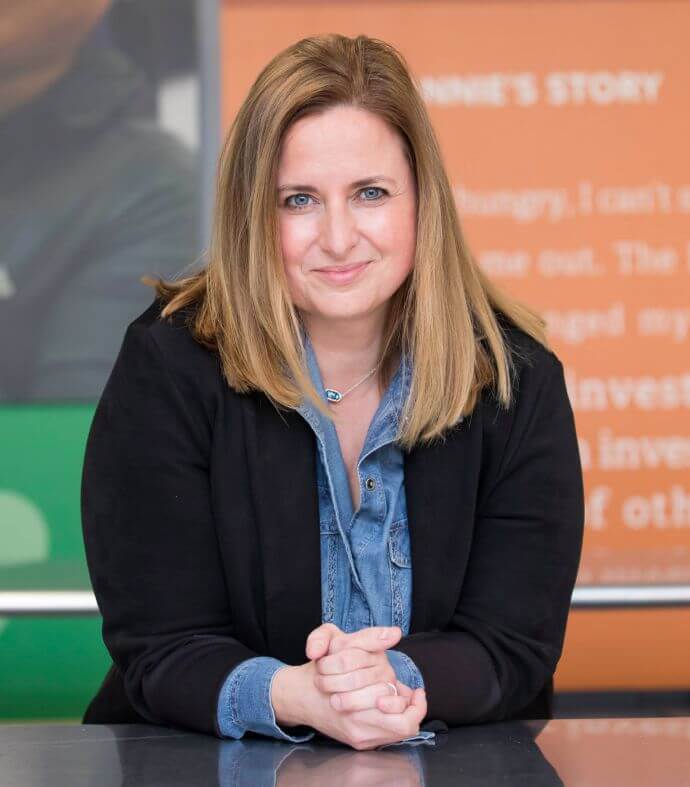
Tanis Crosby
Executive Director
San Francisco-Marin Food Bank
Last year, we focused on iterating and expanding solutions designed together with our community. Together with partners, we are increasing food access programs that enable people to choose fresh, nourishing food and developing a network of support that pairs food access with supportive services. We uplift participants as leaders in advocating for policy solutions to address the causes that perpetuate hunger. The wisdom of partners and participants is guiding this transformation and creating lasting impact.

Fiscal Year 2023

Fiscal Year 2024

Fiscal Year 2025 & Beyond
Our Neighborhood Food Network
Together with 265 community partners, we ensure people in every corner of our two counties have dignified access to high-quality, fresh, nutritious food.
click to view:
Pantries
Community Markets
Pop-up Pantries
Home-Delivered Groceries, San Francisco
Home-Delivered Groceries, Marin
Non-Pantry Partners
Key
Low: 13,500
High: 80,600

Key
Low: 2,300
High: 8,100



Hunger in our community is at historic levels: nearly 1 in 3 households in San Francisco and 1 in 4 in Marin don’t earn enough to meet their basic needs. Neighbors, strained by the high cost of living, are forced to make impossible choices between food and other basic needs like rent or medicine. We respond by working with our partners to create dignified food access programs with nutritious, healthy groceries — 70%+ of which is fresh produce.
“When you don't have that money to make ends meet, you can have the Food Bank to rely on. It was feeding me, my children, it was putting food in the household. Even if you're vegetarian, you can make a really good meal.”
Former Participant, Current Staff, Homeless Prenatal ProgramCommunities are supported with dependable access to good food, in their neighborhood or delivered to their doorstep every week
children
seniors
Offering quality and choice is at the heart of everything we do. As a leader in sourcing fresh, nutritious food, we partner with California farmers through the Farm to Family program to source healthy seasonal produce at scale. We provide culturally relevant foods based on community feedback and offer farmer’s market and grocery store-style experiences where participants browse and choose the foods they want and need for their families.
of food distributions are set up like farmer’s markets or grocery stores where participants select the food they want
of the food we offer is fresh produce
“My husband is on dialysis and needs care. This [food] is a very big help. I cook for him, he likes the chard and kale. I like the chicken and especially the eggs. It makes us healthy.”
Participantparticipants like the food they receive
“I love to cook. Sweet potatoes for chili, cabbage with turkey sausage, spaghetti squash with roasted vegetables. [The produce we get] is healthy, and it allows us to try items we normally wouldn't go buy."
Participant and VolunteerLast year, we launched two Community Markets and paved the way for more partner-run markets to open this year. Community Markets resemble grocery stores, where participants shop and choose what they want with dignity, and at times that fit their schedules. The vision is to lower barriers to the healthy foods participants prefer, and to provide links to support services. In 2025-2026, we will scale Community Markets to more communities with partners and launch a Peer Navigator program, with participants connecting other participants to services to help them thrive.
community markets opened in FY2025
“Even though I'm at my lowest right now, I feel like I have something. They're treating me with respect. Instead of just handing me a bag, I'm getting to choose. You walk through here and you pick what you want. It's not in the back. I like seeing my food laid out like this. Even though I'm not working, I feel respected.”
Participant
participants were served in our
Community Markets last year
partners joined us to design and start
implementing Community Markets
“The community market style is such an amazing opportunity to better serve more people. We are going to be able to provide more services for families all in one place, which is the vision of this work. Access to food is core to the ability to be educated, to be in the workforce, and to be community advocates. Collaboration with the Food Bank has been critical to bring this vision to reality.”
Chief Executive Officer,COVID-19 changed everything. People sheltered in place. Stores emptied. But our Food Bank kept going when everything else stopped. We launched 27 outdoor Pop-Up Pantries and expanded Home-Delivered Groceries to meet historic need. Pop-Ups were supposed to operate for just a few weeks, but continued for five years. The pandemic ended, but record-high hunger didn’t. Even as food insecurity continued to rise, government funding for pandemic-era hunger programs went away, and Pop-Ups closed last June. We remain proud of the many Food Bank staff, volunteers, and supporters who served courageously on the front lines during the pandemic, always caring and innovating new ways to help thousands put food on their tables.
" Running Pop-Up Pantries during the pandemic was a constant series of things we thought were impossible that we figured out how to do. The key to our work is putting participants at the center and then finding ways to serve them in the best way we could."
Senior Associate Director of Direct Service"During the pandemic, we learned how many people can't easily get to a pantry. For them, a weekly grocery delivery means more than just food — it's also a friendly visit and human connection."
Associate Director of Enrollment & Customer ServicePop-Up Pantries operated at the peak of the pandemic; we closed the final 15 Pop-Ups in FY25.
Expanded home-deliveries each week at the peak of the pandemic
households served through Pop-Ups, community partner-run food pantries, and Home-Delivered Groceries at the peak of our pandemic response.
"I've been volunteering since 2020, during the pandemic when we had 300 cars coming through every week. This got me out of the house, and I like being actively involved. People don't ask for hard times, but hard times happen when you don't expect it and you aren't prepared for it. It's nice when there are groups that can step in and support people when they need it."
VolunteerLast year, we recruited residents from San Francisco and Marin with lived experience of food insecurity to shape policies that reflect their needs and priorities. This group — our Food CARE (Community Advocacy, Resilience, & Equity) Council — advocated for change by sharing their stories with policymakers, testifying at hearings, and meeting with state and local lawmakers. This ensures those most impacted by food insecurity have a seat at the table when decisions are made.
“Advocating for the Food Bank was something I had a true passion in because I was remembering how I felt when I was a child and I got to go to the food bank for the first time and the experience I had, it made me feel less alone. I want children to feel like the world is a less scary place. I think everybody deserves that feeling.”
Former Food CARE Council MemberFood CARE Council members spent 480 hours of advocacy preparation to meet with lawmakers
supporters joined our advocacy efforts through online and in-person outreach
"The way things happen in Sacramento is members of the public showing up and taking your time to advocate. Every call, every letter you write makes a difference. There is strength in our collective voice. That's what your graduation signifies - your beginning of that journey. [The Food CARE Council] truly exemplifies what this type of work looks like locally."
California State Assembly Member,The Supplemental Nutrition Assistance Program (SNAP/CalFresh in California) puts money directly into the hands of those in need. Not only is it the most effective anti-hunger tool, but it also supports local economies, generating $1.50 in economic activity for every $1 in benefits. An estimated 2.7 million Californians qualify but don’t receive CalFresh, leaving $3.5 billion in lost dollars to our state. Increased CalFresh access is why we co-sponsored and advocated for A.B. 518, which requires the state to identify eligible but unenrolled residents and find ways to enroll them. We also support neighbors through the enrollment process and conduct outreach, so more people can purchase the groceries their families need.
We helped 4,000 people apply for CalFresh, securing over
in benefits
“If we are going to truly end hunger, we must go beyond just distributing food. That is why we are working to change the systems that perpetuate hunger. We are proud of the progress we have made, but it is not enough. We are committed to continuing to work to strengthen our safety net here in California and locally, even in the face of devastating federal cuts.”
Chief Strategic Partnerships, Advocacy & Voice OfficerThere are 2.7M people eligible for CalFresh, but not enrolled – resulting in
in benefits not being used to buy food in local economies

$35M
for FY25-26 for the California Nutrition Incentives Program (also known as Market Match) statewide
$90.7M
in additional funds for school meals for all statewide in FY25-26
$40M
to implement SUN Bucks statewide
Together with community partners, we serve 44,000 households across San Francisco and Marin every week.
Asian
64%
Hispanic/Latino
20%
White
9%
Black/African American
5%
Middle Eastern/North African
0.5%
Mixed Race
0.7%
Native Hawaiian/Pacific Islander
0.4%
Native American
0.3%
44,000 households served weekly

74% have a first language other than English
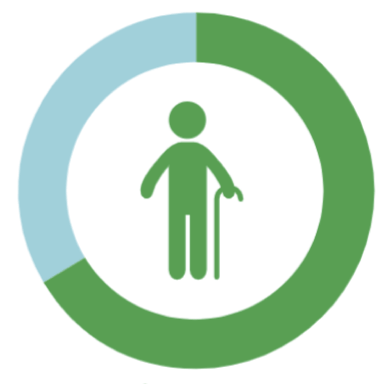
69% senior

29% have children
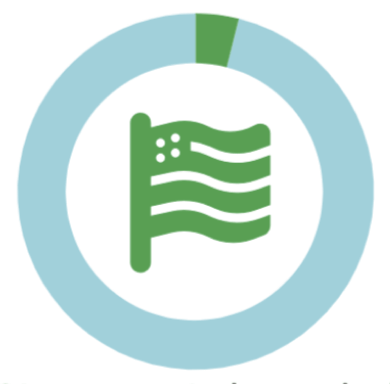
4% veteran in household

68% female
46% have a disabled person in their household
38% of those with children are single parents

2% unhoused
Inclusive of households for whom we have demographic data

It takes an entire community to power this work, from partners who are co-leaders in addressing food insecurity and who know their neighborhoods and understand what their communities need, to volunteers who sort, pack and deliver enough food for over 1 million meals every week. They are critical in ensuring our participants have access to the food they need.
“Food is a basic need. I think everyone should have access to food and it's important to me to be able to support that. What gives me hope is places like this where we have a solid group of people who all are so excited about this. We see a need, we want to get involved.”
Volunteer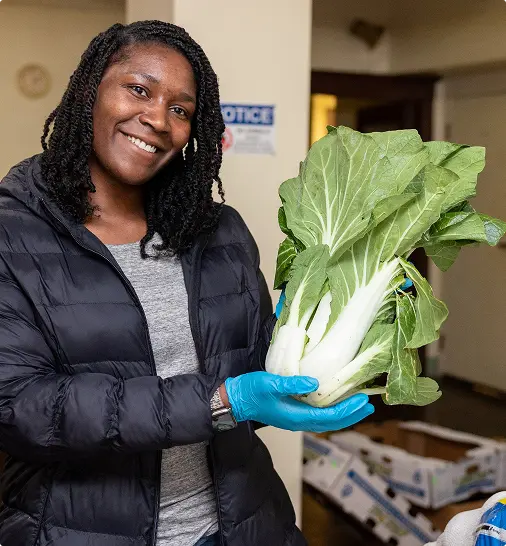
Last year, volunteers worked
shifts, totaling nearly 140K hours
partners supported with volunteer recruiting
Together, nearly
meals worth of food was shared with the community
"Right now, the San Francisco-Marin Food Bank is our only source of fresh fruits and vegetables. We appreciate being a Food Bank partner. We would not be able to serve 450 families every Friday without this partnership."
Distribution Coordinator, Homeless Prenatal Programcommunity partners work alongside us to serve our communities
In fiscal year July 1, 2024-June 30, 2025, the San Francisco-Marin Food Bank focused on moving from pandemic emergency response to new ways to provide food access and services. With your support, we’ve built a financially sustainable Food Bank that can serve our community for years to come.
As planned, we closed our pandemic-era Pop-Up Pantry (PUP) program in June 2025 after operating for five years, due to cuts in government funding and our commitment to ensuring a balanced budget in years ahead. The closure of PUPs resulted in cost savings with a reduction in staffing, food, and other program expenses. The closure, unfortunately, also meant reducing the number of households we served compared to those served during the pandemic.
Our financial position is strong, with support from our donors, in-kind food donations, and some government support (both cash and food commodities), making up the bulk of our revenue sources. While our FY25 financials show a deficit of $1.2 million, which is less than 1% of our total expenses, this is not a cash deficit but reflects that we distributed more donated food than we received within the fiscal year, drawing down inventory we had built up the prior year.
Overall, total revenue decreased about 10%, due to the loss of government funding for pandemic programs and a reduction in the per pound valuation of donated food. This decrease in the valuation of donated food was the driving factor in total expenses being down about 3% from the prior year.
As we prioritize the strong stewardship of the financial and in-kind contributions we receive, there are significant challenges ahead to navigate. Federal cuts to food commodities and food security programs are impacting our community, the households we serve, local farmers, and local economies. And SNAP cuts threaten critical nutrition assistance for thousands of San Francisco and Marin families, driving fear and increased demand for our services. All of this is occurring as rising costs continue to strain household food budgets and our operations alike.
When food prices rise (and they’ve tripled since the pandemic), when federal funding gets cut, or even when we see a chance to buy food at an affordable price, your general support lets us respond. This is why your donations and contributions matter so much. The need for our services keeps growing, but so does our ability to meet it, because of your support. We remain on track for financial sustainability this year and are deeply grateful for your partnership.
Respectfully,
Financial Statement
Funding Breakdown
Revenue
Donated Food and In-Kind Contributions
$ 83,892,163
Government Food Commodities
$ 30,612,469
Government Grants
$ 8,891,065
Private Contributions Including Events
$ 41,804,596
Other Revenue
$ 4,553,389
Total Revenue*
$ 169,753,682
* The value of donated food is included in the dollar breakdown but not the percentage breakdown.
Expenditures
Expenses
Program Services
$ 159,376,335
Management and General
$ 4,018,500
Fundraising
$ 7,587,774
Total Expenses
$ 170,982,609
Total Net Assets
$ 121,547,006
Board of Directors
Jonathan Walker, PhD (Chair)
Retired, Former President,
Economists Incorporated
Pepe Gonzalez (Vice Chair)
Director of Community Partnerships,
San Rafael City Schools
Alok Agrawal
Managing Director & CEO,
Agrawal Capital LLC
Jessica Berg
Co-Founder and Principal,
BergDavis Public Affairs
Noelle Bonner
Chief Executive Officer,
Bonner Communications
Dianna Cavagnaro
Founder & CEO of Hesper,
Founder & CEO of Z’est La Vie
Ashley Cheun Sridhar
Senior Executive Recruiter,
Meta
Cynthia Gaylor
Strategic Advisor
Çigdem Gencer
Executive Coach and Founder,
Fazilet Consulting
Randy Gottfried
Finance Consultant
Mary Herald
Retail Executive and Consultant
Ansaf Kareem
Partner, Lightspeed Venture Partners
Horace L. Montgomery Jr.
Assistant Executive Director of Programs, Associated Students,
San Francisco State University
Grace Park
Senior Commercial Counsel,
Sila Nanotechnologies Inc.
Rabbi Stephen S. Pearce, PhD
Congregation Emanu-El,
San Francisco
Barbara Rosston
Non-profit and Educational Consultant
Beth Roy Jenkyn
Pro-Bono Non-profit Consultant &
Community Volunteer
Joseph Saenz, PhD
Managing Director,
Fremont Group
Jeff Schoppert
Retired Lawyer
Hilary Seligman, MD
Professor of Medicine, UCSF
Tara Seracka
Chief Legal Officer,
Fastly Inc
Linda Shiue, MD
Director of Culinary Medicine,
Kaiser Permanente San Francisco
Uma Sinha, PhD
Chief Scientific Officer,
BridgeBio Pharma
Judy Young
Executive Director,
Southeast Asian Development Center

ONTO
2026