Reflections On Being in Service to the Community

February 26, 2026

Ending hunger takes more than food. It takes trusted partners who know their communities and show up for them week after week. For Black History Month, we’re spotlighting three partners whose service to their neighbors is also a reflection of the Food Bank’s mission and commitment to the leadership of our partners in providing community-led solutions to hunger. 

Shanell Williams, Rafiki Coalition for Health and Wellness 

In partnership with the Food Bank, Rafiki Coalition for Health and Wellness recently opened a Community Market at Umoja Health Access Point in Bayview Hunters Point. Resembling neighborhood grocery stores, Community Markets let participants choose the proteins, produce, and culturally relevant foods they bring home, and are open multiple days each week. The program centers on respect for participants and the power of choice. It also connects them to behavioral health, wellness, and other supportive services that address the root causes of hunger, all under one roof. 

For Shanell Williams, Rafiki’s executive director, food is an entry point for overall well-being. “To really be healthy, it’s not just one domain,” she says. “It’s making sure that folks have access to mental wellness, complementary medicine, supports for chronic health conditions. And food is a big part of that.” 

Bayview Hunters Point has long been a food desert, and Shanell sees Community Markets as a direct response to that history. “What we love about the community food market is that it’s open access, low barrier, and it’s also about dignity,” she says. “Just because folks are needing to access services doesn’t mean we lose that piece around dignity.” 

Shanell grew up in the Fillmore, San Francisco’s historic Black neighborhood known as the Harlem of the West. Her community-focused leadership journey includes community organizing serving eight years on the San Francisco Community College Board and a decade at UCSF as the Director of Community Engagement and Partnerships at the school’s California Preterm Birth Initiative program. At Rafiki, she hires from the community and builds career pipelines for the people who do the work alongside her. She calls them “PhD doers,” honoring their lived expertise. “It’s really for me about community empowerment,” she says. 

Chester Williams, Community Living Campaign 

Shanell’s work connects people to food and services in one place. Chester Williams brings both directly to people’s doors. 

Every week, the Community Living Campaign (CLC) helps get bags of fresh groceries to roughly 140 elderly neighbors who can’t get to a pantry on their own. The Food Bank supplies the fresh produce and groceries. Meals on Wheels San Francisco provides the operational space. And Chester’s team of volunteers packs the bags and delivers them door to door.  As Bayview food coordinator for CLC, Chester has spent more than a decade coordinating home-delivered groceries for seniors across Bayview, Visitacion Valley, Parkmerced and Lakeview.   

Chester grew up in the Fillmore. He’s Catholic, raised in a tradition of service and commitment to the common good at St. Dominic’s and Sacred Heart. That foundation carried him from teaching elementary school to directing a community technology lab to His delivery routes today reach seniors who speak Cantonese, Mandarin, Spanish and other languages. For Chester, making sure every participant feels understood and cared for is the whole point. “I grew up with that feeling of you need to help others no matter who,” he says. “After a while, it’s not even a job anymore. You just automatically put that in.”  

Veronica Shepard, San Francisco African American Faith-Based Coalition 

Chester serves individuals one door at a time. Veronica Shepard mobilizes entire congregations. 

When Veronica and a colleague conducted food security screenings at Black churches across San Francisco, the results were stark: congregants were going hungry, and their pastors had no idea. “These pastors learned their own congregants were hungry and they were blown away by the results,” Veronica says. “Food is relative to everything. You can be unhoused, but you still got to have food.” 

That discovery united faith leaders across the city. In 2016, Veronica formed the San Francisco African American Faith-Based Coalition, bringing pastors, ministers and leaders from across denominations together around the urgency of food insecurity. The coalition impacts some of the city’s most vulnerable populations (Black/African American, Pacific Islanders, Latinx, Black and Middle Eastern Muslims) which have been   partnered with the Food Bank for the past six years. 

Each December, the coalition produces Feeding 5,000, a holiday food distribution that has brought food to more than 22,700 households since the pandemic. But the work continues year-round. “Hunger is not just a holiday event,” Veronica says. “Hunger is every day.” 

Veronica is a native San Franciscan and grew up in the Bayview Hunters Point Neighborhood during the civil rights movement, and she carries that history with her. 

 “I know there’s strength in numbers,” she says. “Just like then, we’re working to make justice happen today.” She reflects on Dr. Martin Luther King Jr.’s speech to the Medical Committee for Human Rights, in which he stated, “injustice in health is the most shocking and the most inhuman.” 

Veronica emphasizes that hunger is merely a symptom of a much deeper ailment.  

“If we don’t address the root cause of hunger, which is poverty,” she explains, “we are failing to confront the structural injustice that keeps our community in a cycle of need. Without addressing the underlying poverty, the cycle of inequity remains unbroken.” 

Looking Ahead 

The Food Bank works with 265 community partners across San Francisco and Marin to end hunger. The works of Shanell, Chester and Veronica reflect what that partnership looks like when antihunger efforts are led by those who know their community best. We are grateful to walk and work alongside them. 

Listening, Connecting, Supporting: Meet the Peer Navigators at Western Addition Community Market

January 22, 2026

Peter helps participants connect with housing assistance and other city resources.

Peter and Annette have been married for 37 years. Their biggest piece of advice? 

Listening. 

“Listening,” says Annette, “is key.” 

It’s also one of the keys to the couple’s success as Peer Navigators at the Western Addition Community Market, where they’ve spent the past three months getting to know participants and connecting them to resources that address the root causes of hunger. 

The couple has been volunteering with the Food Bank for four years, initially through their church, Cornerstone in the Mission. They live in the Castro but volunteer in Western Addition because they see the need across the city. When they saw the opportunity to become Peer Navigators, it felt like a natural next step. “The Community Market provides dignity — folks can come in and choose their items,” Peter says. “As Peer Navigators, we can offer something beyond food.”

Annette greets participants and connects them with supportive services.

A New Model for Food Access

Community Markets resemble grocery stores, where participants can shop for what they need, just like they would at a local market. Responding to community feedback, markets are open multiple days with extended hours, making it easier for people to access food at a time that fits their schedule. 

Last year, the Food Bank launched two Community Markets, supported the opening of a partner-run Community Market, and paved the way for more to open this year. Markets run by the Food Bank, like Western Addition, offer referrals and guidance from Peer Navigators, who use their lived experience to help neighbors find and access local services. 

“There are a lot of resources out there, but people don’t know where to find them,” Annette says. “Being a Peer Navigator means getting people the help they need. Attaching resources to food is huge.” 

Peter and Annette are just two of the Peer Navigators at Western Addition Community Market. 

Glenn went from policy advocacy with the FoodCARE Council to helping neighbors as a Peer Navigator.

From Policy Advocate to Peer Navigator 

Glenn first got involved with the Food Bank through the FoodCARE Council (Community Advocacy Resilience Equity Council), where people with lived experience of hunger learn to advocate for policy change. After working on systemic issues that impact the whole state, he saw the Peer Navigator program as another way to help at the neighborhood level. 

“San Francisco’s going through a difficult time right now,” he says, “and people are not aware of the resources available unless they sit down and talk to someone.” 

From Healthcare to Community Care 

Michael brings three decades of healthcare experience to connecting people with resources.

Michael brings three decades of healthcare administration experience to the work. He spent years helping patients navigate complicated medical systems at a large cardiology practice. When he read about the Peer Navigator program, he recognized the same challenge: people who don’t know what resources are available or how to access them. 

“A lot of people when they come in have one thing on their mind — to get the food and get back home,” he says. “But quite a few people will stop, take the time, and listen to what we have to offer.” 

Connecting Neighbors to Resources 

The Peer Navigator role takes research, quick thinking, and genuine listening. The team maintains contact lists with direct phone numbers for city resources, from utility assistance to job training programs. When someone only has a few minutes between shopping and catching the bus home, that preparation matters. 

“We take them inside, sit down, get on the phone to see what’s available,” Peter explains. 

Housing concerns come up frequently. Peter recalls helping someone whose name wasn’t on the lease. The landlord was trying to push them out. Peter and Annette sat down with them, wrote a letter on their behalf, and connected them with legal assistance. 

Meeting People Where They Are 

Not everyone who walks through the doors is ready to talk about needs beyond food. Annette recognizes the stigma some people carry about accessing support. But showing up consistently builds trust. 

“You’re not just talking to people, you’re encouraging them and supporting them,” Annette says. “Even if they don’t have interest right away, we encourage them to think about it for later or share with someone they know who might need it.” 

These connections are at the heart of the Community Market model. By pairing dignified food access with thoughtful, supportive services, the Food Bank is helping neighbors address not just hunger today, but the root causes that create it.  

Introducing Community Markets: More Than Food, A Path to Stability

January 5, 2026

Building from Experience  

Guadalupe Gonzalez, Bilingual Community Connections Manager at the San Francisco-Marin Food Bank, remembers what it was like to figure out complex systems on her own. 

Born outside Mexico City, Guadalupe moved with her family to the Bay Area when she was eight. Her parents spoke little English, so she enrolled her younger sister in after-school programs and helped the family manage daily life.  

“The help to get through these systems is often there,” she says, “but it can feel inaccessible and overwhelming to find without support from someone who’s been there before.” 

Years later, when her sister went to college, she thanked Guadalupe for paving the way.  

“Having someone to guide you through those processes makes such a difference,” Guadalupe says. 

Now, Guadalupe is bringing her own experience to the work of building out the volunteer-led Peer Navigation program for the Food Bank’s newly launched Community Markets. 

More than Food 

Community Markets are grounded in the belief that drives Guadalupe’s work and all of ours at the Food Bank: no one should have to struggle to access food, housing, or health resources. 
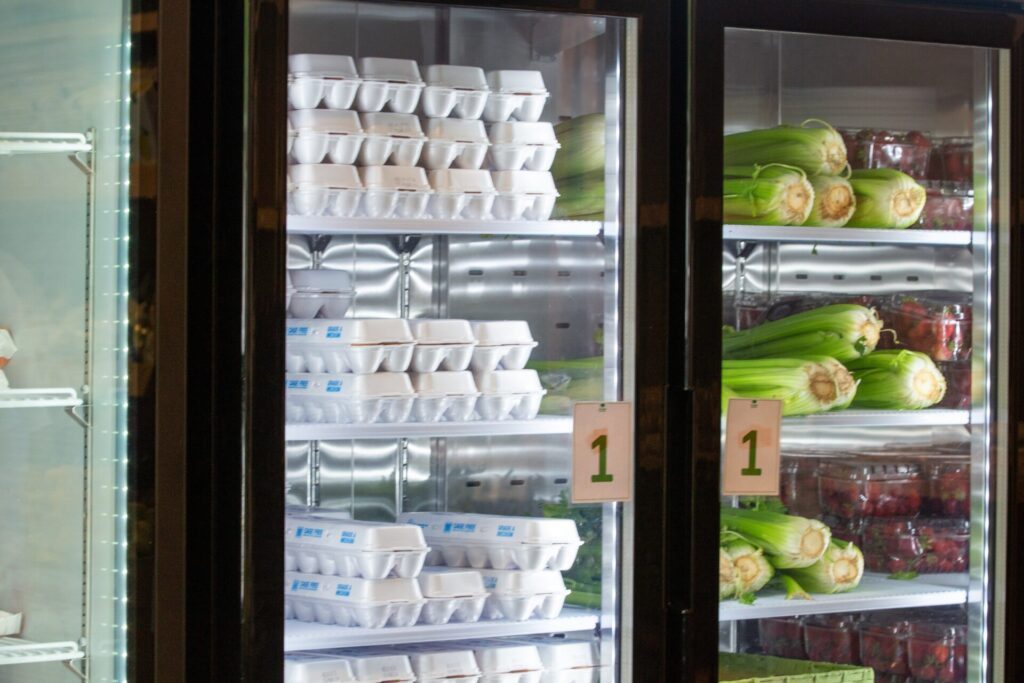
“Community markets are the next evolution of the food pantry,” says Adam Hoffman, the Food Bank’s senior program manager, direct service. 

Together with trusted community partners, the Food Bank is launching this innovative model to address hunger and its root causes. Designed to resemble neighborhood grocery stores, Community Markets let participants choose the proteins, produce, and culturally relevant foods they bring home, and are open multiple days each week. The program centers on respect for participants and the power of choice. 

“Here, you have the ability to choose the day that meets your individual schedule, and you can come any time during that day,” Adam says. 

Expanding Access 

Over the next year, the Food Bank and its partners will open eight Community Markets, some run directly by the Food Bank and others led by community organizations. 

Community Markets led by our partners are pairing food access with the other services they offer to create a more seamless experience for participants. And markets run by the Food Bank are offering referrals and guidance from Peer Navigators, trusted community volunteers who use their own lived experience to help neighbors find and access local services.  

“What makes the Peer Navigators program so powerful is that it’s built for the community, by the community,” Guadalupe says. “The web of services in San Francisco is so big and accessing them can be daunting. “Having someone who’s been through similar experiences and knows how to navigate these systems can make all the difference.” 

Two Food Bank-led Community Markets, China Basin and Western Addition, launched in June. And, El Colibri Community Market, operated by La Raza Community Resource Center in the Mission District, opened Aug. 15. 

Meeting Urgent Needs with Innovative Solutions 

Gabriel Medina, La Raza’s Executive Director, is grateful for another way to reach the neighbors who need it most. 

“Food is a fundamental doorway to our services,” he says. “In a community market, we can not only offer the basic groceries that we have here, but we can also offer more intentional space and connection to our case managers and other resources. Also, with this market, we can keep food a lot longer because it’s a dedicated space. We don’t need to move it, so it can stay here until the next day.” 

El Colibri expects to serve 1,000 participants weekly by the end of October. And, over the next three years, we have the goal of serving up to 4,500 households every week through Community Markets. 

With food insecurity at historic levels and critical supports disappearing, Community Markets are one way the Food Bank is stepping up to meet people where they are and help neighbors keep food on the table, even when times are uncertain. 

 “Community markets are so important, especially today,” Guadalupe says. “We want participants to feel like this is their market, their choice, and that they’re receiving the best quality items. We hope to build community, so participants feel safe and supported.”       


Holly Finds Food, Dignity, and Joy at the Community Market

November 24, 2025

A Bright Start 

Sunlight streams through the floor-to-ceiling windows of the Western Addition Community Market. The space is modern and welcoming, with the cheerful energy of a neighborhood bodega — energy matched by Holly. We met her as she moved excitedly through the aisles of produce and groceries, planning out what she would take home. 

“Some greens, applesauce, potatoes, carrots, eggs. Oh my god — peaches, nectarines, grapes,” she exclaims. “It is really a blessing to come here.” 

A New Way to Shop 

For six years, Holly has relied on Neighborhood Food Pantries for fresh produce each week, helping her avoid hard choices between paying bills or going hungry. When the Western Addition Community Market opened in July, it offered her a new way to shop. Now, Holly decides exactly what she takes home, how much, and when she picks it up. 

“It’s like shopping through Safeway,” she says, calling it “top-of-the-line food.” 

 Community Markets are open multiple days each week with flexible hours, making it easier for people to shop when it works for them.  

That flexibility matters to Holly, who is currently out of work and managing the ups and downs of her mental health. 

“You go in and everything is organized,” she says. “I’ve been to a lot of pantries, but this pantry here is the best. You walk through here and you pick what you want. You don’t just have to take it.” 

Simple Joys, Real Respect 

At the Western Addition Community Market, Holly savors the small, human moments of grocery shopping that many take for granted: tapping on watermelons and smelling ripe produce. 

“It makes me feel good,” she says. “You smell it and you know it’s fresh. It makes me feel good to be able to touch what I get.” 

For Holly, those simple acts restore dignity and a sense of normalcy for her in a period marked by unemployment and financial strain. The market helps ease her fears of hunger, giving her confidence that she can put meals on the table. Just as importantly, she values the respect she feels every time she comes to shop. 

“Even though I’m at my lowest right now, I feel like I have something,” Holly says. “They’re treating me with respect. Even though I’m not working, I feel respected. It’s dignity.”

Finding Nourishment and Community at El Colibrí Community Market

October 17, 2025

For Veronica, finding help has often meant navigating a maze of complicated systems without much support to guide her through.

When her daughter was diagnosed with cancer in 2021, those challenges deepened. After her daughter’s remission in 2023, the family left the hospital without work or housing. Soon after, Veronica was diagnosed with breast cancer. The gaps in the safety net became even clearer when even putting food on the table was no longer certain.

“I tried applying for CalFresh and was told my household income was too high, even though my husband is underemployed and I’m unemployed,” she said.

With so many needs and so few options, it was hard to know where to turn.

But then Veronica and her family got connected to the San Francisco-Marin Food Bank’s pantry at La Raza Community Resource Center, now known as Mercado El Colibrí. It became a steady source of stability for her family, a place where they could count on fresh groceries and friendly faces during difficult times.

“My daughter loves fruit — we almost always get lots of fruits and vegetables,” she said. “With the food I get from El Colibrí, I make her pan con pollo, a traditional dish from El Salvador.”

El Colibrí is one of the Food Bank’s new Community Markets, created with trusted partners like La Raza to make access to nutritious food easier and more dignified ,and facilitate connections to vital social services. This partnership helps ensure families like Veronica’s can find healthy food and a welcoming space whenever they need it most.

“I like being here,” she said. “It helps me socialize, make friends, and relax.”

Where Food and Connection Meet

Community Markets are reimagining what it means to access food with dignity. These welcoming, grocery store–style spaces make it easier for people to get the food they want and need, when it works for them. Open multiple days each week with flexible hours, each market offers fresh produce, groceries, and culturally relevant foods. Importantly, these community-centered environments couple access to healthy food with direct connections and referrals to vital immigration and social services. 

Lucia Ruiz, Senior Program Manager at the Food Bank, said Community Markets mark an important shift in how the Food Bank approaches ending hunger. “The model is more flexible and participant-centered,” she said. “It provides dignity and convenience by offering food alongside service navigation and referrals. When we talk about addressing the root causes of hunger, we have to think about how to lift people out of poverty. Combining food access with supportive resources helps make that possible.”

Eight Community Markets are planned to open over the next year, some operated by the Food Bank and the majority operated directly by our community partners. The first partner-led Community Market to open is La Raza’s El Colibrí in the Mission District. To mark its official expansion to multiple days of service  — increasing its capacity to serve more families — and the market’s integration of critical services directly available for participants, La Raza held a ribbon cutting ceremony to welcome all to Mercado El Colibrí. 

“With our new community market, we plan to serve up to 1,000 families weekly to provide healthy food and help them get the vital wraparound services they need, and all in one place” said La Raza Community Resource Center Executive Director Gabriel Medina. “Once our food seekers are here, not only are they given more choice, all of our food seekers can connect to services like immigration, both affirmative and defensive, citizenship naturalization, women’s support groups, diaper bank, case management. It’s a concept our families sorely need more of.”

The event included remarks from community members and the Food Bank. “We are grateful to partner with La Raza Community Resource Center,” said Noriko Lim-Tepper, Chief Officer for Strategic Partnerships, Advocacy & Voice. “We celebrate La Raza’s Mercado El Colibrí as not only a resource providing access to healthy food but a center for vital services for our community.”

Essential to the vital resources available at Mercado El Colibrí is the concept of community, which is a foundation for Veronica. What began as a source of help during an especially dark time has become a place of belonging and where she now volunteers every week, welcoming others with the same warmth she found there.

“When you are treated with respect, you feel welcomed,” she said. “Everyone deserves that.”