
Building from Experience
 Guadalupe Gonzalez, Bilingual Community Connections Manager at the San Francisco-Marin Food Bank, remembers what it was like to figure out complex systems on her own.
Born outside Mexico City, Guadalupe moved with her family to the Bay Area when she was eight. Her parents spoke little English, so she enrolled her younger sister in after-school programs and helped the family manage daily life.
“The help to get through these systems is often there,” she says, “but it can feel inaccessible and overwhelming to find without support from someone who’s been there before.”
Years later, when her sister went to college, she thanked Guadalupe for paving the way.
“Having someone to guide you through those processes makes such a difference,” Guadalupe says.
Now, Guadalupe is bringing her own experience to the work of building out the volunteer-led Peer Navigation program for the Food Bank’s newly launched Community Markets.
More than Food
 Community Markets are grounded in the belief that drives Guadalupe’s work and all of ours at the Food Bank: no one should have to struggle to access food, housing, or health resources.
“Community markets are the next evolution of the food pantry,” says Adam Hoffman, the Food Bank’s senior program manager, direct service.
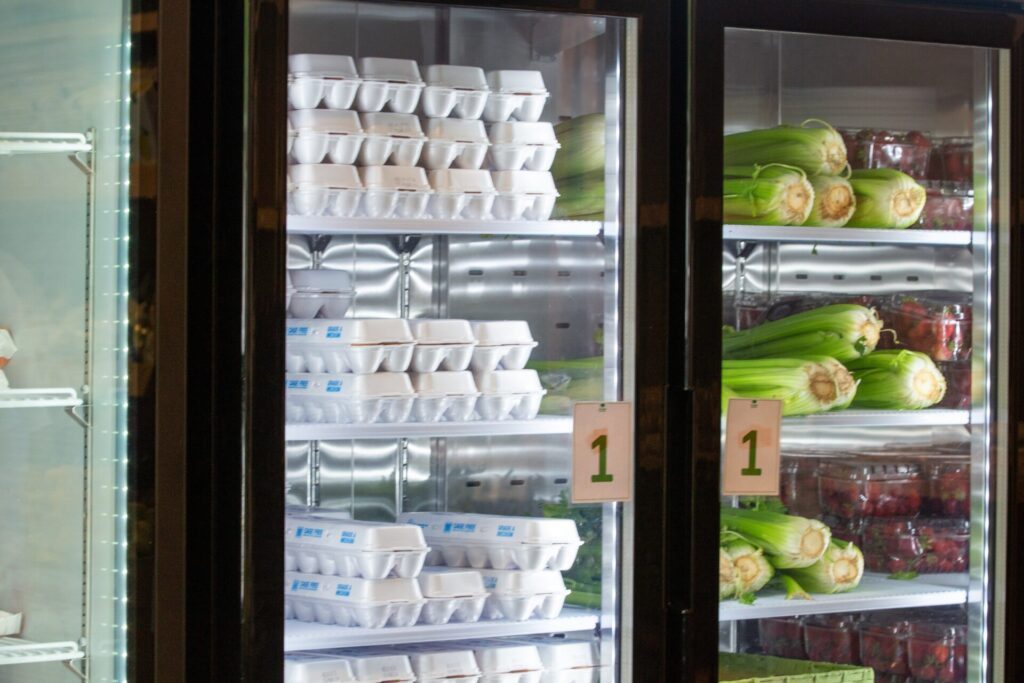
Together with trusted community partners, the Food Bank is launching this innovative model to address hunger and its root causes. Designed to resemble neighborhood grocery stores, Community Markets let participants choose the proteins, produce, and culturally relevant foods they bring home, and are open multiple days each week. The program centers on respect for participants and the power of choice.
“Here, you have the ability to choose the day that meets your individual schedule, and you can come any time during that day,” Adam says.
Expanding Access
Over the next year, the Food Bank and its partners will open eight Community Markets, some run directly by the Food Bank and others led by community organizations.
Community Markets led by our partners are pairing food access with the other services they offer to create a more seamless experience for participants. And markets run by the Food Bank are offering referrals and guidance from Peer Navigators, trusted community volunteers who use their own lived experience to help neighbors find and access local services.
“What makes the Peer Navigators program so powerful is that it’s built for the community, by the community,” Guadalupe says. “The web of services in San Francisco is so big and accessing them can be daunting. “Having someone who’s been through similar experiences and knows how to navigate these systems can make all the difference.”
Two Food Bank-led Community Markets, China Basin and Western Addition, launched in June. And, El Colibri Community Market, operated by La Raza Community Resource Center in the Mission District, opened Aug. 15.
 Meeting Urgent Needs with Innovative Solutions
Gabriel Medina, La Raza’s Executive Director, is grateful for another way to reach the neighbors who need it most.
“Food is a fundamental doorway to our services,” he says. “In a community market, we can not only offer the basic groceries that we have here, but we can also offer more intentional space and connection to our case managers and other resources. Also, with this market, we can keep food a lot longer because it’s a dedicated space. We don’t need to move it, so it can stay here until the next day.”
El Colibri expects to serve 1,000 participants weekly by the end of October. And, over the next three years, we have the goal of serving up to 4,500 households every week through Community Markets.
With food insecurity at historic levels and critical supports disappearing, Community Markets are one way the Food Bank is stepping up to meet people where they are and help neighbors keep food on the table, even when times are uncertain.
“Community markets are so important, especially today,” Guadalupe says. “We want participants to feel like this is their market, their choice, and that they’re receiving the best quality items. We hope to build community, so participants feel safe and supported.”
Share