
Food Policy Spotlight | Protect CalFresh/SNAP

February 13, 2019

Thousands of CalFresh (food stamp) recipients in our community are at risk of losing their benefits and going hungry. We need your help to protest proposed changes for SNAP/food stamp eligibility.

YOUR VOICE MATTERS

Will you take a moment right now to join us and voice your opposition to this harmful proposal?  We only have until April 2nd to step up and protect our neighbors before the rule can be considered final. By adding your opposition to the Federal Register, you’re letting the government know that you won’t support a rule that will increase hunger and poverty in your community.

This proposal would punish workers who are struggling to find steady employment by taking away their food assistance, which won’t help them find a better job or find work faster. Imagine your last job search.  Now imagine doing it on an empty stomach and no idea how you will pay for your next meal.

UNEMPLOYED AND UNDER-EMPLOYED NEIGHBORS AT RISK

The USDA recently announced a proposed rule that would cut off SNAP (Supplemental Nutrition Assistance Program) benefits for people who are struggling to find steady work. Regardless of how hard they are looking for work or how few jobs that match their skill sets exist in their area, they could become ineligible for SNAP- after just three months – if they are deemed “able-bodied working adults.”
The proposed rule could also hurt people who have jobs, like this CalFresh client from San Francisco:

“I have a job, but my boss cut my hours and I barely had enough money to make my rent. CalFresh allowed me to eat regularly over the past six months, and I wouldn’t have been able to survive without it.”

CalFresh can often be part of the solution to helping people who are in between jobs by helping them take care of a basic need like food while they are looking for work.  In fact, more than 80 percent of participants are working in the year before or after receiving the benefit, which suggests that it’s helping them stay afloat when they hit hard times.

 

A Letter from Paul

February 5, 2019

Over the years, I have seen time and again how much more expensive it is to buy and eat healthy foods. We live in a society that has created a very efficient prepared, packaged, and processed food industry that turns out very cheap and high-calorie products. So for our neighbors constrained by budget, produce, for example, won’t give the same bang for your buck as a fast-food “value meal.”

I’m so proud of the way our Food Bank community has stepped in to bridge this gap and increased access to high-quality food for all. Your generosity enables us to provide plenty of fresh produce in the mix of options that people find in our pantries. In fact, two-thirds of the food we distribute is produce and other high-protein foods, such as dairy and eggs.

Through our Nutrition Education program, we’re ensuring that neighbors know how to prepare healthy meals with the food we provide. We also encourage participants to make healthier choices long-term and offer tips for shopping for nutritious foods on a limited budget.

Our participants know they can count on us week in, and week out — not only for great food, but for the resources and information they need to make great meals. In the same way, the Food Bank relies on our monthly donors who provide consistent support, month after month, all year long.

Our monthly donors are such a gift to us because their consistent support provides the financial security we need to make long-term decisions such as expanding our facility in Marin. If you aren’t a monthly donor already, I encourage you to consider becoming one. All February long, Gilead Sciences, Inc. is generously offering to match all new and increased monthly gifts for a full year, up to a total of $125,000.

This year, with your support and the support of our monthly donors, we look forward to doing even more of what we do best: feeding people.

Thank you for your continued partnership in this work.

With gratitude,

Paul Ash, Executive Director,

San Francisco-Marin Food Bank

Food Bank ‘Mini’ Team Favorites: Sweet Potato Recipes to Warm Your Heart

February 1, 2019

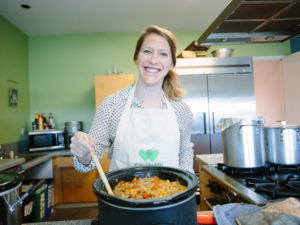
The Food Bank ‘Mini’ team lives to figure out-of-the-box ways of delivering fresh, nutritious food to our neighbors in need. In the spirit of the ‘minis’ scaling “Mount KilaYAMjaro”, we asked members of our Nutrition Education team to help us out with a few sweet potato recipes. They then pulled up a few delicious ideas from our friends at EatFresh.org.  Enjoy!

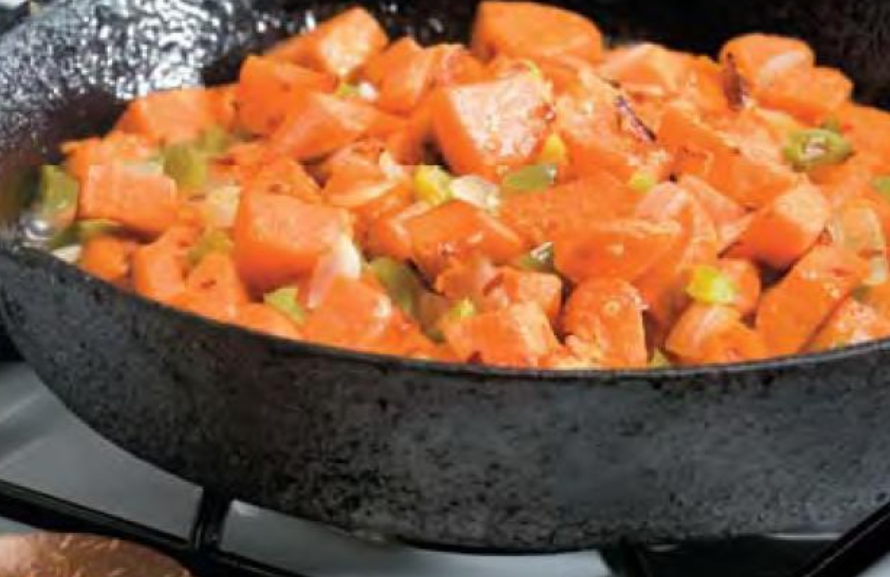
SWEET POTATO HASH

INGREDIENTS

¼ cup vegetable oil
2 cups frozen or fresh chopped bell peppers and onions
2 pounds sweet potatoes (about 2 medium sweet potatoes) peeled and cut into small cubes
1 teaspoon cumin
1 teaspoon salt
1 teaspoon red pepper flakes

PREPARATION

*Heat oil in a large skillet over medium-high heat.
*Sauté bell peppers and onions until tender, about 5 minutes.
*Add remaining ingredients and reduce heat to medium.
*Cook for 20 to 25 minutes, stirring every 2 to 3 minutes.  Sweet potatoes may begin to stick to the skillet, but continue to stir gently until they cook through.
*Serve while hot.

SWEET and SAVORY BURGER

INGREDIENTS

2½ cups Sweet potato cubed & peeled
2½ cups Onion chopped
3 Garlic cloves chopped
1 cup Oats
1 teaspoon Ground cumin
¾ teaspoon Salt
1 tablespoon Vegetable oil divided
6 Lettuce leaves
6 1.9 ounce whole grain buns
2 Tomatoes sliced
Nonstick cooking spray

PREPARATION

*Place sweet potatoes in a large saucepan; cover with water and bring to a boil. Reduce heat and simmer for 15 minutes or until tender. Drain.
*Heat a large nonstick skillet over medium heat. Coat with cooking spray. Add chopped onions and garlic and sauté 5 minutes or until tender.
*Place sweet potato, chopped onion mixture, oats, cumin, and salt in a food processor and process until smooth. Divide mixture into 6 equal portions, shaping each into 1⁄2-inch thick patties.
*Heat 1 1⁄2 teaspoons oil in pan over medium heat. Add 3 patties to pan and cook 4 minutes or until brown. Carefully turn patties over; cook 3 minutes or until brown. Remove cooked patties from pan, put on a plate and repeat procedure with remaining oil and patties.
*Place onto buns with lettuce, tomatoes and other condiments of your choice and serve.


Camp Fire Relief | Bay Area Food Assistance Continues

January 28, 2019

“I got up that morning at 8:30 and looked outside and it was pitch black,” said Jean Bauman, a retiree who lived in Paradise, California. “I went back into the bedroom and I said to my husband Jim, ‘You’ve got to get out of bed.'”

At first, Jim and Jean were hoping the Camp Fire would be contained before reaching their small home. What they didn’t know was that the raging inferno was devouring an entire football field of land every second.

IT WAS TOO LATE

An hour later, fiery chunks of debris were pelting the couple’s home. When it was all over, they were left with nothing but their brick chimney and charred sludge and debris. “We lost fifty years of everything in that house,” Jean said. “It’s numbing.” The couple is now navigating insurance to begin rebuilding their house and their lives.
Help has arrived in the form of weekly food distributions, bolstered by weekly deliveries from Bay Area food banks that have been providing tons (literally) of fresh groceries every week.

“We had a suspicion that once things settled down in Paradise, that the community was going to need some food assistance,” said Barbara Abbott, Food Resources Director at the Food Bank.  “The call eventually came in December, and we have been sending full truckloads of fresh produce, protein, beverages and snacks ever since.”

THANKFUL FOR FULL BELLIES

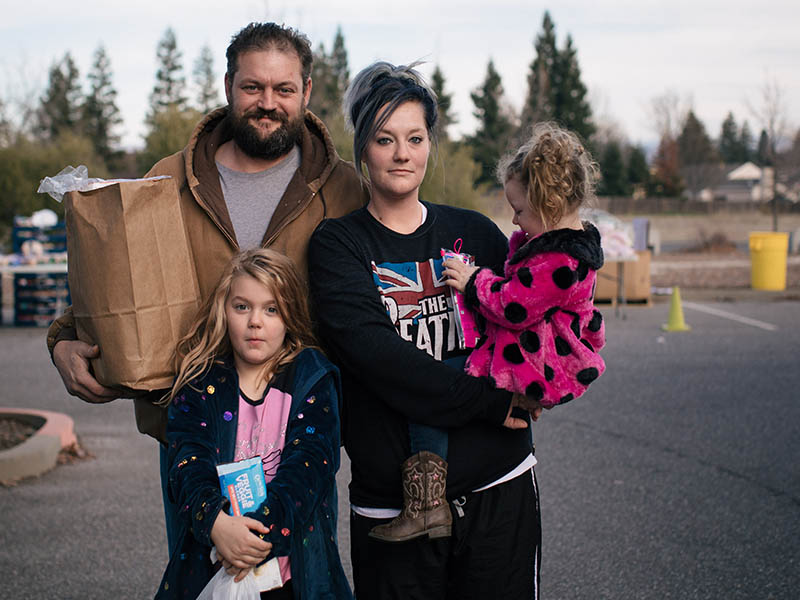
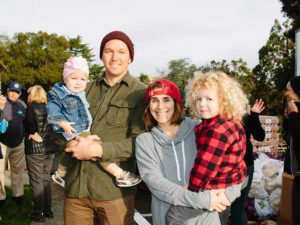
The food assistance is starting to make a difference, helping people like Martin and Ashley feed themselves, as well as their two young children, Lilliana and Rylee.

Martin moved his family from Kansas to Paradise to help with his ailing mother after she recently suffered a stroke. And while the family didn’t lose any property in the fire, they did lose stability. Martin was due to start a logging job the day the Camp Fire started. Logging jobs have since dried up and now the family finds itself visiting the food distribution site in nearby Chico to help provide nourishment until things get better.

“The food got us through,” Ashley said. “It’s been filling in the gaps.”

While Martin hasn’t found a job yet, he’s still searching every day and he’s confident he’ll find something soon.   “It’s a lot easier to go to sleep and focus on finding a job when you know your kids aren’t hungry,” he said. “We’re thankful for having full bellies.”

Home-Delivered Groceries Foster Connections, Community

January 25, 2019

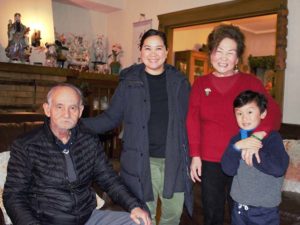
It’s a chilly Thursday evening when Samantha and her 7-year-old son, Taye, are climbing the stairs in a multi-story apartment building in San Francisco’s Richmond District. They’re here to deliver a bounty of fresh food to the Pham family – part of the Food Bank’s Home-Delivered Groceries program. And yet, the food is just part of the equation. Their knock on the front door is followed by a warm greeting, smiles, and hugs all around.

Longtime San Francisco residents, Mr. and Mrs. Pham have come to think of Samantha and Taye like family. The Phams grew up in China and Vietnam and moved to the United States after the Vietnam War. The couple settled in San Francisco, and Mrs. Pham says she has always enjoyed how welcoming and accessible the city has been for them.
Long retired, Mr. Pham has limited mobility and rarely leaves their second-floor apartment. Mrs. Pham also has trouble moving around, after suffering a debilitating back injury during the war. Despite these hardships, the Phams stay positive, and appreciate the friendly conversations and nutritious food that Samantha and Taye bring to their doorstep every week.

“For me, it’s very hard to get outside and go to the store, so we are very thankful that this food is brought to us. And, we always look forward to seeing Taye and Samantha every week,” said Mrs. Pham, beaming at Taye, who during this evening’s visit had joined Mr. Pham in his favorite chair.

Major Milestone for Home-Delivered Groceries Program

In December, the Food Bank’s Home-Delivered Groceries Program made its 250,000th delivery. To mark this milestone, San Francisco Supervisor Sandra Fewer joined us and our partners from Richmond Neighborhood Center and Richmond Senior Center to pack groceries for the Pham family and many other HDG recipients.

“Food security is a critical part of what makes and sustains a healthy neighborhood,” says Supervisor Fewer. “This dynamic Home-Delivered Groceries program allows seniors, the fastest growing population in the Richmond District, to age-in-place with community support.”

Founded in 2011, the Home-Delivered Groceries (HDG) Program serves 1,998 homebound seniors and 467 adults with disabilities in San Francisco every week. The program aims to provide nutritious food to vulnerable neighbors, as well as reduce loneliness and foster connections among community members.

“For thousands of homebound residents in San Francisco, a weekly knock on the door brings not only a delivery of fresh groceries but a friendly visit and some human contact with people who don’t get outdoors very much,” says Jillian Tse, Program Coordinator for the Food Bank.

The Power of Partnerships

The HDG program is funded by San Francisco’s Department of Aging and Adult Services (DAAS). Fourteen faith-based and community-based organizations coordinate volunteers and staff to make weekly deliveries. The Food Bank provides nearly 25 pounds of food (on average) for every recipient weekly, including chicken, pasta or rice, and fresh, seasonal produce. The food is tailored to the nutritional needs of seniors and people who are less active because of mobility challenges.

This program is needed now, more than ever, as the population of seniors in San Francisco continues to grow. In 2016, older adults comprised 20% of that population but are projected to rise to 26% by 2030.

Food Bank Helps Furloughed Workers, Coast Guard Families

January 21, 2019

As the government shutdown continues, the San Francisco-Marin Food Bank is stepping up to assist furloughed workers, including U.S. Coast Guard members and their families who have gone weeks without a paycheck. The Food Bank operated a pop-up pantry on Saturday morning at Hamilton Field in Novato and provided free, fresh groceries to about 150 Coast Guard families.

Meghan and family

“The food being available here – such great food! – is just amazing. We are overwhelmed with thankfulness,” said Meghan, who came to the pop-up pantry with her husband, who serves in the Coast Guard, and their two young children. “With our kids being so young, I work just a few hours a week, so we rely on my husband’s income to cover most of our bills. Not getting his paycheck last week has already caused us a little bit of hurt. And the prospect of not getting the next paycheck is really scary. Because we’re saving some money on food, we’re able to cover our bills this month. Right now we are just hanging on to every dime, because we’re not sure how long this shutdown is going to last.”

Read thank you letters we received from the U.S. Coast Guard Rear Admiral Peter Gautier and the Coast Guard North Bay Spouses Club.

Click here to view photos from Saturday’s pop-up pantry.

Fresh Food for Families

The Food Bank delivered seven pallets of fresh food on Saturday morning- including whole chickens, fruits & veggies, and pasta and sauce – to help the Coast Guard families get through these lean times. In addition, our CalFresh (food stamps) enrollment team was on hand to help eligible families sign up for benefits. Because they have missed paychecks, many Coast Guard members could now meet income requirements for CalFresh.

The Coast Guard families in Novato held their own community food drive last weekend and collected thousands of pounds of nonperishable items, diapers, and cleaning supplies. The fresh groceries from the Food Bank’s pantry supplemented the distribution of these items.

Get Help

Are you a furloughed government employee who needs food assistance because of the government shutdown? We can help! Call 2-1-1 or visit www.sfmfoodbank.org/find-food to get connected with food assistance in San Francisco and Marin.

Give Help

With your support, we can continue to help furloughed workers and their families. Make a donation now.

In the News

CNN

San Jose Mercury News/East Bay Times – Food banks fill in for paychecks as shutdown drags on

Newsweek Magazine – Government Shutdown: Unpaid Federal Workers Are Now Turning to Food Banks To Feed Families

San Francisco Chronicle – Editorial: Crippled Government is the Threat Within

KQED – Bay Area Food Banks prepare to help feed local furloughed federal workers

Marin Independent Journal – Coast Guard Families Tread Water

SF-Eater – Food Bank Hosts Massive Mobile Pantry for Unpaid Coast Guard Workers

Paul’s Secrets for Great Super Bowl Chili

January 21, 2019

It’s a sure bet many people will be glued to their couches and barcaloungers come Super Bowl Sunday. But it’s not just about the football, and those clever, multi-million dollar commercials.  Super Bowl Sunday is also a time to enjoy food, from chips and dip to buffalo wings and everything in between.

For many years, Food Bank Executive Director Paul Ash has cooked up pots of homemade chili for employees to enjoy in the lead up to the big game. Paul has dusted off his favorite recipe, and is willing to share it with the world once again.  Enjoy!

Tips to Make the Tastiest Super Bowl Chili

  • Start with your favorite chili recipe.  The Best Chili Ever Recipe” from www.seriouseats.com is a great place to start.
  • Use fresh chili peppers when possible. Canned chilis are good, but if you can go with fresh chilis, I think they make the overall product taste better. They also give the dish some color.  I like to use jalapeños to add a little heat. If you’re looking for something spicier, consider adding some serannos or even habaneros.
  • Toast and grind. Another personal touch is to toast your spices in a hot frying pan, just until fragrant.  I use a mortar and pestle to freshly grind some of the spices when I can. Things like cumin, coriander, and chili. Again, if you have to use packaged spices, you’re still going to be ok. I’ll add a little bitter chocolate to the mix as well, again to taste.
  • To soak or not to soak? I tend to favor Texas-style hearty meats and big proportions, but I add beans liberally. And contrary to common practice, I do not soak the beans in advance – I do a quick simmer for an hour and then add them to the concoction.
  • Listen to your taste buds.  I’m a big ad-libber and mostly look at recipes for the ingredient lists.  I pretty much mix and match and vary the quantities, tasting and adjusting the quantities of salt, chili peppers and other spices as I go. My taste buds are my most important measuring spoon.
  • Refrigerate overnight before feasting.  If you can possibly wait, make your chili the day before and refrigerate it overnight, which allows the flavors to meld together. It’s been my experience that the chili is always better the second day…and the third day too!

The best part of the experience is heating up the chili the morning of the big meal, dishing it up to friends and family, and seeing smiles on their faces when they take that first bite. Having a bevy of toppings at the ready is a nice touch too. Things like grated cheese, diced onions, and sour cream will add to the overall presentation.

If you’re looking for a vegetarian-friendly chili recipe, Food Bank Nutrition Education Program Director Molly Burke recommends this delicious Vegan White Bean Chili recipe from our friends at www.eatfresh.org.
Morning Snack Program Reaches Far in West Marin

December 26, 2018

When the Food Bank truck pulls up to Tomales Elementary School in western Marin County each week, a group of 7th and 8th graders help the principal, Amanda Mattea, distribute food to all the classrooms. It’s part of the Food Bank’s Morning Snack Program which serves nearly 4,700 wholesome snacks to 20 schools throughout San Francisco and Marin each day — foods such as fresh fruit, carrots, and string cheese, giving kids the fuel they need to learn.

Additionally, the Food Bank’s Healthy Children Pantries provide low-income parents with fresh produce, lean proteins, and pantry staples to prepare nutritious meals at home. These pantries are conveniently located in public schools, giving parents easy access to nutritious food as they drop off or pick up their children.

With these two programs, the Food Bank is making a dent in childhood hunger. Hungry children are often tired, have trouble concentrating, and are likely to fall behind in class. They tend to have weaker immune systems, putting them at greater risk of illness. And studies show that kids who grow up hungry or malnourished are not as well prepared for success.

Healthy Snacks Spur Conversations about Healthy Eating

Educators see a big difference when students have enough to eat. “Children’s basic needs must be met before we can even talk about learning,” says Principal Mattea. “Your body needs to be taken care of, and you need nutritious food to eat.”

For the Tomales Elementary children, their bus ride home can take as long as an hour in this rural area of west Marin. So instead of being distributed as a morning snack, Tomales Elementary School distributes snacks from the Food Bank in the afternoon so kids can stay full on their long bus rides home.

Having a filling snack tides them over until dinner so they can do homework and play. “Our kids’ favorite snack is fruit,” says Principal Mattea. “The other day, they were very excited to get oranges, and we talked about all the ways to eat an orange, from orange juice, to fruit salad. It spurred some great conversation about different kinds of snacks and healthy eating.”

Tackling College Hunger | Annie’s Story

December 20, 2018

Some college students talk about the “Freshman 15,” and gaining weight when starting school. But for other students, the financial burden of tuition and books often means going hungry.  In fact, the US Government Accountability Office released a report recently that quantifies how large a problem college hunger has become.

Annie is one such student who struggles to feed herself many weeks out of the year. She’s studying at UCSF for a health care career and utilizes the Food Bank’s campus pantry. “The market has revolutionized my routine,” says Annie. “I exclusively get my food here. I’m eating healthier and wouldn’t be getting my fruits and veggies otherwise.

“Food insecurity is very real if you don’t come from a family that can provide you with a weekly stipend. Having all this debt, you’re kind of in crisis mode all the time. Many students only eat one meal a day. You can’t study; you’re stressed out all the time; and it has traumatic effects on your body.

“I am undyingly grateful to the Food Bank donors. Because of your generosity, I’m able to eat healthier, take care of myself, and give back by caring for patients. Thank you for investing in my health, so I can invest in the health of others.”

Advocacy Update | No Changes to Public Charge

December 6, 2018

Imagine if you were asked to choose between putting food on your family’s table today or receiving a green card to secure a future in the U.S.  What would you do? 

That the choice facing thousands of our immigrant neighbors – including Food Bank participants because of proposed changes to federal “public charge” rules which could penalize people seeking residency or citizenship for accepting CalFresh (food stamps).

Our Food Bank is working alongside a broad coalition of advocates, community organizations, and elected officials, to coordinate an incredible outpouring of comments and concerns.

Before proposed “public charge” rules are finalized, the government must review and respond to every unique public comment about the proposed regulation. To date, 116,000 comments have been submitted by concerned and engaged people just like you.

What Is “Public Charge”?

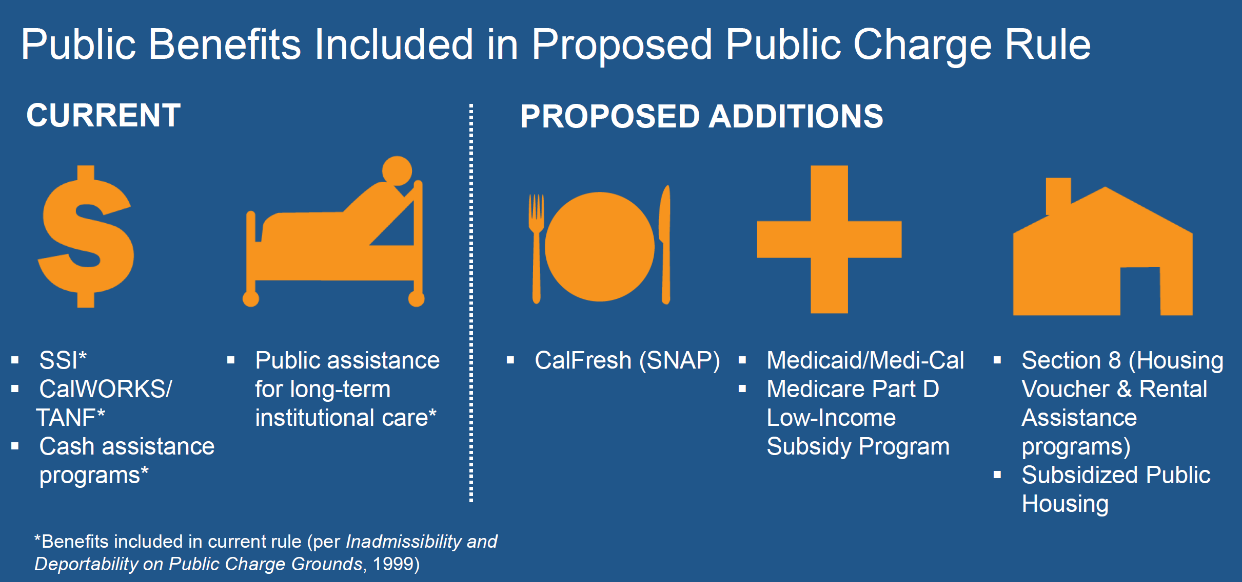
The “public charge” test is designed to identify people who rely on the government as their main source of support. It’s used to deny  lawful permanent residence or “green card” status. On October 10, the Department of Homeland Security proposed changes to exclude anyone who is likely to use certain health care, nutrition (including SNAP/CalFresh) or housing programs in the future. The proposed test adds specific standards for income, health, age, family size, assets, and English proficiency, and expands the forms of public assistance that are counted in a “public charge” determination.

Fig. 1 Changes in Public Benefits included in Public Charge Rule[1]

Public Charge Fear Fuels Hunger

An estimated 20,000-44,000 people in the Bay Area may forgo CalFresh (food stamps) benefits because of the proposed changes, according to recent research from the UCLA Center for Health Policy Research. That’s equal to a loss of benefits of between $32 and $74 million right here in our communities.  We know firsthand that this “chilling effect” is preventing immigrants from enrolling in CalFresh and even from attending our weekly food pantries out of fear.

[1] Ponce, Ninez, et al. “How Proposed Changes to the ‘Public Charge’ Rule Will Affect Health, Hunger and the Economy in California.” The UCLA Center for Health Policy Research, 7 Nov. 2018, healthpolicy.ucla.edu/newsroom/Documents/2018/public-charge-seminar-slides-nov2018.pdf.