
What’s the Farm Bill? How does it impact my neighbors and I? Why should I care?
Well, as our Policy and Advocacy Director Meg Davidson puts it: “Do you eat? Then you should care.”
Let’s dive into how the Farm Bill shapes our nationwide food systems, funds essential federal nutrition programs, and how you can get involved in advocating for continued support for the hunger-fighting programs our community relies on.
Food Bank (FB): So, what exactly is the Farm Bill?
Meg Davidson: The Farm Bill is a piece of legislation that serves as the federal government’s main tool for making sure the nation’s food system keeps running. It sets the priorities for both farming and the primary nutrition safety net programs for the next five years. The 2024 Farm Bill is being negotiated right now.
Think about the Farm Bill as a building with three pillars:
- The first pillar provides farmers with a safety net against the inherent ups and downs of agriculture.
- The second pillar is the nutrition safety net, helping Americans in need put food on the table.
- And the third focuses on the environment – protection of the water, air, and earth to ensure that farming isn’t doing more harm than good.
FB: As the Food Bank, how does the Farm Bill impact our work?
Meg: The Farm Bill funds federal nutrition programs like SNAP (Supplemental Nutrition Assistance Program), TEFAP (The Emergency Food Assistance Program), and CSFP (Commodity Supplemental Food Program), all of which are integral to the work we do. SNAP, aka CalFresh in CA, is a nutrition benefit program that helps one in nine Californians put food on the table. TEFAP is the USDA-supported method through which the Food Bank distributes 6 million meals to our neighbors every week. And CSFP is a program that helps 10,000 seniors in San Francisco and Marin stretch their budgets and nourish themselves.
FB: How are we pushing to make SNAP, and other benefits, stronger?
Meg: We’re looking to improve the adequacy of SNAP benefits by increasing allotment amounts and eliminating barriers for populations who need nutrition support – for example, college students and immigrants. We’re working to expand access to SNAP by removing administrative hurdles, like 3-month limits for working adults and restrictions on how SNAP benefits are spent.
We’re also pushing to reauthorize CSFP and increase funding for TEFAP, as we continue to see heightened levels of need in our community. For both CSFP and TEFAP, we want the minimum eligibility incomes raised to reflect the high cost of living in the Bay Area. And we’re pushing for continued TEFAP investment in BIPOC farmers and local economies.
FB: What would happen if SNAP benefits were cut?
Meg: SNAP benefits are incredible but inadequate. The amount of money that people get is not enough to meet all their needs. Four in 10 people who receive SNAP also go to food banks to supplement their food. So, it’s important that we don’t make SNAP even weaker, because food banks are already completely tapped out. We simply cannot take on more if we were to eliminate certain populations from being deemed eligible for SNAP. There would be millions of Americans who would be excluded from this critical safety net that helps them put food on the table.
We saw how reducing barriers during the pandemic made it easier for people in need of support to enroll in the program. We know what works, so let’s not go backwards.
FB: What is the pushback that these programs receive at the federal level?
Meg: There are a lot of stereotypes that affect lawmaker’s perceptions of programs like SNAP, CSFP, and TEFAP. For instance, there’s always pushback that we need to cut back on the eligibility for SNAP recipients in order to cut costs. But the reality is, SNAP is good for the economy, not just recipients: a recent USDA study estimated that every dollar in new SNAP benefits spent when the economy is weak and unemployment elevated would increase the gross domestic product by $1.54. And 80% of SNAP benefits are spent within the first two weeks of receipt, pumping money quickly back into the economy and generating more jobs.
FB: How can community members take action?
Meg: Start out by signing our petition and tell Congress to protect and strengthen SNAP. Adequate safety nets are the most effective way that we can prevent hunger and food insecurity in our community and ensure that our neighbors have a network of support when they fall on hard times. Then, make sure to sign up for our Advocacy Alerts, so you can stay up to date on timely ways to get involved.
It’s up to all of us to take action to end hunger in our community, so stay tuned for more ways to engage with the 2024 Farm Bill.


 Every other month, Alex is a steering committee member and also meets with the
 This partnership is crucial. We’re all working in specific areas and in many ways , which can sometimes make us work in a silo. But by broadening and expanding partnerships, as we do in the IRJ Work Group we can do so much more. As a trusted member we can share resources of other organizations, which gives immigrants more ease while they get back on their feet, and that to me is collective impact towards sustainability.
 Share this quote
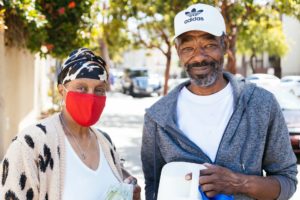
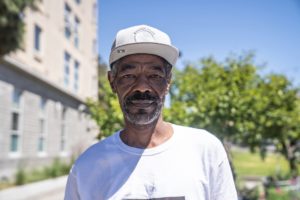 Cliffton: My biggest thing is for my people to get educated. What you know, they can’t take that away from you. If you want to stay in your community, you’ve got to find a way. Educate yourself on what City Hall is doing for your community, what you can do for your community. I’m helping set up the
  you’ve got good people around you, when you’re cooking, and you got people over and everything… take the food away, you got chaos. If you got a group of people together, bring
 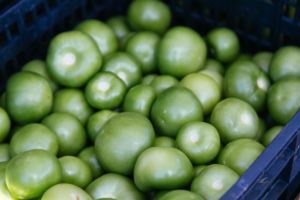 CROps is an effort to provide more culturally responsive foods and more choice for our Black and Latinx participants, By supplying culturally relevant items people like and know how to use in the kitchen, this pilot hopes to increase satisfaction with the food choices offered,
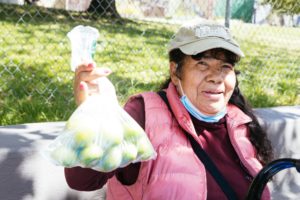 We also caught up with Maria at Cesar Chavez Pop-up Pantry, who is recovering from an operation on her stomach to remove a tumor: “I can’t eat out – my stomach is really fragile from the operation. Street food makes me sick. So, I need to cook at home, for my health.” New food and spice choices, like tomatillos and oregano, allow Maria to make comforting foods that aid her recovery.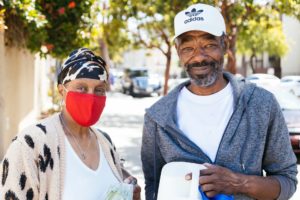
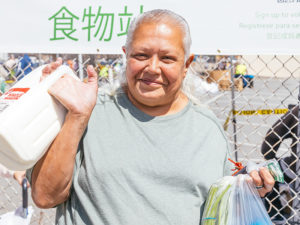 the past 40 years, and understandably, she’s seen the city change a lot in her time here. “When I came here [in the 80s], you could buy a thousand wonders for $50. You could fill the refrigerator for at least a month [for $50]. Now, everything is so expensive. There are times when there’s not enough to buy food. It’s terrible.”
 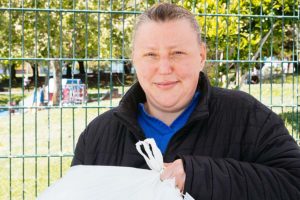 now, Anna is working anywhere from six to seven days a week as a nurse at Highland Hospital, and teaching UCSF nursing students as well. She stops by Cesar Chavez Pop-up Pantry to pick up food for her parents on her one day off.
Share