
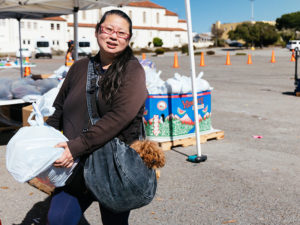
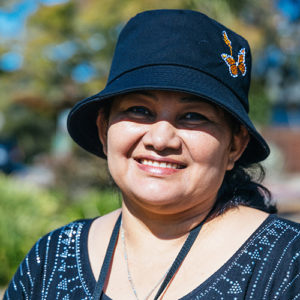
 With her rescue dog Charlie slung over her hip in a crossbody bag (she says, “my passion is, I love dogs”), Cilla Lee was hard to miss at the Stonestown Pop-up Pantry where we met. And as she talked, three things became apparent: Cilla is a woman with a lot of ideas, a lot of drive, and a lot of herself to give. A San Franciscan since the age of five, she says that the pandemic “made [her] step up” when it came to supporting her community.
Buy-Nothing: Where It All Began
She’s underselling it a bit: Cilla took a leave of absence from her airline job so that others with less seniority could keep their jobs during the pandemic, which led her to the San Francisco-Marin Food Bank as a participant. Early in the pandemic, with nowhere to go and not much to do, she stumbled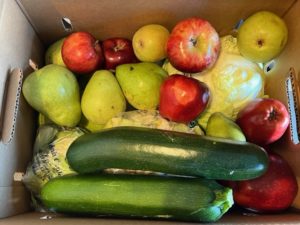 upon the concept of “Buy-Nothing Groups,” virtual and occasionally in-person communities where immediate neighbors exchange all types of goods, services and information– all for free, all from their own abundance, all as part of a “gift economy.”
“There wasn’t a Buy Nothing in my area, so I went ahead and started one up. I went through a crash training course and kind of figured it all out on my own. This whole thing about paying it forward was just because my mom was always helping people growing up. So, I just said, ‘This would be something my mom would do.’”
From Pastries and Prep Meals…
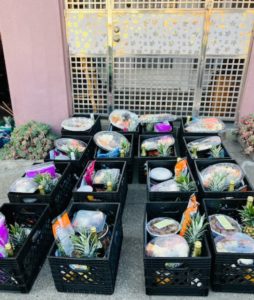 Cilla became the admin of the Outer Richmond Buy Nothing group on Facebook. While food isn’t often the primary focus of Buy Nothing groups, in the early pandemic, food donations started rolling in. At first, she started out by making baked goods and offering them up to add a little sweetness to her neighbor’s days.
“I started making prep meals to show people like, hey, it really wasn’t that hard — come on by and grab a couple of prep meals and pretend it’s a home dining experience. I was also trying to help my neighbors grab groceries. And now I have some volunteers, and they’re just amazing.”
Since those early days, it’s blossomed into something much bigger.
…To Fresh Grocery Sharing!
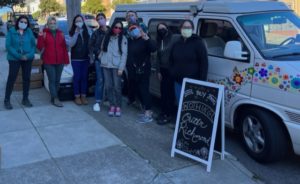
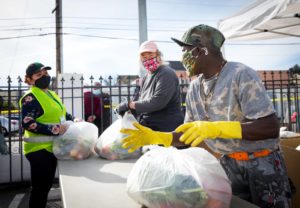
On the day we met at Stonestown, having already picked up groceries for her and her boyfriend, Cilla was collecting items from her fellow participants that they didn’t want. During the pandemic, the Food Bank had to pre-bag groceries for participants due to health mandates. Cilla’s efforts ensured those unwanted items didn’t go to waste by sharing them with her neighbors through their local Buy-Nothing group. While this isn’t a practice that is organized by the Food Bank — nor do we have any ability to regulate what happens with the produce once it leaves our distribution — we’re happy to see those with abundance sharing with their neighbors.
“I have people RSVP, so they line up, and then they just understand that you only take what you need,” Cilla shared.
Over the next several months, many of our pantries will transition back to farmer’s market style, where participants will take only what they need. But during the pandemic, it’s both understandable and admirable how grassroots community solutions developed to creatively prevent food waste. 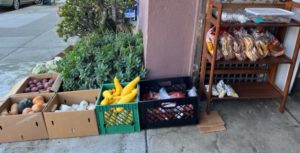
Personal Touches Make the Difference
As a small pantry operation, there’s a community building aspect inherent to the way it operates. Cilla says it’s not just her neighbors’ names and faces she’s come to know.
“I’ll remember which family likes what. There’s a Moroccan family that likes certain items; there’s a Ukrainian family that likes rye bread. And I do a group chat for the regulars that come pick up and for the volunteers. I’ll say, ‘Hey, this is what we got this week. Here’s some [recipe] ideas.’”
A Slice for You, A Slice for Me
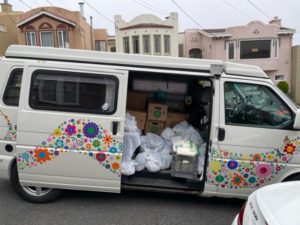
And neighborhood businesses even got in on the pantry distribution, with a local pizzeria offering fresh pies up to the Buy Nothing Group.
“As soon as my driver is on the way to go pick it up, I post it. That way people can claim the pizza as soon as it comes to my door,” Cilla explained. “Depending on how many people claim it, I’ll split it half and half, or I’ll split it three ways, so everybody literally gets a piece of the pie.”
Food is Community
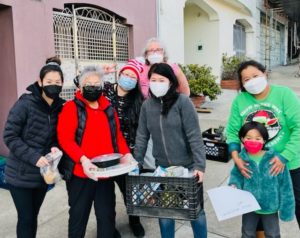 At the Food Bank, we’re grateful to learn from and be in partnership with people like Cilla, who use their knowledge of their neighbors to find hyper-localized, community-specific solutions and novel ways to fight hunger. Ultimately, like Cilla says, at the heart of it all is the gift of connecting with our neighbors– and food is a pathway to do just that.
“It’s uplifting, because you know that you have this community and that you have people that care about you,” Cilla told us, smiling. “Your family may or may not be here; they may be in the same neighborhood, or they may be out of state, but it doesn’t matter. You’ve got a support group.”

 Share this quote
Volunteer
Not everyone has time to start up a pantry - so come help out at a Food Bank-run food pantry!
Get involved
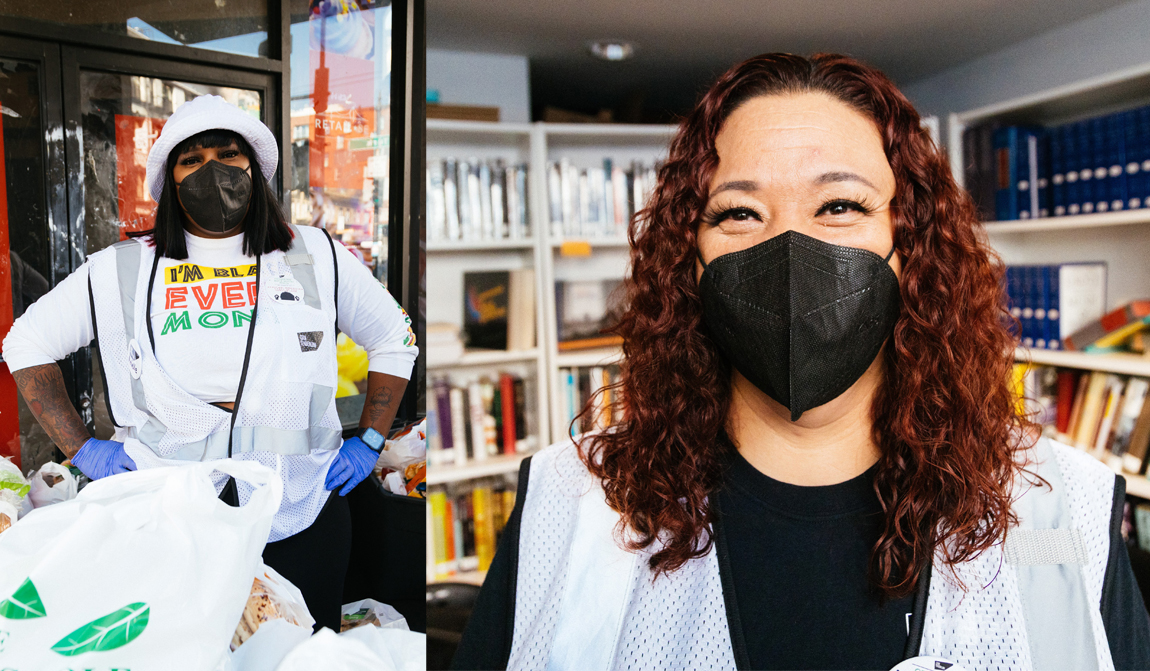
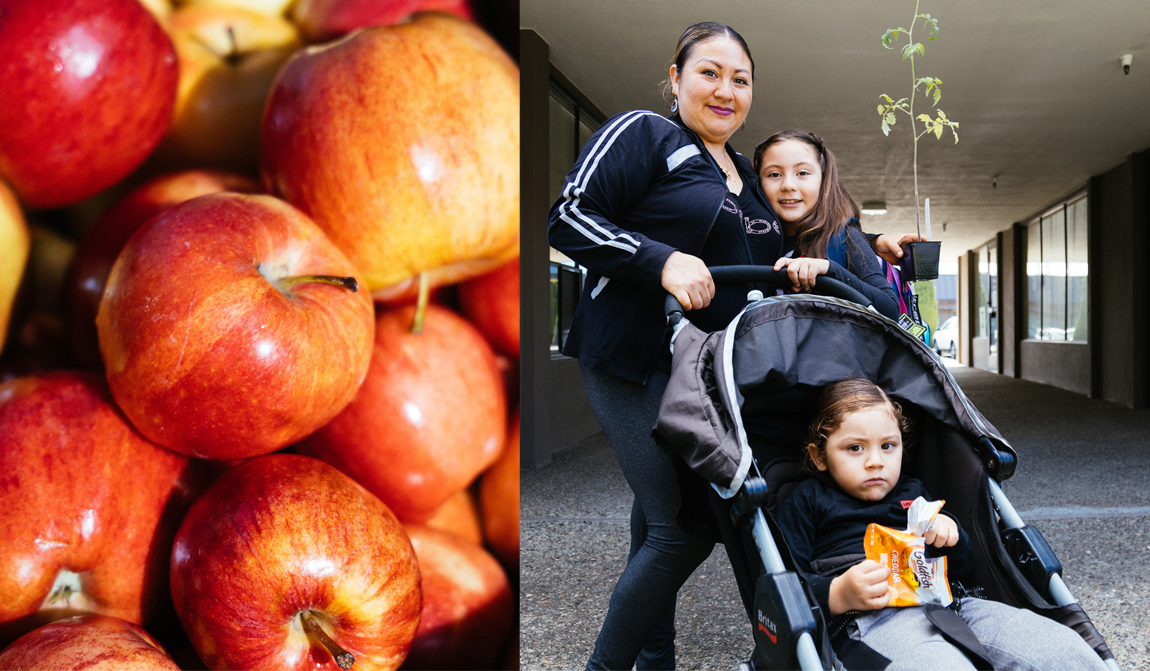
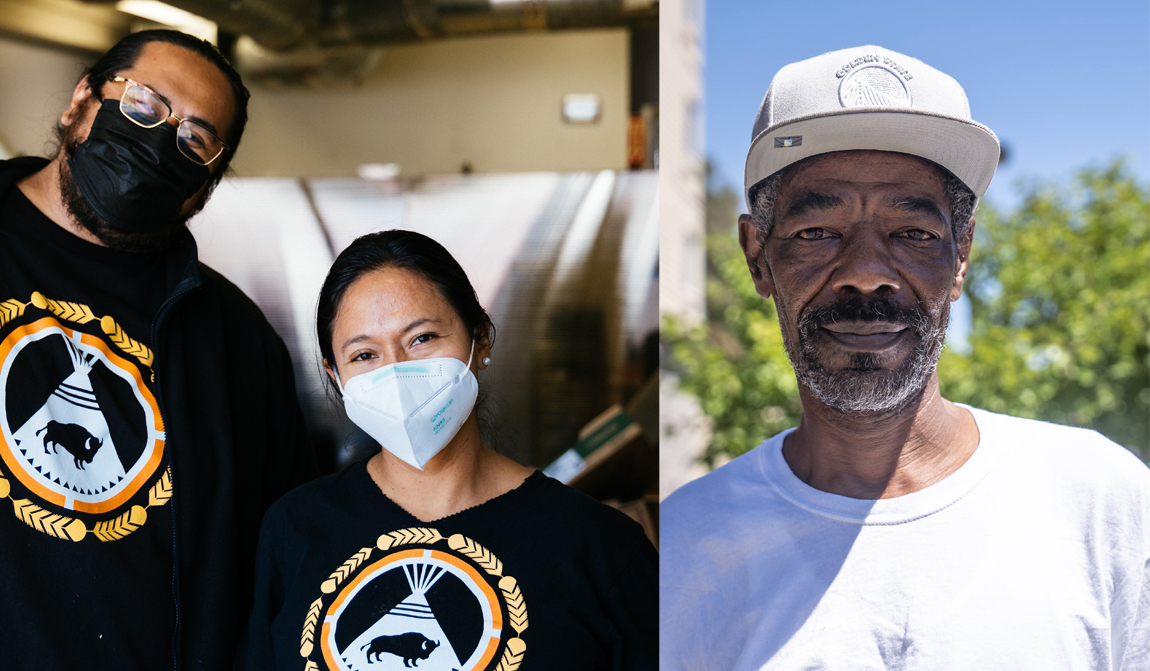
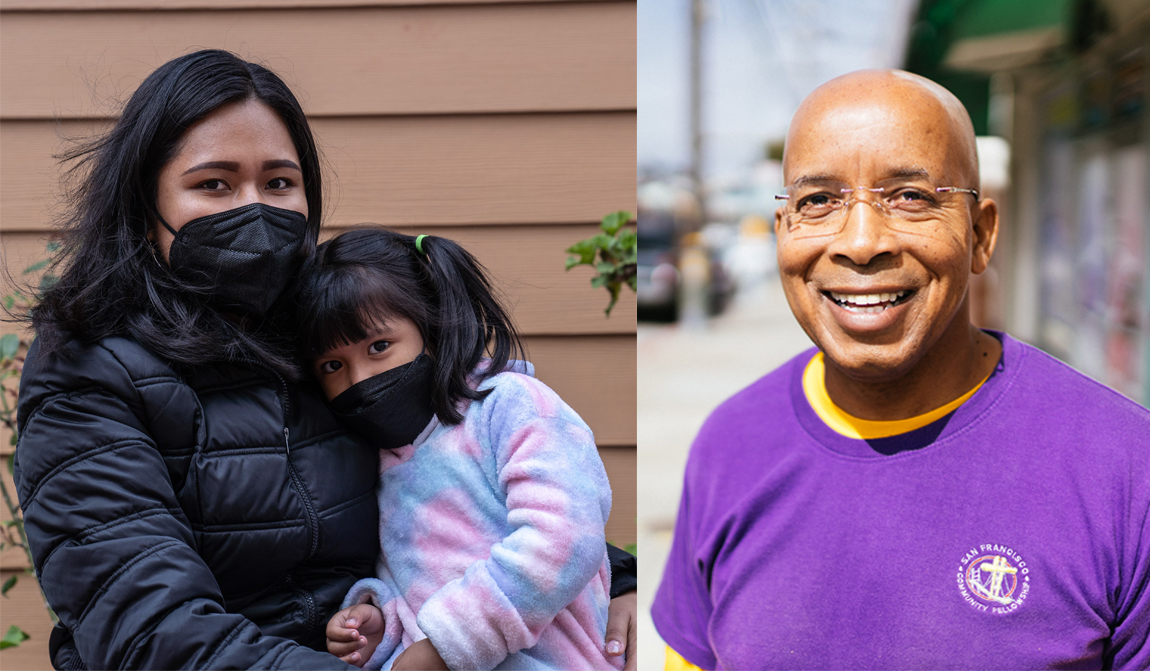
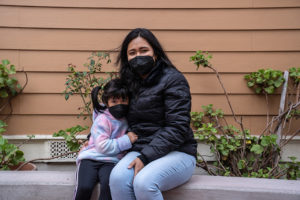 In sociology, there’s something called a “third place,” that describes a social environment outside of work or home where folks can congregate, see familiar faces, and build community. For María, the Friday food pantry in the Mission where she’s volunteered and picked up groceries for the past 10 years is a little of all the above.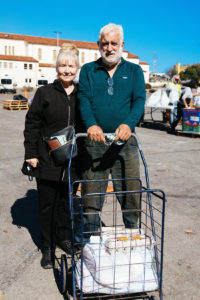
 Sharing Space, Creating Memories
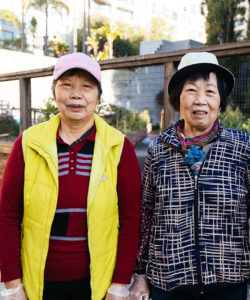
 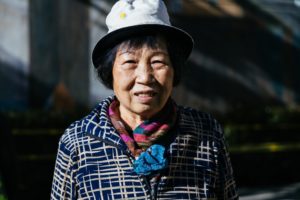 We met Hui Yu at her neighborhood pantry in the SOMA district, where she volunteers regularly and picks up groceries for her and her husband as well. Prior to retirement, Hui Yu worked in a restaurant kitchen, so she’s no stranger to feeding others. Now, she often cooks meals for friends in her senior living facility who can’t make it out to the pantry. Poultry was at the top of Hui Yu’s list as a holiday main: “
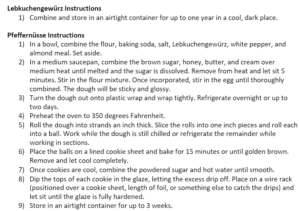
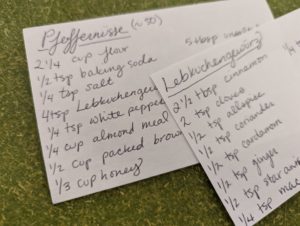 cookies)
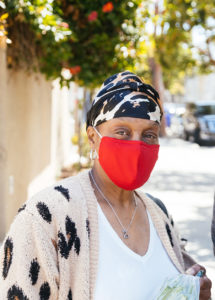
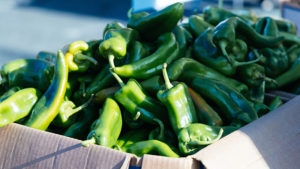 basis, traditional recipes that comes down from your family. My favorite recipe that was passed down to me is my mother’s okra.” At first thoughtfully pondering what else makes up her usual holiday table, Barbara began quickly listing other favorites: “
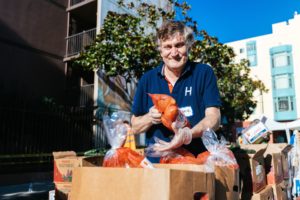 neighborhood pantry. He’s a military retiree and a volunteer at his local pantry, where he also picks up groceries for him and his wife. For his family, the holidays are about the joining of different traditions. “I have a traditional turkey dinner, where I usually go up to my sister’s house for Thanksgiving. And then I host a turkey dinner for my wife’s family. My wife’s Chinese, so we tend to do Chinese vegetables, mashed potatoes and cranberries [on the side].”
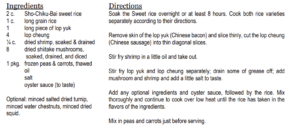
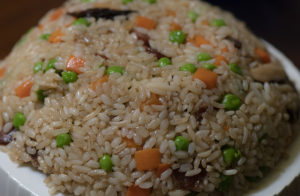 As Program Manager at the Food Bank, Kim is around good food quite a bit! But nothing quite compares to her family recipe for naw mai fan. “This is my mom’s recipe. She learned how to make this from my grandmother, an immigrant from the
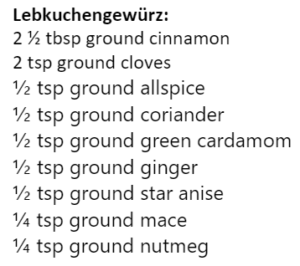
  Sharing is caring! María is a mom, volunteer, and pantry participant in San Rafael. She told us that her family embraces potlucks during the holidays, but also for camping trips and other gatherings throughout the year.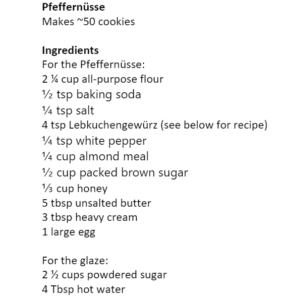
 COVID Pantry Pivots
Share