Pregnancy and the postpartum period are life-changing challenges even at the best of times. But for pregnant people staring down the barrel of poverty and homelessness, paying for rent, food, medical care, and everything a growing baby needs to thrive is a near-insurmountable task. That’s where Homeless Prenatal Program (HPP) comes in. Located in the Mission District, HPP offers a staggering breadth of services for low-income families. We spoke with Linda Huerta, the distribution coordinator for HPP’s weekly food pantries.
Food Bank (FB): How did you get involved with Homeless Prenatal Program?
Linda Huerta: I learned about HPP first through our Community Health Worker program, which is a 16-month, paid, accredited job training program that prepares clients and other women from the community for careers in community health. I make sure our 400 families can get nutritious food – this week, we had broccoli, tomatoes, bananas, eggs, and more. I’m always thinking about how we can make the distribution more equitable.
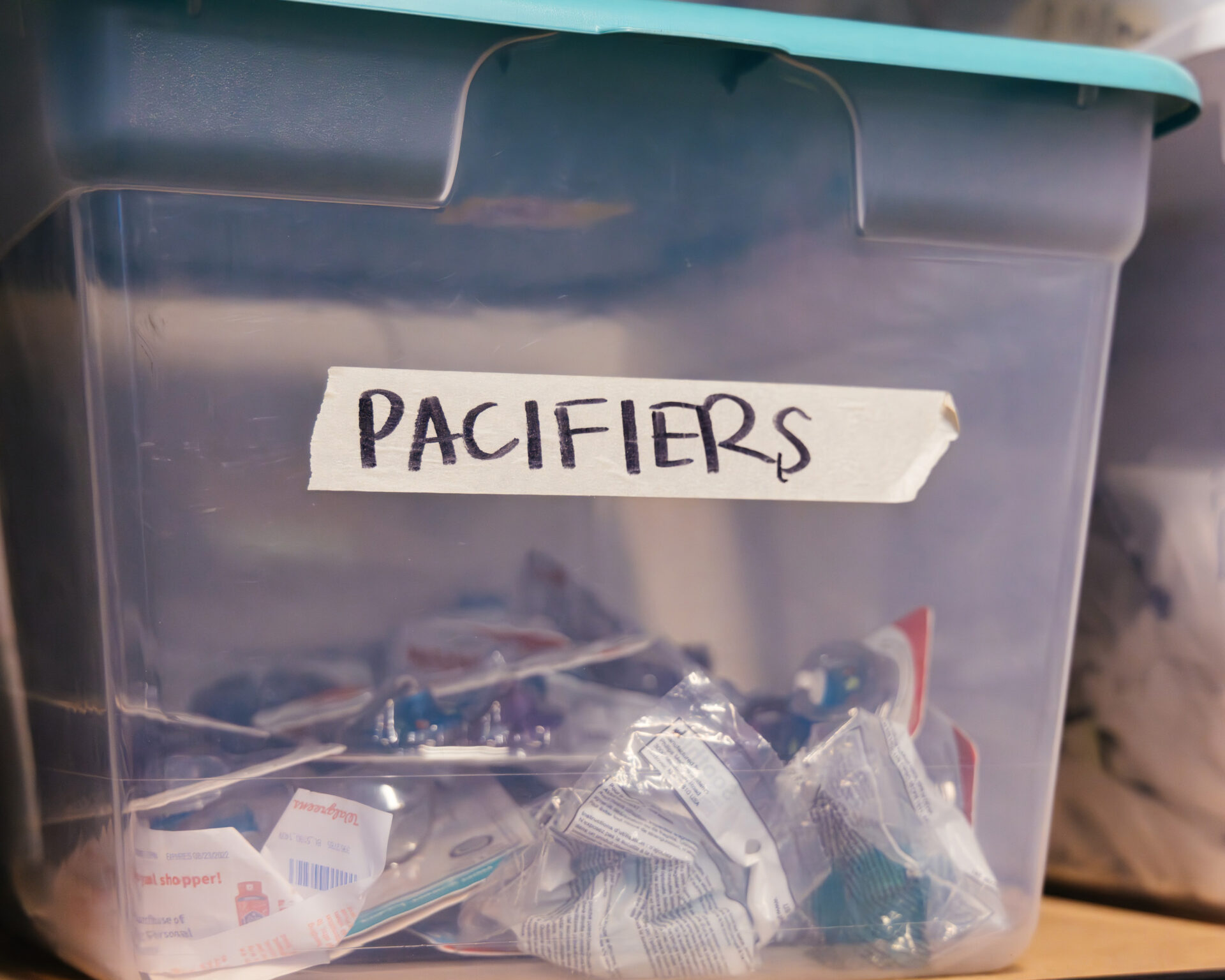
Pacifiers are just one of the host of family items that participants can pick up at HPP
FB: Does HPP provide any other services to the community?
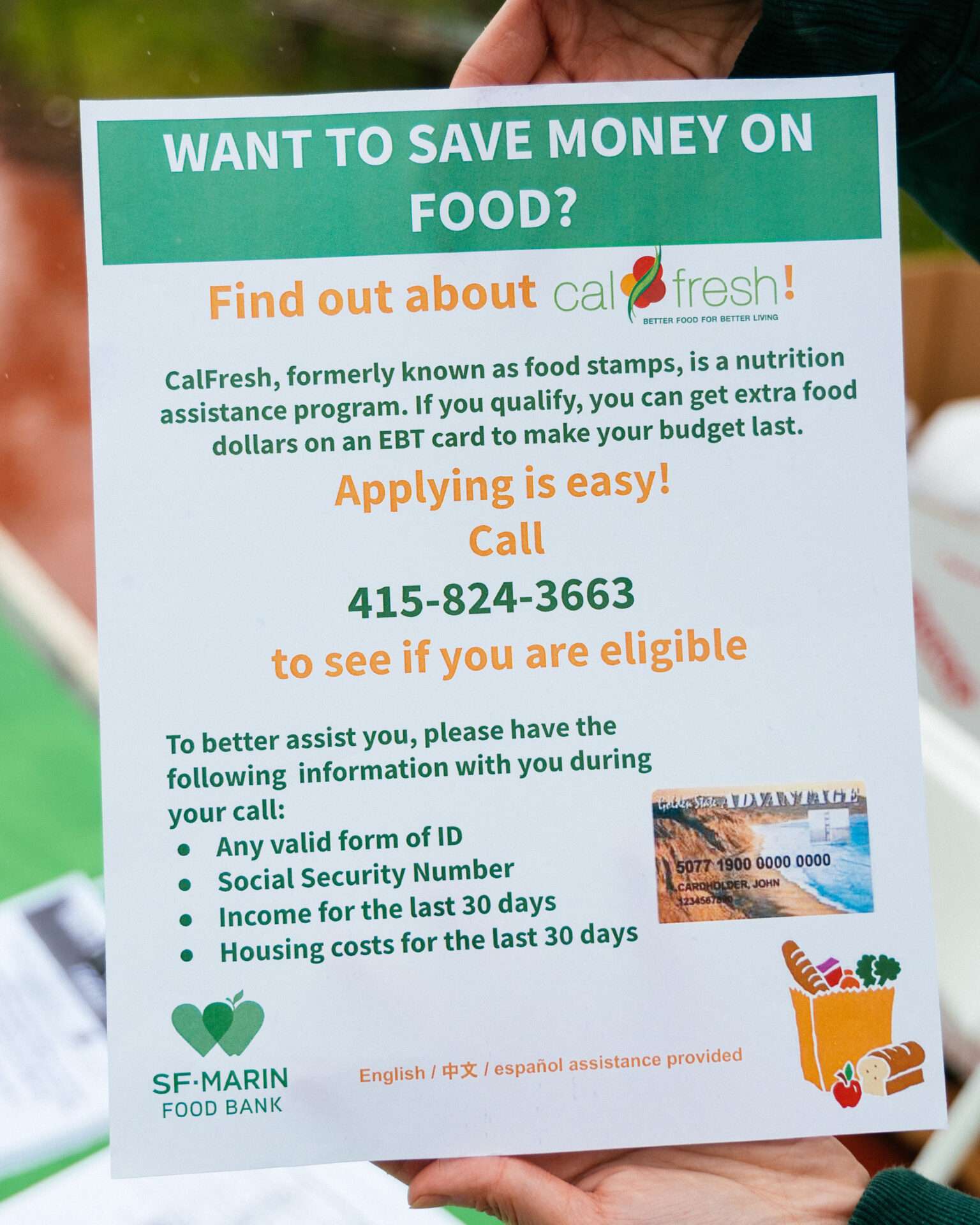
Linda: Absolutely – folks don’t just get food when they visit us on Fridays. It’s also diapers, pacifiers, and teething crackers; housing assistance and CalFresh application help; legal services and other family support. These things are available all week, but it’s so accessible to be able to offer more help or sign people up at the same time as the food pantry. And if we can’t help them, then when they come to get food, we can let them know if there’s another organization that can work on their problem.
FB: How does HPP break the cycle of family poverty and homelessness?
Linda: There are so many ways we work towards ending poverty, and a big part of that is food – it allows families to budget their money; maybe dollars that they were gonna spend on food can go to something else that supports them, especially with how expensive food is getting. It makes me feel good inside, honestly, to know that I can do this for my neighbors. Food means nutrition. Food means energy, food means love. And then we can build off that to offer even more services.
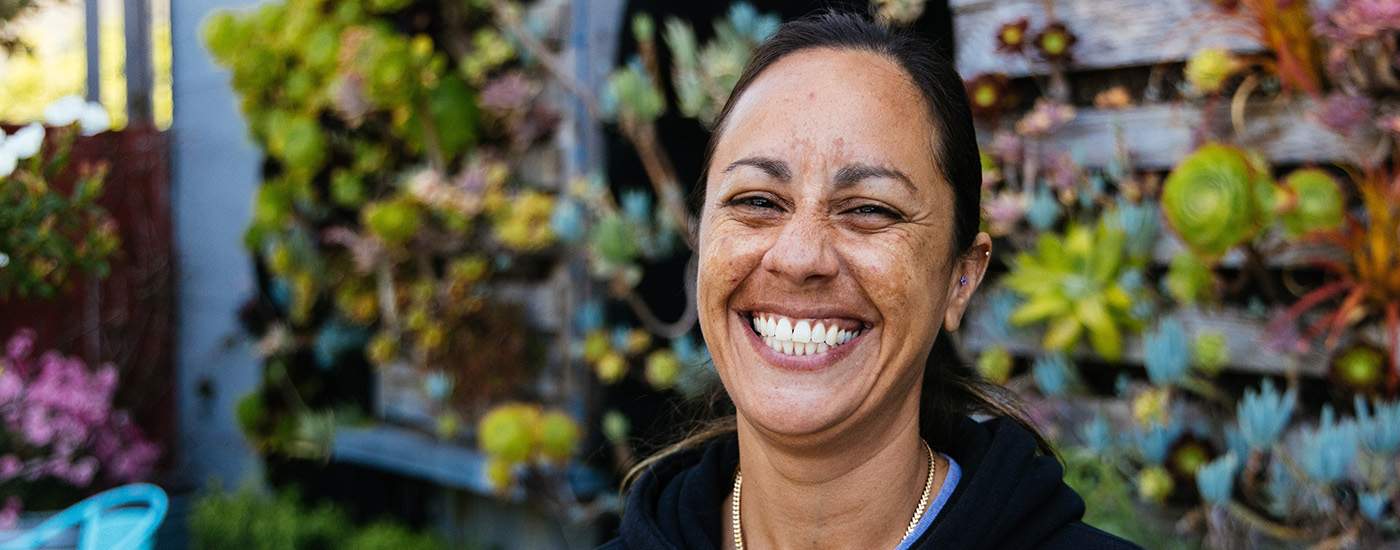
Linda smiles after our conversation in HPP’s back garden
Linda closed our conversation by telling us, “It really does take a community. We can’t all do it alone, we need partnership.” Our Food Bank is proud to be a part of the solution by joining hands with organizations like HPP to make a difference in our neighbors’ lives.
“I’m always saying, pay attention to the quietest people. It doesn’t mean they don’t have something to say; it just means they’re not comfortable saying it yet,” observed Andrea Baker, the executive director of En2Action, a San Francisco nonprofit that works to promote equity and transformative social good. Elevating community perspectives to enable change is critical to her organization’s work. “Our job is to build comfort,” said Andrea. “That’s when they start finding their voice.”
En2Action is a vital community partner of the Food Bank and has extensive experience conducting robust community engagement that centers racial equity and gathers input from diverse communities to inform community and economic development planning. En2Action is collaborating with the Food Bank on several initiatives that address root causes of hunger in San Francisco and Marin, including the Root Cause Action Learning & Leading to achieve Food SecuritY in Marin Project, also known as RALLY Marin.
Led and facilitated by En2Action, the RALLY Marin Project is a one-year planning grant and engagement effort supported by Feeding America that centers the wisdom of people experiencing food insecurity, engages a task force of community-based organizations and multi-service providers with a goal toward removing systemic barriers to CalFresh benefits in Marin County, which disproportionately impacts people of color.
“Our work with RALLY Marin is, again, about elevating community voices. We are reaching out to food providers, pantries, and other organizations that go beyond just providing food. In particular, with this program, we’re looking at CalFresh and why more folks of color are not utilizing it, particularly in Latinx communities.”
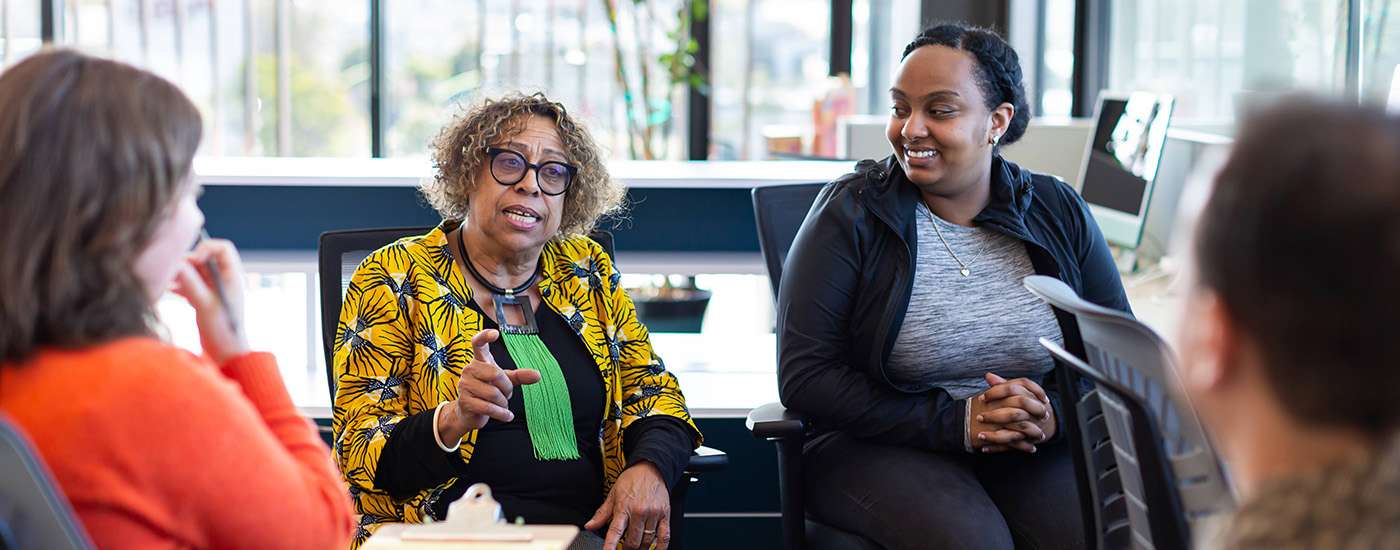
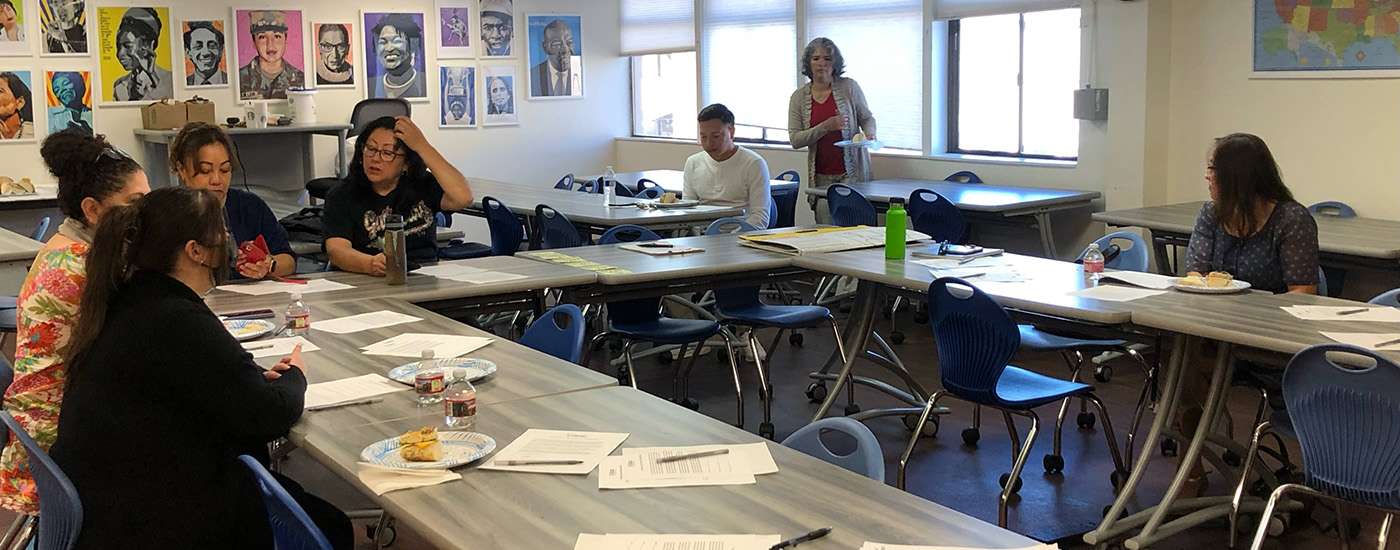
A group meeting at En2Action.
Rooted in Community
When we spoke to Andrea, the nonprofit had just moved into the new Southeast Community Center in Bayview-Hunters Point. A Black, indigenous, and people of color (BIPOC)-led organization, En2Action’s work includes a history of initiatives that intersect food, racial justice, and economic equity. Looking out of the office space windows, she observed that many of the challenges facing the neighborhood and other communities of color in the City are rooted in historic racist policies such as redlining and urban renewal that displaced thousands of Black Americans — erasing generational wealth in the process.
“How do most families build wealth in this area? You build it through real estate; you buy a home. It supports your kid going to college. You can help somebody open a business. That was taken from us,” she says. She notes that those antecedent inequities, compounded by the region’s high cost of living, contributed to San Francisco’s shrinking Black population — from around 13% in the 1980s to under 5% today. “I have seen this neighborhood go from 75% African American to where we are today; just about 30% of the Bayview population is Black.”
Andrea wants to help the remaining enclaves of color in the City thrive and believes food is a catalyst for community development.
“Food has been a way out for many people of color and immigrant communities. It’s been a way out for a business, a catering business, a food truck, a restaurant,” says Andrea. Four years ago, En2Action launched the Bayview Bistro food hub, transforming a vacant lot into a festive gathering space featuring a variety of savory cuisines from Bayview-based vendors. But when the pandemic halted in-person gatherings, life moved online almost overnight, forcing the nonprofit to pivot. The shift was challenging, as they had to acquire a commercial kitchen and develop Bayview Bistro boxes for online food ordering. Its reach was expanded further through pandemic resources to fight hunger. “And that kept our vendors going. Some vendors who’ve worked with us said, ‘I kept my lights on.’ And that was an amazing thing.”
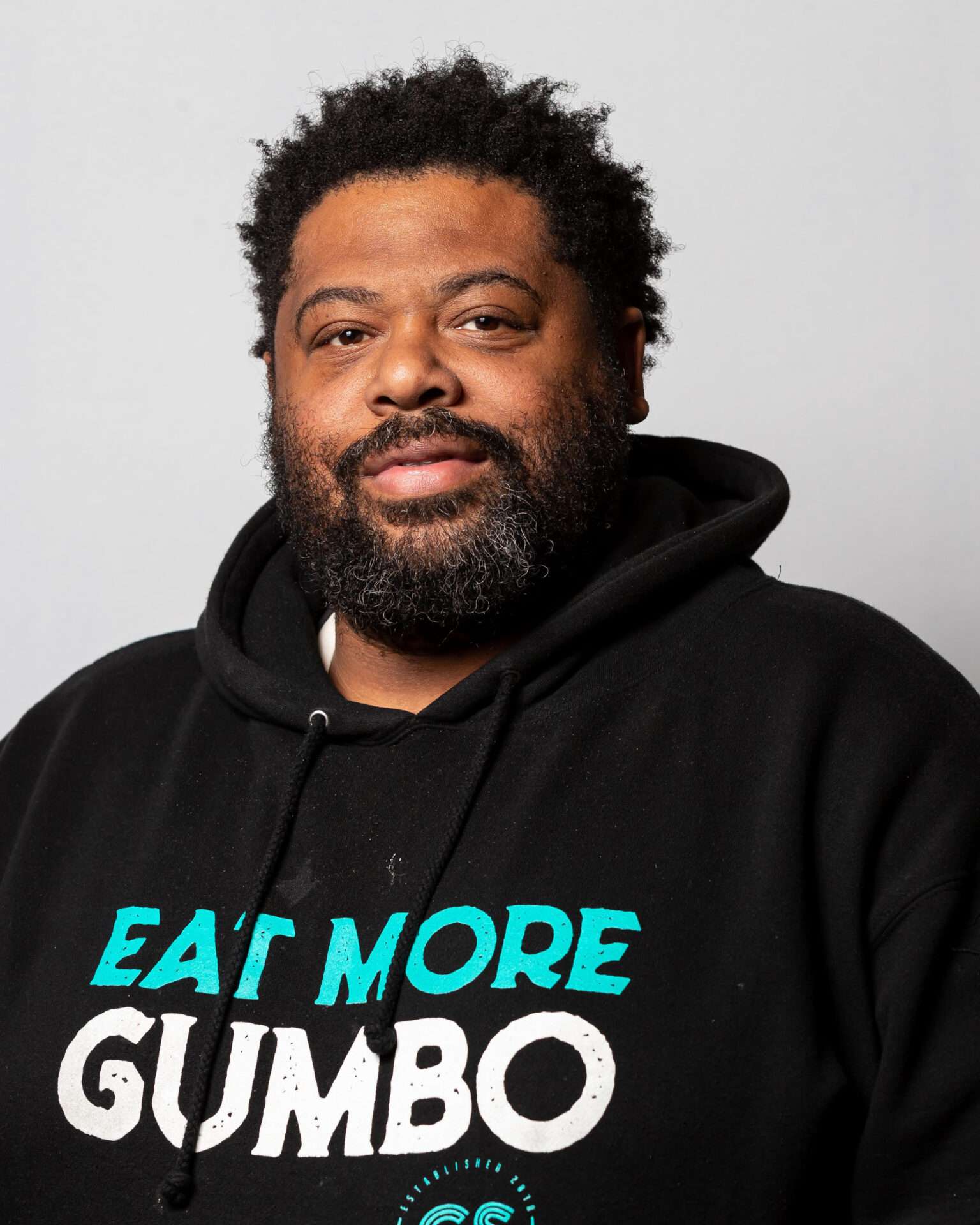
Dontaye Ball, owner of Gumbo Social
The learnings from Bayview Bistro and other neighborhood-focused economic development programs, including Sell Black — a digital marketing program to increase the online presence of Black businesses — contributed to the development of its Ujamaa Kitchen. Modeled on the fourth principle of Kwanzaa — cooperative economics — the initiative is an incubator for food entrepreneurs that features a six-month culinary boot camp, certification to operate a commercial kitchen, and a myriad of business mentorship services. Ujamaa Kitchen alum Chef Dontaye Ball, whose pop-up restaurant Gumbo Social specializes in gumbo and soul food, has high praise for Andrea.
“You just look at her impact on our business. Once we got access to that kitchen, that opened the door to be able to push Gumbo Social forward,” Ball said. “Over $35,000 in sales came directly from referrals or opportunities that came directly from En2Action,” he added. “For some people, that’s not a lot, but for us, it’s a game changer. That’s two months of payroll; that gives us an opportunity to build for the future.” That future included a brick-and-mortar Gumbo Social restaurant that opened in early June in the Bayview. And that is an outcome that En2Action enthusiastically applauds. “It’s really important to me, to us, that we are not simply giving fish. We are teaching folks how to fish,” said Andrea. “Food is an empowering thing.”
Getting Perspectives on Marin
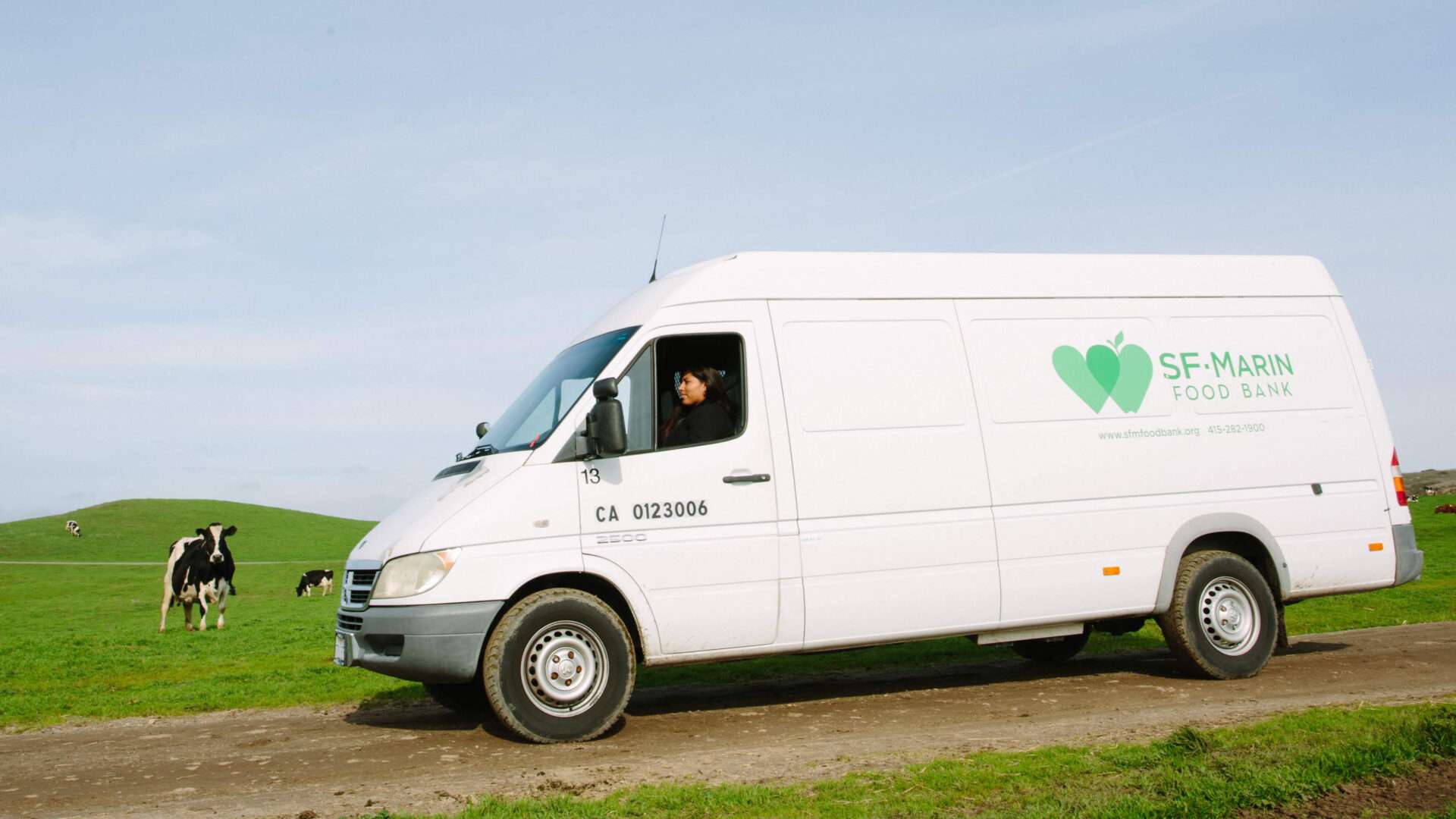
Our Mobile Food Pantry is part of food outreach in Marin County.
For several months En2Action’s community empowerment lens has been focused on a region rife with systemic inequities 50 miles north of the Bayview. RaceCounts.org ranks Marin County as the second most racially disparate county in California, finding the Latinx community the most impacted across all disparity indicators. Twenty-five percent of Latinx children in the county live below the federal poverty level. The RALLY Marin initiative, led by En2Action, features a unique partnership with a task force of community-based organizations seeking to identify and elevate food insecurity solutions that prioritize the lived experiences and perspectives of people most impacted by the issue. Key to finding those solutions is the targeted community outreach conducted through RALLY Marin, which includes listening with intentionality to the concerns of Latinx residents who may qualify for food assistance. The results have been more than revealing.
“The level of information from community members we were able to hear was authentic, and heart-centered,” said the Food Bank’s Senior Program Manager Alex Danino, reflecting on the focus groups led by En2Action in late April. “There were super-rich discussions that spoke to the challenges and the opportunities for growth,” she added. As part of the team developing recommendations and plans for implementing learnings from RALLY Marin, Alex was impressed by the participant feedback in the listening sessions. “I believe the feedback will tell us how and what we can do next on our outreach efforts,” she observed. “A new way of doing our work is emerging, including how we are working with community partners, the county and co-creating options for access, all based on community voices.”
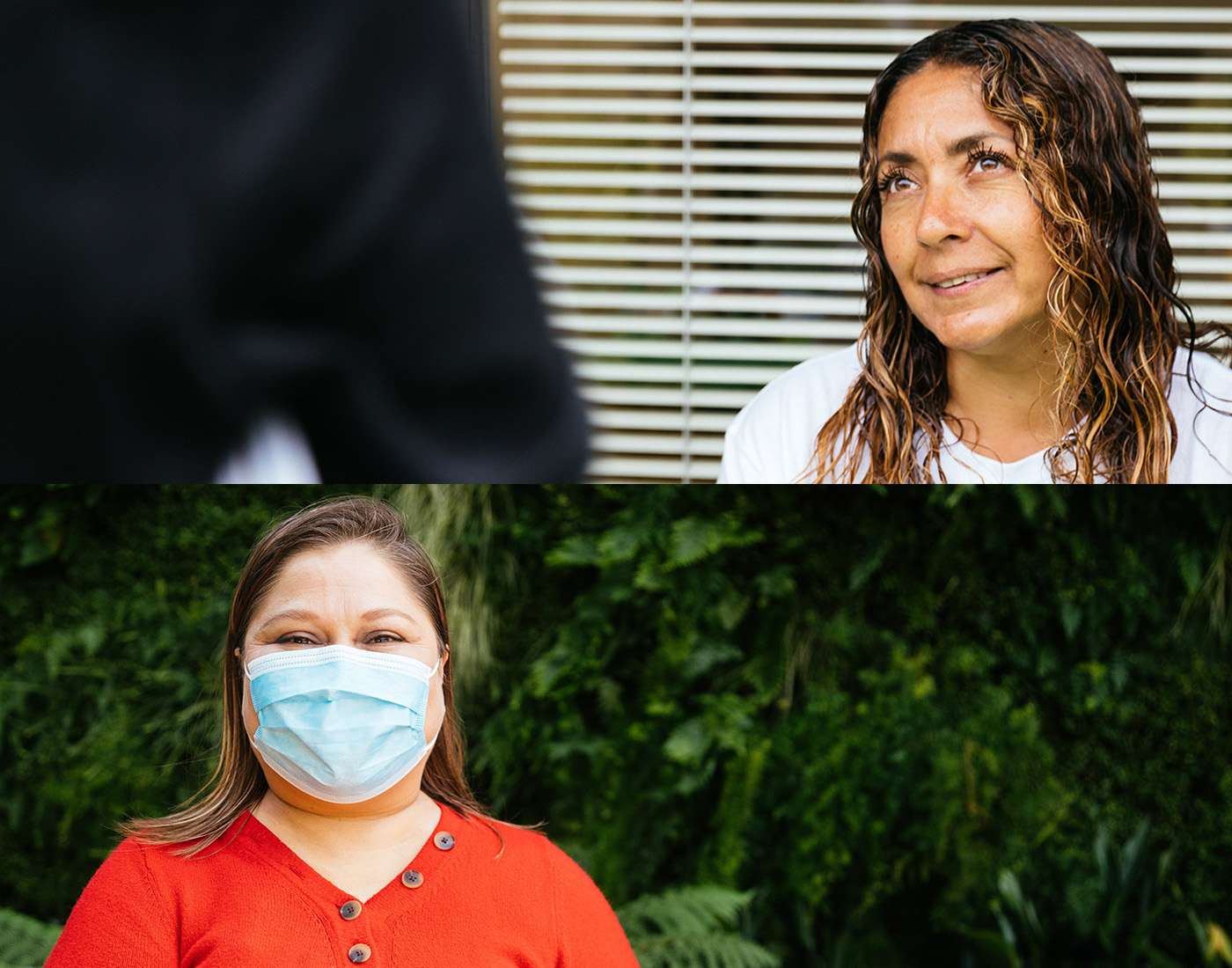
Alex Danino (top) and Liliana Sandoval (bottom)
Liliana Sandoval, Associate Director of Programs, Outreach for CalFresh, looks forward to the outcomes revealed from the focus groups. “En2Action is going to gather all that feedback, analyze it and propose solutions that we could then take for more access and utilization of CalFresh,” Liliana said. And she adds that important questions will arise from these community engagement efforts. “How could we bring Marin County administrators into the fold and get them involved in co-creating solutions? What can the county do with this information that we’ve gotten directly from people who have not accessed the program because of barriers? Just what work needs to be done at all levels?” En2Action will continue its outreach, partnership, and analysis efforts through RALLY Marin, delivering a Community Plan in the early summer.
As for Andrea Baker, she firmly believes providing community members opportunities to be heard and ask authentic questions about their needs are catalysts for real change, whether in Marin or San Francisco’s Bayview. “If we can engage, empower, and then provide the resources for people to act, then I think we can get a whole lot of stuff done,” she said. Pointing to an En2Action team gathered in a meeting room, “You know, the 12 of us here can’t do it all, but if the 12 of us here, every year, can impact one person and those people can go out and impact one more person, I’m all for that. I can live with those numbers.”
A RALLY Marin focus group.
If we can engage, empower, and then provide the resources for people to act, then I think we can get a whole lot of stuff done. You know, the 12 of us here can't do it all, but if the 12 of us here, every year, can impact one person and those people can go out and impact one more person, I'm all for that. I can live with those numbers." — Andrea Baker, executive director of En2Action
At Rosa Parks Pop-up Pantry, Miguel lights up when he starts talking about his art. He sets down his grocery bags and whips out his phone to show us his latest creation, hanging in front of his second story window: a mobile made entirely of syringes (with the needles removed, of course), that blows and gently spins in the breeze, while explaining: “I used to work for the opera, until I retired five years ago. I also made costumes for theatre groups, foundations and drag queens. I have a program going after I retired, [making] mobiles and artwork with the recycled materials I [find] on the street, thrown away.”
A Loss for the Community
Miguel is a longtime member of the arts scene in San Francisco, a gay man who’s been HIV+ for nearly 40 years, an activist, and a pantry participant since 2020 in his neighborhood of the Western Addition. He’s also one of roughly 101,000 CalFresh (known as SNAP federally) recipients in San Francisco who saw their grocery budget decimated overnight. This is due to the federal government’s decision to cut emergency allotments, which boosted CalFresh benefits by an average of $160 for recipients in San Francisco during the pandemic. That’s a loss of nearly $12 million a month in food assistance for our neighbors.
“I applied for the [CalFresh] benefits at the beginning of COVID. I was having a hard time with money. And it was very nice, especially when they started putting the extra funds in it,” Miguel told us. Miguel says he was receiving close to $200 during the pandemic, but after speaking with a CalFresh representative that same morning we met, he learned he’d be receiving just $23. That’s why the Food Bank Policy & Advocacy team is advocating to raise the minimum benefit to $50 in the state Senate this year – because for Miguel and many others, “it’s not worth going through all the [paperwork] trouble for $20.”
Meals are Best Shared
For Miguel, his CalFresh benefits were a supplemental support that helped him stretch his budget and extend a little kindness to other friends who were struggling during the throes of the pandemic. “I was able not only to get things for myself, but I was able to invite friends to get food with me so we can have dinner together. I did it with two friends, maybe every two weeks. Eating alone is not really the best thing. Having company and being able to provide something a little extra, that was very nice. It really made a difference for me and my friends.”
In addition to dinners with friends, Miguel finds support through groups like the 50 Plus Network from the SF AIDS Foundation, which connects long-term HIV survivors through meetups and events. Miguel and his current housemate also stop by the Rosa Parks Senior Center most days for lunch, and utilize the Food Bank’s weekly pantries, where Miguel picks up groceries for them both: “The sweet potatoes are for my roommate, because he can’t come to the pantry – he’s disabled. So [the pantry] not only helps me, it helps someone else.”
A Positive Ripple Effect
As federal lawmakers strip proven poverty-fighting programs and safety nets from our neighbors, and leave food banks to pick up the slack, it’s essential that the Food Bank maintains access to the fresh produce, proteins, and grains that 53,000 neighbors rely on weekly to nourish themselves. “The benefit is greater than just food,” Miguel explained to us. “At my age, I don’t think there’s any stigma – I encourage other people to apply for these services. I have diabetes, so I have to be careful about what I’m eating. And besides the food, I can use the money [I save] on other things that are beneficial for my health or enjoyment. It’s a ripple effect; it magnifies your life in all these positive ways.”
“I was able not only to get things for myself, but I was able to invite friends to get food with me so we can have dinner together. It really made a difference for me and my friends.” - Miguel, artist, Food Bank pantry participant and former CalFresh recipient
Earth Day at Florence Fang Community Farm (FFCF) was a feast for the senses: blue skies and verdant greens offset by blooming wildflowers, the smell of soil, and the conversation of food pantry participants and farm volunteers mixing with bird calls and Chinese folk songs.
Nestled in the heart of the Bayview, FFCF is a “community center, outdoors,” in the words of Director Ted Fang. In addition to cultivating the land, FFCF runs a farmer’s market-style food pantry that opens at 9 a.m. each Saturday to serve the community with fresh fruits, leafy green vegetables, and proteins, provided by the Food Bank. The farm also provides the harvests of the season to pantry participants!
“A Community Center”
As one of the most productive urban farms in the Bay Area, we’re not surprised to see swaths of volunteers showing up throughout the morning in response to FFCF’s call for an Earth Day volunteer workday. Many of the longtime volunteers arrived earlier in the day, some stopping to pick up groceries at FFCF’s food pantry, and others heading directly over to the farm to begin tending to the land.
Some regular volunteers like Ms. Chang, who we met after picking up her groceries, have a multifaceted relationship with the farm. As a retiree, she first came to the farm in search of socialization and something to do with her free time. Since then, she’s brought her sister, daughter, and grandchildren into the fold: “I enjoy volunteering at the farm because it is a community center, but for growing food! I get my exercise through this endeavor, bring home delicious harvests, and have a lot of fun along the way. You’ll have to come visit us when we put on talent shows. We love to sing and dance.”
Another of FFCF’s longtime volunteers, Mrs. Li, offers to take us on a tour of the farm. As we draw closer to the community plots, scattered groups of elders are hard at work watering, thinning out crops to provide adequate space for growth, and weeding the beds. True to Ms. Chang’s word, several women working on the same plot join in singing Chinese folk songs, their harmonies joyfully carrying across the farm. One volunteer is nonchalantly placing some of FFCF’s bees on the flowering pea shoots with his bare hands, so they can pollinate the crop.
Unifying Roots
FFCF was originally founded as a gathering space for Chinese immigrants moving into the Bayview neighborhood – a historically Black neighborhood in San Francisco. Over the years, it morphed into a space to serve the broader Bayview community. In 2020, it was renamed from the “Asian Community Garden” to “Florence Fang Community Farm” to reflect that intention, while honoring Ted’s mother and her history of civic contribution.
Additionally, FFCF houses a Black Organic Farmers program, started by Bayview born and raised Farmer in Charge Faheem Carter. Through this model of self-directed organizing and programming of different Bayview communities, volunteers at FFCF cultivate crops native to their culture and heritage. As Ted says, “It’s important for everyone to be comfortable with the food they want to eat and have control over their food. Food sovereignty gives people control of their food, and that’s what we’re doing.”
Food sovereignty is a radical shift for this neighborhood, as the Bayview has historically been subject to food apartheid due to racism, redlining, city neglect and disinvestment. That’s why the farm is such a critical resource for neighbors – and why the Food Bank is honored to support FFCF’s mission of bringing in even more healthy, fresh foods to the neighborhood via their food pantry.
The Farm, Beyond Food
The impacts of the farm go well beyond fresh vegetables to take home at the end of a workday. For many at FFCF, including many of the Chinese elders present at the Earth Day workday, volunteering has led to fruitful friendships. Some volunteers were even inspired to buy smartphones for the first time and download WeChat [a Chinese messaging app] to stay in touch after leaving the farm.
Farming is networking: you put green onions in one plot, napa cabbage in the other, and the byproducts make the soil richer for the other crops, building networks of nutrients. And this is also reflective of communities above the ground. At its heart, this is the definition of community building. You might come to volunteer or harvest vegetables and end up also reaping the rewards of a thriving network of relationships.
Like Mrs. Li explained to us of the abundant plant tong ho [chrysanthemum greens], “you’ll see it everywhere in the plots, because it keeps volunteering itself,” or self-seeding. In this same way, the volunteers who continue showing up, tending to the land, and making connections are creating their own abundance.
“I enjoy volunteering at the farm because it is a community center, but for growing food! I get my exercise through this endeavor, bring home delicious harvests, and have a lot of fun along the way." - Ms. Chang, longtime farm volunteer and retiree
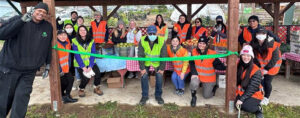
Join us in celebrating our partners at Florence Fang Community Farm in the Bayview, who reopened their farmer’s market-style pantry back in March! Neighbors and community members gathered for the ribbon cutting and filled their carts and bags to the brim with pears, cabbage, grapefruits, sweet potatoes and more.
Reopening for the Community
While some pantry partners were able to continue operating during the pandemic by pre-bagging groceries, many more – including Florence Fang – were forced to shutter their operations. Now, our Programs team is focused on helping those partners open back up for their neighborhoods.
As partners reopen, “we’re reaching out to neighbors [currently enrolled in Food Bank-run pantries] to let them know they have a choice to return to their neighborhood pantry,” said Tina Gonzales, Director of Community Partnerships at the Food Bank. “When a pantry reopens, it’s exciting for people who used to go there – that’s their community.” Plus, pantries run by our partners will help us scale back our large Food Bank-run sites (which opened during the pandemic to meet the increased need, and are nearly all at capacity), making them smaller and more manageable.
Farmer’s Market-Style Transitions
Many Food Bank-run pantries are also transitioning from COVID-mandated pre-bagging to farmer’s market-style. This pantry model centers choice by encouraging folks to take what they want and pass on what they don’t, while reducing food waste and plastic bag use. It’s a win-win for creating a more equitable and sustainable food pantry!
Perhaps most importantly, farmer’s market-style creates opportunities for connection with community. “Sometimes if we’re working with a nonprofit, that’s how they check in with their participants. It’s through farmer’s market distribution,” said Tina. “They’ll start talking about the food and then learn, ‘I need to book you an appointment for free tax help, or eviction defense.’ It’s a good connecting point.”
“When a pantry reopens, it’s exciting for people who used to go there – that's their community.” - Tina Gonzalez, Director of Community Partnerships at the Food Bank
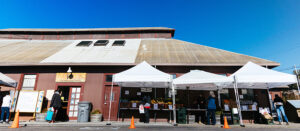
The town of Pt. Reyes Station itself is, by all accounts, pretty tiny. But the reach of local community hub and Food Bank partner West Marin Community Services (WMCS) extends to nearly 16,000 neighbors in rural West Marin — as far as Dillon Beach to the north and Bolinas to the south — with an array of services including a food pantry, financial support, a youth center, and a thrift store.
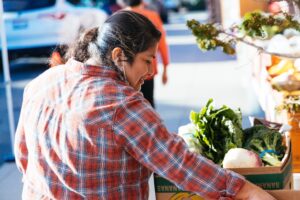
We met Alma Sanchez, Food Pantry Manager at WMCS, on a Thursday afternoon as golden hour set in. Neighbors stopped by the food pantry periodically, many exchanging a few friendly words with Alma and other staff.
Accessibility for Farmworkers in West Marin
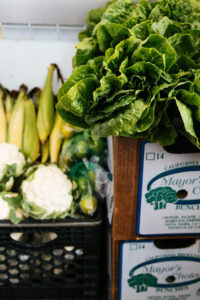
Outside WMCS’ main building, fresh produce provided by the Food Bank —like zucchini, broccoli, corn, oranges, cauliflower, eggplant and apples — was on full display at their farmer’s market-style food pantry. Inside, extra community food donations filled a few fridges.
Alma helped restock produce outside, explaining to us as she went: “There are remote areas where people live on ranches [in West Marin]. There’s no transportation and difficult access to stores. This is the only place that is open five days a week, four hours every day.”
WMCS serves all members of the community. But their pantry schedule is especially critical for farmworkers and their families, who often can’t attend during the limited hours at other pantry sites. Additionally, many farmworkers “don’t qualify for CalFresh, or they’re afraid to apply because they don’t know how it works.” That’s where WMCS steps in and helps fill the gaps with fresh, healthy groceries.
Resourceful and Resilient
During the intense flooding back in December, “People were saying, ‘We have no power, we lost everything in the fridge,’” Alma shared. “Those days we were very busy, and we operated with no power. We had a generator, and we plugged in everything and continued [all our services]. People were so happy that we had food.”
If it’s not apparent from that anecdote alone: resourcefulness is the name of the game here in West Marin. Aside from a disaster preparedness program, the funds from their beloved community thrift store doubles as a safety net for community members.
The Gift of Thrift
“Thanks to our thrift store, we have a community fund that allows us to support individuals and low-income families in West Marin with unexpected expenses,” shared Yareli Cervantes, Emergency Assistance Program Manager at WMCS. “Just by serving food, we’re able to really get to know people and identify their needs. It opens up the conversation for them to come seek out financial assistance.”
Though much of their work revolves around rental assistance — “rent out here is so high that it really eats the cost of living,” said Yareli — WMCS also supports neighbors with medical bills, prescriptions costs, and intake support for energy and rental assistance programs through a partnership with Community Action Marin (another Food Bank partner!).
Fun for the Kids, Too
A short walk up the road from the main WMCS hub takes us directly to the Tomales Bay Youth Center, an after-school program for mainly 6th, 7th, and 8th graders, with some high schoolers too. Food Bank and community donations cover after-school snacks and meals, and the students enjoy activities ranging from art and tutoring to sports and even a youth DJ program.
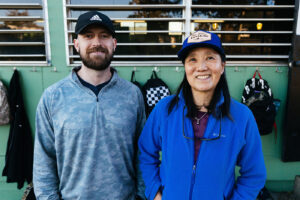
“The kids are really hungry, so we need a lot of food every day. We also started a cooking class that happens every Tuesday, so some of our ingredients also come from the food pantry,” shared Interim Youth Program Coordinator Piro Ishizaka. The Youth Center helps local parents who work late, says Piro: “Pt. Reyes is a small town, so there’s nowhere for [the kids] to go otherwise. That’s what we’re doing here every day — providing a safe and fun place for the kids.”
A Channel for Community Care
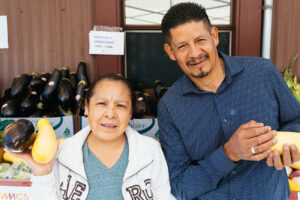
At the Food Bank, our hope is to support and uplift important local organizations like WMCS that provide tailored services for the needs of their communities — all with empathy and dignity. During our visit to Pt. Reyes Station, this deep care for the community shined through every conversation with neighbors, staff, and volunteers. One couple we met, Margarita and Jaime, are residents of Pt. Reyes and regular volunteers. Margarita shared, “I had the time, and so at the start of the pandemic I started volunteering with a cousin of mine. I liked it so much, I brought my husband along too!”
It’s clear Margarita isn’t the only one who feels this way. WMCS Executive Director Socorro Romo summed it up: “There is the love of the community and there’s the support of the community; we are just the channel to get that through.”
“Just by serving food, we're able to really get to know people and identify their needs. It opens up the conversation for them to come seek out financial assistance.”- Yareli Cervantes, Emergency Assistance Program Manager
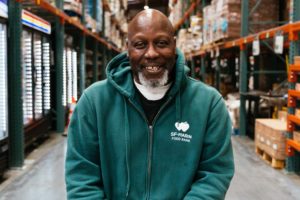
Step onto the shop floor at the Pennsylvania Warehouse and you’ll be greeted by racks filled with just about every item under the sun: fresh fruits and vegetables (of course), canned beans and proteins, fresh breads and pastries, eggs, frozen proteins like chicken breasts, and assorted dry, fresh, and frozen grocery items from supermarkets all over San Francisco.
Through our “shop” program, we serve 243 partners in the community. Here’s how it works: on any given weekday, by appointment or drop-in, agencies ranging from congregate meal sites to afterschool programs can stop by the warehouse and shop for groceries from 8am-3pm.
Donations and Fresh Rescue Lead the Way
These Food Bank shop partners “pick up free produce, bread for 8 cents/pound, and other donated items for 18 cents/pound,” said Henry Randolph, Senior Shop Floor Manager at the Food Bank. “Produce comes to the Food Bank through the Farm to Family program just like it does for food pantries. But the other food we offer comes from community donations, or through our Fresh Rescue program. We’ll go out to local supermarkets like Whole Foods, Lucky’s, Safeway, Amazon and Costco, and bring back a variety of different products for our shoppers.”
Flexibility, Variety, Affordability
One partner, the Homeless Church of San Francisco, has been coming for the past three decades. Since they don’t operate a traditional pantry, the flexibility and price point of the shop floor is a huge draw.
“At the place where we live, we bring in [unhoused] guests and we serve lunch and dinner five days a week. And we go out to different camps across San Francisco on Thursday and Friday nights and serve a full meal. On Sunday morning, we cook pancakes and serve them at the Embarcadero. And we also give out food boxes to around 30 people who live in hotels,” said April Prosser, co-founder of the Homeless Church along with her husband Pastor Greg Prosser. “So, we have a variety of needs. The donations from the Food Bank allow us to have really good meals.”
Community Support Remains Crucial
The Food Bank helps hundreds of partners meet the unique needs of their programs and agencies. But Henry says that lately, “demand is very high, with a limited supply,” because of inflation and supply chain issues, driving home the need for continued support from our community as we strive to keep our shop floor racks full for our neighbors and partners.
In Henry’s words: “We’re trying to do the best we can. But if the Food Bank is hungry, how can we feed other people?”
Through Challenges, Relationships Remain
Regardless of current challenges, one thing remains stable: the relationships formed between Food Bankers and long-term shop partners. “I can think of a handful of agencies, like the Homeless Church, that have been shoppers for close to 30 years. And I think that’s really special because we all have a common goal: to provide services to our community. There are a lot of compassionate people that are really dedicated,” Henry shared.
The feeling is mutual: April says that “from the beginning, the Food Bank has been a lifesaver. And Henry is a real blessing.”
“We have a variety of needs. The donations from the Food Bank allow us to have really good meals.” - April Prosser, co-founder of the Homeless Church
It all started back in 2001 with a little neighborhood newsletter.
When Pam Smith moved back to San Francisco to begin her retirement after a couple years away on business, in her mailbox was a callout for volunteers at the nearby Richmond Neighborhood District Center Food Pantry. It wasn’t long before Pam was going in every week to help out. What she saw during her time volunteering shifted her perspective on hunger.
“We distributed food we got from the Food Bank, and I saw how many people were coming and getting food – 300 people every Thursday. A lot of them were seniors. It drove it home that there’s a lot of neighbors around who don’t have enough money to buy food,” she told us.
“Life Back on Track”
One neighbor’s story, a young mother of two, always stuck with Pam.
“One young woman I met was looking for a job and having a hard time. I hadn’t seen her for a couple weeks. Then I ran into her, and she had gotten a job! I was so happy that she was back on good footing. I think that having food available for people gives them a chance to get their life back on track.”
Pam remained a regular volunteer and donor at the RDNC until the pandemic hit. When COVID restrictions prevented her from continuing at her neighborhood pantry, she switched her efforts to volunteering with the Food Bank five times a week at our warehouse and Pop-up Pantries all over the city, logging more than 1100 hours to date. She’s also a monthly donor to the Food Bank, because she believes that this work “is helping a lot of people.” Pam, thank you for your dedication to ending hunger in San Francisco and Marin!
"I think that having food available for people gives them a chance to get their life back on track.” - Pam Smith, monthly donor and volunteer
On an otherwise quiet afternoon, Oakdale Avenue in Bayview Hunters Point was filled with the sounds of laughter, chatting and mingling. That’s because every Friday at 1 p.m., roughly 40 neighbors gather at a small food pantry in front of their apartment complex to pick up groceries and hang out. Across the street, vibrant murals painted by local youth adorn a large building and its stairway, and a community garden sits at the top of the stairs.
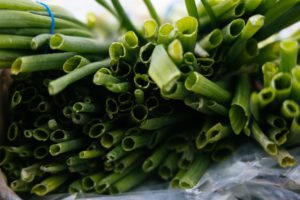
The common thread here is San Francisco Housing Development Corporation (SFHDC), a nonprofit and longtime Food Bank partner that builds affordable housing, provides financial empowerment services, and invests in the growth and development of Black entrepreneurs in historically Black corridors of San Francisco. They also offer supportive services for residents, including a weekly food pantry with groceries like green onions, rice, grapefruit, sweet potatoes, avocadoes, and squash provided by the Food Bank.
Securing Stability
SFHDC’s multi-pronged approach is crucial for securing housing and financial stability for the community – but that’s not all.
“We’re here to not only keep affordable housing in San Francisco, but to ensure and enrich the fact that we want to keep the African American community [of San Francisco] here,” said Taylor Booker, Associate Director of Resident Services and Community Engagement at SFHDC.
For one resident Nicole, financial literacy workshops put on by SFHDC helped her pay back-due rent on her apartment – and now she gives back, too. On top of caring for her three grandchildren, she volunteers at the pantry every Friday and sits on the Board of the Tenants Association. “Oakdale’s the only pantry that’s open [in this area], so I tell all my residents to come out. And I love volunteering – it gets me out of the house, and we get to know our neighbors in the community,” Nicole shared.
Healing in Community
SFHDC also manages the building across from the pantry, which houses other local organizations including Dev/Mission, City of Dreams, and the Phoenix Project. There’s a variety of services available to transitional age (14-24) youth in the neighborhood – and they extend far beyond the employment, education, and housing support one might expect, thanks to leaders like Kiani Shaw.
Kiani, a life coach at the Phoenix Project and a regular pantry volunteer, says that “a lot of the work I’ve been doing here with the youth is healing. How do we address the traumas that we’ve been through and how they’ve impacted us? How do we transform that into something more productive or conducive to your success?”
This emphasis on healing and transformation is interwoven throughout the work of community advocates and activists – including SFHDC Resident Services Assistant Travis Moananu.
The X-Factor? Trust
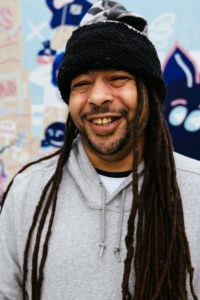
“This is where my heart is,” Travis told us. He’s talking about San Francisco in general – Travis was born and raised in Potrero Hill and has been a resident of Bayview Hunters Point for the last 15 years – but the Oakdale pantry seems to fit the bill, too. Folks lit up when he arrived, with neighbors calling out, “Hey Trav!” or “My friend!”
As a community activist and Resident Services Assistant with SFHDC, Travis’ ease and familiarity with his neighbors is irreplaceable – because trust and healing go hand in hand. “The asset that a community member can bring to an organization who’s serving the community is huge. You can’t teach what I know. They don’t have a college course for this. I lived it, I know it, I am it.”
To Travis, having readily available, fresh produce at the food pantry is the perfect way to show his neighbors that “not everybody who comes into the community has ulterior motives. Some of us really want to help. When people can see there are organizations and people who want better for the community, I think the community will become better.”
Visibility, Transformation, and Future-Building
“I think people are starting to learn and understand how powerful that can be, for the community to see a community member change their life and be able to do things different,” Travis mused towards the end of our conversation. His own life has had a series of ups and downs, and the fulfillment of becoming an activist and advocate is something he never saw coming. With the trust of the community on one hand, and new connections to resources on the other, he’s the “perfect bridge.”
“We need to see us helping us. We need to see people who look like me. That way, the kids can say, ‘Okay, well, he did it. He got out.’ I can’t really change what my past was. But I can dictate my future. My future is to help, my future is to give back, and my responsibility is to communities like this.”
“The asset that a community member can bring to an organization who's serving the community is huge. You can't teach what I know. They don't have a college course for this. I lived it, I know it, I am it.” - Travis Moananu, Resident Services Assistant at SFHDC
“I just went to the store, and a carton of eggs was over $10. And now I’m only going to receive $23? What can I buy with that?”
This is the predicament that Gladys, and nearly 82,000 other households in San Francisco and Marin are facing this month due to the end of CalFresh (aka SNAP, or food stamps) emergency allotments. During the pandemic, CalFresh recipients received a boost to their monthly budget for groceries. For Gladys, these emergency allotments were a buoy to hang onto as inflation remained high – but they came to an end nationwide in February.
Staring Down a Benefits Cliff
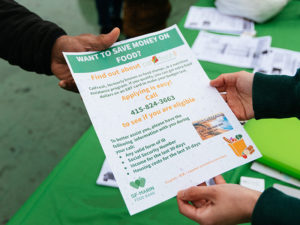
“I pick up groceries from the food pantry in the Canal (San Rafael) on Tuesdays, and the rest I buy with my food stamps. Last month, I received $211. Now, the letter from the county says I’ll receive $23, at most $29,” Gladys told us over the phone in Spanish. As a senior, grocery shopping is already made difficult by mobility issues: “My son will often go shopping for the both of us. I’m scared I’m going to fall.” Now, it will be doubly difficult without the emergency allotments she depended on previously.
Gladys works as a caretaker for a woman in her neighborhood, and lives and splits rent with her adult son. It’s hard to make heads or tails of the prices she sees at the grocery store: “When I do go shopping, I see that everything is so expensive: beef, chicken, eggs. And if I want bread or something else?” Her voice trails off, as if to say, “Forget about it.”
Food Banks Already at the Brink
In San Francisco and Marin, the benefits cliff will be especially steep: emergency allotments for our counties averaged out at $150 and $160, respectively. Currently, the California Department of Social Services is directing affected CalFresh recipients to supplement their budget by heading to their local food banks – even though many CalFresh recipients like Gladys were already frequenting food banks to make ends meet. But the San Francisco-Marin Food Bank, and others in the area, are stretched to the limit by inflation, shrinking government support, and declining donations.
“It’s An Injustice”
Food banks are a band-aid, not a long-term solution for the erosion of safety nets. So while our Policy and Advocacy team continues to push at the federal level for benefits that better reflect the cost of living in our counties, and our CalFresh team continues assisting households in applying and securing the benefits they qualify for, we need our community members and local elected officials to rally in support of our neighbors facing food insecurity.
It will take all our collective efforts to mitigate the harm stemming from the end of these emergency allotments – because for Gladys and thousands of others, this decision is nothing short of devastating.
“I just don’t agree with this. No one agrees with this,” Gladys shared. “We won’t have food. It’s an injustice.”
“I just went to the store, and a carton of eggs was over $10. And now I’m only going to receive $23? What can I buy with that?” - Gladys, Marin resident and CalFresh recipient



 Share this quote
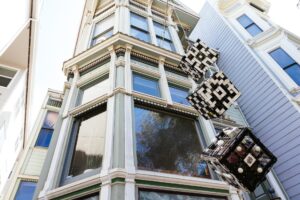
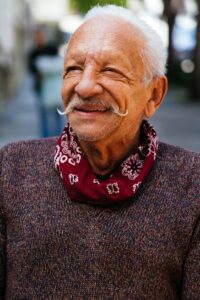 40 years, an activist, and a pantry participant since 2020 in his neighborhood of the Western Addition. He’s also one of roughly 101,000 CalFresh (known as SNAP federally) recipients in San Francisco who saw their grocery budget decimated overnight. This is due to the federal government’s decision to cut emergency allotments, which boosted CalFresh benefits by an average of $160 for recipients in San Francisco during the pandemic. That’s a loss of nearly $12 million a month in food assistance for our neighbors.
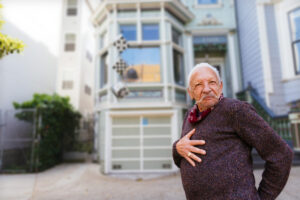 For Miguel, his CalFresh benefits were a supplemental support that helped him stretch his budget and extend a little kindness to other friends who were struggling during the throes of the pandemic. “I was able not only to get things for myself, but I was able to invite friends to get food with me so we can have dinner together. I did it with two friends, maybe every two weeks. Eating alone is not really the best thing. Having company and being able to provide something a little extra, that was very nice. It really made a difference for me and my friends.”
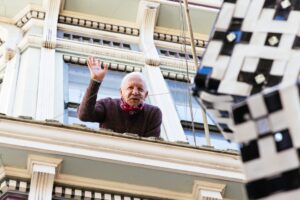 leave food banks to pick up the slack, it’s essential that the Food Bank maintains access to the fresh produce, proteins, and grains that 53,000 neighbors rely on weekly to nourish themselves. “The benefit is greater than just food,” Miguel explained to us. “At my age, I don’t think there’s any stigma – I encourage other people to apply for these services. I have diabetes, so I have to be careful about what I’m eating. And besides the food, I can use the money [I save] on other things that are beneficial for my health or enjoyment. It’s a ripple effect; it magnifies your life in all these positive ways.”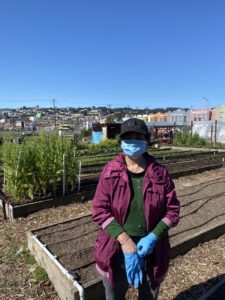
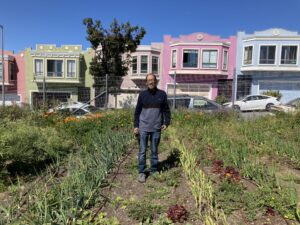 her history of civic contribution.
 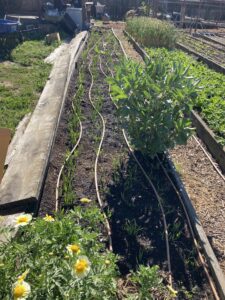 app] to stay in touch after leaving the farm.
  As partners reopen, “we’re reaching out to neighbors [currently enrolled in Food Bank-run pantries] to let them know they have a choice to return to their neighborhood pantry,” said Tina Gonzales, Director of Community Partnerships at the Food Bank. “When a pantry reopens, it’s exciting for people who used to go there – that’s their community.” Plus, pantries run by our partners will help us scale back our large Food Bank-run sites (which opened during the pandemic to meet the increased need, and are nearly all at capacity), making them smaller and more manageable.
  The town of Pt. Reyes Station itself is, by all accounts, pretty tiny. But the reach of local community hub and Food Bank partner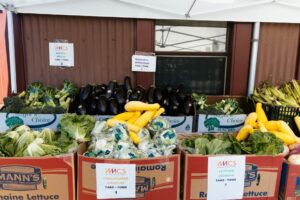
 During the intense flooding back in December, “People were saying, ‘We have no power, we lost everything in the fridge,’” Alma shared. “Those days we were very busy, and we operated with no power. We had a generator, and we plugged in everything and continued [all our services]. People were so happy that we had food.”
 income families in West Marin with unexpected expenses,” shared Yareli Cervantes, Emergency Assistance Program Manager at WMCS. “Just by serving food, we’re able to really get to know people and identify their needs. It opens up the conversation for them to come seek out financial assistance.”
 an after-school program for mainly 6
 provide tailored services for the needs of their communities
  Step onto the shop floor at the Pennsylvania Warehouse and you’ll be greeted by racks filled with just about every item under the sun: fresh fruits and vegetables (of course), canned beans and proteins, fresh breads and pastries, eggs, frozen proteins like chicken breasts, and assorted dry, fresh, and frozen grocery items from supermarkets all over San Francisco.
 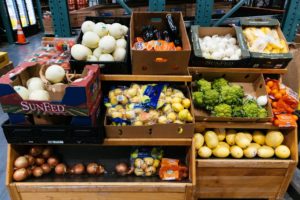 Henry says that lately, “demand is very high, with a limited supply,” because of inflation and supply chain issues, driving home the need for continued support from our community as we strive to keep our shop floor racks full for our neighbors and partners.
 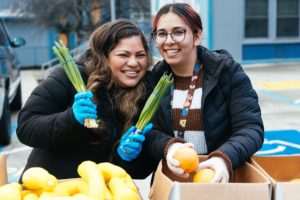 garden sits at the top of the stairs.
 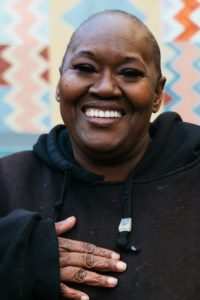 community – but that’s not all.
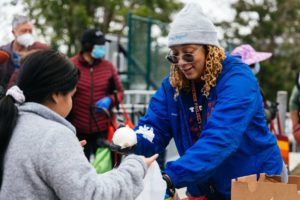 Kiani, a life coach at the Phoenix Project and a regular pantry volunteer, says that “a lot of the work I’ve been doing here with the youth is healing. How do we address the traumas that we’ve been through and how they’ve impacted us? How do we transform that into something more productive or conducive to your success?”
 “Hey Trav!” or “My friend!”
  activist and advocate is something he never saw coming. With the trust of the community on one hand, and new connections to resources on the other, he’s the “perfect bridge.”
  “I pick up groceries from the food pantry in the Canal (San Rafael) on Tuesdays, and the rest I buy with my food stamps. Last month, I received $211. Now, the letter from the county says I’ll receive $23, at most $29,” Gladys told us over the phone in Spanish. As a senior, grocery shopping is already made difficult by mobility issues: “My son will often go shopping for the both of us. I’m scared I’m going to fall.” Now, it will be doubly difficult without the emergency allotments she depended on previously.
  and Advocacy team continues to push at the federal level for benefits that better reflect the cost of living in our counties, and our CalFresh team continues assisting households in applying and securing the benefits they qualify for, we need our community members and local elected officials to rally in support of our neighbors facing food insecurity.
Share