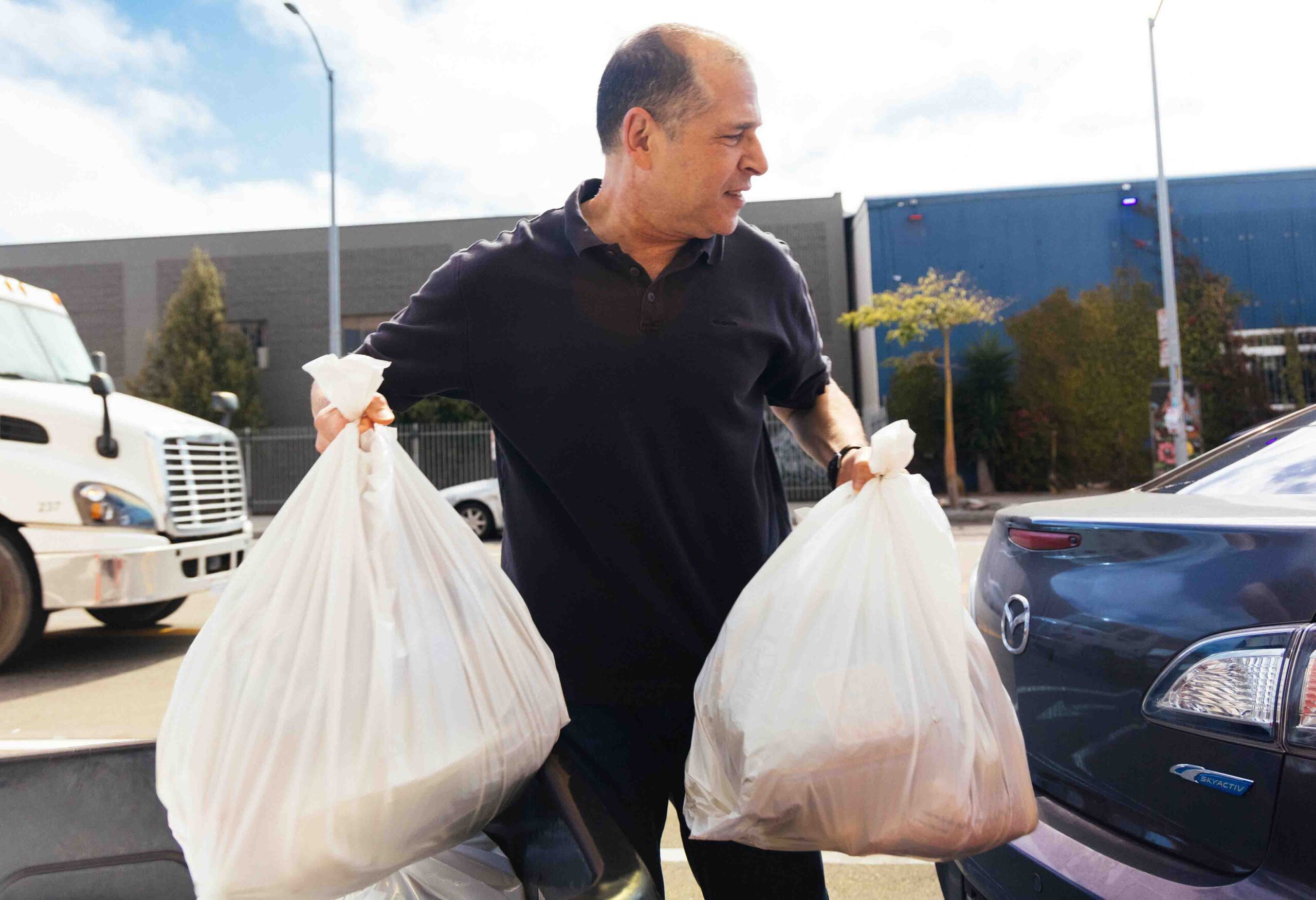
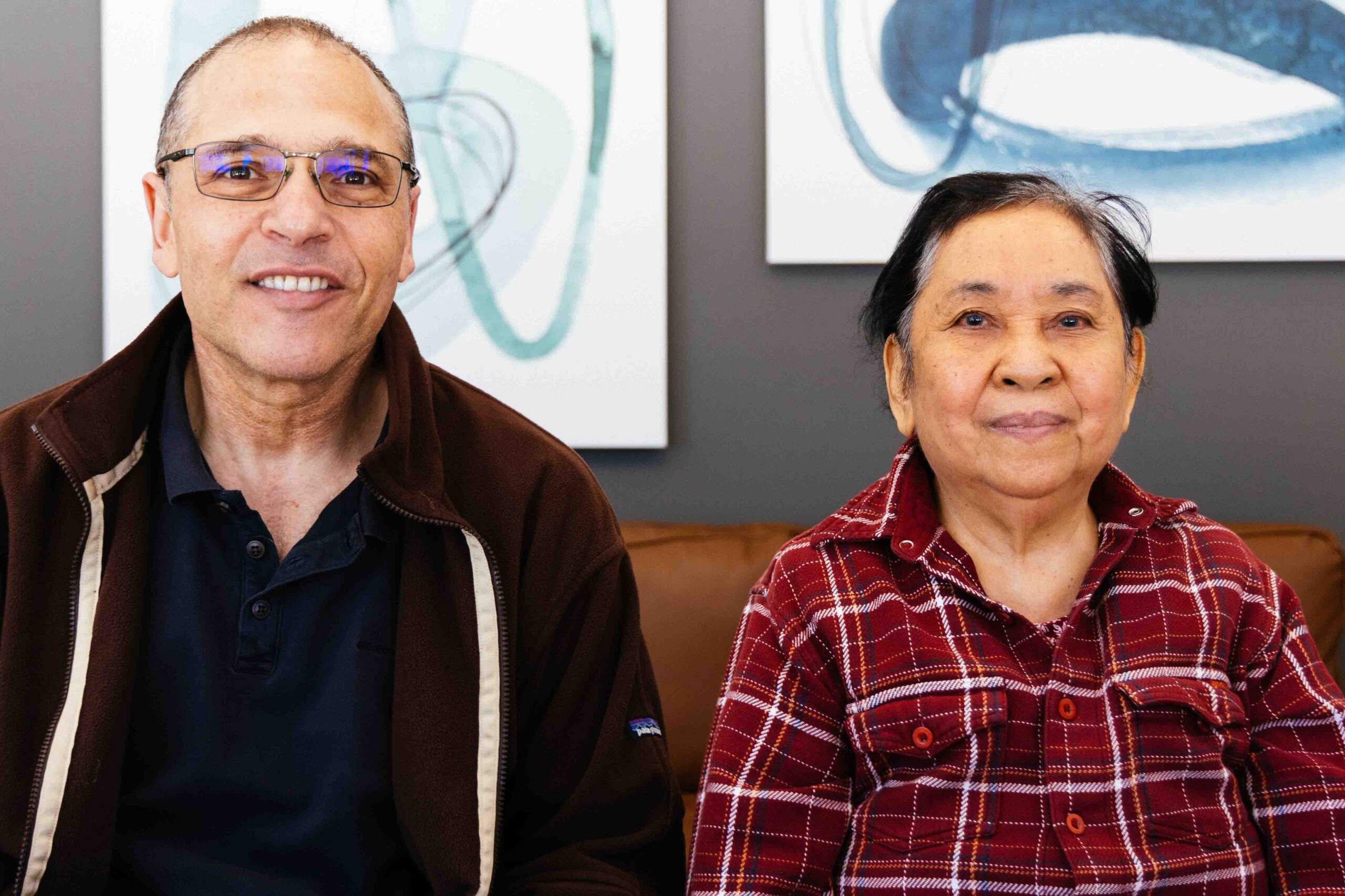
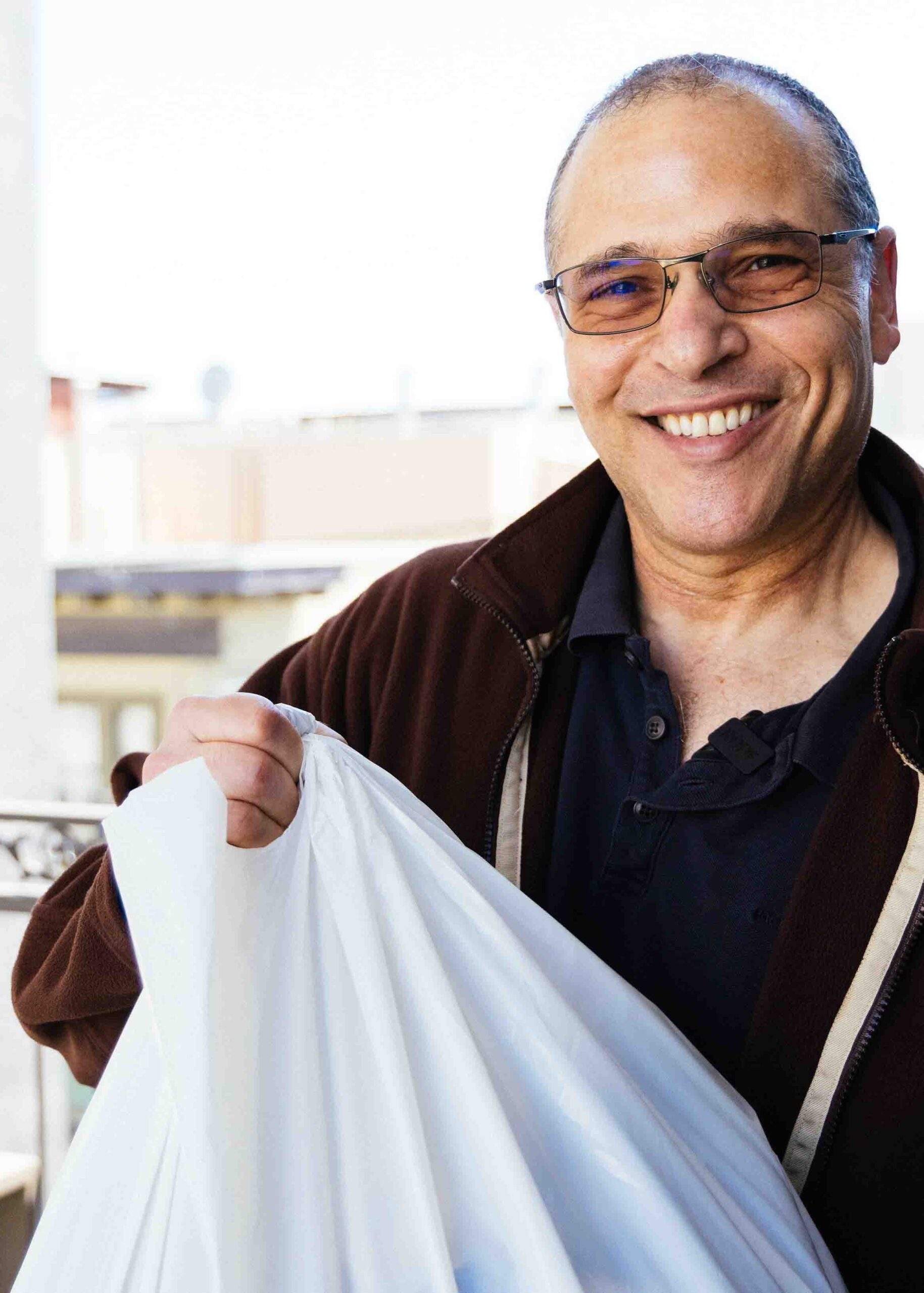
Volunteering with the Food Bank in May 2020 was really a no-brainer for Mitchell. As a retired government worker for various public health agencies, he already had a deep knowledge of epidemics and health outbreaks. Combined with the driving force of his faith, Mitchell knew he wanted to help his community out during a difficult and pivotal time.
“I come from a Jewish culture that mandates we help repair the world. I heard that the Food Bank needed volunteers, so I went down, I signed up and that’s where I’ve been,” Mitchell told us.
Community: An Antidote to Isolation
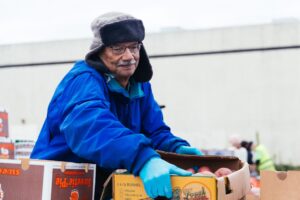
Today, Mitchell is a regular fixture at four pantries a week, with more than 1300 volunteer hours under
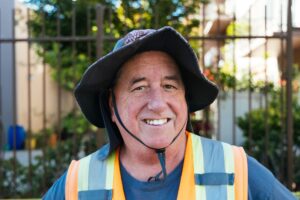
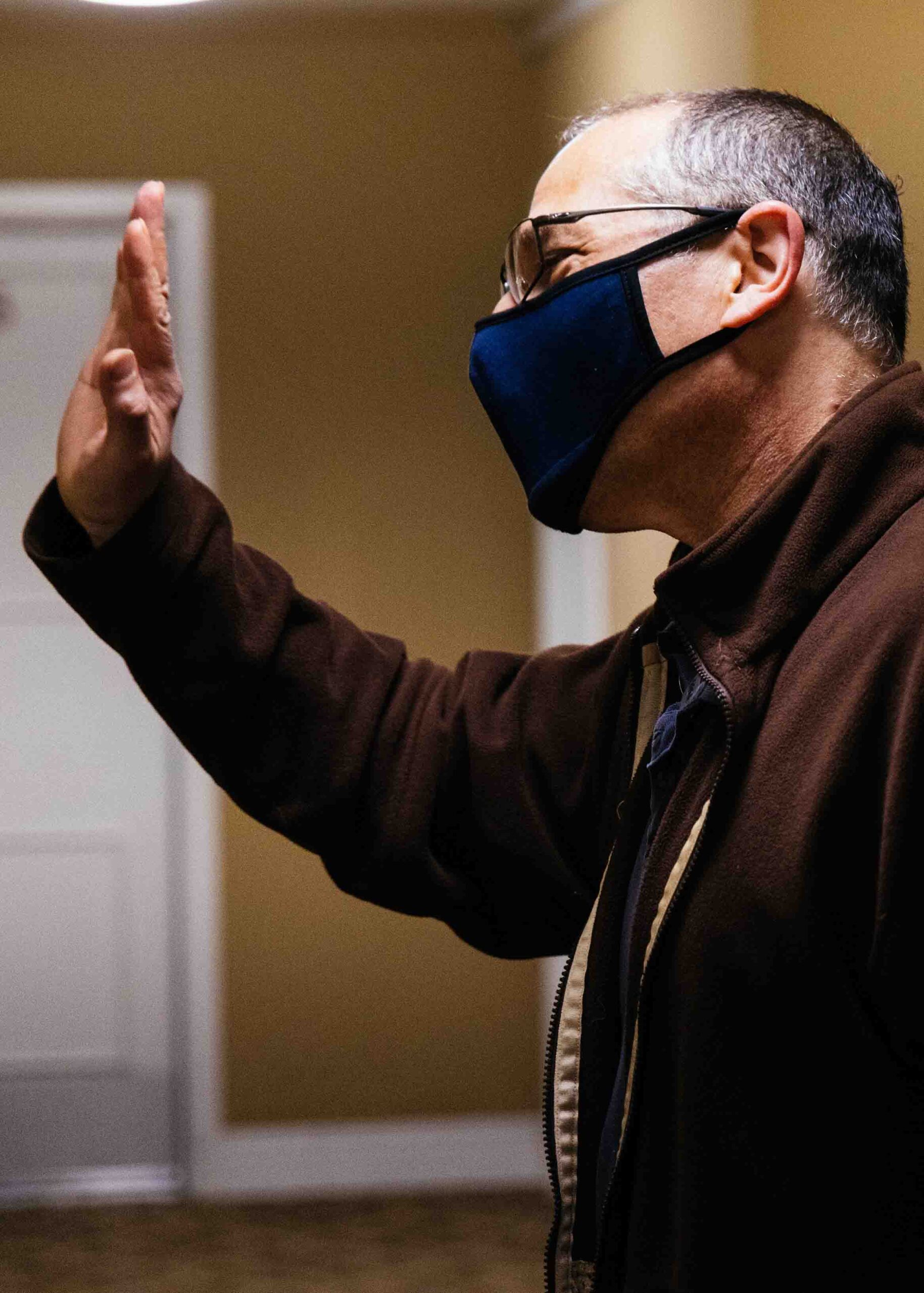
Mitchell stops to chat with Mike, Senior Pop-up Supervisor at the Food Bank
his belt. Though he has some ambitious ideas for getting more folks involved with volunteering – “get influencer people, the ones with the hot names to plug the Food Bank. Maybe Taylor Swift, I understand she’s an influencer” – we think his own testimony is pretty convincing.
“A lot of seniors isolated themselves during the pandemic. Being at the Food Bank allows you to be with real-life people. So it’s very good for the psyche, the mental health,” Mitchell shared. And aside from the social component, “going to the Food Bank is like going to the gym. I can lift a 60-pound bag of rice from a pallet and put it on the table. And I will be 80 years old in July!”
Outside of his busy Food Bank shift schedule, Mitchell is active in Lao and Burmese communities in the Bay, a longtime affinity and connection that stems back to his college days. He also became interested in Legos during the pandemic, dedicating his entire living room to elaborate Lego sets: “my living room is a museum!”
Join Mitchell
In addition to his extensive volunteering, Mitchell also donates to the Food Bank each month – a crucial way to ensure we can continue meeting the immediate needs of our neighbors while strategically planning for more long-term, holistic solutions in the future. Thank you, Mitchell, for your dedication to ending hunger in San Francisco and Marin! We can’t do this work without supporters like you.
Becoming a monthly donor or a regular volunteer are two of the best ways you can support neighbors facing hunger. Make a gift orsign up for a shift to make a difference today!
Being at the Food Bank allows you to be with real-life people. So it's very good for the psyche, the mental health." - Mitchell
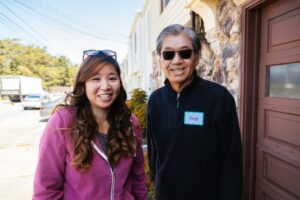
Ask a regular volunteer at our Pop-up Pantries, or any Food Bank Pop-up staffer, and they’ll smile at the mention of Stephanie Chin and her dad, George. Stephanie and George started volunteering in the early days of the pandemic, and their friendly and fun presence has been a fixture at multiple weekly pantry sites ever since.
But it’s not only other volunteers and staffers who look forward to seeing them. Through their consistent dedication to volunteering, Stephanie and George also get to know many participants – and on top of social connection, these friendships can help build a stronger safety net, too. Case in point: Stephanie shared the story of how she became friends with “Grandpa,”* a participant she first met at Roosevelt Pop-up Pantry over a year and a half ago.
Tell us a little about how you first met Grandpa and his family.
Stephanie and George volunteering at a Pop-up Pantry
Grandpa stood out because he was accompanied by a young girl, who I later came to find out was his granddaughter. I struck up a conversation with them both – his granddaughter is one of the sweetest, most polite, and mature kids you’d ever meet. I watched as she helped Grandpa push his cart and get his food. Grandpa, who’s quite independent himself, just seemed very kind and had a gentle demeanor. Seeing the two together reminded me a lot of the times when I would help and spend time with my Grandpa when he was alive.
How did volunteering help you get to know them better?
In subsequent weeks, I kept seeing the duo. I would greet them, and then check in with Grandpa to make sure he was doing okay, and with his granddaughter to see how school was going. His granddaughter and I bonded over “girly things” and our love for stickers (something I used to collect when I was her age), so one day I brought her a few to share.
She was so gracious, and the following week, she brought me a lovely handmade and handwritten card. It was also at this point that I met the rest of the family (Grandpa’s son and daughter-in-law, aka the granddaughter’s parents). We chatted and from then on, we saw each other on the regular and became friends.
In late 2022, you stopped seeing Grandpa and his family for several weeks. What happened?
There was one week when his daughter-in-law and granddaughter showed up at the pantry just to come see me. That’s when I found out that Grandpa had an accident at home – he had fallen in the kitchen and broken his leg. He underwent surgery, and was in the hospital with quite a long recovery road ahead.
Dealing with a family health issue like that isn’t easy – and often comes with medical bills that can put a strain on budgeting for other necessities like food. How did your relationship with the family support them through this difficult time?
About two months went by, and I still hadn’t seen Grandpa return to the Pop-up Pantry. I was worried about his health and also wanted to make sure that he didn’t lose access to the pantry’s services if he was still in need of the food. That’s when I remembered that included in the handwritten card that his granddaughter had given me, was her mom’s contact info.
So, I reached out to see how Grandpa was progressing and to support them in finding ways to help Grandpa get back on his feet (including maintaining his access to food from the pantries). That’s where the whole community pitched in – his kind neighbors picked up his groceries for him, while his daughter-in-law became the primary caretaker to look after him at home.
Have you been able to speak with Grandpa since his accident?
After about nine months, I finally saw Grandpa return to the pantry with his daughter-in-law. It brought my dad and I so much joy to see Grandpa up and about, walking, and looking healthy and strong. We chatted for a bit, and both thanked us for just always sending good thoughts and checking in on them. For me personally, this was honestly one of the most rewarding days at the pantry. Not to mention, it was the first time that Grandpa got to see for himself the farmer’s market-style in action!
Double cause for celebration there! That’s amazing. We’re glad that Grandpa made a strong recovery, and that he got to see the switch from pre-bagging groceries to a farmer’s market-style pantry! Thank you for sharing this story with us — and thanks to you and your dad for being such superstar volunteers, neighbors and advocates.
"I reached out to see how Grandpa was progressing and to support them in finding ways to help Grandpa get back on his feet (including maintaining his access to food from the pantries)." - Stephanie
If you asked Nick his driving motivation to home-deliver groceries to neighbors during the pandemic, he simply felt it was the right thing to do: “I feel very strongly that people should not go hungry. I think that of all the things that humans confront, hunger is the worst. So, I just wanted to help make food available.” What he couldn’t have expected was to come away from his volunteering experience at the Food Bank with some new home décor — but more on that later.
From New Neighborhoods to Familiar Faces
After working in the warehouse and at different Food Bank pantries during the early pandemic, Nick signed up to home-deliver groceries to seniors, families with young children, folks with disabilities and other neighbors who weren’t able to make it to a traditional pantry but still needed food. His shift took him all throughout the city — including neighborhoods that he, after many years of living in San Francisco, had never been to before.
Then, he got an email from the Food Bank, inviting volunteers to “adopt a building,” or deliver to the same building and neighbors each week.
“That’s how I got into home-delivering groceries at an apartment complex in Japantown. And it’s been extremely fulfilling. I enjoy seeing the same people again and again. They have a true multinational force in that building, so it’s a huge variety of people,” Nick shared.
Communicating Through Food
“I’ve had all kinds of food given to me because people just want to acknowledge me bringing food to them,” Nick told us, highlighting how despite communication barriers, both volunteers and participants find a way to share their mutual care and respect. Though Nick is the one dropping off groceries, including 70% fresh fruits and vegetables, pantry staples like rice, and proteins like eggs and chicken, many neighbors reciprocate in their own way.
“There’s one unit with an elderly couple, and the woman is a baker. She makes these palmiers that are so good! And then for example, this week, one person gave me a bag of raisins and date pieces.” Who knew volunteering could be such a sweet gig?
A Heartfelt Gift
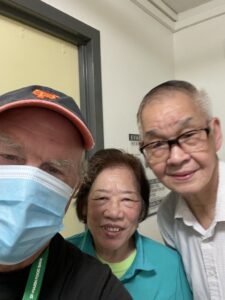
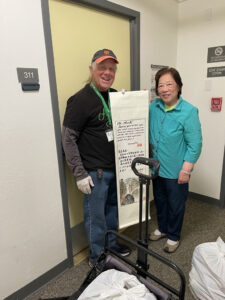
But of all the moments he’s shared with other neighbors, one memory with John and Yihung, an older couple on his delivery route, sticks out for Nick above the rest.
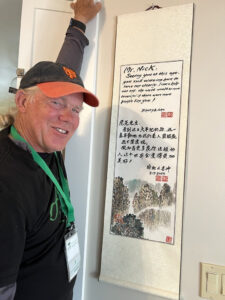
“John asked me one time how old I am [75]. I told him, and he just was blown away. He wound up making me a scroll, which is in English and in Chinese characters. It’s just incredible that he took this effort to prepare that scroll, as a way of saying thank you. I almost choke up thinking about it,” Nick shared.
The hand calligraphy of the beautifully ornate scroll reads: Mr. Nick: Seeing you at this age, you still working hard to serve our elderly. I can’t help but say: the world would be more beautiful if there were more people like you!
In Nick’s words: “It’s really a beautiful thing, isn’t it?”
Just the Delivery Boy?
Nick was immensely touched by John and Yihung’s gesture and hangs the scroll in his home to this day. But he was quick to point out that it takes a whole community of people to make delivering groceries possible, week in and week out.
“I am humbled by all the effort behind me, by all the people at the Food Bank who make this happen. That’s the extraordinary part of this. The people who are out there on the curb in all kinds of weather, loading groceries into people’s cars, people who are working in the warehouse day after day, that’s not exactly the easiest thing to do,” he said. “I’m just the delivery boy.”
Nick’s right: transformative change takes collective action. But that’s exactly why the hard work of volunteers or “delivery boys” like Nick is so critical to ensure that fresh groceries can reach neighbors across San Francisco and Marin. Thousands of families, including John and Yihung, depend on home-delivered groceries to put food on the table and keep up with the ever-high cost of groceries, rent, medical bills, gas and more.
We can’t promise you a handmade scroll of appreciation. But here’s what volunteering WILL deliver: greater connection with your community, a critical service for our neighbors, and an opportunity to help provide Food For All. Join Nick and sign up to “adopt” a route –fill out this form of interest to get more details.
It's just incredible that he took this effort to prepare that scroll, as a way of saying thank you. I almost choke up thinking about it." - Nick, Home-Delivered Groceries volunteer
It’s a simple question: what’s the dish you would make for a holiday gathering? But these answers reveal more than just food preferences. When we prepare a meal that means something to us and those we gather with, we bring a piece of ourselves and communal joy to the table.
Our community is cooking up some delicious dishes as the holiday season kicks into high gear. But before we dive into their holiday food traditions, we must recognize that steep food prices combined with a sky-high cost of living are forcing many to turn to the Food Bank to afford a holiday meal for their table. And with support from all levels of government going away, we’re struggling too. We’re serving thousands more neighbors than before the pandemic, and we need your support. Join us and reinvest in community by donating today.
Now – let’s get into those recipes!
“Fish and chicken are very important for us as Chinese people. Without fish and chicken, it wouldn’t be a holiday!” – Mimi (left) and Amy (right), Food Bank participants
“It’sdefinitely menudo and pozole season – those big bowls of warm soups! And tamales with a big cup of atole. Tamales are what I’m most excited to eat – that’sreally what lets me know the holidays are here.” – Omar, volunteer at Food Bank partner La Raza CRC
“My tradition is always making Christmas lasagna, using spinach in the ricotta so there’s green and red from the tomatoes. [It makes me think of] back in my younger days when I could entertain, andhaving friends and family over – just good times.” – Deirdra, Food Bank participant
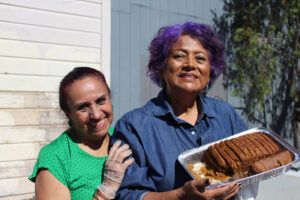
“Calabaza entachais a type of sweet pumpkin dish. It’s delicious, and the texure is very smooth. You caramelize the pumpkin with piloncillo (pure cane sugar). It’s a sugar bomb, and a very special Mexican recipe for Semana Santa and Día de los Muertos!” – Norma (left) and Gloria (right), Food Bank volunteers
“My candied yams are a family recipe that goes back many generations – itmakes me think of my great-grandmother and my great-aunt.For the spices, you need brown sugar, allspice, cinnamon, nutmeg, cloves, vanilla flavoring, a pinch of salt and lots of butter. It’s so good!” – Beverly, Food Bank participant
“I always make this for the holidays — it’s my tradition. Steam some brussels sprouts whole, then drop them in an ice bath and then quarter them. Chop up some thick bacon, cook that, then add half a cup of finely diced garlic. Toss in the brussels sprouts and some caraway seeds, get it nice and hot, and you’re done!” – Sean, Community Coordinator at the Food Bank
Thanks to our community for sharing out their favorite recipes – we hope you can garner some inspiration for your next holiday feast. Happy Holidays!
Help Us Set the Table
Grocery prices are up 13% compared to 2021 - and our neighbors need your support.
Peering in through the windows of a Cantonese barbeque spot in the Richmond district, your gaze meets a line of roast duck, dripping fatty juices onto pans of stir-fried noodles, vegetables, and roast pork below. Next door, another restaurant dishes up steaming, juicy xiao long bao.
These two restaurants are where Food Bank pantry participant Ming has worked for the past 10 years – first as a cook, now as kitchen manager of both operations. Though her job has steady hours, and she’s able to eat shift meals at work, inflation is still taking a toll on her household budget: “Groceries are really expensive,” she shared. “But even though it’s hard, I still have to support my three daughters.”
That’s why her local food pantry makes all the difference.
Pantry Ingredients Save More than Money
Ming first learned about the Roosevelt Pop-up Pantry from a friend in 2020, when the pandemic shut down restaurants all over the Bay Area and put her and thousands of others out of work. As a single parent raising a high schooler, putting another daughter through college, and helping support her eldest daughter at the time, Ming needed some support of her own. Ever since, these weekly groceries from the pantry near her work have remained a crucial time- and money-saver for this busy mom.
“What I get here is easily enough for a few days, sometimes a week — it depends on what there is. I’m really grateful, but I have to be strategic,” Ming told us. Thousands of neighbors are performing this mental math each week, stretching their groceries out to cover as many meals as possible.
Our survey of more than 9,000 Food Bank participants showed that single parent households like Ming’s are among those hit the hardest — 69% could not afford a $400 emergency expense, and 88% were worried about running out of food. And with the holiday season and family gatherings in full swing, the pressure to afford special ingredients on top of the essentials can be daunting.
For Ming, the holidays are all about reconnecting with her three daughters — and for her family, much of that connection happens through food. She says her older daughters head home for the holidays with one thing in mind: a home-cooked meal.
“‘What tastes best is Mom’s cooking!’” Ming laughed, mimicking her daughters. “I make whatever they feel like. I make a soup with carrots, tofu, bean curd sheets, shiitake mushrooms, pork — it’s my daughters’ favorite.”
Food Brings Joy Year-Round
As the pantry is winding down for the day, Ming darts back into the restaurant and emerges with massive trays of stir-fried noodles and vegetables, braised pork, and fried rice. Food Bank staff and some volunteers make their way over, dishing up portions buffet-style and gathering around the foldout table. Turns out, it’s not only Ming’s family that she’s bringing together over food.
“I asked our chef to cook these dishes for the pantry staff – they like eating it,” she shrugged nonchalantly. “Our staff have to eat lunch too. We make enough for all of us, and then we can have lunch together.”
As folks sit around laughing, chatting and eating in the sunshine, it’s clear this lunch tradition has morphed into something beyond a quick break from work. These meals are a weekly chance to slow down, connect, and be in community with others. And whether for a special occasion or a regular Tuesday afternoon, any day is a great day to share the joy of good food.
“What I get here is easily enough for a few days, sometimes a week — it depends on what there is. I’m really grateful, but I have to be strategic." - Ming, mom, restaurant worker and Food Bank pantry participant
Here at the Food Bank, our mission is to end hunger in San Francisco and Marin. On its face, the solution might seem simple: provide nutritious food so people facing hunger can thrive, not just survive. But while providing food on the ground is an essential part of our services, we know it’s not enough to simply address the hunger we see today – we must also work to address its root causes and change the policies that allow hunger to continue in our communities and plan for long-term solutions.
That’s why, in partnership with our community and other supporters, our Policy and Advocacy team works to promote proposed laws and create new policies that benefit everyone. We advocate at all levels of government, from local to state to federal – and we’d like to share with you some key wins we’ve achieved in the California legislature.
“Changing policy is a marathon, not a race,” said Marchon Tatmon, associate director of policy and advocacy at our Food Bank. “Nonetheless, we’re proud of how we’ve worked together with other advocates to achieve some pretty audacious goals. Our strength is that we’re always in conversation with our community to inform our policy priorities.”
California Anti-Hunger Policy Wins in 2023
CalFresh: According to a report by the Public Policy Institute of California (PPIC), about one in eight Californians relied on CalFresh (also known as food stamps) in 2022. The state adjusted this existing program to make it more effective, including:
Allocating $15 million to fund a pilot program raising the minimum CalFresh benefit to $50/month (currently, minimum benefits are $23/month).
Funded increased summer benefit amounts at $47 million, providing families with school-age kids more money to spend on food – a critical lifeline when free school meals disappear during summer vacation.
Secured $40 million to speed up the implementation of California Food Assistance Program (CFAP) benefits, which are similar to CalFresh benefits for undocumented immigrants.
Legislated reimbursement funds for skimmed CalFresh benefit dollars and increased benefit theft protection.
Secured $9.9 million for a broader Fruit and Vegetable pilot program giving extra CalFresh money for purchasing produce.
School Meals for All: Chances are, more kids are hungry than you think: according to the same report from PPIC, roughly half of the children in our state will participate in CalFresh by the age of six. Together with other activists, we successfully lobbied for more than $300 million to fully implement free school meals for all kids in California.
Social Security: Many older adults and adults with disabilities rely on this safety net to pay most or all of their expenses, including buying food. We helped secure a grant increase of 8.6% to raise the incomes of these vulnerable groups.
CalFood: Secured $60 million in funding for food banks across the state to buy California-grown produce, strengthening our local economy while also providing fresh fruits and vegetables to neighbors facing hunger.
These policy wins over the last year bring us another step closer to ending hunger – but our work isn’t done yet. In coalition with partners, participants and other activists, we’re determined to continue advocating for just, compassionate and equitable public policy that truly makes a difference for our communities.
Changing policy is a marathon, not a race. Nonetheless, we’re proud of how we’ve worked together with other advocates to achieve some pretty audacious goals. Our strength is that we’re always in conversation with our community to inform our policy priorities.” – Marchon Tatmon, director of policy and advocacy at our Food Bank
Jalal Alabsi is many things: he’s a formerly-practicing doctor, he’s an immigrant from Yemen, he’s a resident of San Francisco’s Tenderloin neighborhood. All these identities and more come together to inform his comprehensive work to end food insecurity in his community. From securing funding for halal food vouchers to lowering stigma around accessing assistance, Jalal has collaborated with organizations like our partner Tenderloin Neighborhood Development Corporation (TNDC) to help end hunger.
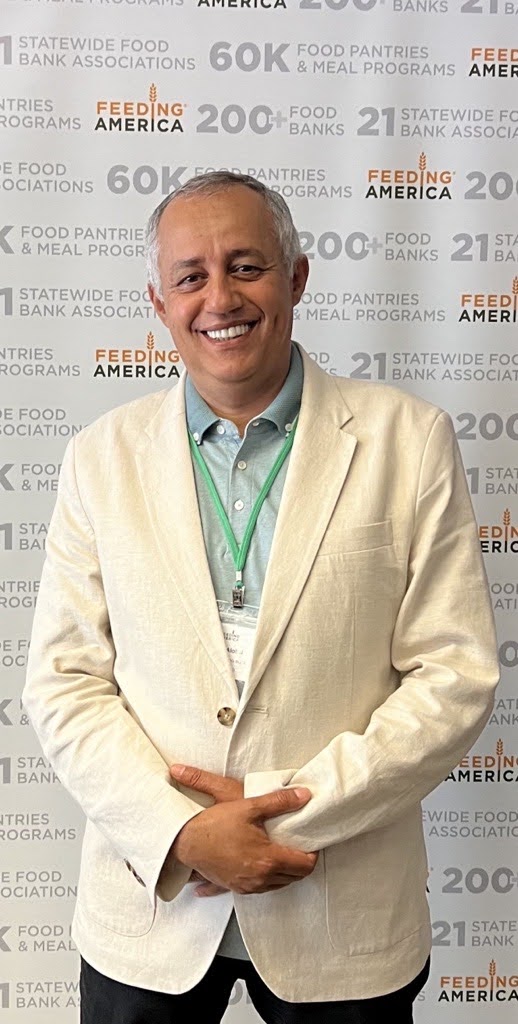
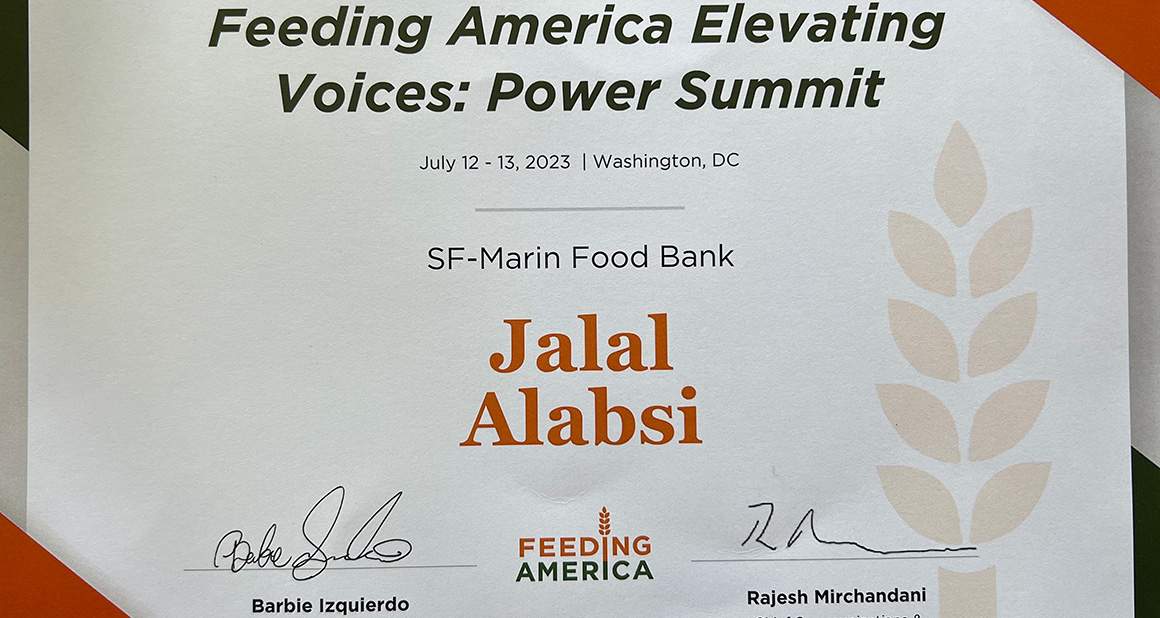
Jalal’s years of successful activism are exactly why our partners at TNDC suggested him when the Food Bank asked for nominees for the first-ever Elevating Voices: Power Summit. Hosted by Feeding America in Washington, D.C., the Summit brought together activists who have lived experience with food insecurity and connected them with key decision makers to discuss effective solutions to hunger.
We caught up with Jalal to hear more about the Summit and his work in the Tenderloin.
Food Bank (FB): Before we dig into the Elevating Voices: Power Summit, let’s hear a little more about your work in the Tenderloin.
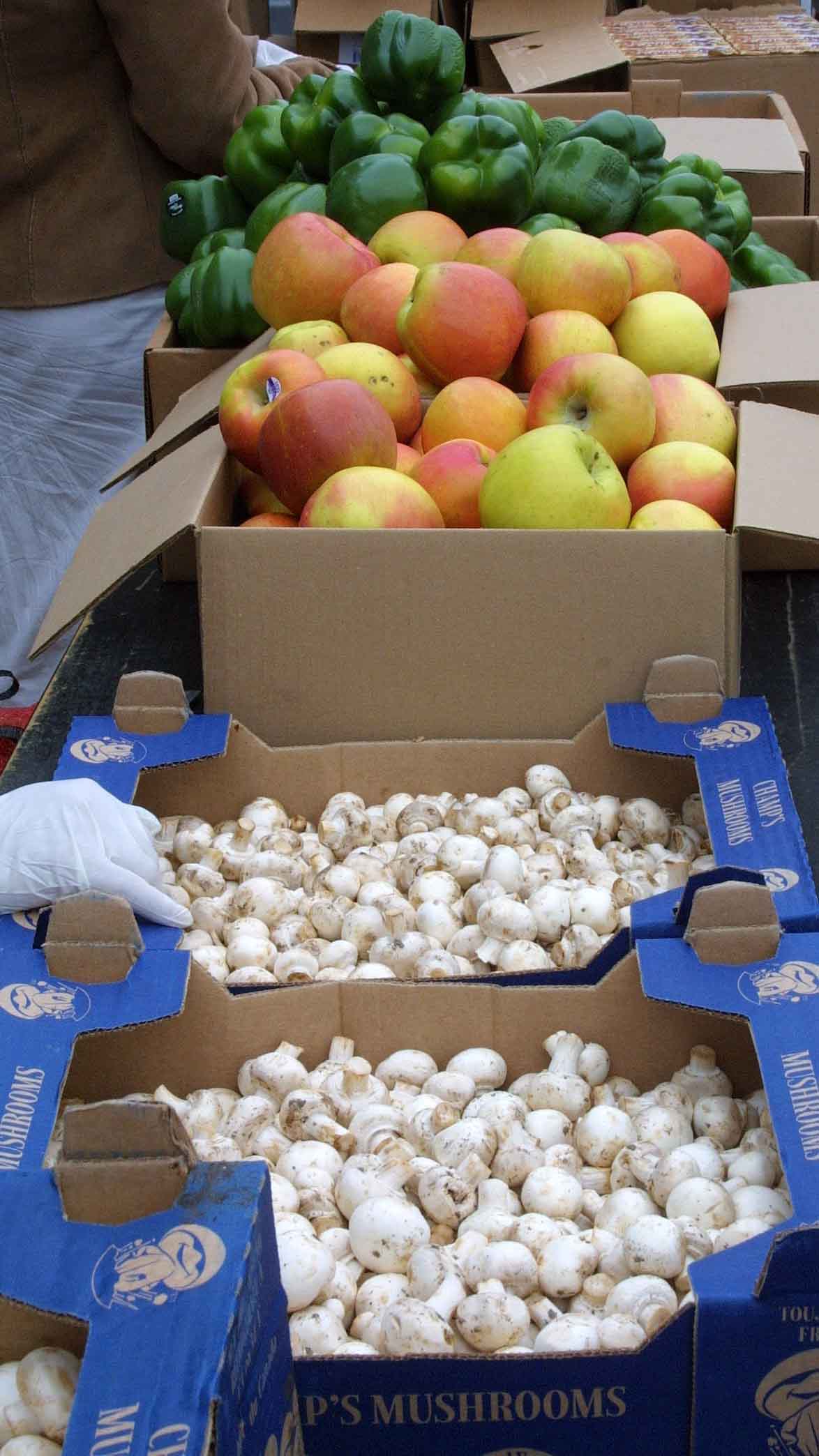
Jalal: I’ve been working to end food insecurity in my neighborhood for over five years. I started out volunteering at different places, working as a translator for folks who speak Arabic and explaining how people can use food that they weren’t culturally familiar with – I gave people recipes for mushrooms, for example.
[But I realized] that just giving out food isn’t enough – there are bigger problems than that. So, I decided to take classes at City College [of San Francisco] to be a community health worker, where I did my research project on hunger in the Tenderloin.
Now, I’ve worked with City Hall to get $500,000 in funding for halal food vouchers so Muslims can eat their preferred foods. I’ve worked with a few organizations to start the Food Policy Council to discuss hunger in the Tenderloin. [On the ground], I work every day to decrease the stigma around accessing food assistance. And I still give food directly to my neighbors.
FB: What inspired you to do this work?
Jalal: I live with this every day. When I first came to the US, I had problems with hunger. I feel what people are feeling when they say they are hungry. You get sick when you don’t have enough food, you can’t live even on the street without food. And now, I’ve gotten the education to be able to do something about food insecurity.
FB: What are the biggest barriers to ending hunger?
Jalal: One of the biggest challenges is the stigma around getting food assistance. Many people live with this, and it means they may eat only twice a day so they can afford to live on their salaries. But I explain to people, “[food assistance] is yours, you deserve this, it’s your right”.
Another challenge is CalFresh (food stamps). People need CalFresh. But it’s such a long and confusing process to apply, especially for people that don’t speak English, that for some people it just isn’t worth it.
FB: Tell us about the Elevating Voices: Power Summit.
Jalal: The Summit happened on July 12 and 13, and it brought together a group of activists from across the country who have lived experience with hunger.
The first day, we met with Feeding America’s CEO, Claire Babineaux-Fontenot. She wanted to hear from us: who are we, what do we do, what is the next step to end hunger? The objective was to reach a shared understanding of what the power landscape looked like – they wanted to center actual experience with hunger in finding solutions.
Overall, I would call it a long conversation. We had small breakout sessions discussing our advocacy, everything from why we do the work we do, to how we advocate for our community.
FB: What were your takeaways from the Summit?
Jalal: We learned how to use our “why” to create change – instead of complaining about a problem, we can turn that complaint into a policy ask. If you use your story and real examples of how you lived with hunger, if you connect feelings and emotions to suggestions for change, then you’ll be able to convince more people that your issue is important and needs to be addressed.
I met with a lot of different people with their own experience. I can see a way where we bring these learnings to San Francisco, so more people can learn how to use their experience to make change. Hunger is a huge problem. It’s different in different places, but the effects are the same.
FB: Is there anything else you’d like to share?
Jalal: I’m grateful to the Food Bank for supporting me in going to the Summit – it was a great opportunity to make connections with people in other states so we can share information, knowledge, and strategies.
Hunger is solvable. We have the resources. We just need to figure out how to do it.
Hunger is solvable. We have the resources. We just need to figure out how to do it." - Jalal Alabsi, our nominee to the first annual Elevating Voices: Power Summit
Home-Delivered Groceries (HDG) is one of the flagship services our Food Bank offers, serving thousands of participants every week. HDG fills critical gaps in the food assistance landscape: it means that people who find it difficult or impossible to attend food pantries, like seniors or adults with disabilities, can still receive the fresh, nutritious groceries they need. “The produce is just wonderful,” shared Violet, a resident of the Richmond district and HDG participant. “It’s hard for me to lug vegetables home – they’re heavy, you know? And I don’t want to be a burden on my sons and their families.”
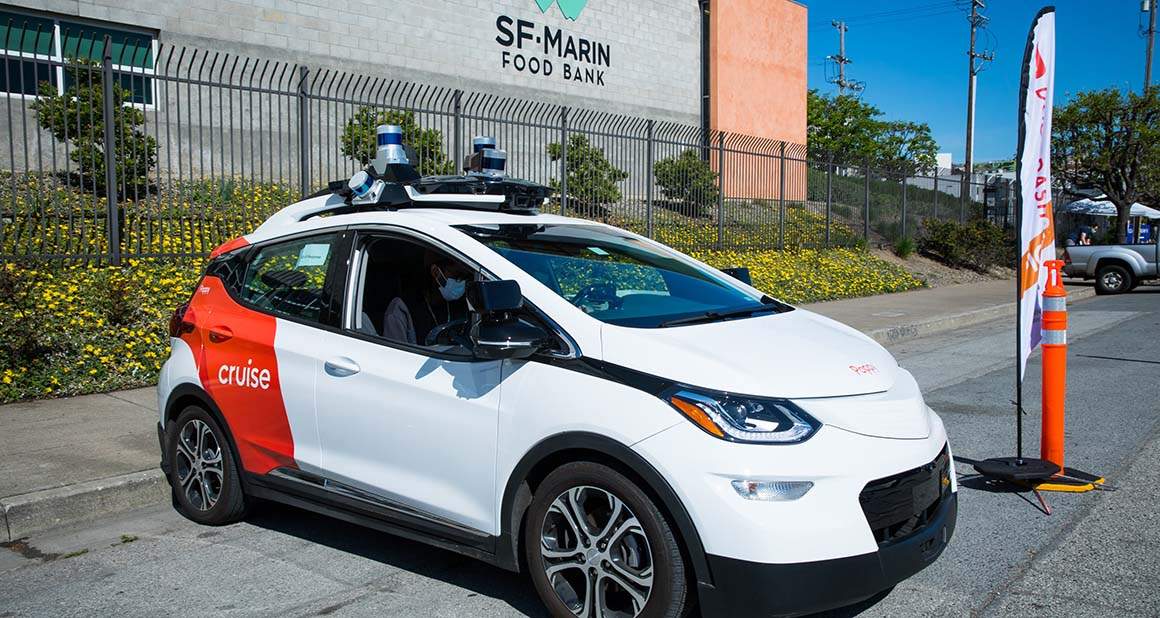
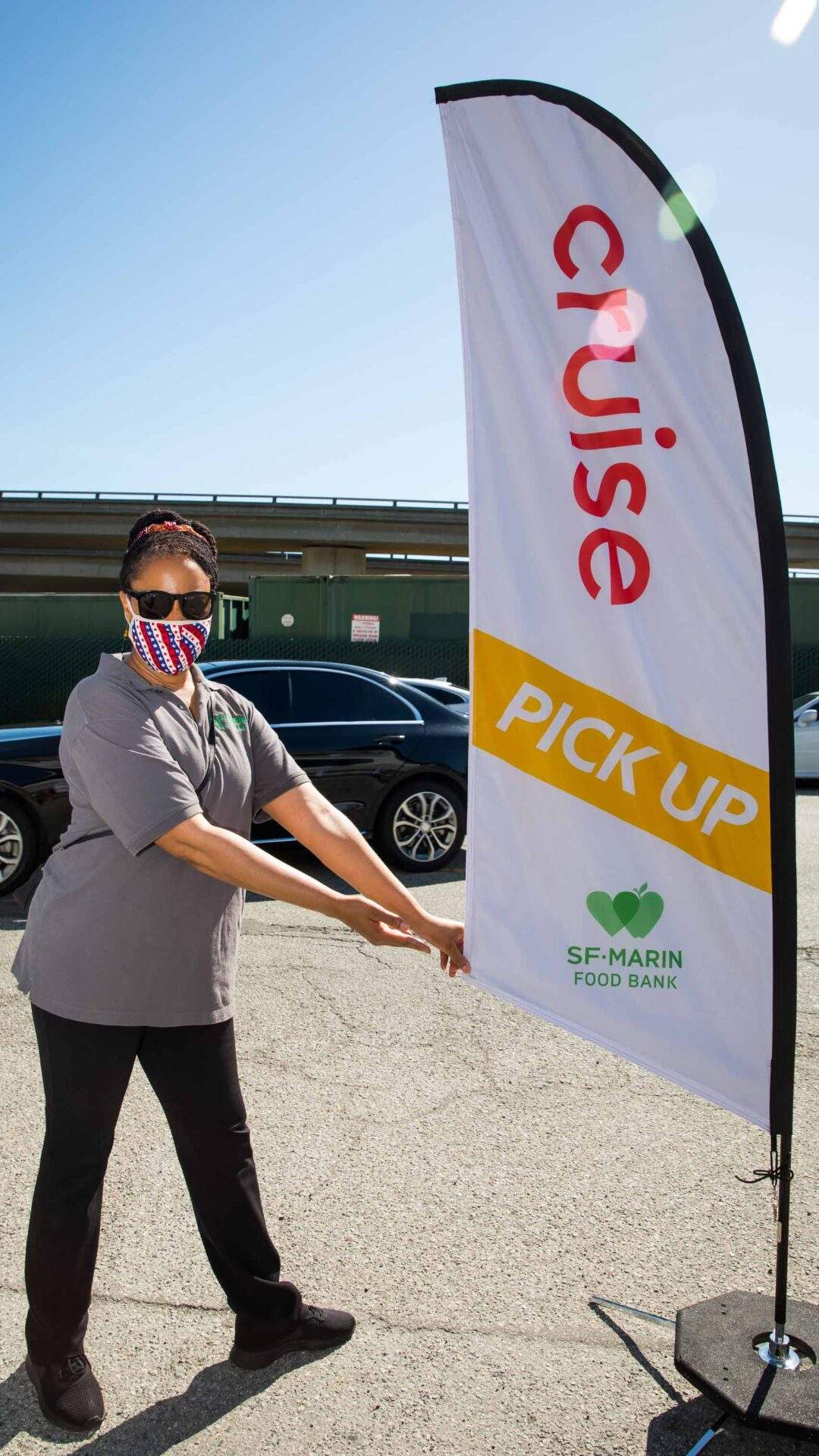
But HDG wasn’t always as robust as it is now. Thanks to partners like Cruise, we were able to quickly scale the service when shelter-in-place began in 2020. Their commitment to serving the community is moving us closer to providing food for all. We sat down with Cruise to hear more about our partnership.
Food Bank (FB): When and how did the partnership with the Food Bank come about?
Cruise: When the pandemic hit in early 2020, food insecurity skyrocketed across San Francisco. The number of people who needed support from the San Francisco-Marin Food Bank nearly doubled.
At Cruise, we started by simply asking how we could help. After talking with the Food Bank’s leadership, we committed part of our all-electric fleet of autonomous vehicles (AVs) to quickly scale the HDG program and aid in delivering groceries to those in need. What initially started as a crisis response program in 2020 has grown into a long-term community partnership – to date, we’ve delivered millions of meals with our AVs – and more than three years later, we’re honored to continue delivering these meals six days a week.
FB: What benefit have you seen to giving back to the community in this way?
Cruise: Our Cruise for Good partnerships have provided benefits for our community and our company. We’ve delivered over 2.5 million meals to local residents in need, particularly in underserved areas. We’re proud to directly be partnering with San Francisco-Marin Food Bank in a robust way – our teams work together on a daily basis to ensure we’re utilizing the best of our technology to meet a community need in bringing nutritious food to people in a way that fosters equity and dignity.
We’ve also learned through this process. Community partnerships have allowed us to tangibly see how our technology can be harnessed to directly meet the needs of our neighbors – and as a result, these partnerships have been a significant source of employee pride as well as provided operational learnings for our business.
FB: Cruise took the 1% Pledge, did your partnership with the Food Bank influence that decision in any way?
Cruise: Absolutely! Serving our communities is core to our mission, but it was this partnership that started in the pandemic that was pivotal for us in realizing our potential to meet urgent challenges in our community even while we were pre-commercial.
While this began organically, it is now core to how we operate. Cruise for Good is a formal program anchored by our Pledge 1% commitment to dedicate at least 1% of our fleet to serving the needs of our local communities.
FB: Cruise isn’t just working with the Food Bank, are there other ways you are engaging with the community?
Cruise: The hunger crisis also sits at the intersection of a climate crisis, with over 30 million Americans facing food insecurity, while food waste reaches record highs. Recently, we partnered with food rescue nonprofit, Replate, to launch a first-of-its-kind driverless, all-electric food rescue initiative to combat food insecurity, food waste, and climate change. Cruise’s AVs now deliver recovered meals from local restaurants and business to nonprofits serving those experiencing food insecurity.
In addition, millions of Americans don’t have access to reliable transportation, which in turn creates barriers to economic mobility. That’s why we extended our partnership with nonprofit SF New Deal to provide free rides to late-shift service workers here in San Francisco. In the first few months of this ridehail partnership, Cruise has provided hospitality workers with thousands of rides to workers who often have limited safe or affordable ways to get to and from work.
FB: September is Hunger Action Month, a time for people to step up to take tangible action to end Hunger. How would you encourage other companies to take action?
Cruise: Hunger Action Month is an important reminder: it’s up to all of us to take action to end hunger.At Cruise, social impact is in our DNA and embedded in our mission to build more sustainable, equitable, and accessible communities – so it’s natural that our employees have shown genuine enthusiasm for this partnership and many teams across Cruise have volunteered and even led fundraising campaigns for the Food Bank. Volunteering with San Francisco-Marin Food Bank is a simple but effective way for individuals to take action to combat food insecurity. We’d also love to see other companies at One Big Table, where we’ll come together as a community to fundraise to end hunger.
We encourage companies of all sizes to leverage their resources (employee time and talent, in-kind and financial donations) to support critical organizations like San Francisco-Marin Food Bank – and consider joining Pledge 1% to institutionalize these commitments.
Ring twice. Leave it at the door if there’s a note. Knock once, but loudly, he’s hard of hearing. She’ll get the door; it just takes her a while to get up.
By now, Home-Delivered Groceries volunteer Gideon has these quirks down pat. A freelance journalist by trade, he had just started remote work when the pandemic hit. Three weeks into lockdown, his friend posted on Facebook about a volunteering opportunity with the Food Bank, delivering groceries to homebound neighbors. Gideon was in: “There are things you miss doing, being work from home the whole time. This kind of fills in some of those gaps,” he told us.
Volunteering: A Social Exercise
Gideon loads grocery bags into his car for delivery.
After trying different routes, Gideon eventually chose to “Adopt a Building” or make regular deliveries to the same apartment complex each week. For three years, Gideon’s Saturday mornings have looked very similar: roll up to the Food Bank warehouse, pack his sedan with 20 grocery bags, knock on his neighbors’ doors, and deliver fresh produce, proteins, and grains from the Food Bank wagon in tow.
It’s at this apartment complex where he first met Victoria, who we met in the previous story, along with 19 other neighbors he’s come to know in the years since. For Gideon, volunteering is equal parts exercise – “a trainer once told me the best workouts are the ones that are repeatable!” – and socializing. At one apartment, he goes in to chat with a 94-year-old woman and her daughter offers him a taste-test of the noodles they’re cooking. At another, he shares that they gifted him caramel popcorn after the Warriors were in the finals last year. Even in these passing interactions, it’s clear how food and care go hand in hand.
Showing Up, Every Week
Gideon waves hello to one of the participants along his route.
“It creates a sense of membership,” Gideon said of delivering groceries each week. “You know you’re part of a community, and seeing familiar faces, there’s a type of connection. It’s made [this time] a lot less grim and lonely, without a doubt.”
As we head to make the last delivery of the day – Victoria’s apartment – Gideon shares he’s excited to sit in on the interview and learn more about her life. With 20 deliveries to make, it’s not every day he gets to sit down for a conversation with one of his neighbors. “I look forward to this,” he told us. “I have a stressful job where I don’t interact with people, and volunteering is kind of the opposite. We don’t really have that much time to talk to any [neighbors] individually, but we want to be there for them. We want to show up.”
Gideon (left) and Victoria (right) in Victoria’s building lobby
It creates a sense of membership. You know you're part of a community, and seeing familiar faces, there's a type of connection. It's made [this time] a lot less grim and lonely, without a doubt.”
As a retired nurse and home health aide of 25 years, Victoria knows the importance of staying active and eating healthy. In early 2020, she “started going to the YMCA – they have a lot of activities for seniors. There’s bingo, exercise [classes], and every Tuesday they give us food,” she told us at her apartment in the Mission, where she’s lived alone for the past 10 years.
When the pandemic hit, everything at the YMCA shut down – along with the food pantry across the street where Victoria would pick up groceries each week. “I can stand for a couple of minutes, but if the food I get is too heavy, it’s hard for me to get to my apartment,” she shared. “So, when the program was changed, and they delivered it, I was very happy.”
Home-Delivery Makes a Difference
Gideon (left) and Victoria (right) in Victoria’s building lobby
That new program was Home-Delivered Groceries (HDG), which was greatly expanded by the Food Bank during the pandemic when many neighbors like Victoria were homebound and hundreds of neighborhood food pantries were closed. Once a week, HDG participants get a knock at their door, and a bag full of leafy greens, seasonal fruits, proteins, and grains are delivered to their doorstep with a smile.
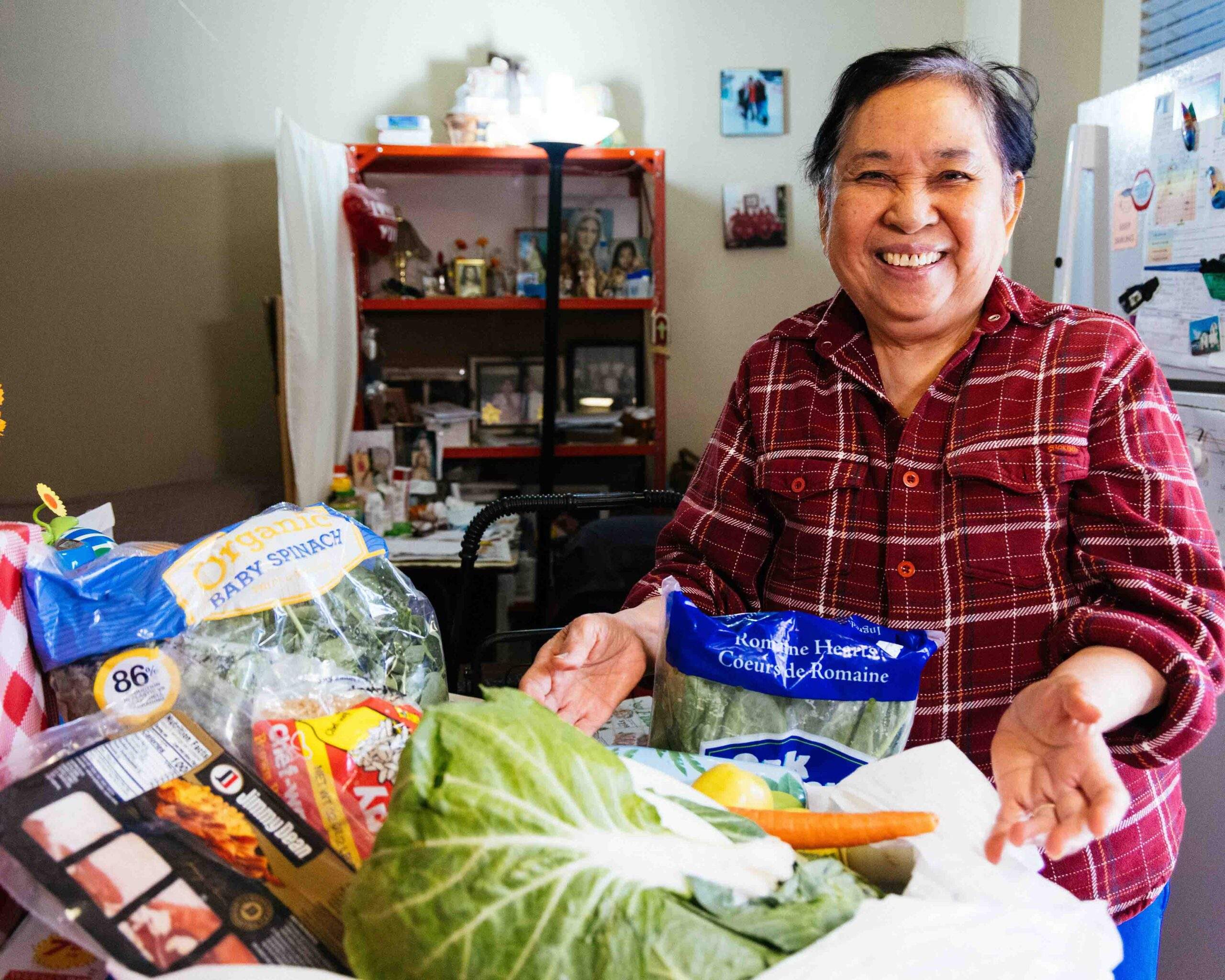
“That’s why I’ve known Gideon for a long time. He always comes and delivers the food every Saturday, which I appreciate so much,” Victoria shared with us, gesturing to Gideon, her regular HDG volunteer of three years. “He’s working every weekend – we should give him some award, signed by the governor,” she proposed, earning a laugh and a “I’ll take it!” from Gideon.
Convenient, Consistent Food Access
Gideon lifts a bag of home-delivered groceries.
Victoria is very health conscious, especially since getting diagnosed with glaucoma. With ingredients from HDG, she can make the nutritious meals that help ward away what she calls the “three brothers and sisters” that visit you as you get older: high blood pressure, high blood sugar, and high cholesterol.
“I have to watch my diet sometimes. [The Food Bank] gives mostly everything – bell pepper now, mushroom, ground beef, turkey, eggs, lettuce, tomatoes, oranges… so, mostly the food that [I] eat every day. I’ll use that in a stir fry, or sometimes I make sinigang, sisig, adobo, or lumpia shanghai. I enjoy it.”
Convenient, consistent access to healthy food helps take a huge stressor off Victoria’s plate, especially as a retiree on a fixed budget. Her income of $850 per month from Supplemental Security Income has to stretch to pay for her utilities, rent, and various medications and medical bills – a nearly impossible task in San Francisco. “Because of [my] age, I cannot go back to work. This is what I get. And the prices of commodities are going up. With the help of the Food Bank, at least I have something to eat.”
Until Next Saturday!
In the coming months, Victoria is focused on attending checkups for her glaucoma, and looking into attending a friend’s Episcopalian church community – she says the bingo is a big draw. And, of course, she’ll be looking forward to Saturdays, both for her grocery delivery and chatting with Gideon. After showing us the bounty in her bag and contemplating what she’ll make for dinner – “maybe some omelet” – she leaves us with a few parting words that Gideon’s already familiar with.
“When I see him, I say, ‘I cannot repay you for all these sacrifices that you are giving to us.’ So I say, ‘Be healthy, be safe, and enjoy life.’ That’s the thing I tell [him] every Saturday he comes and delivers my food.”
Victoria shows off her grocery haul.
When I see him, I say, ‘I cannot repay you for all these sacrifices that you are giving to us.’ So I say, ‘Be healthy, be safe, and enjoy life.’ That's the thing I tell [him] every Saturday he comes and delivers my food.”


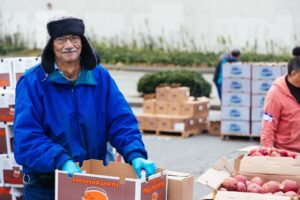 Volunteering with the Food Bank in May 2020 was really a no-brainer for Mitchell. As a retired government worker for various public health agencies, he already had a deep knowledge of epidemics and health outbreaks. Combined with the driving force of his faith, Mitchell knew he wanted to help his community out during a difficult and pivotal time.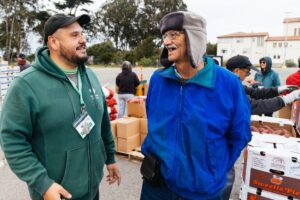
 a pallet and put it on the table. And I will be 80 years old in July!”
  way to ensure we can continue meeting the immediate needs of our neighbors while strategically planning for more long-term, holistic solutions in the future. Thank you, Mitchell, for your dedication to ending hunger in San Francisco and Marin! We can’t do this work without supporters like you.
 Share this quote
 about his health and also wanted to make sure that he didn’t lose access to the pantry’s services if he was still in need of the food. That’s when I remembered that included in the handwritten card that his granddaughter had given me, was her mom’s contact info.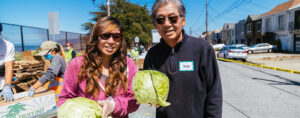
 After working in the warehouse and at different Food Bank pantries during the early pandemic, Nick signed up to home-deliver groceries to seniors, families with young children, folks with disabilities and other neighbors who weren’t able to make it to a traditional pantry but still needed food. His shift took him all throughout the city — including neighborhoods that he, after many years of living in San Francisco, had never been to before.
  couple on his delivery route, sticks out for Nick above the rest.
 “I am humbled by all the effort behind me, by all the people at the Food Bank who make this happen. That’s the extraordinary part of this. The people who are out there on the curb in all kinds of weather, loading groceries into people’s cars, people who are working in the warehouse day after day, that’s not exactly the easiest thing to do,” he said. “I’m just the delivery boy.”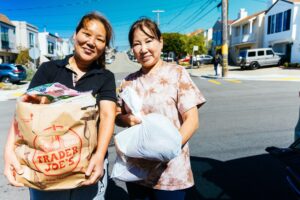
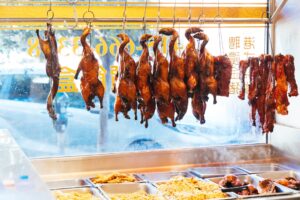 below. Next door, another restaurant dishes up steaming, juicy xiao long bao.
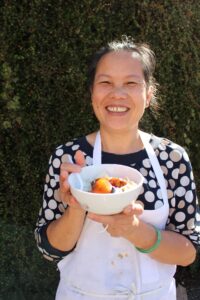 down restaurants all over the Bay Area and put her and thousands of others out of work. As a single parent raising a high schooler, putting another daughter through college, and helping support her eldest daughter at the time, Ming needed some support of her own. Ever since, these weekly groceries from the pantry near her work have remained a crucial time- and money-saver for this busy mom.
 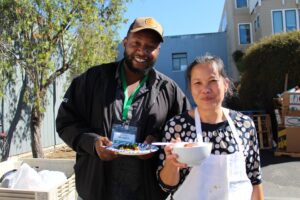 volunteers make their way over, dishing up portions buffet-style and gathering around the foldout table. Turns out, it’s not only Ming’s family that she’s bringing together over food.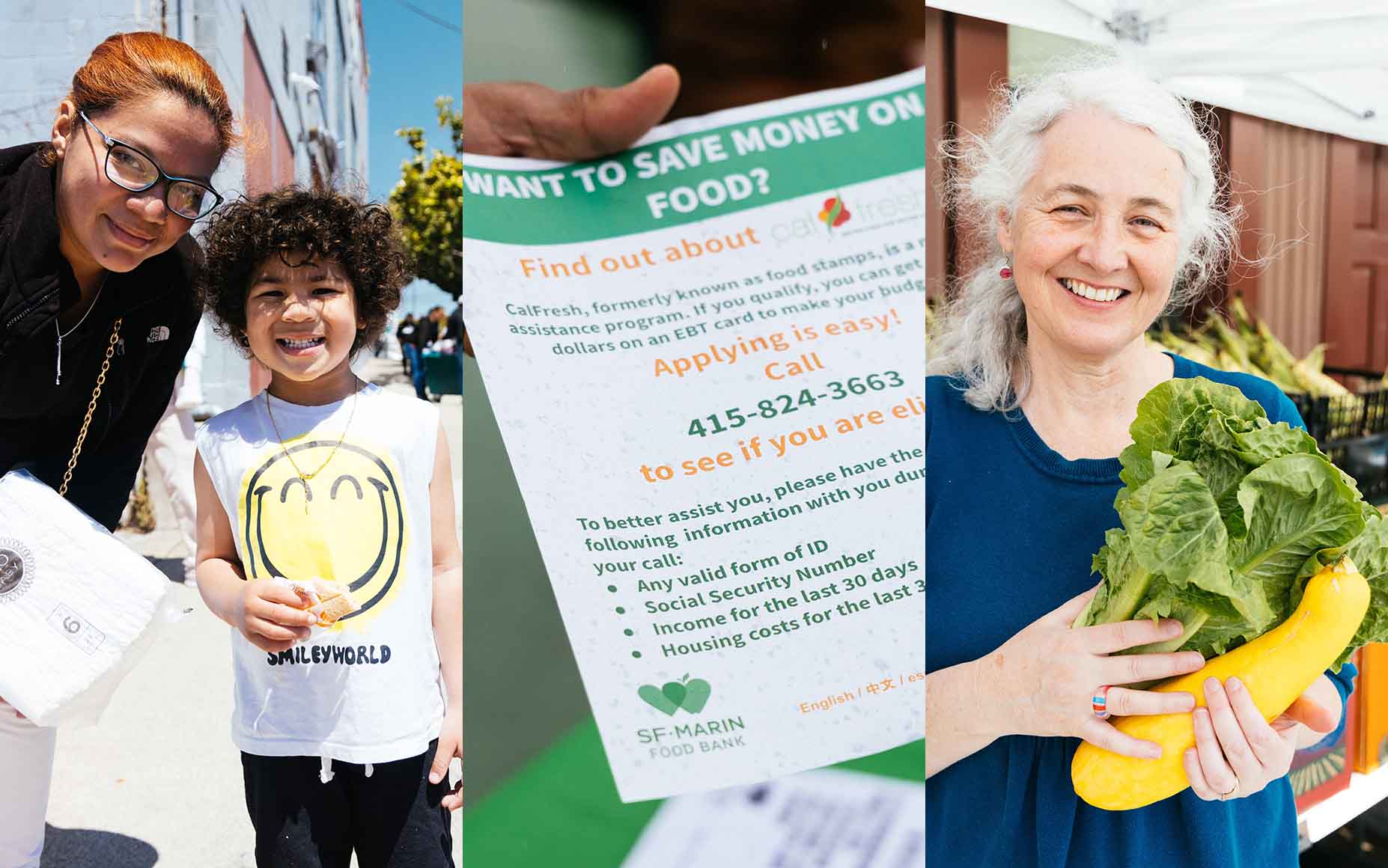
 Food Bank (FB): Before we dig into the Elevating Voices: Power Summit, let’s hear a little more about your work in the Tenderloin.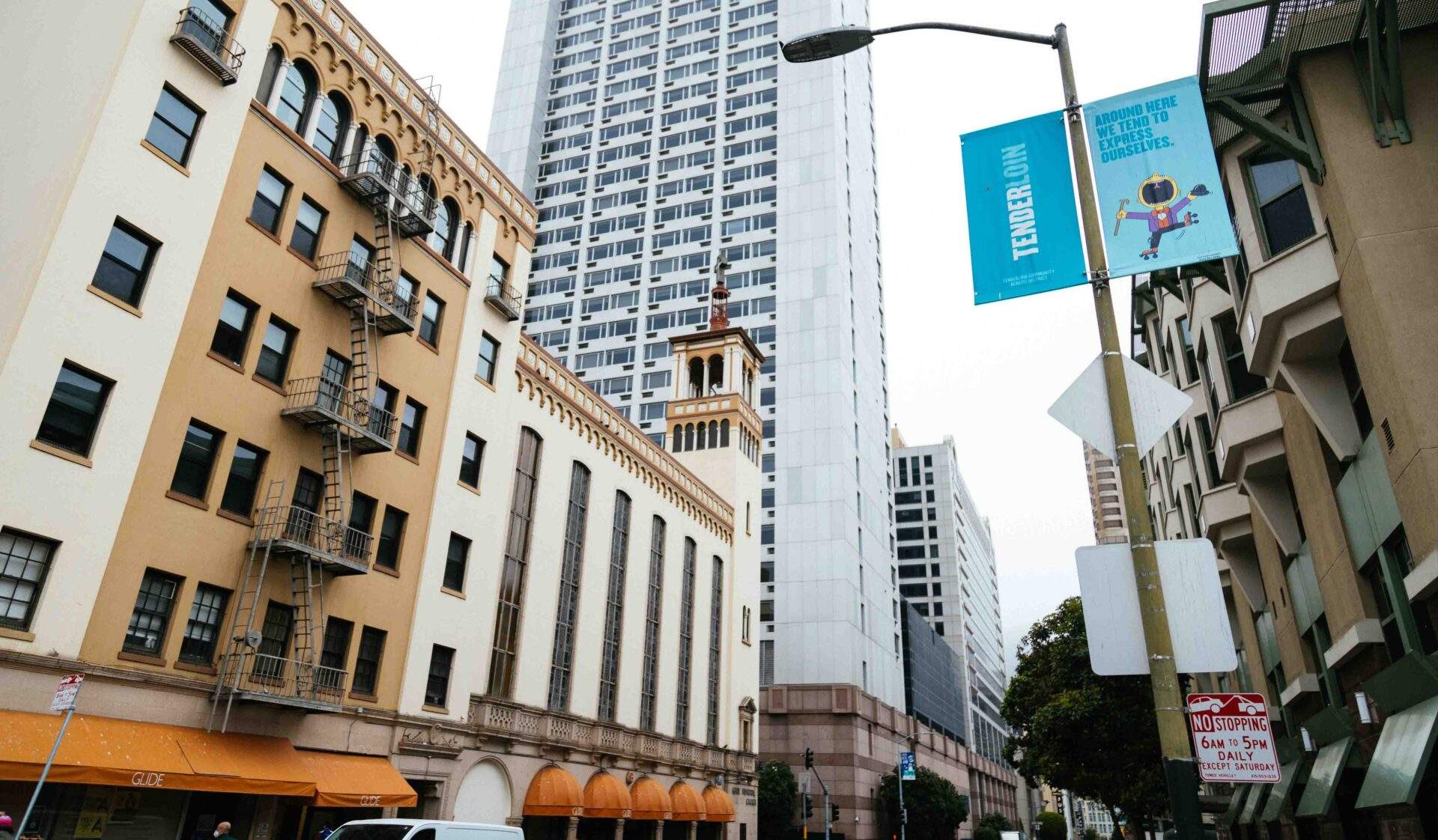
Share