For centuries, bread has been the fabled metaphor for sustenance, nourishment, and life. No matter what your background is, when we come together to break bread and share a meal, there’s a feeling of goodwill and friendship. At the Food Bank, we invite you to symbolically break bread and be a permanent fixture in our community by donating to our “bread wall.”
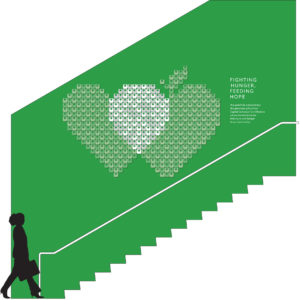
As you may know, the Food Bank has broken ground on a major $40 million expansion to better serve our neighbors in need. For every donor who gives between $2,500 and $25,000 toward this project, a bread tag with your name will be placed on a giant wall in our new lobby.
A bread “tag” is one of those pieces of plastic to tie a bread bag closed and keep it fresh. This is our twist, and each tag will have your name on it. But unlike actual bread tags that have an expiration date printed on them, your gift will never expire. It is a legacy of your generosity to help provide ongoing sustenance to thousands of hungry neighbors in need of food.
The Food Bank’s expansion is long overdue to serve the growing need in our community as income inequality grows and rents skyrocket. Before the pandemic hit, we were bursting at the seams in our current facility and distributing 48 million pounds of food in a warehouse designed for only 30 million.
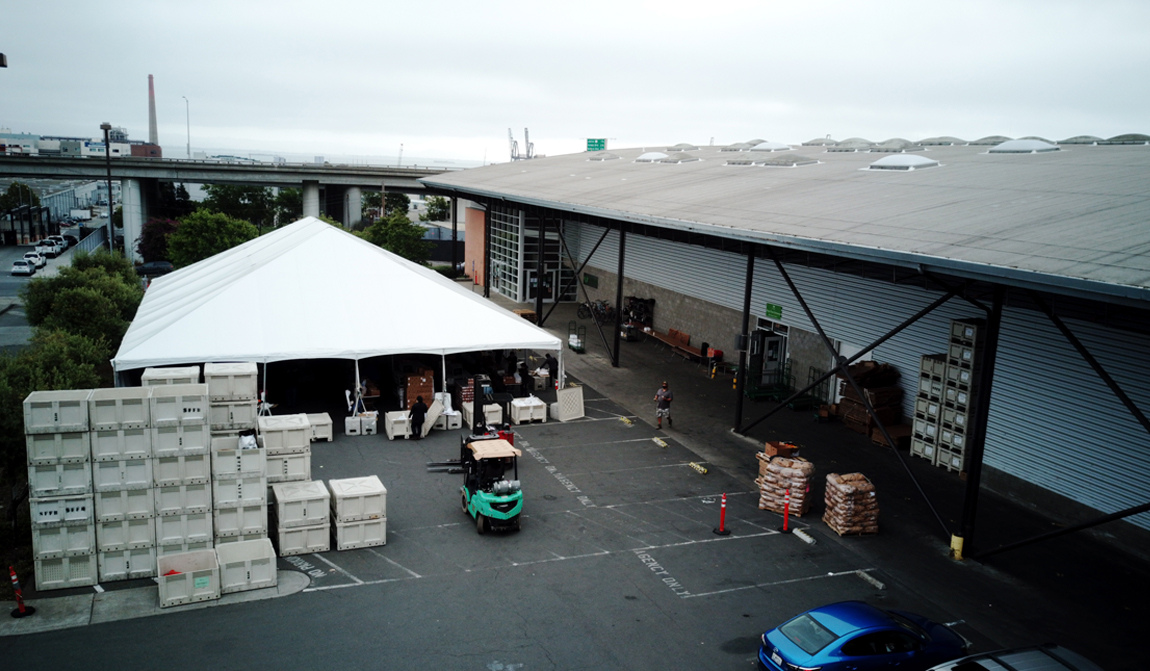
COVID-19 put a magnifying glass on hunger, with so many people turning to the Food Bank with job loss and reduced hours. In the crisis, the Food Bank has made do with makeshift tents and numerous rented warehouse spaces around town. It’s been costly and inefficient.
With our $40 million expansion, we’ll have the space to house all of our San Francisco operations under one roof, distribute 75 million pounds of food annually, and expand the number of people we serve from 140,000 to 200,000 weekly.
Construction is underway! We’ve closed the parking lot, started excavating the hill in the back, and have moved our entrance lobby to the other side of the building. With your financial support, we can make our goal of a grand opening in the spring of 2022.
We invite you to symbolically break bread with our larger Food Bank community and ensure that our neighbors always have something to eat.
More than half of the Food Bank’s participants are Asian Americans who are struggling to put food on the table. Despite the challenges, we’ve seen the resilience, solidarity, and sense of community from our neighbors.
May is Asian American and Pacific Islander (AAPI) Heritage Month and we want to thank all of our partners who serve the AAPI community – we couldn’t do the work without them! This month please consider supporting one of our many AAPI partners. Here are just a few:
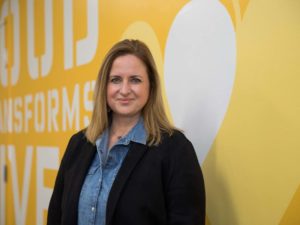
100 days into her tenure at the Food Bank, Executive Director Tanis Crosby reflects on her experience, her gratitude, and on the enormity of the imperative work ahead.
What’s your overall pulse, 100 days in?
I feel incredibly grateful and humbled and… at home.
What’s one memory from your first 100 days that will stick with you?
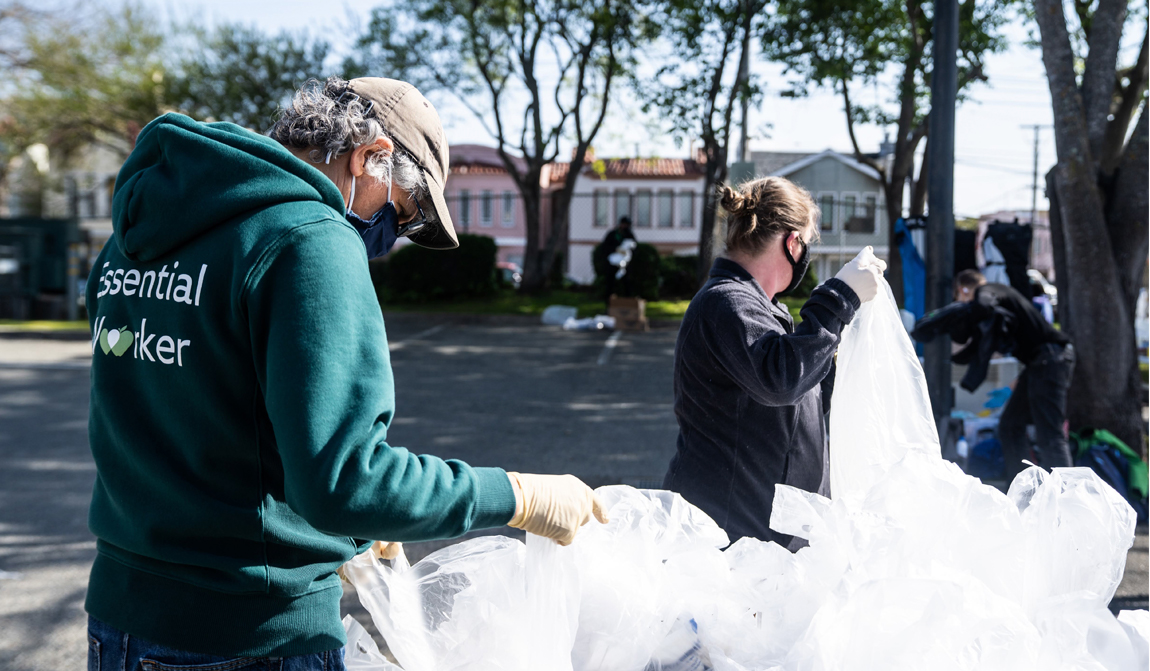
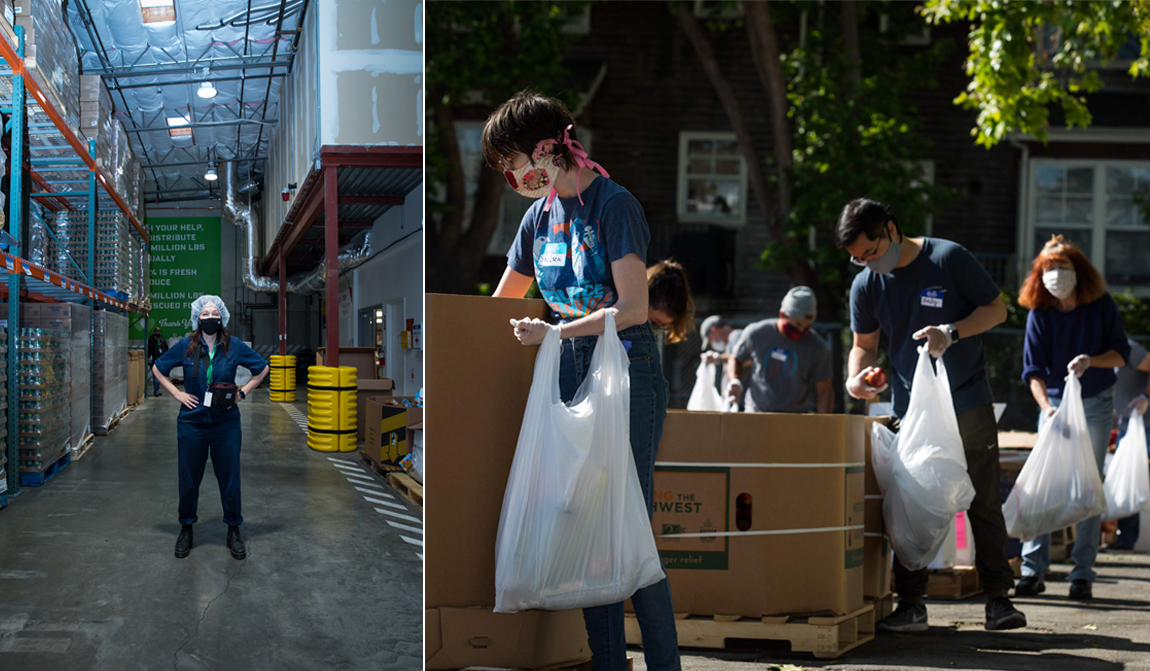
One Wednesday evening, I volunteered packing boxes of food for seniors. Music was playing through the speakers—whoever curates our playlists is just magical—and next to me was this lovely man named John, who had been volunteering with us on Wednesdays for 21 years, wearing his food bank sweatshirt as a badge of pride. Next to John were a couple of women who were having a blast working together, just completely welcoming, and some families who came to volunteer as a unit. It was this beautiful community within a community that had sprung up.
At the end of the shift, the Food Bank project leader Robert announced how many pounds we had collectively packaged, and I looked around and felt such pride and celebration of taking action to fight hunger together. It was such a clear image of our vital service and the wholly unique way in which we bring the community together for a great cause. It was a moment.
Your second 100 days may look very different from your first as vaccines roll out. How is that changing the way you think about our priorities?
The pandemic is revealing that which we already knew to be true: Poverty and racism are inextricably linked to food insecurity. That is not going to go away when the masks go away. We’re going to focus on advancing our mission with the analysis and the framework that this team’s wisdom created, which is understanding that we are addressing not only the consequences of hunger, but also the causes. We will work on upstream and lasting solutions and are steadfast in our commitment to ensure we are making meals possible for our neighbors right now.
As we look forward, we also need to determine what it means to sustainably serve all of those who need us – those we are currently reaching and those we hope to reach. After more than a year spent responding to this crisis, how do we return to solutions we know work, but weren’t possible during the pandemic – like a farmer’s market style distribution to enable choice – and what innovations from our crisis response do we maintain – like the grocery delivery. This will be hard work, but it is essential work. The Food Bank is part of a critical safety net that is made up of grassroots, well-established, and new community-led organizations as well as government programs. Together we will find the solutions. Because we are all working collectively to fulfill our purpose of ending hunger.
This isn’t just a vision, it will be a future, with partners, donors and volunteers making it real.
Do you think there are ways in which the pandemic has changed our community for the better?
The pandemic was a stark reminder that you can work hard, get a job, and still find yourself at risk of homelessness or relying on the Food Bank to make sure that you’re not choosing between your PG&E bill and feeding your family. You can have good job and not be able to make ends meet in San Francisco or Marin.
That’s not going to go away anytime soon. And what it has created is empathy and a deep-seated understanding that food is a human right. The community wants to be part of taking care of each other. Whether they are a 10 year-old donating their small proceeds from a lemonade stand, or a Foundation giving millions, donors of all ages, of all means are recognizing that we’ve got to take care of each other. And that has been completely inspiring.
The Food Bank just announced its Capital Campaign to expand warehouse facilities. How do you envision that helping to chart our way forward?
In this coming year, we have a tall order. Delivering on these expansion plans is really about delivering on current community need; we started this project 5 years ago with the goal of building for the future, but it turns out we are building for right now.
We are renovating not to expand, but to sustain. Because it’s not about a building and it’s not about the number of pounds of food, it’s about having the space to feed our neighbors who are making real and practical choices every day about where they’re spending scarce dollars. Our community is hurting. People are making choices–choices that weigh on families, choices that are hard and hurt.
Our job is to relieve that hurt, to make it less stressful and more hopeful. It is not about a building. It’s about what happens as a result of having that capacity to deliver on this critical need, person, by person, by person, in all of the neighborhoods in which we serve.
What has surprised you most during your first 100 days?
What surprised me was what it means to see that sheer scope upfront, to see it come alive in the field. What surprised me was how excited I would feel to see the orders being built, knowing that they would be landing in a neighborhood pantry, a pop-up or a drive-thru and put into the hands of people in our community, our neighbors. Just the magnitude of what this scale feels like, to see it and to know what it means, not just hear about it or read about it, but to see it. And just the enormous sense of… I can’t think of another word other than pride. I feel so proud to be part of this team – staff, donors, and volunteers – that is delivering food and hope to every corner of our community.
In the year since the start of the pandemic shutdown countless neighborhood food pantries have closed due to safety reasons and hundreds more shifted their distribution models or expanded grocery delivery to continue serving the community.
Take St. Paul Tabernacle Baptist Church, which has operated a neighborhood pantry in the Bayview for over 28 years. Pre-pandemic the church was serving between 85 to 100 participants. When shelter-in-place went into effect, not only did the church have to stop indoor church services, with nowhere safe to host them, but they also had to close their doors for the weekly pantry.
Mother Beverly Taylor, who ran the food pantry at St. Paul Tabernacle Baptist Church, was determined to keep serving her community. “We’re still involved and running,” said Mother Beverly. “Unfortunately, with this [pandemic] we have to keep going.”
Beverly knew finding a way to keep service going during the pandemic would help provide fresh, healthy food to those who couldn’t afford it and had nowhere else to turn.
Challenges in the Southeast
Bayview–Hunters Point is a neighborhood with more convenience stores than grocery stores. In fact, there’s only currently one large-scale grocery store located on Williams Avenue–that is one grocery store for an 8.6 square mile neighborhood that is home to 106,731 people.
At the same time, 37 percent of Bayview-Hunters Point residents, many of whom are Black/African American descent, live on less than 200 percent under the federal poverty level while 19 percent are at or below the federal poverty level. Over 40 percent of infants and youth live with families who earn below or at the federal poverty level.
As Beverly explained, before their pantry opened there wasn’t a place anywhere for those in need of food assistance to turn to. “We saw that a lot of people really need the food but didn’t know where to go get it,” she said. “There wasn’t enough being distributed, so that’s how we got involved.”
This problem is not unique to San Francisco andBayview-Hunters Point. The USDA estimates 39 million people live in neighborhoods like Bayview-Hunters Point without adequate access to fresh, healthy food within a reasonable proximity.
“When COVID shut everything down, not only was there an already food insecure population, but residents were also further impacted due to job losses as a result of various industries having to shut down,” said Program Coordinator Claudia Wallen, who coordinates with community partners in Bayview-Hunters Point. “So, it double affected that area, I think, because the community was already so underserved.”
Call It What It Is: Food Apartheid
Areas that lack access to fresh, healthy food are often referred to as “food deserts.” However, that term fails to acknowledge that a lack of food access, and the negative health outcomes it causes, disproportionately impact BIPOC communities.
By using the term “food apartheid,” we clearly acknowledge that neighborhoods deemed food deserts are predominantly in BIPOC communities. We also acknowledge that redlining (including supermarket redlining), which is the racially discriminatory practice of denyingvital services and/or avoiding investment in specific neighborhoods based on the race/ethnicity of the residents, plays a huge role in food access. As a result, 19.1 percent of Black households and 15.6 percent of Latinx households experienced food insecurity in 2019 alone. Indigenous peoples also experience the shortest lifespan from diabetes as a result of lack of access to fresh healthy food in their communities.
Food apartheids are a result of persistent structural and racial inequalities that prevent communities of color from accessing better socio-economic opportunities and essential services like access to fresh and healthy food, public transportation, public safety services, and nutrition education programs in K-12 public schools.
In our own community, we see that the Visitacion Valley, Bayview-Hunters Point, Treasure Island, and Marin City neighborhoods have the least access to food and are some of the most cut off from public transportation. Many residents in these neighborhoods would have to rely on driving a car or commuting for at least an hour to areas likedowntown San Francisco.These same neighborhoods are home to some of the highest percentages of Black/African American residents: 33 percent of the Bayview-Hunters Point population, 13 percent of the Visitacion Valley population and24 percent of the Treasure Islandcompared to just 5 percentof San Francisco as a whole. Marin City has the largest Black population (up to 42 percent of the city’s population) in Marin County.
Community Partners Tackle Food Apartheid
For the Food Bank, food for all means working closely with trusted community partners like St. Paul Tabernacle Baptist Church to ensure the Food Bank is supporting positive health outcomes. We also work with neighborhood partners to open new pantries in areas that both lack food access and where we can better serve communities disproportionately impacted by structural racism. In some cases, this means new types of partnerships like the one with the San Francisco African American Faith-Based Coalition (SFAAFBC) to deliver groceries to those who are unable to come out to pantries.
“Community organizations like SFAAFBC knowthe community well,” said Claudia. “Grassroots, boots on the ground organizations are more trusted by community members and seen as a friend or fellow neighbor. This is why collaborating with them like the San Francisco-Marin Food Bank is now doing is very important.”
What Food Means to the Community
During each grocery delivery, Beverly personally calls the participants to let them know ahead of time when their groceries are arriving. “They’re so thankful because many of them are disabled, and we’re out there getting food to the people that need it,” she said.
According to Claudia, the food means everything to the community. “To Bayview-Hunters Point residents, it’s important to have access to the same healthy food that other, less marginalized communities get to enjoy and often take for granted.”
As long as there is a need Beverly plans to keep delivering, and the Food Bank plans to keep supporting her efforts to improve food access in areas that experience food apartheid throughout our community.
Charitable giving not only has positive effects in our community, but it is also a popular tax deduction. Many choose to invest in donor-advised funds (DAFs) as a way to stretch their dollars for greater impact. The Food Bank is engaging with donors about DAF gifts, as well as partnering with #HalfMyDAF, an organization that is committing donors to spend half their DAFs and awarding $1.5 million in matching grants.
A donor-advised fund (DAF) is a charitable giving account through a financial institution designed to invest, grow, and give to charities. People donate into a DAF and recommend how those assets should be invested. Contributions are tax-deductible, and donors can then distribute all or part to a nonprofit whenever they want.
The benefit of a DAF is that money can earn interest, which increases the amount donors can give to charities over time. The drawback is that once a donor gives to a DAF and takes the tax deduction, people often forget – or do not know – how to release the funds. In fact, it is estimated that about $5 billion in charitable donations are locked up in DAF funds that could be released to help fund important work such as the Food Bank’s.
The #HalfMyDAF Challenge in Response to the COVID Crisis
#HalfMyDAF was founded by Jen and David Risher to help facilitate greater giving during the pandemic. Donors sign a pledge to give half their DAFs by September 30 to help sustain nonprofits – many of which, like the Food Bank, are taking on additional work to support those directly impacted by COVID.
“We want to inspire people to give and get their money put to work when that money is needed the most,” said Jen. “COVID has shifted everything, and nonprofits are having to do more with less. Donors may be thinking they might be saving for a rainy day. The pandemic is that rainy day, and now is the moment.”
Spending Down DAFs Now to Double Donors’ Impacts
On May 15, #HalfMyDAF will award $1.5 million in matching grants, including one $100,000 match, one $50,000 match, and many dollar-for-dollar matches of up to $10,000. So, spending down DAFs could potentially double a donor’s impact in the world.
“The silver lining of COVID is that it’s shining a light on the need in our communities,” said Jen. “When you can’t see it, you can’t make change. The pandemic has made it so clear, and the time to act is now to come together and create a real social safety net.”
Make a DAF Grant & The Food Bank Could Receive $100K
The Food Bank is working with donors directly and partnering with #HalfMyDAF to potentially double the amount of food we can provide to the community. “#HalfMyDAF provides donors with the opportunity to express their philanthropic intent and the kind of impacts they want to have on the world,” said Kera Jewett, Director of Leadership Gifts at the Food Bank. “And when donors partner with #HalfMyDAF, they can potentially double their gift to the Food Bank.”
Do you have a donor-advised fund? If you make a DAF grant to the Food Bank and commit to spending down half the money in your DAF by September 30, we’ll be eligible to receive up to $100K in matching funds. Look for details at halfmydaf.com or contact Kera Jewett at kjewett@sfmfoodbank.org.
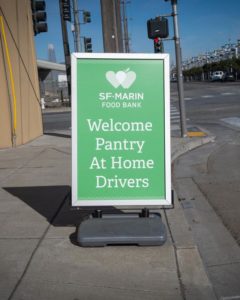
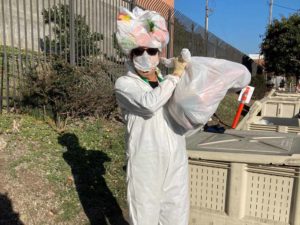
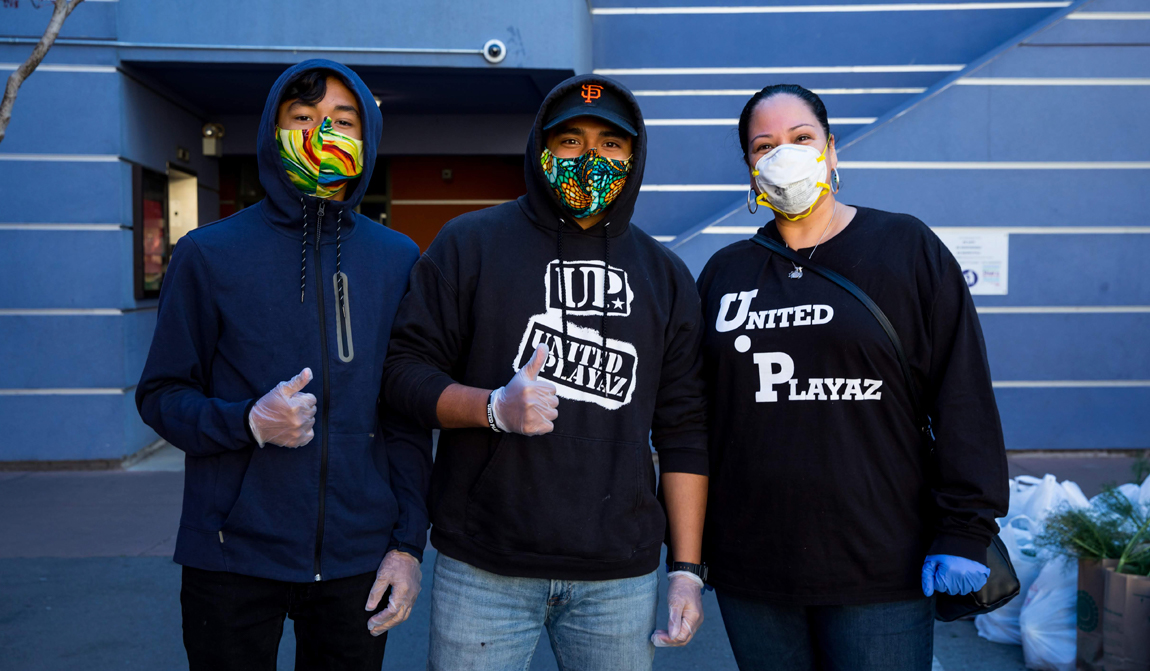
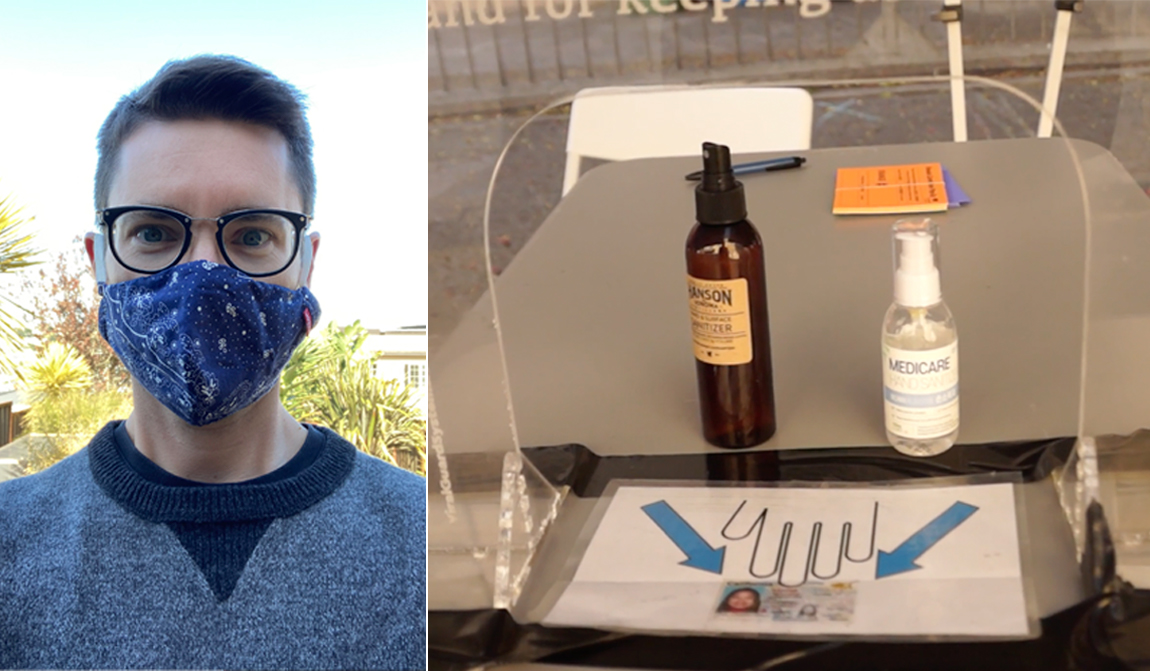
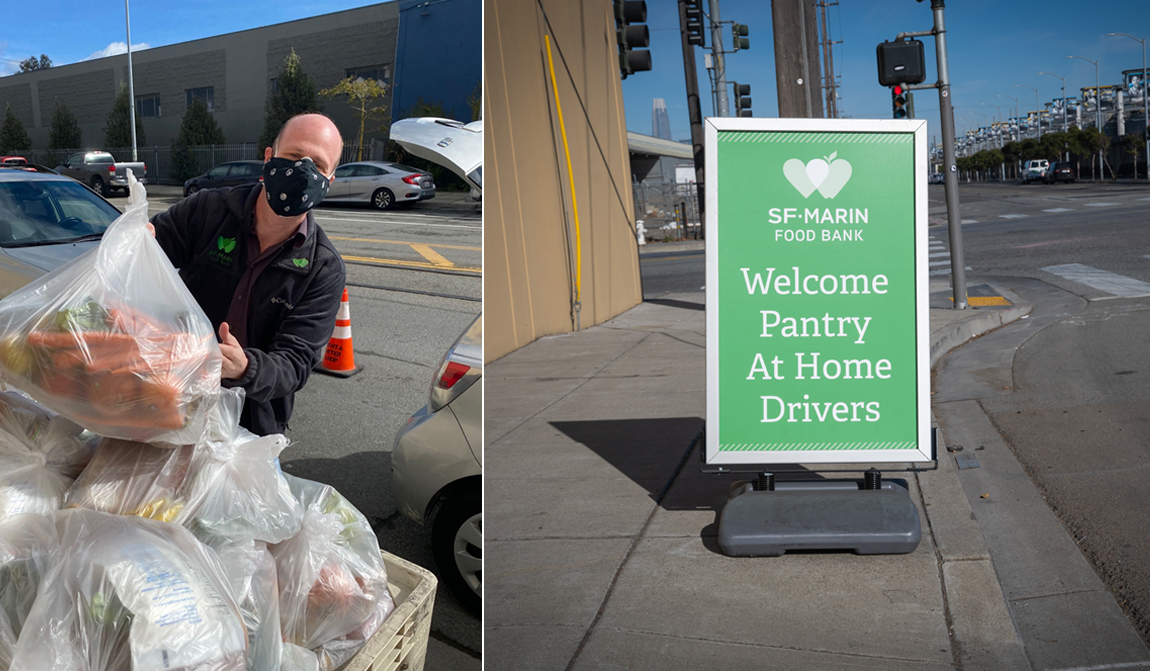
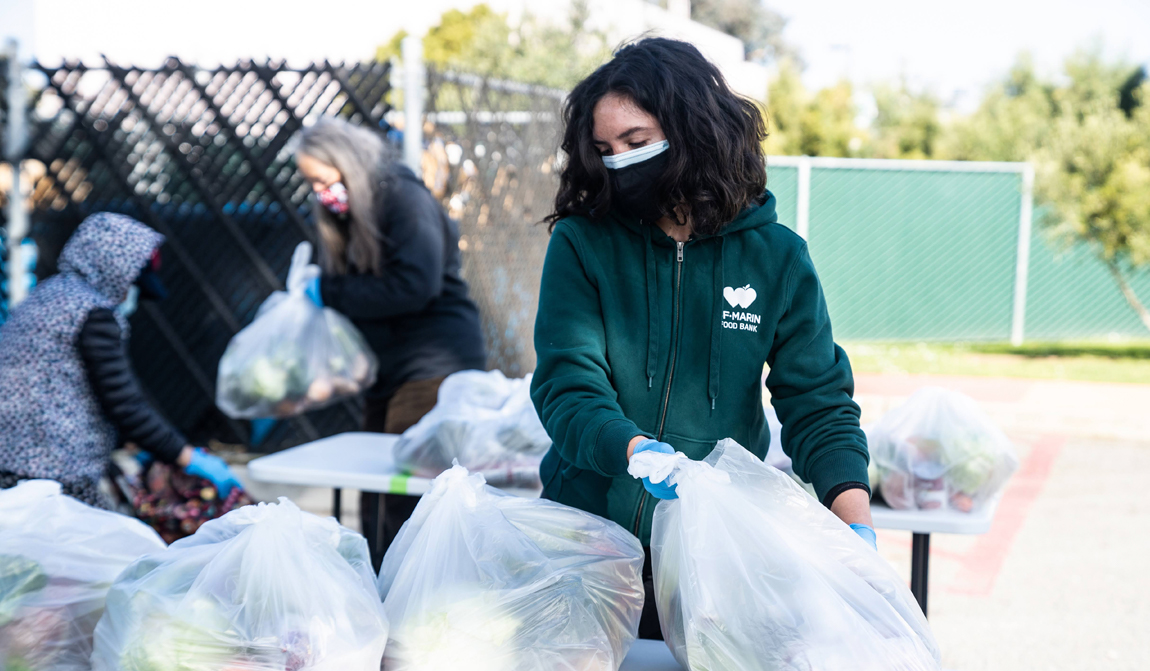
In September the Food Bank approached several regular Pantry at Home volunteers with an idea: adopt a building; commit to making all your deliveries to the same location and the same participants at the same time week after week for three months.
A few regular volunteers were all in.
Kelly Runyon and his wife Barbara decided to adopt a building as a way to show their love for a neighborhood they enjoyed visiting.
“I filled out an application and said I’d be interested in Chinatown,” said Kelly, who spent the next three months delivering to 44 participants every Monday and Tuesday.
Patricia Tuori, who had been volunteering twice a month for weeks, though it would be a great way to keep volunteering even after her work schedule changed. After adopting a building, Patricia always knew her Tuesday route would take about an hour and a half door to door.
She explained, “I was working while I was doing this, so, it was nice to take a little bit less time at it. But I still got to do it.”
A Whole New Experience
Both Kelly and Patricia felt that adopting a building (or in their cases a few buildings) enriched the Pantry at Home experience for both themselves and the participants.
Kelly and Barbara have lived in San Francisco since the seventies. Despite decades in the City, they still “went to a lot of neighborhoods that we had no idea even existed. So, it was interesting for that reason. We kind of got to know the city better.”
But the real joy came in adopting a few buildings. “We got to know individuals and they got to know us,” he said. “They knew when I knocked on the door, they knew my knock.”
They also discovered suppressing benefits on a pragmatic front. Coming back week after week helped them learn the ins and outs of each building. One apartment required a key fob to use the elevator – meeting the building manager and getting her cell phone number was their ticket in.
“Each week we could just text her as we were getting parked and then pick up a fob and do our thing,” explained Kelly. Delivering to that building “went from being an absolute, impenetrable ‘how do we do this’ problem to a whole procedure that was straightforward and always worked.”
Getting to Know the Neighbors
For Patricia, the greatest reward was getting to know people. “Rather than just going up to a house and you don’t ever see them again, you see the same people every week. It’s a really nice way to develop a relationship,” she said.
“When I was doing the same two buildings every week, I knew that the neighbor for this person takes both their bags,” she shared. “Or that the person in 202 would leave their door open and they want you to put the bag right inside on the stool.”
The support that came from getting to know each other went both ways. One woman saved all the jars she struggled to open during the week for Patricia to help her open them. Another participant checked in to make sure Patricia was okay after she took a couple of weeks off to quarantine.
“The benefit to [the participant] is just knowing that every Tuesday at 12:30, which is when I did it, there’d be a delivery and they didn’t have to hang around all afternoon or wonder when someone was coming,” said Patricia.
Adopting a building was “just a really nice way to develop a relationship. I don’t know why more people wouldn’t want to do it that way if they could,” she said. “It takes a lot of the unknowns out of it.”
The time before COVID-19 fully entered our collective consciousness feels so far away, so unrecognizable it isn’t fair to say they feel like 10 years ago – it is of a different place and time entirely.
It’s almost as if we all celebrated the New Year prematurely, ignoring a much more consequential marker of time: March 17, the day the Bay Area shelter-in-place order officially went into effect. The eve of which was not spent watching fireworks or drinking something bubbly, but panic shopping and hoarding toilet paper and hand sanitizer.
After a very long and very challenging year that has forever changed the fabric of our community, we do not celebrate but we acknowledge this occasion. Between March 2020 and March 2021 more than 529,300 (as of 3/15/21) people died of the coronavirus, tens of millions of people lost their jobs, hundreds of thousands of businesses shut down, and in the process, 45 million people nationwide – including 15 million children – were thrust into food insecurity.
“I was naïve.”
“I’m pretty sure I was at the office,” said Michael Braude, thinking back to when he first heard about the shelter-in-place order. “We already had been meeting to address our response efforts, but I don’t think anyone expected a complete shut-down to come from out of the blue as it did.”
Looking back none of us expected to be here a year later.
“I was naïve. I thought it would be over when the order was lifted – three weeks later,” remembers Gunilla Bergensten.
“A devastating blow.”
As the months wore on, we all saw the images of food bank lines nationwide and the heart-breaking portraits of those in them. For the Food Bank staff, this need was not distant. Day in and day out we saw our community hurting, we saw our neighbors, our friends, and our family in need.
“COVID has magnified the existing health and income disparities in the community I support,” said Lucia Ruiz. “This has been a devastating blow, which often causes me to feel both sadness and anger.”
Almost overnight we saw the need in our community double. In just 2 months we went from serving 32,000 households a week to 62,000 (we are now steadily seeing about 55,000 households weekly).
“Seeing the surge in people who needed food, oftentimes for the first time in their lives, kept me going,” said Joseph Hampton.
Keeping up with that level of demand was no small feat.
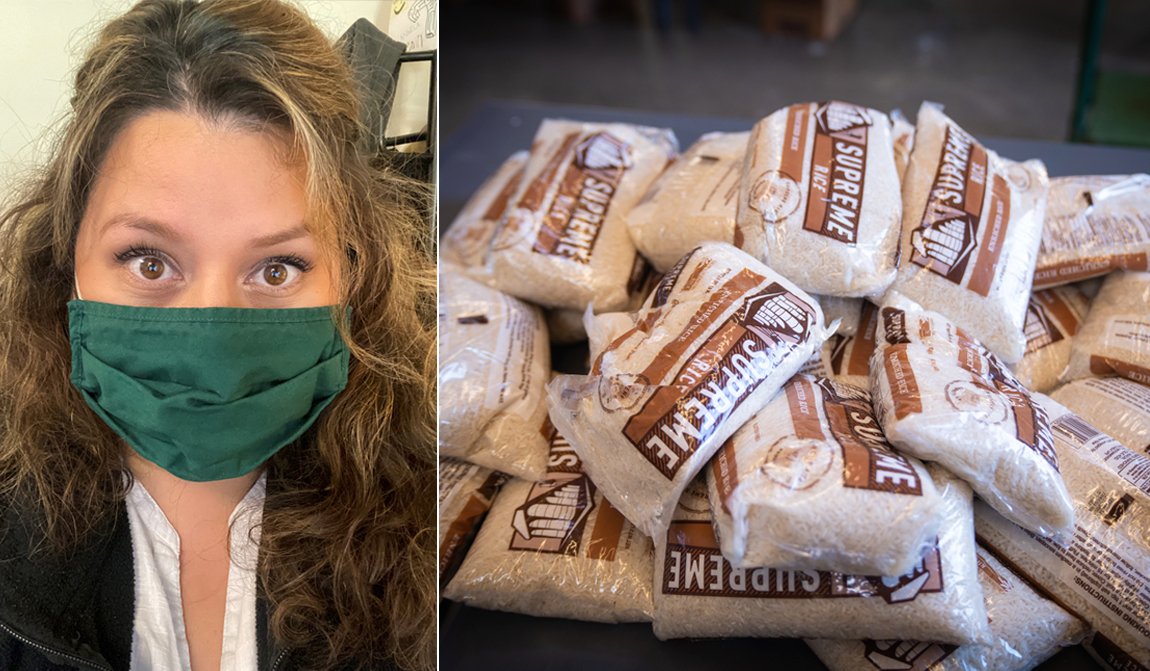
“The biggest challenge I think was getting food quickly while the retail market crashed. And operating at such a high UOS (Food Bank term for households) without increasing our physical working space,” said Angela Wirch. “With everyone panic shopping there was no getting rice…there were so many challenges. The money and infrastructure were gradual, but the need was immediate. We filled that second warehouse so fast.”
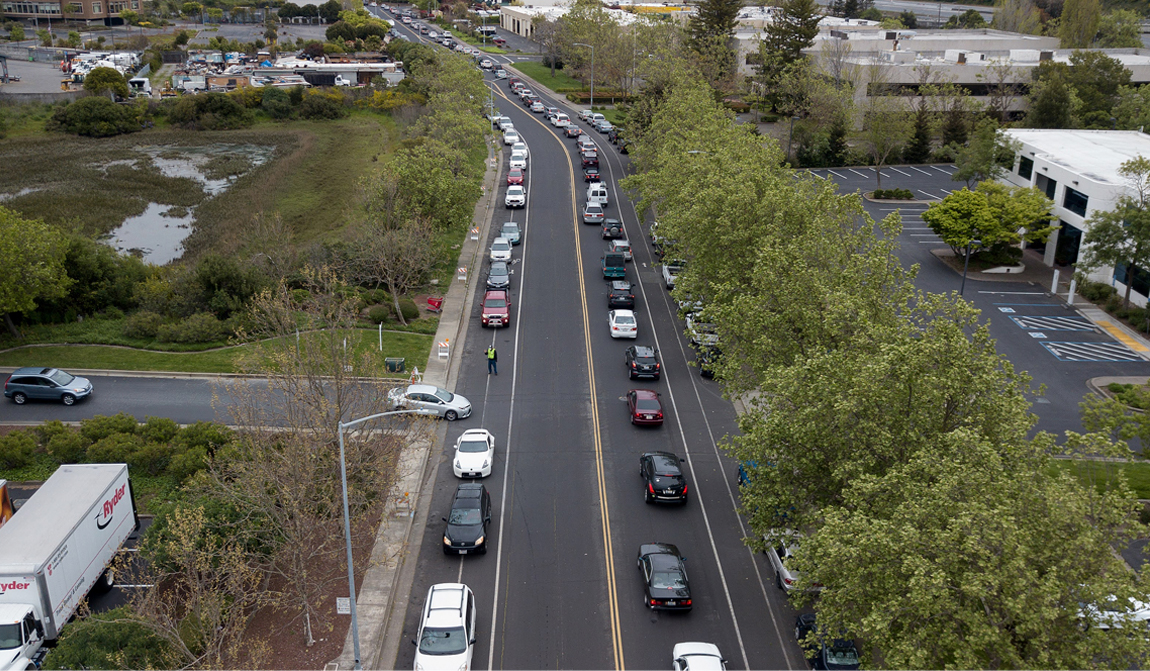
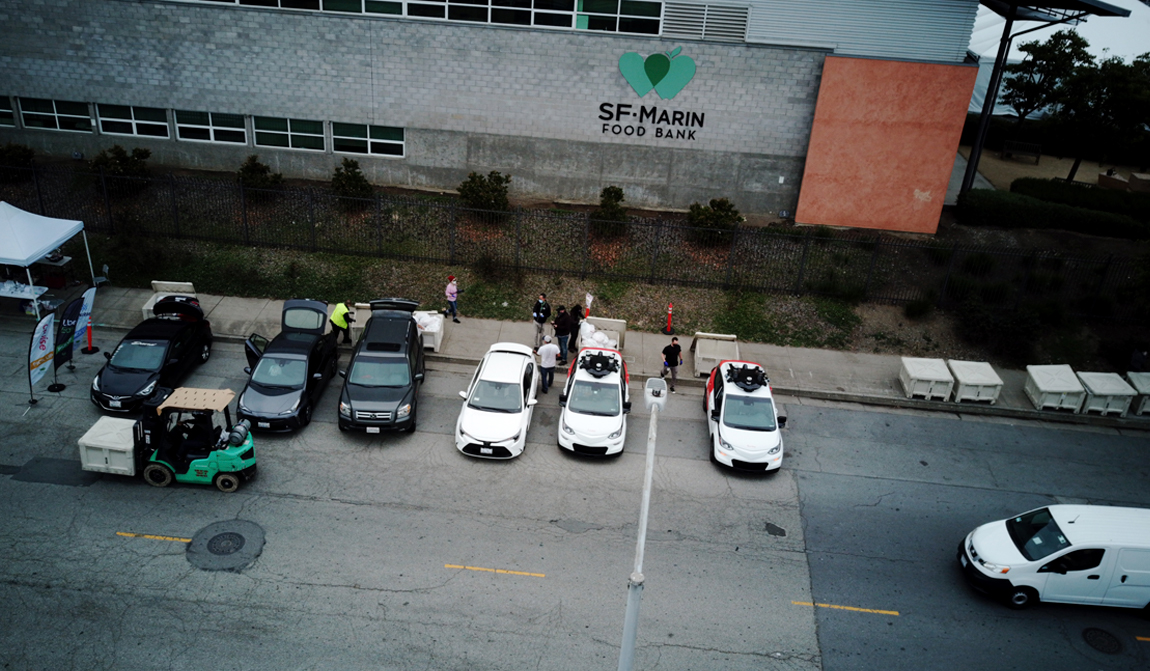
Two tractor-trailers, 10 bobtails, two new warehouses, and one giant tent to cover our parking lot later, we somehow found the space for 77 million pounds of food to meet the tremendous need.
Finding the People Power
“Never in my career have I experienced a more profound threat of not having a safe work environment for workers or enough workers available to run the operations,” said Nadia Chargualaf.
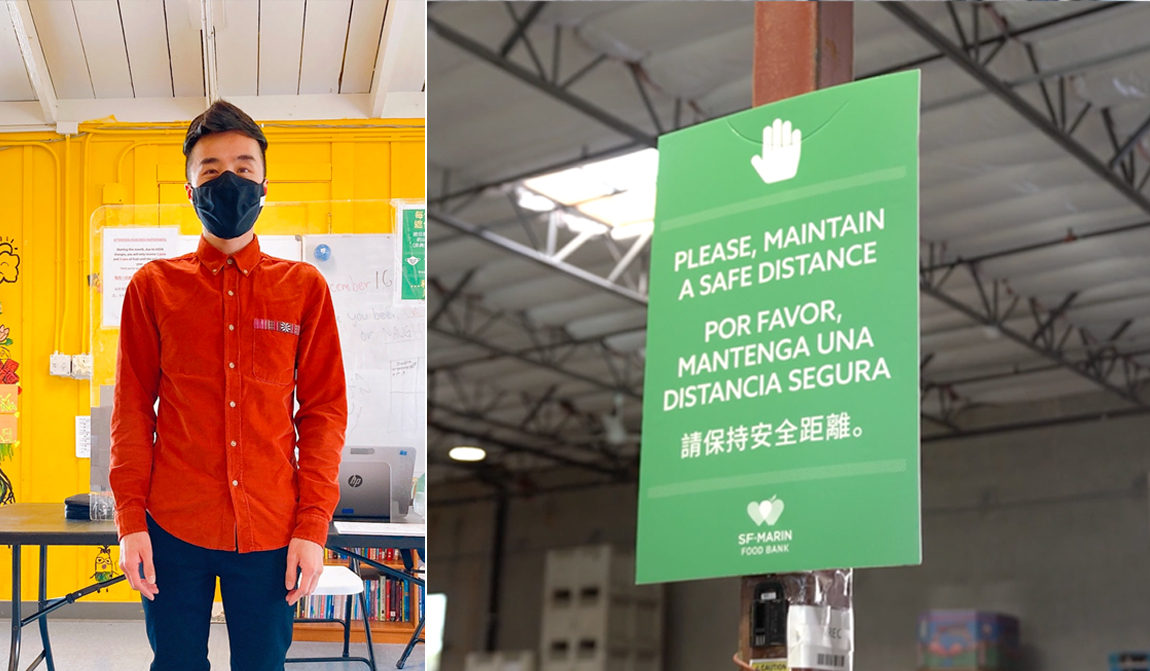
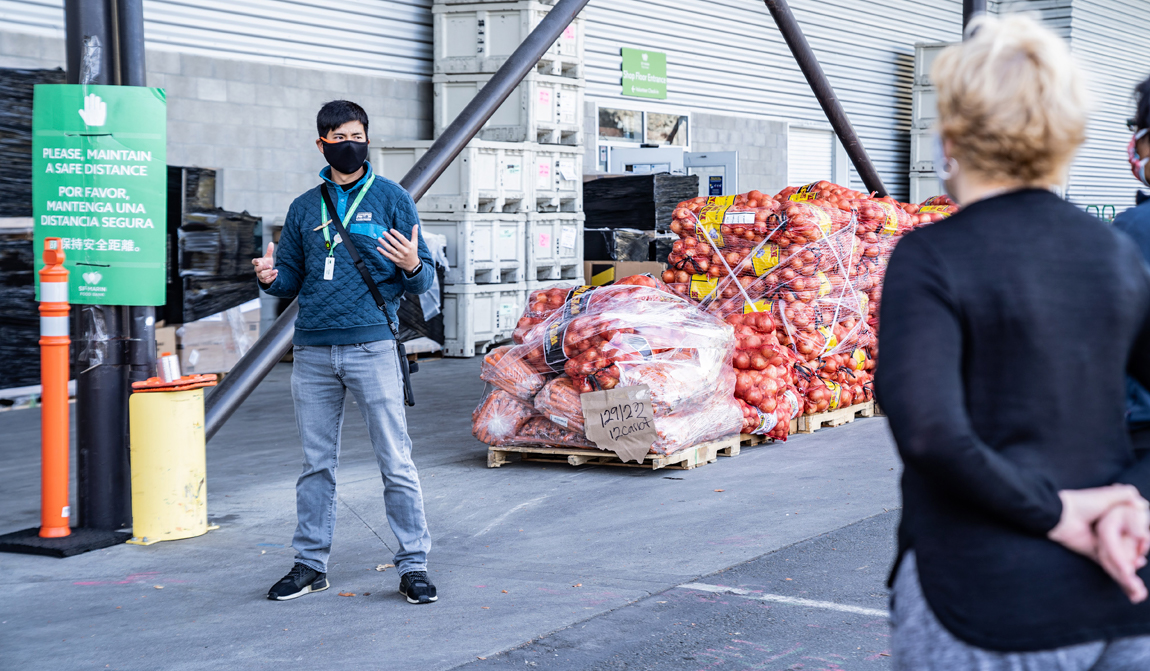
“Half of our team was incapacitated because of COVID, so we were short-staffed for a long period,” said Johnny Lee, remembering how many staff members needed to stay home because of their health. “Many of our sites were closed at the beginning, and a few remain closed to this day. We used some PPE before COVID, but now we follow all the guidelines given to us by the CDC and strictly try to enforce distancing between participants.”
Cody Jang remembers, “I was at work when the news came in. Within hours we had lost close to 3,000 volunteer reservations. We were worried about how we would complete the work without volunteers.”
But the community not only stepped up, they stepped up in droves. Within a matter of months, if not weeks, we were seeing twice as many volunteers as we welcomed pre-pandemic – that’ more than 157,000 volunteer hours since March 2020. Not to mention the support of Disaster Service Workers, corporate partners and community groups.
Challenges: Emotional and Physical
“The biggest challenge has been trying to stay safe during the days that I physically need to be at the office. Even after all this time, I still get a bit of anxiety when working in the office due to the extra layers of planning and endurance (mask-wearing, sanitation, etc.) that go into working within close proximity to others during the pandemic,” said Joseph Hampton.
“The biggest challenge is really the emotional toll that COVID is taking,” said Ken Levin. “Both in people we may know that have been directly affected, or those affected tangentially. This past Saturday, I brought food to a friend who had just lost a family member. I left it at her doorstep. Then on Monday, I attended an online memorial for another friend’s husband. Not being able to see, hug, and be with these people in their time of need has been particularly difficult.”
“There were multiple types of challenges to face. But one that I really wasn’t ready for was the isolation and loneliness of being separated from my loved ones,” reflects Lauren Cassell. “A lot of things in my life changed because of the pandemic, and I wish I had been more kind to myself. Having hard, unproductive days in the midst of a pandemic is okay.”
Policy Makers Rise to the Occasion
As the need rose, so did the public consciousness around food insecurity. Even before the pandemic 1 in 5 San Francisco and Marin residents was at risk of hunger. Food Banks can’t meet the need alone.
“Before COVID, getting movement from elected officials on policies that impacted low-income people was much more of an uphill battle. By thrusting millions more Americans into hardship, COVID forced politicians to listen to anti-poverty and anti-hunger advocates much more seriously and take immediate action,” reflects Meg Davidson. “Things we’d been told were impossible for years we were able to make happen in a matter of weeks. Turns out, we were onto something when we’ve been repeating that making it easier for people to get the help they need when they fall on hard times is good for everyone.”
“We adjusted, pivoted and made the necessary changes to help more in our community to reduce food insecurity during the pandemic. I’m proud of some of our legislative victories, such as, improvements to CalFresh, like waivers, increases in benefits, the P-EBT rollout, online EBT purchase ability, etc.,” said Marchon Tatmon.
Perseverance Despite the Weight of the World
“I feel very lucky to work at the Food Bank. As challenging as this year has been, I am grateful for my colleagues. I’m heartened by the generosity of our supporters,” said Iris Fluellen.
“There have been challenging moments, and breaking points, and everything in between, but we’ve kept the work going for our communities and for ourselves,” said Claudia Wallen. “My mom always says, ‘You must have a plan B, and if possible, a plan C.’ Never before has she been more right.”
“Being able to help so many new people get CalFresh benefits – and getting to know my staff’s pets – has kept me going,” shared Liliana Sandoval.
“Although I haven’t sat in my pod or met everyone internally or externally, I’m humbled to be a part of the team,” shared Denise Chen. “The dedication and commitment we have in serving our community is truly amazing.”
“Growth is messy, even when you plan it. We definitely haven’t felt like the most organized bunch on some days, but we did the work that needed to get done clear-eyed and together. My heart is so full of respect and love for each and every team member,” said Kera Jewett. “We may have been tired, sore, in PJs, short-staffed, and completely overwhelmed, but I know for a fact everyone did their level best every single day. I couldn’t ask for a better group of people to go into battle with.”
“Looking back I would tell myself, this looks really bad, but there are many, many good people doing amazing things to turn this situation and this world around, politically, scientifically, and morally, so keep your eye on the prize and don’t give up,” said Bob Brenneman.
More Stories
Follow us on Instagram for more stories from our essential team.
February is Black History Month and this year more than ever we have the opportunity to rethink how we acknowledge and affirm this month. Not only in the month of February but all year round, it is essential we recognize that our Black communities, neighbors and friends face food insecurity differently. The disproportionately high numbers for food assistance and lack of food access are a result of systemic racism.
We at the Food Bank will continue to work to reduce barriers to food access for our BIPOC neighbors in need of food assistance. We will work with various local Black community members, organizations, faith-based groups and our local partner agencies to improve our programming and to increase food access.
This month, in honor of Black History Month, consider donating to any of our partners who is doing the work to address this disparity head-on. The below is a selection of our community partners who serve the Black community.
The Food Bank unequivocally denounces the surge of violent, racist attacks that are being perpetrated against Asian Americans in the Bay Area and around the country.
The pandemic has exacerbated anti-Asian racism and hate. Between March 19, 2020 and December 31, 2020 Stop AAPI Hate received over 2,800 firsthand accounts of anti-Asian hate incidents, and more than 700 of those took place in the Bay Area. We are horrified by the trauma being inflicted on our community as a result of violent racism and xenophobia.
We are in resolute solidarity with our Asian American staff, participants, partners, and supporters during this incredibly challenging time. The community continues to suffer lost wages, businesses, and lives due to COVID-19. We also echo the recent calls of many Asian American organizations in the Bay Area to demand action from our local leaders to do more to stop these attacks.
More than half of the Food Bank’s participants are Asian Americans, many of them elders, and we see firsthand the fear and trauma the community is experiencing. Our team cares deeply for our participants and is working to ensure our food distributions remain safe, so those who need food will be able to continue to come without fear of violence. Over the coming days and weeks, we will also be working with our community partners who serve Asian American communities to ensure we are supporting them in the way they need during this challenging time. No one should forgo food due to fear and racism.
Systemic racism and white supremacy are pervasive. The same issues of institutional racism that perpetuate food insecurity are threatening the lives of people of color in our community. Anti-Asian racism, like the attacks from recent weeks, is often underreported and cannot be ignored. If we are to work towards being an anti-racist organization, then we must advocate firmly against all forms of racism.
As many celebrate Lunar New Year today, we will continue to support our community in healing from this moment.
If you would like to take action and support the Bay Area’s Asian American community, please see the resources below from many of our partners and other Asian American organizations around the Bay Area.
In solidarity,
Tanis Crosby
Resources
If you or anyone you know experiences an anti-Asian attack, report it at org
El Banco de Alimentos denuncia inequívocamente la oleada de ataques violentos y racistas que se están perpetrando contra los estadounidenses de origen asiático en el Área de la Bahía (en inglés: Bay Area) y alrededor del país.
La pandemia ha exacerbado el racismo y el odio contra los asiáticos. Entre el 19 de marzo de 2020 y el 31 de diciembre de 2020, Stop AAPI Hate recibió más de 2.800 informes de primera mano de incidentes de odio contra Asia, y más de 700 de ellos tuvieron lugar en el Área de la Bahía. Nos horroriza el trauma que se inflige a nuestra comunidad como resultado del racismo violento y la xenofobia.
Nos declaramos en solidaridad absoluta con nuestro equipo, participantes, y colaboradores asiático-americanos y quienes nos apoyan durante este período tan increíblemente difícil. La comunidad continúa sufriendo la pérdida de salarios, negocios y vidas debido al COVID-19. También, hacemos eco a los recientes llamamientos de muchas organizaciones asiático-americanos en el Área de la Bahía para exigir acción por parte de nuestros líderes locales para hacer más para detener estos ataques.
Más de la mitad de los participantes del Banco de Alimentos son asiático-americanos, muchos mayores de edad, y vemos de primera mano el temor y el trauma que sufre nuestra comunidad. Nuestro equipo se preocupa profundamente por nuestros participantes, y está trabajando para asegurar que nuestras distribuciones de alimentos permanezcan seguras, para que aquellos que necesitan alimentos puedan seguir viniendo sin miedo a la violencia. Durante los próximos días y semanas, también trabajaremos con nuestros socios comunitarios que sirven a las comunidades asiático-americanos para asegurarnos de que los estamos apoyando de la manera que ellos necesitan durante este período difícil. Nadie debe privarse de comida debido al miedo y racismo.
El racismo sistémico y la supremacía blanca son omnipresentes. Los mismos temas de racismo institucional que perpetúan la inseguridad alimentaria están amenazando las vidas de las personas de color en nuestra comunidad. El racismo anti asiático, al igual que los ataques de las últimas semanas, frecuentemente no se denuncia, pero no se puede ignorar. Si vamos a trabajar para ser una organización antirracista, entonces debemos abogar firmemente contra todas las formas de racismo.
Mientras muchos celebran el Nuevo Año Lunar hoy, seguiremos apoyando a nuestra comunidad para que sane por lo que sucede ahora.
Si usted desea tomar medidas y apoyar a la comunidad asiática-americana del Área de la Bahía, favor de revisar los recursos a continuación de muchos de nuestros socios y otras organizaciones asiático-americanos en el Área de la Bahía.
En solidaridad,
Tanis Crosby
Recursos
Si usted o alguien que conoce ha sido víctima de un ataque anti asiático, favor de reportarlo aorg
Únase a la manifestaciónLove our People: HealOurCommunities Rally(en español: “Ame a nuestra gente: Sane nuestra comunidad”) el domingo, 14 de febrero a la 1:00 de la tarde enCivic Center Plaza
When you cross the Bay Bridge by car or bus, you’ve probably noticed an exit right before the I-80 freeway continues to the East Bay, one that heads toward Treasure Island. If you took thatexit,you’d find yourself on a human-made island that’s less than a mile wide and comprised of a few thousand residents.
What folks may not realize is that due to the island’s isolation, it has dealt with many issues,such asa lack of transportation, health issues from radiation exposure given the island was historically usedas a dump, and limited food access.
“If you live here and you don’t have a car, you’re really restricted with taking a bus or paying for an Uber,” said Amanda Scharpf, a resident for seven years. “One of the biggest restrictions is if you can’t find something at the only marketwe have here, then you kind of have to haul it yourself all the way from downtown San Francisco.”
Limited Food Access
Treasure Island didn’t even have a grocery store until 2012 when the Island Cove Market opened.Unfortunately,not everyone can afford to purchase food there.
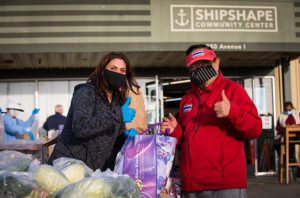
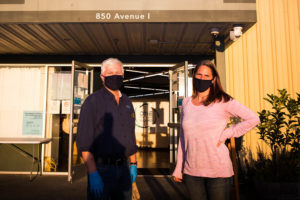
To address this lack of food access, the nonprofit One Treasure Island, with the help of the Food Bank,has hosted a neighborhood food pantry at the Ship Shape Community Center for more than 20 years.
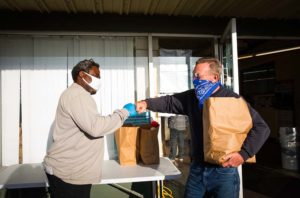
Every Tuesday, both volunteers and staff members come together in front of the community center and pack bags with fresh produce such as apples andlettuce, as well as meat or eggs and loaves of bread to give out to the participants who live on the island. Once the pantry opens, over 200participants (up from over 85 participants before the pandemic), arrive by car or walk on over from their homes, and areenthusiastically greetedby the volunteers and staff. Some of the participants even stay to catch up and hearwhat others have been up to after grabbing their weekly bags of groceries.
Since the start of the pandemic, Amanda, who also manages the pantry, has seen an increase in the number of people using One Treasure Island’s services. Previously, many pantry participants worked in the restaurant industry;an industry heavily impacted byCOVID.With many restaurants closing their doors temporarily or for good, around 117,000 jobs in the hospitality industry were lost in California during December alone.
“We’ve had people come to sign up for the pantry and they’ve even said, ‘I used to work for this restaurant, and they just completely closed down, and I don’t know what I’m going to do.’ This has impacted many people,“ shared Amanda.
Providing Access for All
Dave, a participant for over ten years, previously worked in landscaping and was barely getting byon his salary when he started coming to the pantry. He now works for the city and knows everyone at the pantry.
“The food pantry really saved my life,” he said. “[Otherwise] I’d be eating a lot more noodles.”
For some newer residents of Treasure Island, like Rickey, formerly incarcerated, coming to the pantry is the only choice for fresh food.
“This makes it a lot easier for us. Right now, we don’t qualify for benefits like food stamps, so it means a lot to us,” said Rickey.
Others like Mike, a long-time volunteer and participantwho knows everyone living on the island, see the pantry as a tight-knit community that continues to be resilient during unprecedented times.
“I used to like the closeness; everyone on the island is my friend,” he said. “Now, you can’t get close [due to COVID]. It’s sad.”
Staying Hopeful
While the pantry is still the only option for many, Amanda stays hopeful for the future.
“At the beginning of COVID, we had lines around the block, and it was just nice to see that we can provide families with something that meant a lot to them,” said Amanda.“It’s always heartwarming when people show up with their kids because you get to know the kids too. It’s been very helpful, especially for the families.Living here on this island, I really felt like the community has come together a lot more in the last few months.”
"This makes it a lot easier for us. Right now, we don't qualify for benefits like food stamps, so it means a lot to us." - Rickey

 As you may know, the Food Bank has broken ground on a major $40 million expansion to better serve our neighbors in need. For every donor who gives between $2,500 and $25,000 toward this project, a bread tag with your name will be placed on a giant wall in our new lobby.
 What’s your overall pulse, 100 days in?
 For
For 
 In September the Food Bank approached several regular
  For Patricia, the greatest reward was getting to know people. “Rather than just going up to a house and you don’t ever see them again, you see the same people every week. It’s a really nice way to develop a relationship,” she said.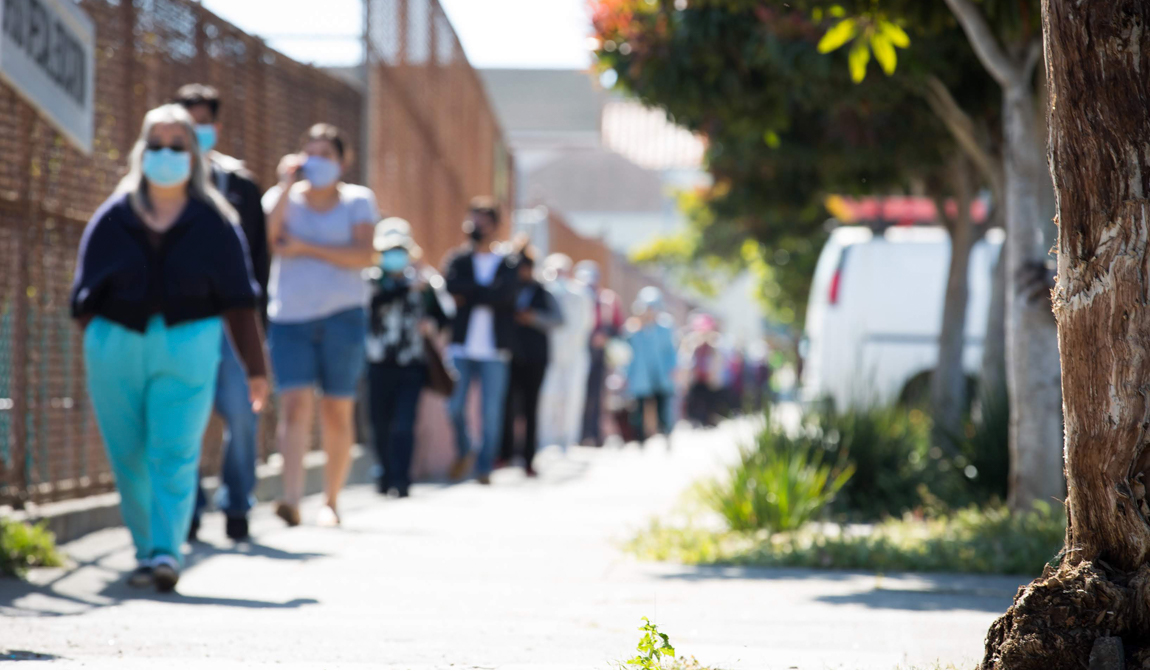
 When you
  Treasure Island didn’t even have a grocery store until
  Dave, a participant for over ten years, previously worked in landscaping and was barely getting by
 Share this quote
Share