
The Food Bank Hires a New Executive Director

January 26, 2021

Dear Friends,

It is our pleasure to introduce Tanis Crosby as the new Executive Director of the San Francisco-Marin Food Bank.

Paul Ash is retiring after more than 32 years of dedicated and transformational leadership. He led the Food Bank from distributing just three million pounds of food in 1989 to 67 million pounds now, ensuring hundreds of thousands of Bay Area families have access to food. The full extent of his impact is truly immeasurable. He leaves behind an enduring legacy.  

Tanis Crosby joins us after serving as a leader in the YWCA movement for almost 20 years, most recently the CEO of the combined YWCA Silicon Valley and YWCA San Francisco & Marin. Having dedicated her career to advancing the mission of eliminating racism and empowering women, Tanis brings a deep understanding of the root causes of food insecurity to the Food Bank’s mission to end hunger in San Francisco and Marin. Her energy, passion, and dedication will help lead this organization into a transformational next chapter.

“The mission of the Food Bank is critical now more than ever. The pandemic has left many of our neighbors out of work and struggling to feed their families, while crystalizing what we already knew to be true – hunger exacerbates inequities like racial injustice and poverty. We are here to end hunger, to do that we must not only address current demand, but also work together to end the underlying causes of hunger,” said Tanis Crosby, Executive Director, San Francisco-Marin Food Bank. “I’m honored and excited to be part of advancing that mission.” 

This is a unique and challenging time in the Food Bank’s history. The need for a strong social safety net has never been more apparent. Under Tanis’ leadership, the Food Bank will remain committed to providing food to all our neighbors who need it and advocating for stronger policies around food security.

Tanis looks forward to meeting our community in townhalls and out in the fieldThank you for your continued dedication and support of the Food Bank.Together we will ensure that our neighbors have the food they need to thrive.

Sincerely, 
The San Francisco-Marin Food Bank Board
Scott Brubaker, Chair

About Tanis Crosby 
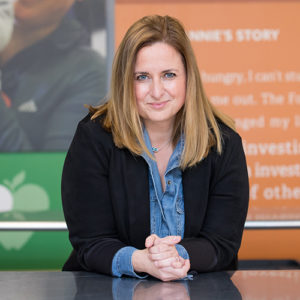
Tanis serves the mission of the San Francisco-Marin Food Bank to end hunger with a commitment to equity, collaboration and community.  Joining the Food Bank in 2021, Tanis previously served as a leader in the YWCA movement for almost twenty years, most recently as CEO of a combined YWCA Silicon Valley, and YWCA San Francisco & Marin since immigrating to the US in 2014. During her tenure leading YWCAs, she centered on the mission of eliminating racism and empowering women to grow impact, launch innovative programs, and grow operations by 400%.   

Tanis has served on the Silicon Valley Council of Non-Profits Leadership Council, the National Association of YWCA Executives Board of Directors, and as Co-Chair of the Santa Clara County Blue Ribbon Task Force on Intimate Partner Violence. She has been recognized as a Silicon Valley Business Journal Woman of Influence, the YWCA of Canada’s President’s Award, the Queen’s Jubilee Medal for service, and in recognition of housing advocacy and policy change the Elizabeth Fry Society’s Housing Hero Award.   

Tanis enjoys cooking, gardening, and any opportunity to explore the outdoors of our beautiful Bay Area with her family and dogs.
In the Head of the Architects of Our New Warehouse

January 24, 2021

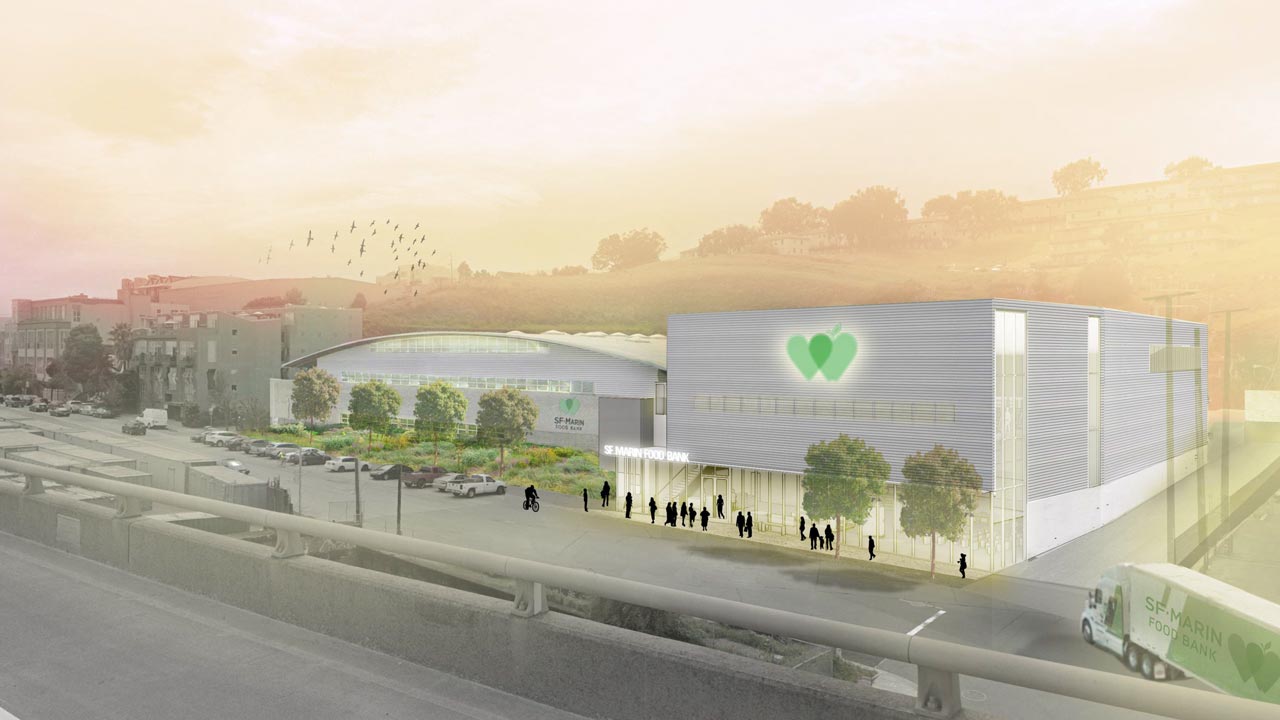
Scott Shell is a principal at EHDD, the architect on the design/build team working with Truebeck Construction on the warehouse expansion project. We spoke to him about his vision for the new building and how it aligns with the Food Bank’s Mission.

Q: How did you get involved with the Food Bank expansion project?

A: There was a design competition, and the Food Bank invited three design/build teams to submit ideas. We worked over a month – toured the facilities, researched the mission and vision, and then presented our ideas. I believe we were selected because our design both showcases the mission and integrates the building into the community.

Q: How does the design showcase the mission and increase awareness of the Food Bank?

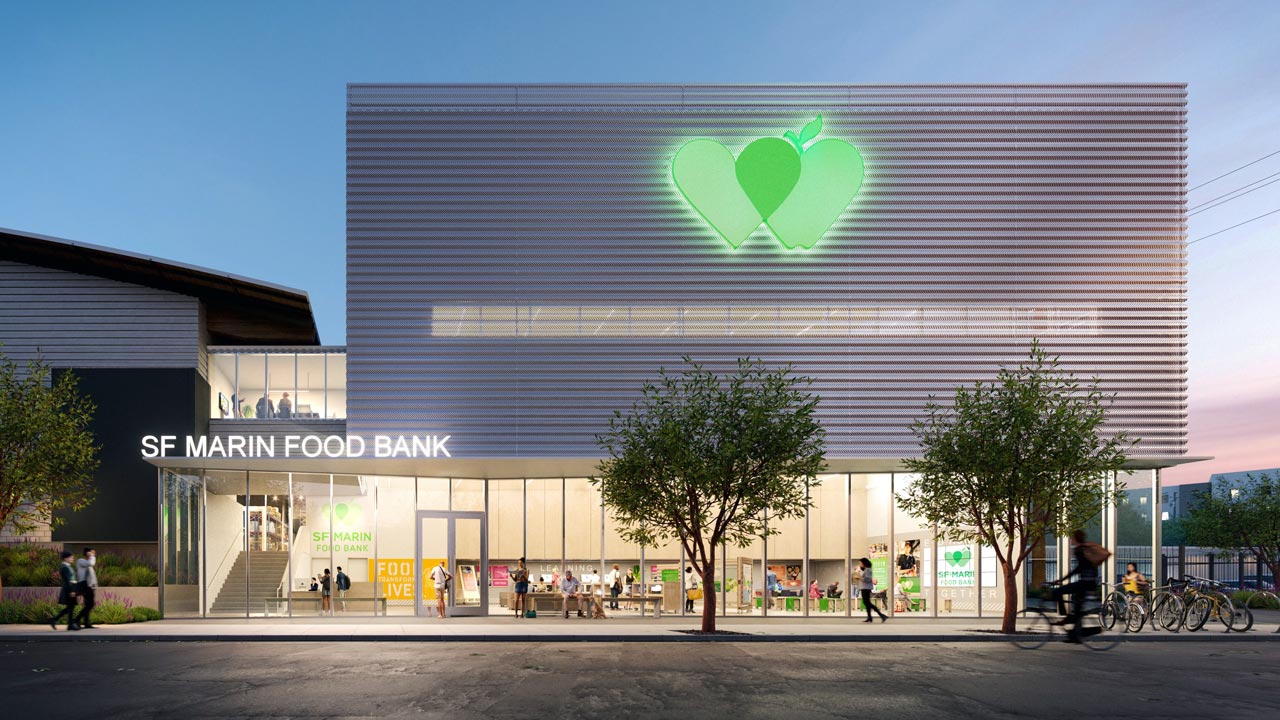
A: We wanted to make the building iconic and make a visual representation of the organization’s mission. The Food Bank has this stunning site right off the 280 Freeway that hundreds of thousands of people drive by every day. Those are all potential donors and volunteers who are currently not seeing the building. So, we enlarged and illuminated the logo of the heart and apple. The logo is about feeding people and also about loving and respecting them. And that’s why the Food Bank’s mission is so fantastic: It’s not just about the food, it’s about treating people like human beings. With more visual awareness of the building, we hope more people will be aware of the Food Bank’s mission.

Q: How is the building integrated into the community?

A: Some people think the area is an industrial neighborhood. But Dogpatch is a vibrant area, and we think it’s going to transform to have an active pedestrian life. The Food Bank is a volunteer-driven organization, and so our design is meant to welcome anyone who passes. Right now, there’s a fence, and you have to walk up the stairs to get to the reception. We wanted to bring the welcome center right down to the street. There will be lots of graphics and photographs connecting to the community right behind the glass. We want it to say, “Come on in and be a part of our mission: You are welcome here.”

Q: Now that you’ve been working closely with the Food Bank, what’s noteworthy to you?

A: First of all, the quality of the food is impressive. It’s not an outdated notion of canned food. It’s healthy, fresh food that’s important for physical and mental health. Fresh fruits and vegetables are what we all want for our families. The second thing is how the warehouse is a logistical powerhouse. It’s buzzing with activity with huge quantities of food coming in and out. When you watch the warehouse crew unload trucks, it’s thrilling to see them weave forklifts in and out doing an amazing dance. It’s like a professional sporting event.

Q: The design is all about the warehouse. Tell us about the expansion.

A: The warehouse isn’t just an empty space. It’s highly technical. The design is 30,000 additional square feet with two new loading docks, expanded refrigerators and freezers, a welcome center on the ground floor, and expanded offices on the 2nd floor. But it’s not just about increasing the square footage – it’s about optimizing storage capacity to feed as many families as possible. To that end, the Food Bank has also brought in a racking specialist and a refrigeration specialist to maximize the space inside. Our firm is responsible for the overall plan – from the building to the additional loading docks to space for staging, storing, sorting, and then redistributing out to the pantries where participants pick up their food.

Q: Are there any special features of the expanded building?

A: It’s an all-electric building with solar panels on it. It’s going to have a super low carbon footprint. If you google the most polluted cities in this country, many are in California, and that pollution is typically concentrated in low-income communities. The same people who suffer from food insecurity also suffer the most because of pollution. We are proud that the new building will contribute to cleaner air and contribute to people’s good health – just like healthy food.

Q: How will the building contribute to the Food Bank’s mission?

A: There’s too much inequality in the world today, and people can’t dig out of a hole without a helping hand. The Food Bank is that helping hand when it comes to food. The expanded building will make the Food Bank more visible and show off what the organization does in a physical form. We hope that awareness will lead to more donations and volunteers, which ultimately will lead to more families served. And that’s what this is all about.

Take a photo tour of our warehouse in Marin and our future one in San Francisco.

Meet the Chairs for the Capital Campaign Committee

January 23, 2021

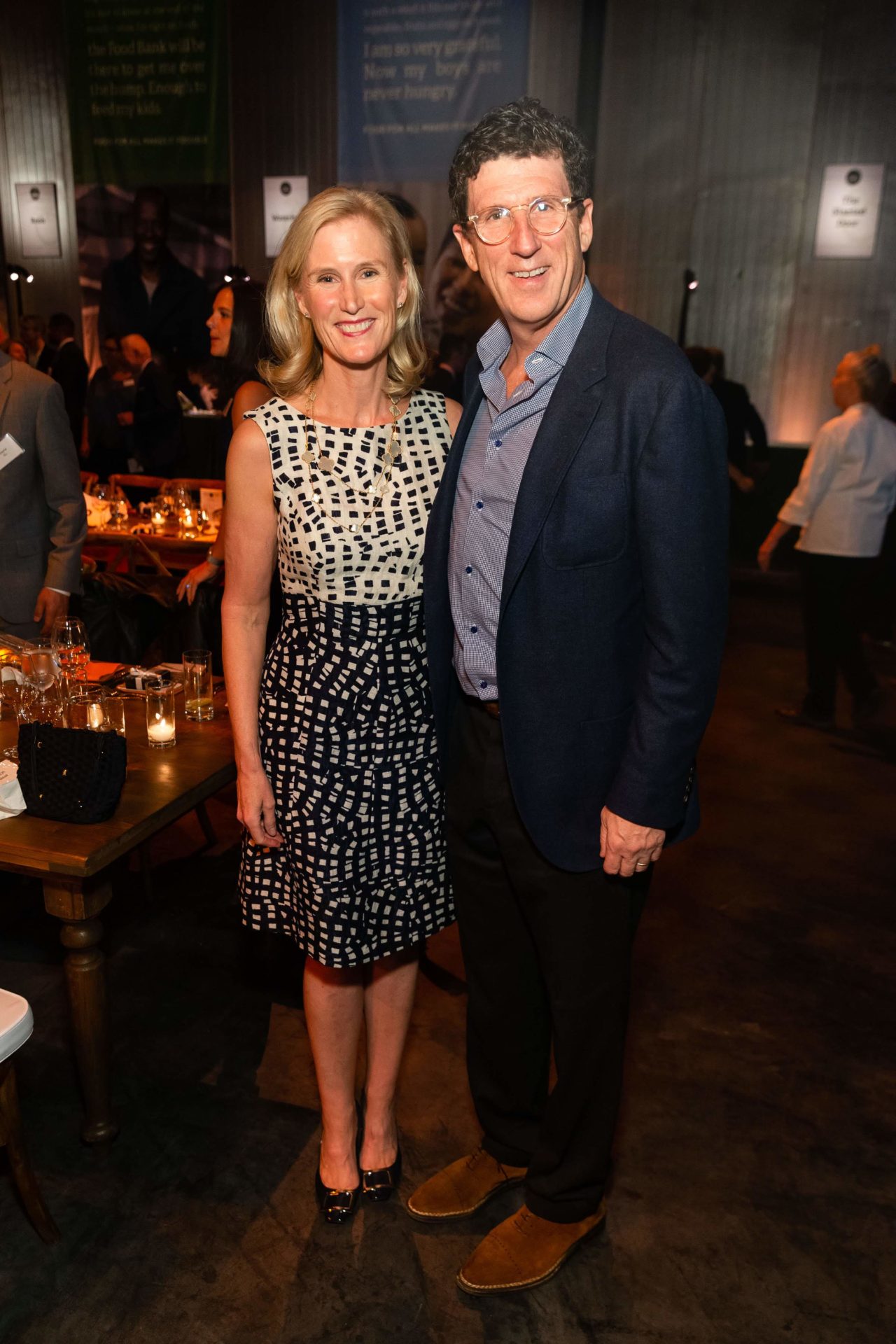
The scale of the Food Bank’s warehouse expansion is enormous, and with a $40 million price tag, it can’t happen without the broad support of donors like Mike and Alison Mauzé, who chair the Capital Campaign Committee. 

Mike and Alison Mauzé are like many Food Bank donorsThey devote an enormous amount of their time, talent, and treasure to our mission to end hunger. As chairs for the Capital Campaign Committee, they have been leaders in our donor community over the last three years. 

Mike manages a private equity fund and invests in entrepreneurial food brands, while Alison chairs the board for Davidson College and works full-time in philanthropy. They moved to the Bay Area in 2000 and have witnessed the need for food grow. 

 “We are seeing a tremendous increase in food insecurity,” said Mike. “With the rising cost of living, rent takes up more of the paycheck than ever before, while government programs have been cut and are more difficult to tap.”

Alison concurred: This is why the couple first got involved with the Food Bank. “Food is a universal need, and food insecurity affects people from different backgrounds,” she said. “But what strikes me the most is how it affects kids. Children aren’t as prepared for school when they are wrestling with hunger.” 

Nearing the goal

During the time the Mauzés have been volunteering with the Food Bank, they have gotten to know other donors from all different walks of life and industries, but they say there is a tie that binds them together around the Food Bank’s mission to end hunger.  

That tie is so strong that people have gladly chipped in for the warehouse expansion, knowing it means feeding more people struggling to put food on the table. In fact, donors have been so enthusiastic that the Capital Campaign Committee has already raised over 90% of the needed $40 million.  

Alison attributes this to donors recognizing the growing needs. “There is economic hardship in the community, and so many people have lost their jobs in the pandemic, or they are working hard but still can’t make ends meet,” she said. “Struggling families have even more expenses with kids out of schoolHaving food means one less thing to worry about and provides that basic fuel to take on life’s other challenges.” 

While there is still more to raise, the Mauzés are confident that the expansion will continue to win support from the broad donor community. “We are in the middle of the pandemic and a recession,” said Mike. “I’m not a prognosticator of the economy. But I know for certain that the Food Bank’s donors will step up for anything our community needs. People are having a hard time making ends meet, and we need to lend a hand. Now more than ever is the time to make a difference.” 

Phillis & Lee: ‘Boring’ Until You Know Them

January 14, 2021

COVID-19 has brought tremendous attention to Food Banks. Newspapers nationwide included images of long lines of cars or people standing six feet apart waiting for food at food pantries in their top images of 2020. But something is lost in those images of people waiting for hours – the people.

Participants at our pantries are more than their circumstances.  They are people with families and friends, with jobs and hobbies, with hopes and fears, with sorrows and joys. And many of them – like Phillis and Lee – are full of surprises.

We first met Phillis (89) and Lee (81) in a line of cars waiting for groceries at the San Geronimo Valley Community Center’s Pop-up Pantry. They started coming to San Geronimo by way of the Community Center’s weekly senior lunch held on the same day as the pantry.
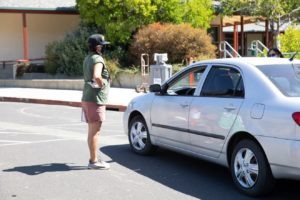
“We were friends with someone else who comes here. For weeks she kept saying you’ve got to come to the lunch, it’s great, you’ve got to come. Well finally we came,” explained Phillis. “We had lunch with her, and next door was the food pantry.”

Since coming to the pantry, they no longer need to spend money on groceries – a huge advantage considering almost half their income from Social Security goes to rent. Without it, Lee says, “we could survive.” Phillis pipes in, “but it would be very difficult.”

Despite their financial situation, they both say the real benefit of coming to the pantry has been the community.

“We are just so grateful for the San Geronimo Valley Community Center,” said Phillis. “We’ve met so many wonderful people, you can’t imagine.”

The Neighborhood Pantry: A Community Gathering

Food pantry coordinator greets participant

Before the events of 2020 neighborhood food pantries weren’t just the primary way the Food Bank gets food to those who need it—they were bustling, thriving communities. Regardless of if you were a volunteer or participant or both the pantry was a chance each week to catch up with friends. The farmer’s market-style meant not only that people chose the food they wanted, but that they were encouraged to mingle with their friends and neighbors before and after picking up their food.

“When you start talking to people, they may look old or they may look funny to you, but once you start talking to them, you just can’t imagine how much background there is, and just the lives they’ve led,” said Phillis. “When people say they are retired, you never hear their story.”

Lee agrees, “that’s so true. You think ‘boring’ until you know them.”

Lee and Phillis certainly were not boring, but they did have stories to tell—stories that went far beyond the pantry.

After talking to Phillis and Lee about why and how they started coming to the food pantry they mentioned they’ve only been married for three years. The two finish each other’s sentences constantly and have the banter of an old married couple, so you’d never guess it had only been three years.

Phillis said she was living in a veterans home in Yountville and “I needed a walking partner, and I heard him say he likes to walk.” Before she could say more, he chimed in, “it just grew.”

These are the kinds of stories you hear when you spend time at a pantry. At the Food Bank, our hope is food pantries will continue to foster this sense of community, and the food people receive will help to support the lives they want to lead—because everyone deserves to do more than just survive.

Continuing Family Holiday Traditions During the Pandemic

December 17, 2020

“I was waiting for the holidays to be with my entire family,” says Anabely, while standing in line with her two young daughters to pick up a grocery bag at the Cornerstone Church Pop-up pantry. “But now because of the virus, I won’t be able to do that.”

Like many families, Anabely, her husband, and her two daughters always reunite with their extended family during the holidays. But now because of COVID-19, they’ll have to celebrate on their own.

“Every year, we get together for the holidays and celebrate together with food,” she says. “I love making tamales and I also cook turkey. I just love cooking.”

Celebrating with Food

Food is a tradition that 2020 hasn’t taken from us. We can’t see each other in person, but we can enjoy the food we always cook around the holidays.

Like many, Mei Yu stays connected with her family via WeChat. Of course, like the rest of us, she’s sad she can’t see her loved ones in real life but isn’t letting that stop her from making the food she enjoys every year and keep it festive.

“We love having roast chicken during the holidays,” she says. “We usually season the chicken with salt, chicken powder, and soy sauce, and we cook it in the oven for 20 minutes.” “I also love making vegetable dishes, salads, and cakes to celebrate with my family. We also put eggs in the salads.”

Mei Yu never finds herself alone in the kitchen. Her husband, son, and daughter join her to make these dishes—all of which are family recipes. 

Although Mei Yu considers these dishes to be simple, her family enjoy them regardless. 

“I can’t celebrate with my extended family this time, but I can still enjoy these dishes and celebrate with my own family.” 

Supporting Families this Holiday Season 

While families are finding ways to keep their traditions alive, many still struggle to afford food. That is why the Food Bank is working hard to meet the need and even include some extras like cooking oil during the holiday season to help families continue these traditions in a special way. 
“Getting food here helps us from having to purchase food I can’t afford,” says Mei Yu. “Food has gotten really expensive recently.” 

Anabely feels the same way. “We’re very thankful for the food. Our whole family is very thankful. God bless the Food Bank because what they’re is doing for people like my family that need food—it’s great and it’s really helpful for people that need it and love to cook.” 

Why is the Food Bank Expanding?

December 14, 2020

Michael Wirkkala is the Chief Operating Officer at the Food Bank. He has been directing everything from our needs assessment to planning to being an ambassador in the community for the project. We sat down with him to learn more about what’s going on behind-the-scenes with the project.

Q: Why is the Food Bank expanding?

A: The short answer is that hunger is growing, and we want to serve more people. The longer answer is that we’ve occupied our current warehouse since 1997; we were bursting at the seams before COVID, and since the pandemic, it has become even more critical to expand our facilities. The building was originally intended to support the distribution of 30 million pounds of food per year, and pre-COVID, we were handling 48 million pounds. Since the pandemic began, that number has jumped up to 56 million. The expansion will enlarge the site by approximately 32,000 square feet and allow us to grow our annual food distribution to 75 million pounds, serving up to 200,000 people per week.

Q: How has the pandemic impacted the expansion?

A: We were already almost five years into planning and designing the expansion when COVID hit. Since then, we’ve doubled the number of families we serve at our pantries, and we dramatically grew our Pantry At Home program from 250 participants to almost 12,000 seniors and people with disabilities. The lack of space has been costly and requires additional coordination.

Given that the warehouse was already stretched beyond capacity, we erected a makeshift tent in the parking lot, then rented additional warehouse space, then another, then another, and then another. Managing inventory for eight separate warehouses has been incredibly complex. In addition to the cost related to space, transportation, and coordination, we’ve been less efficient than we could be if we were all in one warehouse.

Q: How much will the expansion cost, and where will the money come from?

A: The total price tag is $40 million. The support from donors has been incredible, and we’ve already raised 90% of the $40 million. People have been especially generous during the pandemic as COVID has left thousands of people out of work. The need to expand is even more urgent, as the economic effects of the pandemic are not going away anytime soon.

Q: Has the community been involved in the planning process?

A: After we had done some initial planning and drafted our initial designs, we solicited feedback from the community. Because of their input, we’ve improved our designs to provide additional pedestrian safety and much easier and efficient truck access to the site which will result in less traffic congestion. We now have unanimous support from key neighborhood groups such as the Dogpatch Neighborhood Association, the Potrero Boosters, and the Green Benefit District.

Q: Will the construction alter your food distribution services?

A: Our goal is to not disrupt the flow of food to the community. When we expanded our Marin warehouse, there was no disruption. This will be a complex renovation given our current footprint, and we will temporarily have to back trucks into Pennsylvania Avenue. We’ll have flag people on the streets for safety, and trucks will be staged off-site until we are ready. It will require a lot of strategic planning to ensure we can get food to the community without adding traffic congestion to our neighborhood.

Q: When will the construction be complete?

A: As you might imagine, the pandemic has slowed the process. Permitting from the City has been significantly delayed as those offices were closed for months. We hope to break ground in the spring of 2021 and complete construction in 2022. It’s going to be very exciting to open our new doors. The building will be beautiful, but more importantly, it will allow us to meet the needs of the community, making a difference in people’s lives.

Take a photo tour of our warehouse in Marin, and our future one in San Francisco.

Support Your Community During the Holidays

December 2, 2020

As COVID-19 continues to spread, so does the rise in food insecurityThis holiday is a holiday like no otheras families struggle to afford rent, utilities, medication, or food.

Since the start of the pandemic, many more people have stepped into our pantry lines for the first time. In October alone, almost four times as many people than before the pandemic used our Food Locator to find resources, pantries, and CalFresh (food stamps) assistance.

That’s why this holiday season, it’s important now more than ever to make a difference however you canHere are several ways you can support your local community so that no one goes hungry. 

Volunteer

While it’ll be hard to have a safe gathering during the holidays, you can still volunteer at our Pop-up food pantries and warehouses in San Francisco and Marin by packing grocery bags for participants or deliver groceries to homebound seniors and adults with disabilities. We especially need help during the weekAnd remember the need for volunteers doesn’t end in December, so please consider volunteering throughout 2021.

If you’re bilingual, your language skills are also imperative to make these distributions more inclusive and effective for all participants. Currently, Cantonese and Spanish support are our most urgent needs.

Learn more about volunteer opportunities here.

Fundraise for Us

Due to COVID-19, we are temporarily halting the delivery. Host a virtual fund drive instead, which can be done easily to raise money. Plus, participants will receive even more food. We are able to turn every dollar into two healthy meals! Learn more about food and fund drives here.

Donate 

We need sustained financial support to continue to respond to the dramatic need we are seeing in the community right now. Your donations are what keep us going, and we hope you’ll consider signing up for our Monthly Giving Circle to help support us year-round. Your gift will go a long way to feed those in need. Learn more here.

Support Our Partners

Our community partners will also need your support to fight hunger. If our volunteer shifts are filled, support our partners by volunteering with them instead.

Take Action Today

It will take systemic change to end hunger. That’s why our actions extend beyond food distribution and CalFresh assistance. You can influence change by: 

  • Calling and emailing your members of Congressto demand they pass comprehensive COVID relief to keep our communities fed.  
  • Speak up on social media and tag your members of Congress by using the hashtag #BoostSNAPNow. You can find their Twitter handles  here. 
  • Write a letter to the editor to highlight why boosting SNAP will help your community. You can submit one to the San Francisco Chronicle here.

So, whether you decide to volunteer, donate, or take action, your support will provide more food for the community during the holidays and beyond. We can’t do any of this without you. We hope you will join us to end hunger. 

A Holiday Like No Other

November 19, 2020

For many, Thanksgiving is synonymous with three important things: family, gratitude, and food. Unfortunately, COVID-19 is forcing many of us to rethink what those things mean this year.

For one family, the global pandemic is a time to establish new Thanksgiving traditions and cook familiar dishes, even if they can’t gather everyone around the same table.

“I kind of have a large family and my mother – she is 85 now – was the cook,” said Irie, a Food Bank participant. “We would go over to her house for dinner. So that won’t be happening this year.”

Irie lives with his wife in San Francisco’s Bayview District. A few years ago, he and his wife were in a motorcycle accident – she broke her spine. After the accident, neither of them were able to work their construction jobs, so they rely on disability and they are regularly coming to the Pop-up Food Pantry at Cornerstone Church. Since Irie was a little kid, Thanksgiving has always involved turkey and dressing, plenty of cakes and pies, cans of cranberry sauce, and greens. This year is no different. He has a special baster that will inject the marinade right into the turkey he is planning to fry. For dessert, he is making a couple of sour cream pound cakes plus, “my mother and my wife want me to make a German chocolate cake, and I want to make some banana pudding blend.”

It’s an ambitious menu for a small Thanksgiving, but Irie inherited his mom’s love of cooking, and whatever they don’t eat they are planning to share.

Keeping Traditions Going

Last year, with more leftover food at the end of their Thanksgiving dinner than they knew what to do with, Irie and his family said, “Let’s just go and just make a bunch of plates and just take it out to the hungry while the food is still warm.”

They ended up giving away 10 plates of food to unhoused folks in their neighborhood.

“It just felt so good. We thought, ‘let’s try to feed 20 people this year’. So that’s what we’re gonna do,” said Irie. Even though they’ll have fewer family members around the Thanksgiving table this year, “we’re going to cook the food up, make 20 plates, and go feed 20 people.”

One of those plates will go to his mom so he’ll at least be able to see her from a distance. By the sound of it, Irie’s mom and anyone else getting a Thanksgiving meal from him this year are in for a treat.

A Food Bank Thanksgiving

Food and community are at the heart of what we do here at the Food Bank, making this is an extra special time of year for us. Despite family gatherings being scaled back or canceled altogether this year, we are still planning to distribute extra food this month to help our community make Thanksgiving as special as possible.

In fact, we will give away enough food for 1.4 million Thanksgiving meals, up from 880,000 last year. That includes more than 232,000 pounds of chicken and 1 million pounds of produce.

Finding Gratitude in 2020

Even if this will be a holiday like no other, we want to ensure our community can still enjoy a celebratory family meal next week, no matter what form it takes.

“I’m just really thankful to have this Food Bank because I’m sure it helps a lot of people, including me,” said Irie. “At the same time, it helps me to help others, and that’s what I really want.”

Students Volunteer During COVID | Leo’s Story

October 19, 2020

Volunteer after volunteer has stepped up during the COVID-19 pandemic. Prior to the pandemic, it took 1,200 volunteers each week to run our operations. Now, with new COVID-19 programming, it takes 2,000. That is an unprecedented number of new volunteers.

One of the volunteers is Leo, who is 11 years old and starting middle school this year. Leo’s mom, Amber, works at the San Geronimo Valley Community Center, and at the beginning of the pandemic, he started tagging along with her every week to volunteer at the Center’s Thursday Pop-up Food Pantry.

“I’ve just been coming along because I know that they need volunteers,” he said, adding jokingly: “and because she makes me.”

Leo and his mom have a good laugh over that. But despite any extra encouragement from Amber, Leo always has a good time when he volunteers.

“It’s pretty fun. I mean, it can get kind of exhausting because it’s really hot outside sometimes. But yeah, it’s pretty fun.”

A Strange School Year

For Leo, the Pop-up food pantry is not the only thing new in his life, he is starting middle school this year. And if middle school was not hard enough, he is doing it amid the pandemic.

“I’m excited, but I’m also not excited,” explained Leo. “I wish that I could actually start in the classroom in Middle School, but I’m going to have to be at home.”

Like many of his peers, Leo is navigating remote learning while trying to stay in touch with friends – a challenge many teenagers are currently facing.

At least he is not the only teen who volunteers at the pantry; there are several other students who regularly joined him on Thursdays in the summer. Though they aren’t his school friends, Leo says he likes meeting new people while helping out.

A Family Affair

The Food Bank has always encouraged young volunteers to join us, and we often see families volunteering together to give back while spending time together. This includes families delivering to seniors, families in our warehouses, and families like Leo and his mom, who volunteer at Pop-ups.

For other youths who are up for the hard work, it takes to pack bags and load trunks for several hours, “It helps a lot of people for the food pantry to have extra volunteers,” said Leo. “And even if you don’t like it, you can bring extra food home.”

Undocumented Immigrants Forgotten in Pandemic Relief

October 5, 2020

Each week, Diana and Cristina* wait patiently to get food at our Mission High School Pop-up Pantry. 
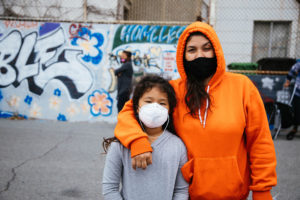
“I’ve been laid off for three months because of this virus,” said Cristina, who worked as a hotel housekeeper. “Most of the money goes to bills.”

Diana, a friend of Cristina’s who worked as a cashier at a café, echoes that concern. “The money that I do get is only for paying bills, and I don’t have that much money left to buy food.” 

The Food Bank is open to all, and they are among many immigrant participants who benefit from the groceries at our Pop-up pantries. However, for Diana and Cristina who are also undocumented, the Food Bank is one of the few supports to get them through the week.

Weathering the Pandemic Without a Safety Net

Prior to COVID, immigrant families were already impacted by the changes to the long-standing Public Charge rule. Undocumented immigrants who keep their government benefits such as CalFresh (food stamps) for more than 12 months within any 36-month period are barred from obtaining lawful permanent (or “green card”) status. As pandemic-related job losses exacerbate the need for food assistance, rules like Public Charge force families to balance seeking help with remaining in this country. 
Many resources are currently available to weather this pandemic but are inaccessible for undocumented immigrants like Cristina and Diana. For example, while both women lost their jobs due to COVID-19, they are still ineligible to receive unemployment benefits. Undocumented immigrants were able to receive a one-time disaster relief assistance fund and support from nonprofit groups due to ineligibility for federal assistance. 

The Governor also recently passed an expansion of the state’s Earned Income Tax Credit this year, allowing all tax filers, including undocumented people who pay taxes, to receive a tax credit. This policy change will put money back in the pockets of nearly 600,000 undocumented California taxpayers.

However, these are not long-term solutions and not every family is able to continue to receive assistance elsewhere. Bills such as AB 826, which would’ve provided emergency food assistance by distributing pre-paid grocery cards through food banks and immigrant-serving organizations to low-income communities including undocumented immigrants, was recently vetoed by Governor Newsom.

Currently, there aren’t any other bills to provide food aid to undocumented immigrants throughout this pandemic.

Navigating Remote Learning 

As single mothers and Spanish speakers, both Diana and Cristina found it challenging to find ways to educate their children while schools were closed. Although their children can speak English, the language barrier made it even more challenging for homeschooling.

“I try to create projects to keep my daughter busy and educated,” said Diana. 

On top of navigating homeschooling and distanced learning in a second language, Cristina and Diana were constantly ensuring their children, who typically received meals at school, were getting enough to eat each week. 

The Need to Feed 

Like many of us during shelter-in-place, both Diana and Cristina are concerned about catching COVID-19, especially knowing the Latinx population makes up an increasing proportion of COVID-19 cases in California due to historic inequities. 

“I’ve been feeling a bit trapped, but also afraid of going outside,” said Diana. “Still, I need to come here so that I can feed my seven-year-old daughter, Maria.” 

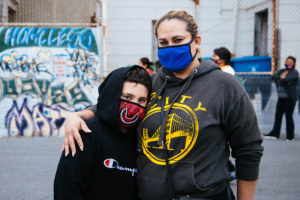
“If these programs didn’t exist, I feel like I wouldn’t be able to properly feed my son,” said Cristina, as she tightly hugged her son. “It especially helps because if my son wants specific foods, at least I’ll be able to use this food as a daily staple without feeling guilty about it.”

*Names used in this blog post are aliases to protect the identities of the participants