

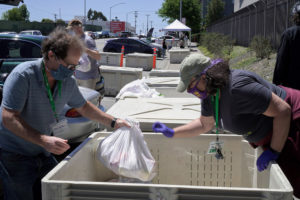
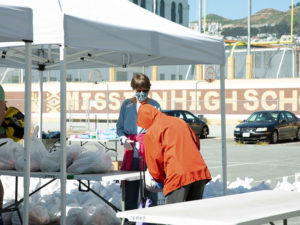
While COVID-19 put limits on gatherings and in-person church services, Cornerstone Missionary Baptist Church in San Francisco’s Bayview district has found new opportunities for service through its Pop-up Food Pantry during this crisis.
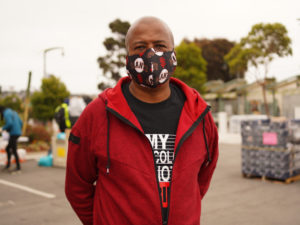 “Although our church can’t fellowship in person and the doors for the church are closed, we like to say that the church is still open and we’re still doing the work,” explained Minister Damonn White, who spends his Thursdays at the Pop-up Pantry Cornerstone now hosts in partnership with the Food Bank.
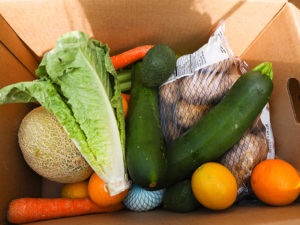
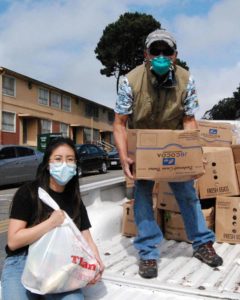
The Pop-up at Cornerstone opened in May, making it the second Pop-up Pantry the Food Bank opened in the Bayview District after the Bayview Opera House. Each week it serves bags of fresh produce, protein, and shelf-stable items to 600 households from all over San Francisco.
The pantry may be new, but food has always been part of the ministry at Cornerstone Church. Not only do they feed about 250 families each year through their holiday food baskets, but they are also always prepared “if somebody comes to us hungry,” said Minister White. “We have families sometimes say, ‘I’ve been displaced, we need food to eat.’ We always have some food on hand.”
Challenges of COVID-19
Cornerstone Missionary Baptist Church has experienced the grief of this tragedy firsthand. When we spoke with Minister White in July, eight of his parishioners had gotten the virus, and one person had died.
Minister White explained, “the sad part of this is that when transitioning of life happens, that we’re not really able to love on people the way we would like to. But we just have to take the safety precautions, you know. We’re learning on a day to day basis, with gloves, masks, social distancing, and it’s tough. It’s tough.”
Their experience is not unique. The disproportionate impact of COVID-19 on Black and Brown communities is particularly evident in Bayview, where 31% of residents identify as Black compared to just 6% of San Francisco’s population overall. As of July, there were 192.91 cases of COVID-19 per 10,000 residents in the neighborhood – the highest infection rate of any San Francisco neighborhood.
Immediate Food Needs
The risk of the virus itself is not the only challenge for the Bayview community. In July, the Human Services Agency (HSA) conducted a survey of low-income San Francisco residents who receive its services. It found that Bayview had one of the highest percentages of people 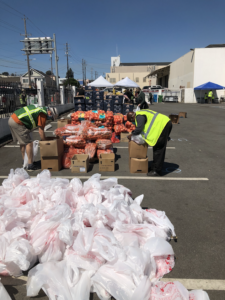 reporting that they did not have enough food in the last two weeks.
HSA also found that while 34 percent of Black respondents reported food as their most immediate post-shelter in place need, only 26 percent reported visiting a food pantry.
The Food Bank is trying to address this by working with community partners like Cornerstone Baptist Church and the Bayview Opera House to ensure there are food pantries in the neighborhood. But we know simply opening a pantry is not enough. After hearing from local residents that lines were too long, we implemented an improved line management system where individuals registered for timeslots to reduce wait times. And we will continue working with community leaders to improve our outreach to the local community.
In the meantime, Cornerstone is happy to be of service to San Francisco residents far beyond its immediate community. “We want to make sure we meet the masses. We don’t want to be considered a Black church. We’d like to be considered a community church for all.”
And if you visit the pantry Thursdays, you’ll see they’ve achieved this. The Pop-up Pantry at Cornerstone serves a diverse cross-section of people. Thanks to the welcoming environment the Cornerstone community provides, we continue to see strong interest from neighborhood residents in wanting to join.
“For me, this is what it’s really all about. It’s nice to wear a suit and get up and say an elegant speech in front of a room full of people and inspire them to live a greater, a better life,” said Minister White. “But this right here is where the rubber hits the road. For me, I’m a people person. I’m a community person. I like to do whatever I can do to help people. So today and every Thursday, when I’m here, it’s so gratifying, you know, to walk away and know, okay, we actually helped some people today.”

 Share this quote
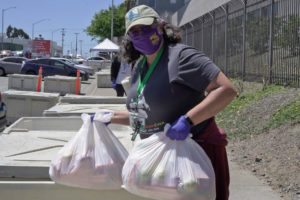 “I miss being at the library, but I recognize that it’s important for me to be here,” said Pauline.
 Now
Now 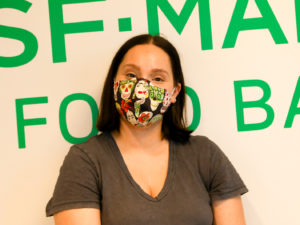 Growing up in San Francisco, my grandmother was everything to me. She had migrated from Nicaragua, re-married into a food family, and helped run a restaurant. So, she knew how to cook, and prepared meals for us regularly. Her kitchen was the epicenter of our family.
 Since COVID-19 struck, the music and hugs have taken a pause, but the welcoming atmosphere has not. In Marin, we’ve changed many of our operations to drive-thru pantries. Folks drive up, open up their trunks, and a volunteer puts their groceries in. It’s a “no-touch” experience, but you can still see everyone smiling beneath their masks.
 So, o
So, o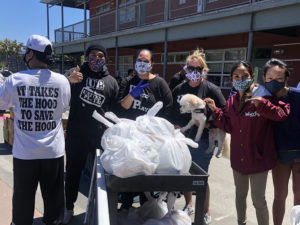 SW
SW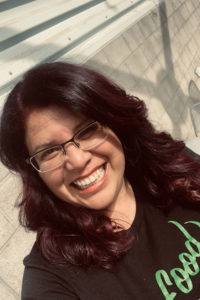 Growing up, there was a time our kitchen cabinets were filled with blue and white generic brand food. I didn’t know my family was going through a hard time and that generic was the cheaper option. All I knew was that we had plenty.
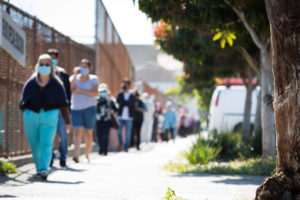 After an hour and thirty minutes, I finally saw them coming around the corner to enter the distribution area. They were both smiling under their masks and still holding hands as they seemed to cross the finish line together. It warmed my heart, and I couldn’t help but clap and say, ‘You made it! Good job!” The little boy gave me a thumbs up. It was a beautiful thing to see him unaware of the long line he waited in for the food they needed.
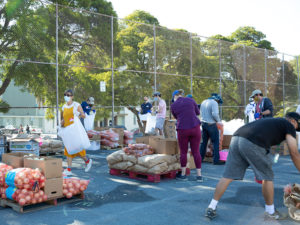 Every Tuesday, volunteer Ruthanne McCunn arrives
  “I’ve known about the Food Bank for many years,” said Ruthanne.
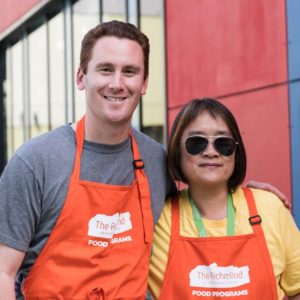
 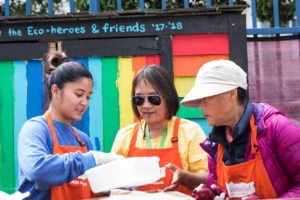 Before COVID-19, The Richmond Neighborhood Center created a thriving community around its food programs. Pantry volunteer shifts created an atmosphere similar to a family gathering. Even among the participants, weekly pantries were a place to gather and catch up with one another. And with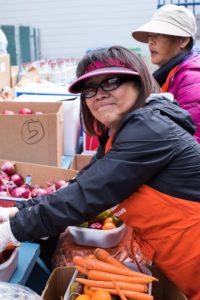
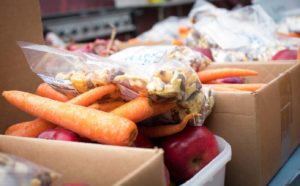
 Most of us try to limit our trips to the grocery store – trying to make it in and out as quickly as possible to protect everyone’s health. But when we venture out, it’s hard to miss the shortages and increased prices – it can seem like the bill keeps going up even as we can never get everything on the list.
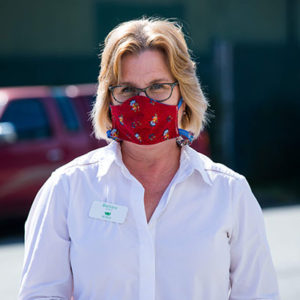
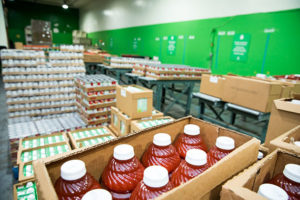 “We’ve had to re-engineer our operations in so many ways,” Barbara said. “But the biggest change is that we’re serving nearly double the number of families with so many of our neighbors out of work.”
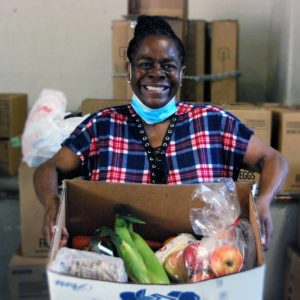 “We always try to have extra bags if people come late, or if they didn’t know about the pantry,” said Mary Ann Pikes, who is one of the volunteer leaders who has come since 2012. “It’s amazing how many people who live here never knew about the pantry. But I can understand, it’s because they were working every day.”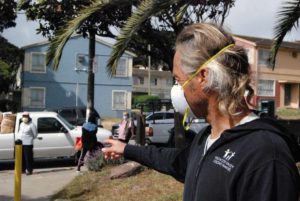
Share