SNAP is a proven, effective program that reduces hunger and poverty, and sparks local economic development. The passage of the “One Big Beautiful Bill Act” guts SNAP and reverses decades of progress to address hunger in the US.
This outcome is truly anguishing. Hunger is a policy choice, and there is no justification for the widespread pain that will be inflicted on millions of families with children and seniors who will struggle to put food on their tables as a result of these cruel choices guided by the politics of avarice.
Food is a human right, and we remain committed to providing healthy food to our community and advocating policies that align with our mission — eliminating hunger and its root causes. Our Food Bank is collaborating with Feeding America, the California Association of Food Banks, and local, state, and federal leaders to monitor developments on other food security programs related to the farm bill and federal commodities funding. We will continue to advocate for the protection of critical food security programs and work to address these consequences.
While this is a truly disappointing day, we are grateful for the ongoing support from those in our community who raised their voices to oppose these regressive measures. We are resilient and unapologetic in ensuring people have access to healthy food. We will never back away from our mission to end hunger and pursue our vision where everyone has access to nutritious food of their choosing and is uplifted by a network of support.
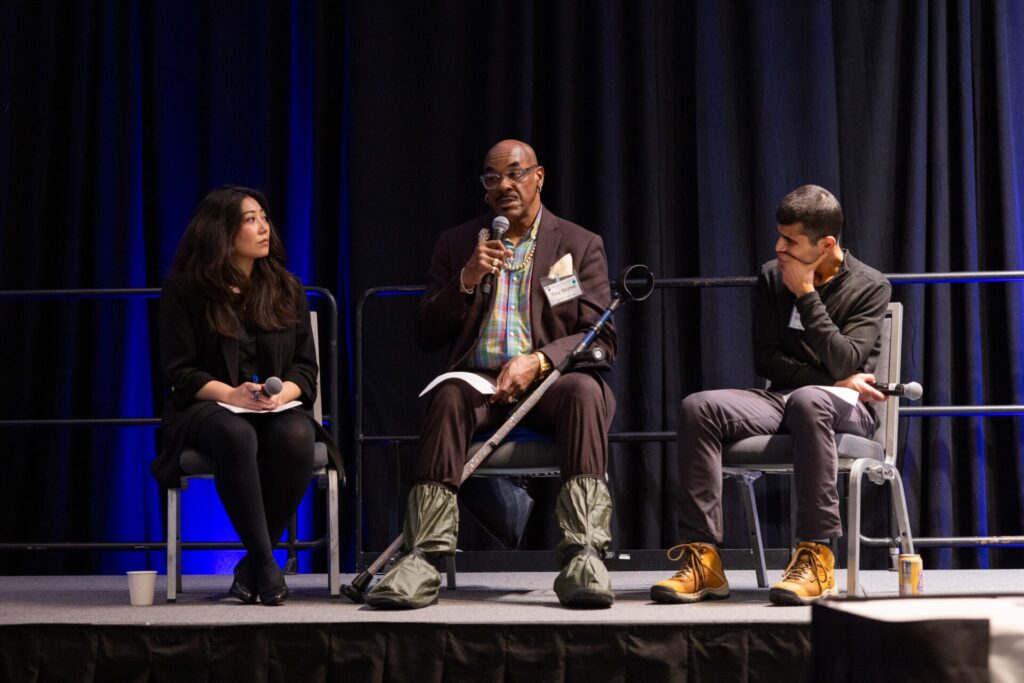
At the Food Bank, we know ending hunger means disrupting its root causes, which include poverty and housing instability. Real change is impossible if we don’t tackle these issues together — a belief that was front and center at the Episcopal Community Services’ (ECS) inaugural Housing Symposium in February, where San Francisco’s leading hunger and homelessness advocates gathered to discuss solutions.
Noriko Lim Tepper, chief officer for the Food Bank’s Strategic Partnerships, Advocacy & Voice department moderated a panel discussion on improving food security through CalFresh.
“The symposium is gathering community and government leaders to strategize ways we can develop inclusive policies and give more people the opportunity to access social services like CalFresh and other benefits,” she said.
Noriko was joined by Rohit Naimpally, senior director of Impact at Tipping Point Community, and Troy Brunet, a member of the Food Bank’s Food Policy Action Coalition (PAC). Each panelist brought a unique perspective on how CalFresh serves as a critical tool in the fight against poverty.
The Impact of CalFresh
Rohit shared Tipping Point’s research on the significance of CalFresh’s impact on hunger and poverty and details from its latest report on the issue. One key takeaway was that, when comparing multiple social safety net programs, CalFresh played the largest poverty fighting role statewide.
CalFresh — known nationally as SNAP and formerly as ‘food stamps’ — is a cornerstone of our food safety net in California. CalFresh alone kept over 100,000 Bay Area residents from dipping below the poverty line, according to Tipping Point’s findings. Additionally, the report noted that, compared to the five most populous states in the U.S., California has the lowest percentage — at 55% — of eligible people accessing CalFresh. And, while San Francisco has the highest eligible enrollment rate in the Bay Area at 81.5%, Tipping Point’s findings showed most of the Bay Area averaged below the state at 52%. Marin’s rates weren’t included in the findings, but the county does slightly better at 58.9%, according to 2021 data from the California Department of Social Services.
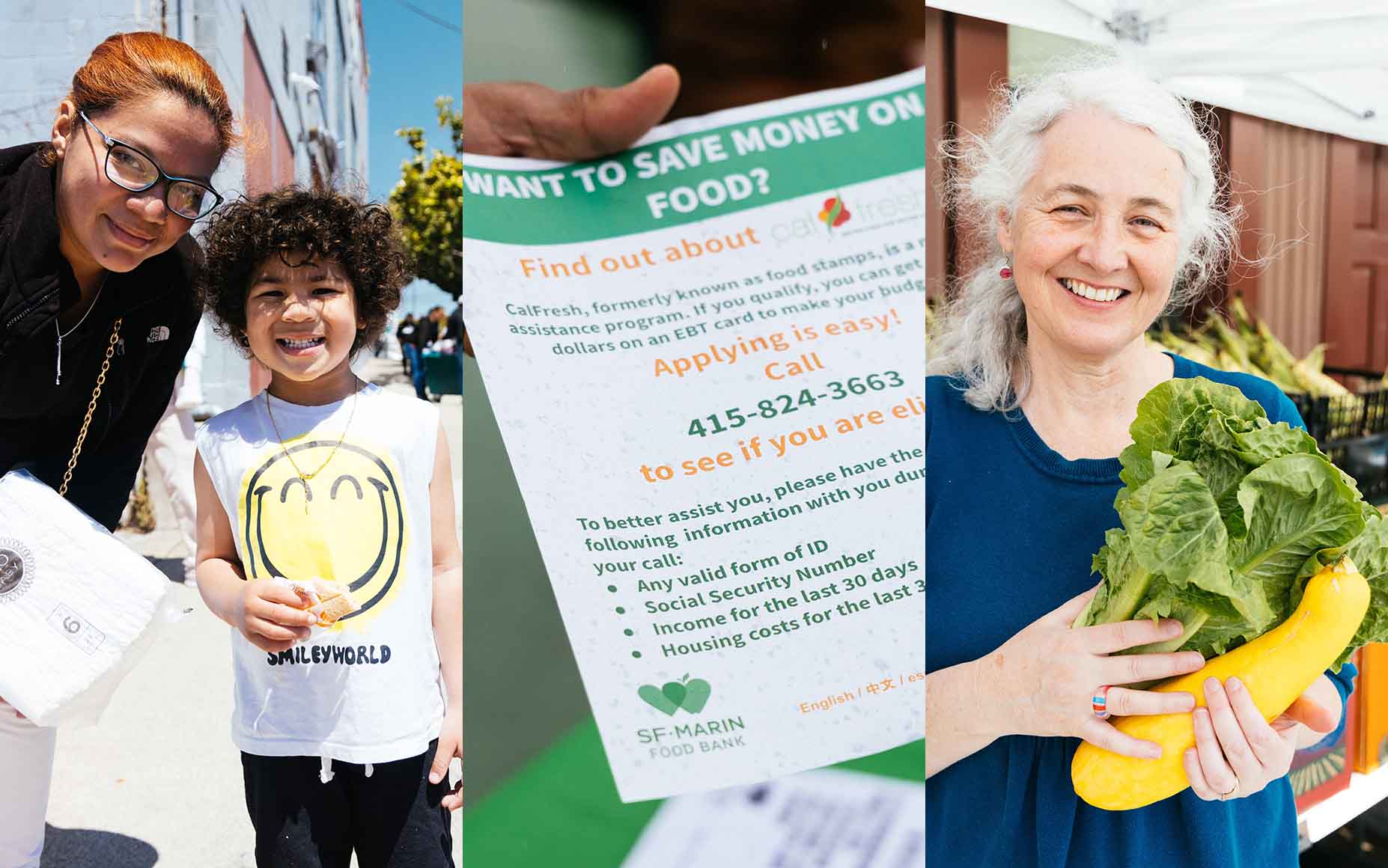
Because CalFresh is recognized for its effectiveness in addressing a root cause of hunger — poverty — increasing greater access to the program is a priority for the Food Bank. It’s why we helped pass AB518, a bill requiring California to identify people eligible but unenrolled in CalFresh and to find ways to enroll them.
Speaking from lived experience with food insecurity and as a CalFresh recipient, Troy weighed in on why he thinks the number of CalFresh users isn’t higher. “People don’t know that they qualify and that it’s there for them,” he said.
Troy also spoke about the enrollment process, which can be a barrier.
“The applications are kind of long and drawn out,” he said, “and some people don’t want to fill all of that out or even have the energy to do it.”
As a member of the Food PAC, Troy and 12 other people who have also experienced food insecurity help the Food Bank advocate for just, equitable public policies that address the root causes of hunger and strengthen the social safety net. For Troy, CalFresh especially matters.
“CalFresh to me is very important,” said Troy. “I’m HIV positive, so I deal with a lot of health issues. Having quality, good food to eat is a big help for my health. I’ve also found a lot of seniors don’t get the access they need, and they do need to be able to eat and have quality food.”
A Call to Action
Looking ahead, the panel members and others at the symposium expressed concern about our vulnerable social safety net — especially CalFresh, which is at risk of federal funding cuts.
“We just think that more needs to be done in terms of bringing attention to this issue,” said Beth Stokes, executive director of ECS.
A Food Bank community partner, ECS focuses on the needs of the unhoused, and “food is a very, very basic need,” she continued. “For folks that are in supportive housing to be able to have easier access to hot meals, it’s quite a challenge. We do have access to the Food Bank, but we also have over two thousand units of supportive housing in the city. That means a lot of people need food.”
A clear takeaway from the gathering was the importance of collective advocacy to ensure CalFresh remains intact.
“CalFresh benefits are critical for our community,” Noriko said. “It’s the first access point that people have in receiving healthy, fresh foods. People being able to access those benefits are vitally important for them to then participate and be healthy enough to just survive but be a part of a thriving economy.”
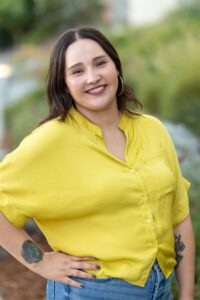
For Irene Garcia, the Bay Area isn’t just where she lives — it’s who she is. “I was born and raised in San Francisco,” she says. “Giving back to my community is part of who I am to my core. For me, working here, living here, and breathing here is just natural.”
Irene’s deep connection to her community brought her to our Food Bank nearly 11 years ago. Starting as a neighborhood representative, she supported our partners in Bayview-Hunters Point and Visitacion Valley then eventually San Rafael and Novato. Over the years, she’s continually found new ways to serve her neighbors and expand her impact with us. Two years ago, Irene became the Food Bank’s Associate Director of Community Building, where she’s helping to take on one of our most exciting and transformative initiatives: Community Markets.
Co-developed with our dedicated partners, Community Markets reimagine food assistance to better meet the needs of participants. These markets look and feel like grocery stores, allowing individuals to browse and choose nutritious food items in a dignified setting. They also connect individuals to vital services that address the root causes of hunger.
“Ending hunger isn’t just about handing out food — it’s about lifting folks out of poverty,” Irene says. “If you’re only managing hunger, you’re not solving the problem. Combining food assistance with wraparound services is how we support people in building stable, thriving lives.”
The markets are designed with convenience and accessibility in mind, featuring permanent or semi-permanent indoor locations with extended hours. They will be open at least two days a week and will help support participants who previously relied on Pop-Up Pantries. This reflects our commitment to serving as many people as possible as all Pop-Up Pantries close by June 2025.
Irene is grateful to work alongside a passionate and motivated team dedicated to helping food assistance in San Francisco and Marin evolve to meet the community’s changing needs. “Working with people who are just as collaborative and committed to innovating, finding solutions, and making things better is why I’ve stayed [at the Food Bank] for so long,” she says.
The Community Markets program is just one example of how all of us — from the Food Bank to community partners and supporters like you — are working together to transform our services and find lasting solutions to the root causes of hunger.
Ending hunger starts with policy change, and policy change starts at the ballot box. To encourage civic engagement around the issue of hunger in the City and County of San Francisco, the Food Bank partnered with the League of Women Voters and UCSF in co-sponsoring a San Francisco Mayor Candidate Forum on Sept. 30, 2024, at 6 p.m. at UCSF’s Robertson Auditorium. That same evening, 20 community members came together for a live stream of the event at a Mayoral Forum Watch Party in the Food Bank’s Welcome Center.
In alignment with the Food Bank’s co-sponsorship of the forum, mayoral candidates were asked how they would address food insecurity. Watch party attendee Troy Burnette, a member of the Food Bank’s new grassroots advocacy program, the Food Policy Advocacy Coalition (Food PAC) appreciated the opportunity to gather with others to discuss the candidates’ positions. “We all need to be coming together to get a better understanding of what we need to work on, to hopefully make things better for everybody,” said Troy. “To hear the candidates speak from their own voices makes a difference on who you may lean toward to move forward and hopefully help the Food Bank.”
Andre Aikens, Director of Programs for the Rafiki Coalition (a Food Bank partner), also noted that the location of the watch party helped underscore the reality of hunger with the policy positions on food insecurity shared by the candidates. “It connects the dots,” Andre said. “Listening to the candidates and sitting in this place kind of brings it all together so that you feel whether or not an individual actually has a plan, and this issue [hunger] is a priority as well.”
The candidate forum and watch party are part of ongoing strategic efforts to increase awareness of the Food Bank’s public policy concerns and foster civic engagement activities around ending hunger, according to Noriko Lim-Tepper, Chief Officer for the Food Bank’s Strategic Partnerships, Advocacy and Voice (SPAV) Department. “The Food Bank values the strength and wisdom in our community. As an organization, we center our efforts on lifting the voices of people who have lived experiences with food insecurity to lead meaningful policy change,” said Noriko.
In addition to viewing the live stream, attendees posed questions to members of the SPAV team. Discussion topics included how ranked choice voting works, aspects of the mayoral race and updates on the Food Bank’s latest policy and advocacy efforts including helping to drive statewide efforts to pass AB518, a new law that could lead to greater access to CalFresh for many eligible but unenrolled Californians.
Over the next several months SPAV plans additional events demonstrating the Food Bank as a civic engagement gathering place. The department includes the Community Building team of Associate Director Irene Garcia, and Community Builder Jesus Benitez Gomez, and Policy & Advocacy’s Associate Director Marchon Tatmon, and Community Organizer Alex Raffanti. Learn more about Food Bank advocacy efforts at sfmfoodbank.org/advocacy.
The San Francisco-Marin Food Bank is a nonprofit, nonpartisan 501(c)(3) organization and is prohibited from participating or intervening in any political campaign on behalf of, or in opposition to, any candidate for public office. Our goal is to elevate the issue of hunger with candidates and the public during the election cycle.
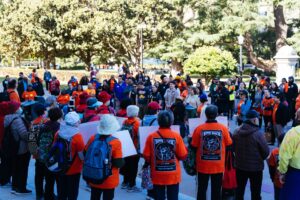
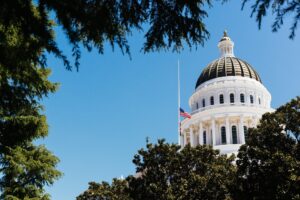
On April 30, our Policy and Advocacy team gathered in-person with the California Hunger Action Coalition (CHAC) in Sacramento to raise their voices for Hunger Action Day! Hunger Action Day is the single largest anti-hunger advocacy day in California, bringing advocates from across the state to the State Capitol to speak face-to-face with our policymakers.
Associate Director of Policy and Advocacy Marchon, Community Organizer Alex, and Community Builder Jesus all traveled to Sacramento to represent the Food Bank. After an energetic pep rally outside of the Capitol, where we saw neighbors from partner organizations like Tenderloin Neighborhood Development Corporation (TNDC) representing their communities, advocates got down to business.
Key Demands
This year, we lobbied in coalition for some key funding requests:
Increased CalFresh benefits for Californians
Continued funding for Market Match, which gives CalFresh recipients $10-$15 extra dollars at farmer’s markets
$60 million for food banks to purchase California-grown produce and pantry staples
Increasing Supplemental Security Income (SSI) to keep pace with the cost of living
…and many others!
Together other CHAC members, Marchon, Alex and Jesus shared directly with our elected officials how dwindling government support is affecting our neighbors already struggling with the high cost of living in the Bay Area and stretching food bank resources thin – emphasizing the need to double down on and invest in proven anti-hunger solutions like CalFresh.
Staff Takeaways
Reflecting on a jam-packed day of collaboration, Food Bank staff came away feeling energized to continue pushing for impactful, equitable policy.
On being able to build community with other advocates, Jesus shared: “We’re able to see how interconnected all our efforts are and advocate for CalFresh, Food for All and increased funding for food banks. All of our collective efforts have an impact on our communities.”
“It was amazing to hear everyone’s stories, and the way that they are affected and connected to the policies,” Alex added, speaking to neighbors who showed up to drive home the personal aspect of these policy and funding asks. “I hope that people feel empowered to vote positively for these measures, and that legislators are empowered by our stories.”
One such neighbor was Ms. Liu, who showed up to advocate for fully funding Market Match – a program that helps match CalFresh shoppers’ dollars at farmer’s markets, giving an extra $10-$15 to spend on farm-fresh fruits and vegetables.
Personal Stories, Passionate Advocates
Ms. Liu is a San Francisco resident, Home-Delivered Groceries participant, and an active member of TNDC’s Tenderloin Chinese Rights Association.
She spoke passionately about Market Match’s impact on her family, telling staff of our elected officials: “My husband and I are both chronically ill, and it’s vital that we have access to fresh produce. With the closures of many Tenderloin corner stores, we highly depend on the benefits of the Market Match for fresh food within our means.”
Since the end of CalFresh emergency allotments, Ms. Liu’s health has declined – but even that couldn’t stop her from traveling to the Capitol to advocate for better CalFresh benefits.
“I showed up today because it is imperative that they see that we are the people who are struggling,” Ms. Liu told us, gesturing to her friends and neighbors who also came to advocate. “We are elders, and many of us are chronically ill with mobility issues. We need more sustainable resources that work for us.”
Moving the Needle on Hunger
Thank you to all the advocates, including Ms. Liu, who spoke truth to power about the resources and support our communities need. Everyone has a right to nourishment and the ability to thrive – and our Policy and Advocacy team will continue pushing for equitable policies that uplift and support our neighbors while addressing the root causes of hunger.
In Marchon’s words: “Can’t wait to see what we continue to do to move the needle forward!”
We’re able to see how interconnected all our efforts are and advocate for CalFresh, Food for All and increased funding for food banks. All of our collective efforts have an impact on our communities” - Jesus, Food Bank Community Builder
Here at the Food Bank, our mission is to end hunger in San Francisco and Marin. On its face, the solution might seem simple: provide nutritious food so people facing hunger can thrive, not just survive. But while providing food on the ground is an essential part of our services, we know it’s not enough to simply address the hunger we see today – we must also work to address its root causes and change the policies that allow hunger to continue in our communities and plan for long-term solutions.
That’s why, in partnership with our community and other supporters, our Policy and Advocacy team works to promote proposed laws and create new policies that benefit everyone. We advocate at all levels of government, from local to state to federal – and we’d like to share with you some key wins we’ve achieved in the California legislature.
“Changing policy is a marathon, not a race,” said Marchon Tatmon, associate director of policy and advocacy at our Food Bank. “Nonetheless, we’re proud of how we’ve worked together with other advocates to achieve some pretty audacious goals. Our strength is that we’re always in conversation with our community to inform our policy priorities.”
California Anti-Hunger Policy Wins in 2023
CalFresh: According to a report by the Public Policy Institute of California (PPIC), about one in eight Californians relied on CalFresh (also known as food stamps) in 2022. The state adjusted this existing program to make it more effective, including:
Allocating $15 million to fund a pilot program raising the minimum CalFresh benefit to $50/month (currently, minimum benefits are $23/month).
Funded increased summer benefit amounts at $47 million, providing families with school-age kids more money to spend on food – a critical lifeline when free school meals disappear during summer vacation.
Secured $40 million to speed up the implementation of California Food Assistance Program (CFAP) benefits, which are similar to CalFresh benefits for undocumented immigrants.
Legislated reimbursement funds for skimmed CalFresh benefit dollars and increased benefit theft protection.
Secured $9.9 million for a broader Fruit and Vegetable pilot program giving extra CalFresh money for purchasing produce.
School Meals for All: Chances are, more kids are hungry than you think: according to the same report from PPIC, roughly half of the children in our state will participate in CalFresh by the age of six. Together with other activists, we successfully lobbied for more than $300 million to fully implement free school meals for all kids in California.
Social Security: Many older adults and adults with disabilities rely on this safety net to pay most or all of their expenses, including buying food. We helped secure a grant increase of 8.6% to raise the incomes of these vulnerable groups.
CalFood: Secured $60 million in funding for food banks across the state to buy California-grown produce, strengthening our local economy while also providing fresh fruits and vegetables to neighbors facing hunger.
These policy wins over the last year bring us another step closer to ending hunger – but our work isn’t done yet. In coalition with partners, participants and other activists, we’re determined to continue advocating for just, compassionate and equitable public policy that truly makes a difference for our communities.
Changing policy is a marathon, not a race. Nonetheless, we’re proud of how we’ve worked together with other advocates to achieve some pretty audacious goals. Our strength is that we’re always in conversation with our community to inform our policy priorities.” – Marchon Tatmon, director of policy and advocacy at our Food Bank
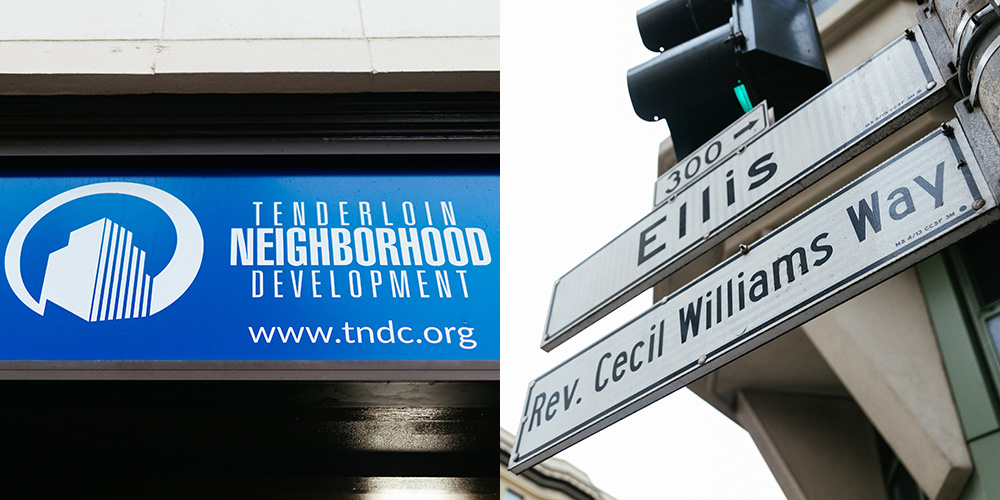
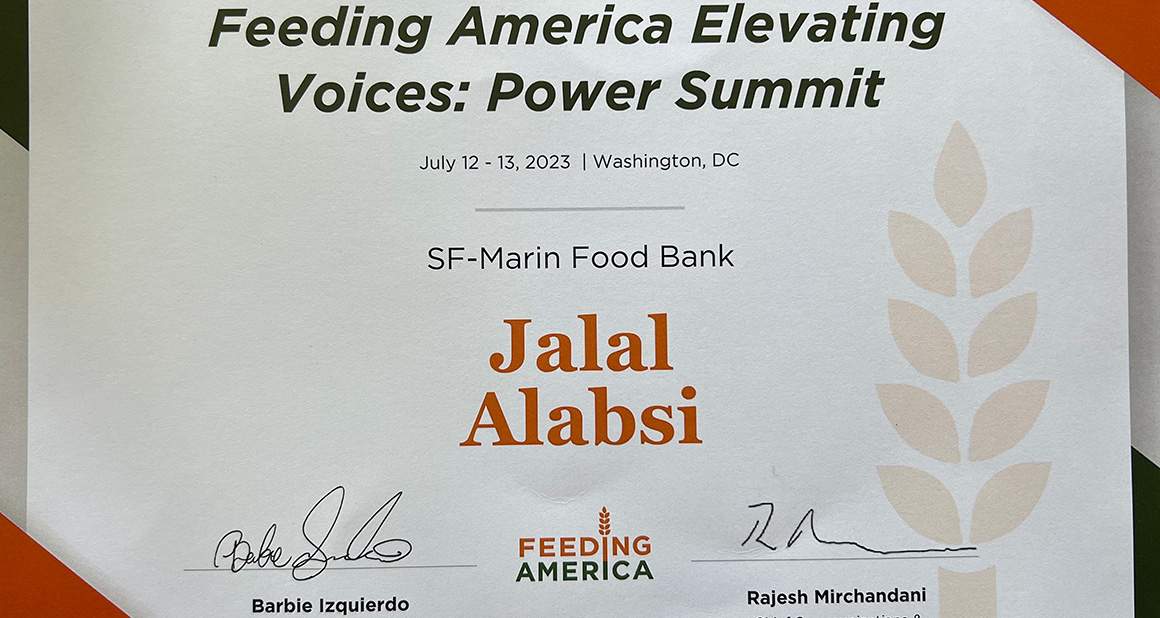
Jalal Alabsi is many things: he’s a formerly-practicing doctor, he’s an immigrant from Yemen, he’s a resident of San Francisco’s Tenderloin neighborhood. All these identities and more come together to inform his comprehensive work to end food insecurity in his community. From securing funding for halal food vouchers to lowering stigma around accessing assistance, Jalal has collaborated with organizations like our partner Tenderloin Neighborhood Development Corporation (TNDC) to help end hunger.
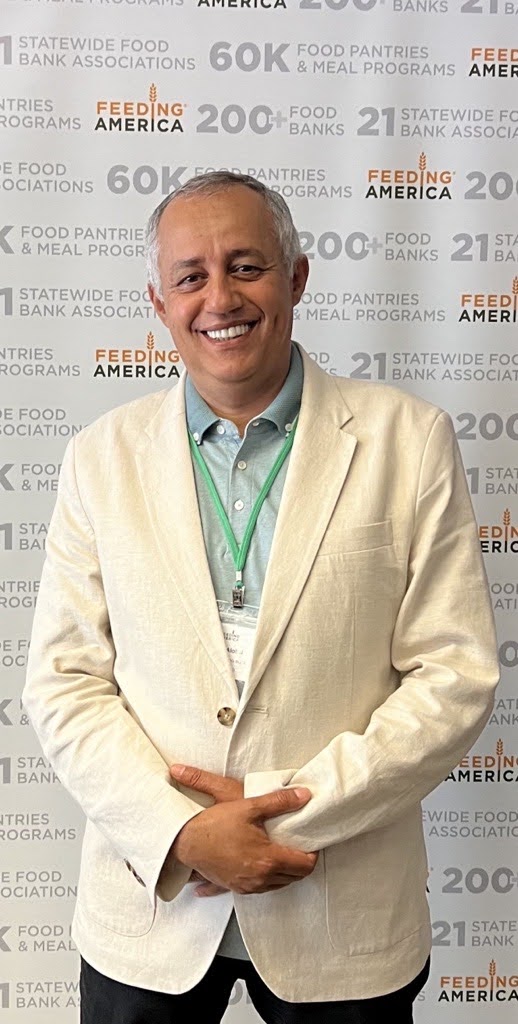
Jalal’s years of successful activism are exactly why our partners at TNDC suggested him when the Food Bank asked for nominees for the first-ever Elevating Voices: Power Summit. Hosted by Feeding America in Washington, D.C., the Summit brought together activists who have lived experience with food insecurity and connected them with key decision makers to discuss effective solutions to hunger.
We caught up with Jalal to hear more about the Summit and his work in the Tenderloin.
Food Bank (FB): Before we dig into the Elevating Voices: Power Summit, let’s hear a little more about your work in the Tenderloin.
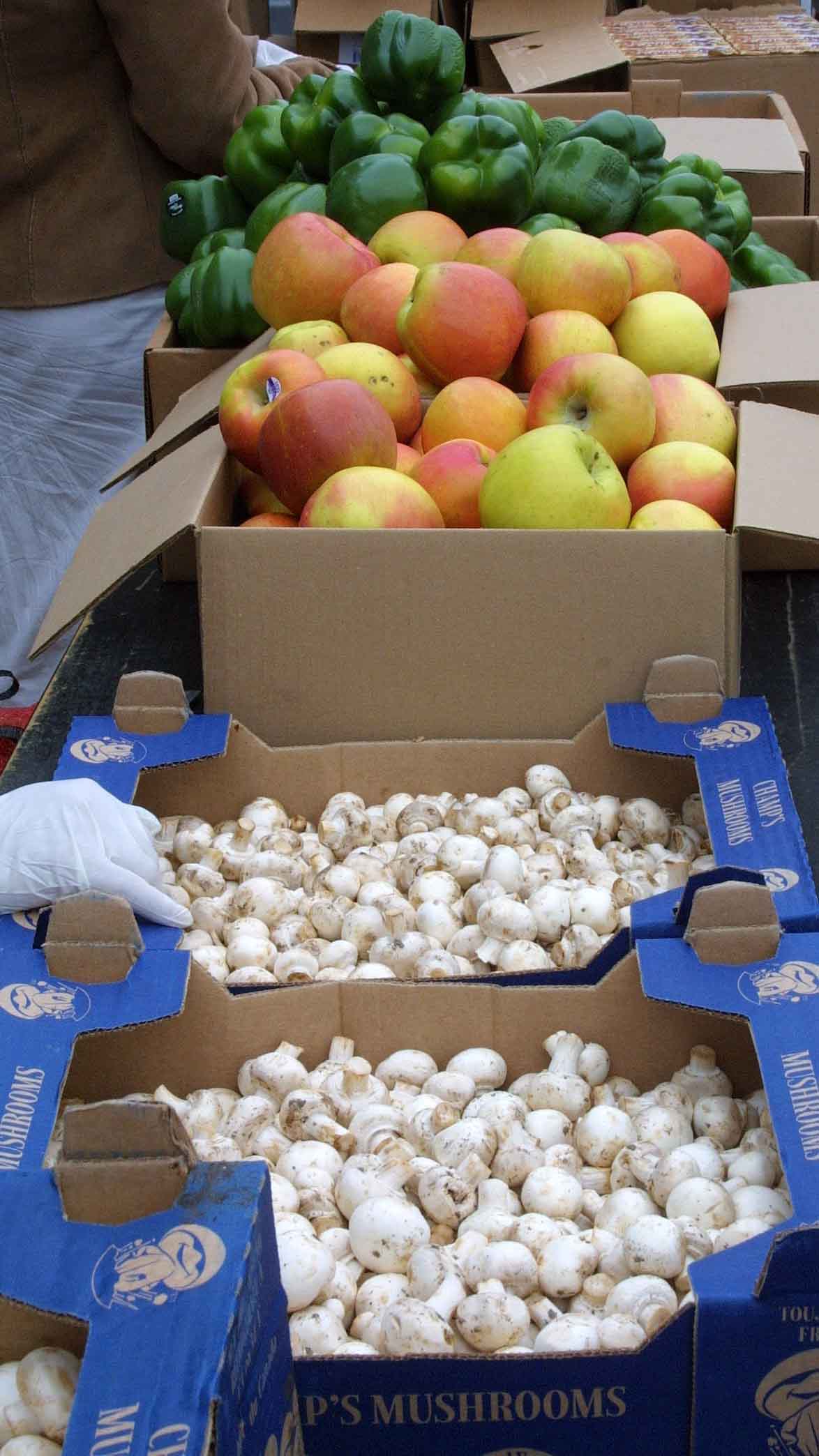
Jalal: I’ve been working to end food insecurity in my neighborhood for over five years. I started out volunteering at different places, working as a translator for folks who speak Arabic and explaining how people can use food that they weren’t culturally familiar with – I gave people recipes for mushrooms, for example.
[But I realized] that just giving out food isn’t enough – there are bigger problems than that. So, I decided to take classes at City College [of San Francisco] to be a community health worker, where I did my research project on hunger in the Tenderloin.
Now, I’ve worked with City Hall to get $500,000 in funding for halal food vouchers so Muslims can eat their preferred foods. I’ve worked with a few organizations to start the Food Policy Council to discuss hunger in the Tenderloin. [On the ground], I work every day to decrease the stigma around accessing food assistance. And I still give food directly to my neighbors.
FB: What inspired you to do this work?
Jalal: I live with this every day. When I first came to the US, I had problems with hunger. I feel what people are feeling when they say they are hungry. You get sick when you don’t have enough food, you can’t live even on the street without food. And now, I’ve gotten the education to be able to do something about food insecurity.
FB: What are the biggest barriers to ending hunger?
Jalal: One of the biggest challenges is the stigma around getting food assistance. Many people live with this, and it means they may eat only twice a day so they can afford to live on their salaries. But I explain to people, “[food assistance] is yours, you deserve this, it’s your right”.
Another challenge is CalFresh (food stamps). People need CalFresh. But it’s such a long and confusing process to apply, especially for people that don’t speak English, that for some people it just isn’t worth it.
FB: Tell us about the Elevating Voices: Power Summit.
Jalal: The Summit happened on July 12 and 13, and it brought together a group of activists from across the country who have lived experience with hunger.
The first day, we met with Feeding America’s CEO, Claire Babineaux-Fontenot. She wanted to hear from us: who are we, what do we do, what is the next step to end hunger? The objective was to reach a shared understanding of what the power landscape looked like – they wanted to center actual experience with hunger in finding solutions.
Overall, I would call it a long conversation. We had small breakout sessions discussing our advocacy, everything from why we do the work we do, to how we advocate for our community.
FB: What were your takeaways from the Summit?
Jalal: We learned how to use our “why” to create change – instead of complaining about a problem, we can turn that complaint into a policy ask. If you use your story and real examples of how you lived with hunger, if you connect feelings and emotions to suggestions for change, then you’ll be able to convince more people that your issue is important and needs to be addressed.
I met with a lot of different people with their own experience. I can see a way where we bring these learnings to San Francisco, so more people can learn how to use their experience to make change. Hunger is a huge problem. It’s different in different places, but the effects are the same.
FB: Is there anything else you’d like to share?
Jalal: I’m grateful to the Food Bank for supporting me in going to the Summit – it was a great opportunity to make connections with people in other states so we can share information, knowledge, and strategies.
Hunger is solvable. We have the resources. We just need to figure out how to do it.
Hunger is solvable. We have the resources. We just need to figure out how to do it." - Jalal Alabsi, our nominee to the first annual Elevating Voices: Power Summit
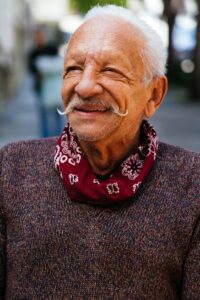
At Rosa Parks Pop-up Pantry, Miguel lights up when he starts talking about his art. He sets down his grocery bags and whips out his phone to show us his latest creation, hanging in front of his second story window: a mobile made entirely of syringes (with the needles removed, of course), that blows and gently spins in the breeze, while explaining: “I used to work for the opera, until I retired five years ago. I also made costumes for theatre groups, foundations and drag queens. I have a program going after I retired, [making] mobiles and artwork with the recycled materials I [find] on the street, thrown away.”
A Loss for the Community
Miguel is a longtime member of the arts scene in San Francisco, a gay man who’s been HIV+ for nearly 40 years, an activist, and a pantry participant since 2020 in his neighborhood of the Western Addition. He’s also one of roughly 101,000 CalFresh (known as SNAP federally) recipients in San Francisco who saw their grocery budget decimated overnight. This is due to the federal government’s decision to cut emergency allotments, which boosted CalFresh benefits by an average of $160 for recipients in San Francisco during the pandemic. That’s a loss of nearly $12 million a month in food assistance for our neighbors.
“I applied for the [CalFresh] benefits at the beginning of COVID. I was having a hard time with money. And it was very nice, especially when they started putting the extra funds in it,” Miguel told us. Miguel says he was receiving close to $200 during the pandemic, but after speaking with a CalFresh representative that same morning we met, he learned he’d be receiving just $23. That’s why the Food Bank Policy & Advocacy team is advocating to raise the minimum benefit to $50 in the state Senate this year – because for Miguel and many others, “it’s not worth going through all the [paperwork] trouble for $20.”
Meals are Best Shared
For Miguel, his CalFresh benefits were a supplemental support that helped him stretch his budget and extend a little kindness to other friends who were struggling during the throes of the pandemic. “I was able not only to get things for myself, but I was able to invite friends to get food with me so we can have dinner together. I did it with two friends, maybe every two weeks. Eating alone is not really the best thing. Having company and being able to provide something a little extra, that was very nice. It really made a difference for me and my friends.”
In addition to dinners with friends, Miguel finds support through groups like the 50 Plus Network from the SF AIDS Foundation, which connects long-term HIV survivors through meetups and events. Miguel and his current housemate also stop by the Rosa Parks Senior Center most days for lunch, and utilize the Food Bank’s weekly pantries, where Miguel picks up groceries for them both: “The sweet potatoes are for my roommate, because he can’t come to the pantry – he’s disabled. So [the pantry] not only helps me, it helps someone else.”
A Positive Ripple Effect
As federal lawmakers strip proven poverty-fighting programs and safety nets from our neighbors, and leave food banks to pick up the slack, it’s essential that the Food Bank maintains access to the fresh produce, proteins, and grains that 53,000 neighbors rely on weekly to nourish themselves. “The benefit is greater than just food,” Miguel explained to us. “At my age, I don’t think there’s any stigma – I encourage other people to apply for these services. I have diabetes, so I have to be careful about what I’m eating. And besides the food, I can use the money [I save] on other things that are beneficial for my health or enjoyment. It’s a ripple effect; it magnifies your life in all these positive ways.”
“I was able not only to get things for myself, but I was able to invite friends to get food with me so we can have dinner together. It really made a difference for me and my friends.” - Miguel, artist, Food Bank pantry participant and former CalFresh recipient
On a beautiful, late Wednesday morning, we visited the Rosa Parks Senior Center, where members of The Village Project packed grocery bags to be delivered to community members, primarily senior citizens, in San Francisco’s Fillmore District, also known as the Western Addition.
As we approached several picnic tables assembled into a large rectangle, we could see Adrian Williams, Executive Director of The Village Project among her staff moving quickly through an efficient assembly line to fill green plastic bags with groceries — a typical morning for her. She has been a longtime partner of the San Francisco-Marin Food Bank, where community-based organizations that offer food as part of their other programming can come to purchase food for a few cents a pound.
The Village Project, founded seventeen years ago, began as a program to ensure the youth in the Fillmore/Western Addition communities had access to food and enrichment during the summer, when school was closed, and school lunches weren’t available. It has since evolved to include a yearly summer program for youth, afterschool program, free celebratory events for Kwanzaa and Mardi Gras, grocery deliveries to local families and seniors, and more. It’s all due to Ms. Adrian’s profound passion for youth and her unique ability to identify community needs, and tailor her approach to finding and utilizing resources.
“Ms. Adrian is an amazing part of the community who’s adapted her programming to meet the needs of the neighborhood,” said Food Bank Program Coordinator, Benson Truong. “We are lucky to have partners like her and hope to continue supporting The Village Project in their mission to feed the community.”
We caught up with Ms. Adrian during her break from the assembly line to learn more.
Food Bank: Why did you start The Village Project?
Ms. Adrian: We started in 2006, during the height of violence in this community. I was working in Oakland [and] my grandbaby was growing up [in the Fillmore]. I was taking my grandbaby to school one day on California Avenue and passed by this park — [I saw people] throwing frisbees, dogs were bouncing, people on blankets. Then it dawned on me, I don’t see that in the Western Addition.
[Because I show up for my community by feeding people], I was concerned about how the babies* eat during the summer. I talked with my boss and told him that I wanted to volunteer [in the Fillmore] and feed the babies, and that’s how The Village Project started. [I would] come over on Wednesdays, knock on doors and tell the parents “Let me have your babies,” and I’d take them out on field trips to the Aviation Museum and feed them. For some, it was their first time riding BART.
Eventually, the babies would ask for more. I decided to take a leave of absence from my sales job at a Xerox dealership. My boss held my workstation for two years, [but I got hooked], so I just told him, “I can’t come back.” And that was basically the start of The Village Project.
FB: The Village Project’s website boast the Mardi Gras, San Francisco Style and Seven Days of Kwanzaa events; are there other events that The Village Project hosts?
Ms. Adrian Williams: We also have a community barbeque to kick off the summer. I’m also into the blues, honey, so we have a free blues concert.
My stuff is free, and somebody told me a long time ago that people don’t value free; I tend to disagree. I think it’s just the way you present it. People are prideful, and in the era I grew up in, pride was very important in my community.
FB: What does food mean to you?
Ms. Adrian: I grew up in the South, and we had wonderful lunches. We had real cooks in the kitchen, and we were poor. Growing up, lunch was a major meal for me. So that was one of my concerns, that the babies had food to eat. I guess that’s Southern because I’m always trying to feed people.
FB: Do you want the legacy of your work to continue into future generations?
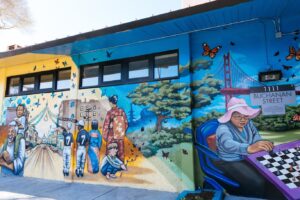
Ms. Adrian: My daughter is the president of the Fillmore Corridor, so she’s already walking in my footsteps working with the community.
FB: It’s Women’s History Month. What does Women’s History mean for you and your community?
Ms. Adrian: I have a strong history of women [in my family]. I used to always wonder why the male person was often missing in the community, and I figured out why when we got older. In the old days, if you’re subsidizing, you could lose your income if you moved a man into your house. Well, my mother, Ruth Williams, who was the strongest person, worked three jobs, and was always astute. She literally changed legislation in the state of Louisiana to allow women on welfare to have a man stay in their household. It just amazes me how much humanity is deprived because of certain economic situations. That’s how my mother was, strong, extremely strong woman.
* When Ms. Adrian says “babies,” she is talking about young children/youth in general, not just infants and toddlers.
“I just went to the store, and a carton of eggs was over $10. And now I’m only going to receive $23? What can I buy with that?”
This is the predicament that Gladys, and nearly 82,000 other households in San Francisco and Marin are facing this month due to the end of CalFresh (aka SNAP, or food stamps) emergency allotments. During the pandemic, CalFresh recipients received a boost to their monthly budget for groceries. For Gladys, these emergency allotments were a buoy to hang onto as inflation remained high – but they came to an end nationwide in February.
Staring Down a Benefits Cliff
“I pick up groceries from the food pantry in the Canal (San Rafael) on Tuesdays, and the rest I buy with my food stamps. Last month, I received $211. Now, the letter from the county says I’ll receive $23, at most $29,” Gladys told us over the phone in Spanish. As a senior, grocery shopping is already made difficult by mobility issues: “My son will often go shopping for the both of us. I’m scared I’m going to fall.” Now, it will be doubly difficult without the emergency allotments she depended on previously.
Gladys works as a caretaker for a woman in her neighborhood, and lives and splits rent with her adult son. It’s hard to make heads or tails of the prices she sees at the grocery store: “When I do go shopping, I see that everything is so expensive: beef, chicken, eggs. And if I want bread or something else?” Her voice trails off, as if to say, “Forget about it.”
Food Banks Already at the Brink
In San Francisco and Marin, the benefits cliff will be especially steep: emergency allotments for our counties averaged out at $150 and $160, respectively. Currently, the California Department of Social Services is directing affected CalFresh recipients to supplement their budget by heading to their local food banks – even though many CalFresh recipients like Gladys were already frequenting food banks to make ends meet. But the San Francisco-Marin Food Bank, and others in the area, are stretched to the limit by inflation, shrinking government support, and declining donations.
“It’s An Injustice”
Food banks are a band-aid, not a long-term solution for the erosion of safety nets. So while our Policy and Advocacy team continues to push at the federal level for benefits that better reflect the cost of living in our counties, and our CalFresh team continues assisting households in applying and securing the benefits they qualify for, we need our community members and local elected officials to rally in support of our neighbors facing food insecurity.
It will take all our collective efforts to mitigate the harm stemming from the end of these emergency allotments – because for Gladys and thousands of others, this decision is nothing short of devastating.
“I just don’t agree with this. No one agrees with this,” Gladys shared. “We won’t have food. It’s an injustice.”
“I just went to the store, and a carton of eggs was over $10. And now I’m only going to receive $23? What can I buy with that?” - Gladys, Marin resident and CalFresh recipient


 At the Food Bank, we know ending hunger means disrupting its root causes, which include poverty and housing instability. Real change is impossible if we don’t tackle these issues together
  For Irene Garcia, the Bay Area isn’t just where she lives — it’s who she is. “I was born and raised in San Francisco,” she says. “Giving back to my community is part of who I am to my core. For me, working here, living here, and breathing here is just natural.”
 On April 30, our Policy and Advocacy team gathered in-person with the California Hunger Action Coalition (CHAC) in Sacramento to raise their voices for Hunger Action Day! Hunger Action Day is the single largest anti-hunger advocacy day in California, bringing advocates from across the state to the State Capitol to speak face-to-face with our policymakers.
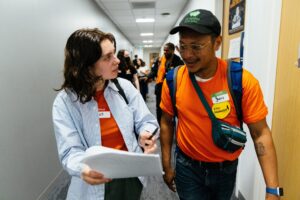 Reflecting on a jam-packed day of collaboration, Food Bank staff came away feeling energized to continue pushing for impactful, equitable policy.
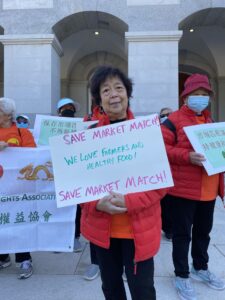 TNDC’s Tenderloin Chinese Rights Association.


 Share this quote
 Food Bank (FB): Before we dig into the Elevating Voices: Power Summit, let’s hear a little more about your work in the Tenderloin.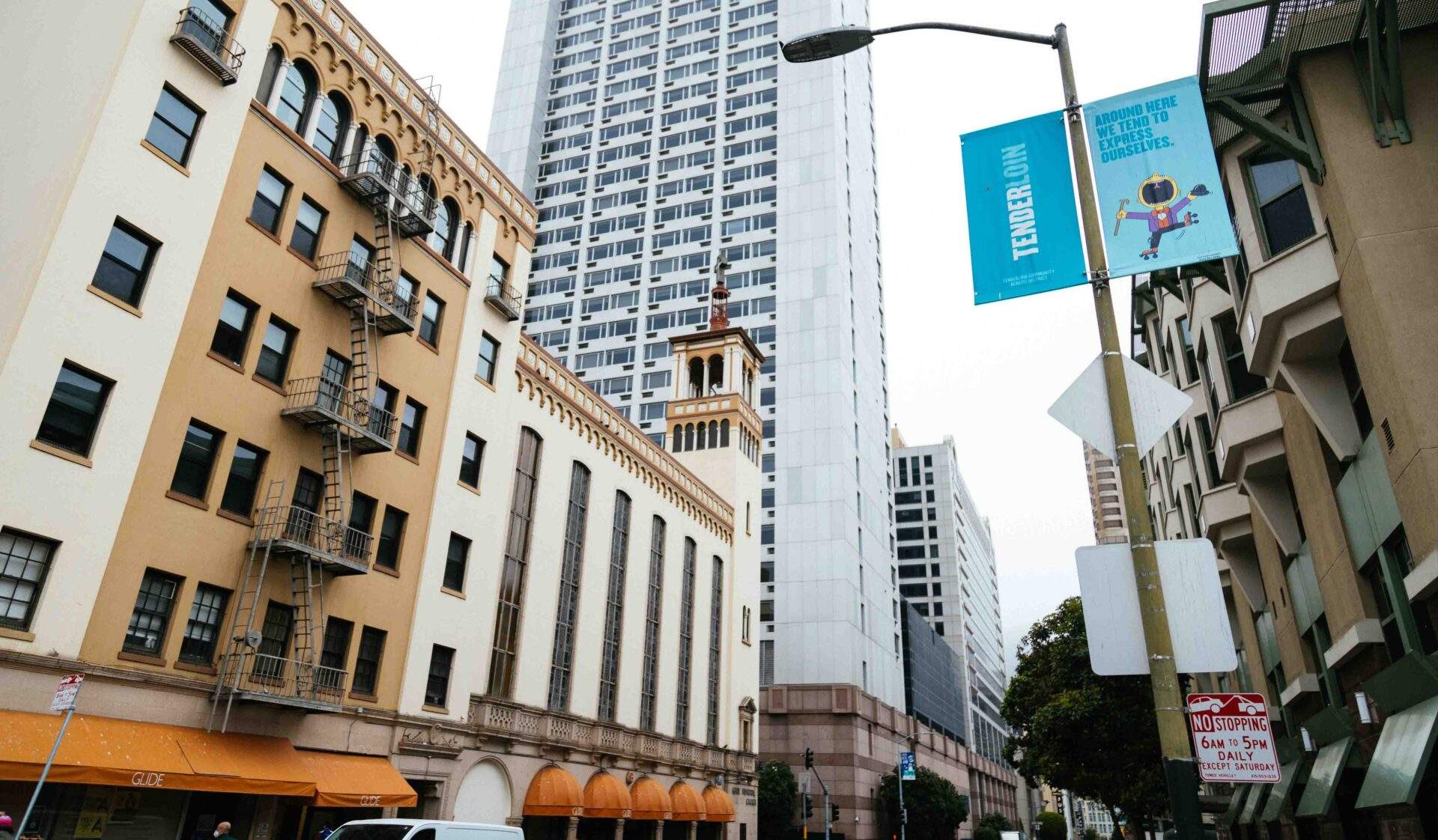

 40 years, an activist, and a pantry participant since 2020 in his neighborhood of the Western Addition. He’s also one of roughly 101,000 CalFresh (known as SNAP federally) recipients in San Francisco who saw their grocery budget decimated overnight. This is due to the federal government’s decision to cut emergency allotments, which boosted CalFresh benefits by an average of $160 for recipients in San Francisco during the pandemic. That’s a loss of nearly $12 million a month in food assistance for our neighbors.
 For Miguel, his CalFresh benefits were a supplemental support that helped him stretch his budget and extend a little kindness to other friends who were struggling during the throes of the pandemic. “I was able not only to get things for myself, but I was able to invite friends to get food with me so we can have dinner together. I did it with two friends, maybe every two weeks. Eating alone is not really the best thing. Having company and being able to provide something a little extra, that was very nice. It really made a difference for me and my friends.”
 leave food banks to pick up the slack, it’s essential that the Food Bank maintains access to the fresh produce, proteins, and grains that 53,000 neighbors rely on weekly to nourish themselves. “The benefit is greater than just food,” Miguel explained to us. “At my age, I don’t think there’s any stigma – I encourage other people to apply for these services. I have diabetes, so I have to be careful about what I’m eating. And besides the food, I can use the money [I save] on other things that are beneficial for my health or enjoyment. It’s a ripple effect; it magnifies your life in all these positive ways.”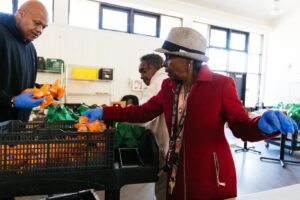
 Ms. Adrian: My daughter is the president of the
 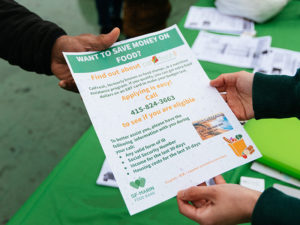 “I pick up groceries from the food pantry in the Canal (San Rafael) on Tuesdays, and the rest I buy with my food stamps. Last month, I received $211. Now, the letter from the county says I’ll receive $23, at most $29,” Gladys told us over the phone in Spanish. As a senior, grocery shopping is already made difficult by mobility issues: “My son will often go shopping for the both of us. I’m scared I’m going to fall.” Now, it will be doubly difficult without the emergency allotments she depended on previously.
 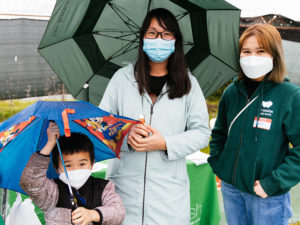 and Advocacy team continues to push at the federal level for benefits that better reflect the cost of living in our counties, and our CalFresh team continues assisting households in applying and securing the benefits they qualify for, we need our community members and local elected officials to rally in support of our neighbors facing food insecurity.
Share