
Partner Spotlight: Q&A With The Richmond Neighborhood Center

June 18, 2020

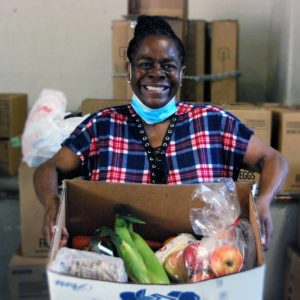
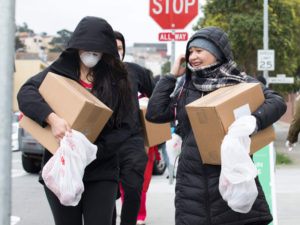
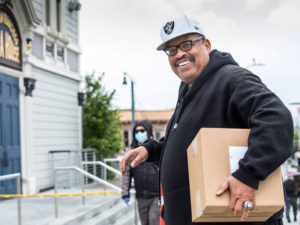
With three neighborhood food pantries serving more than 800 Richmond District residents each week, a home delivered grocery program that reaches 150 seniors, and a CalFresh application assistance program, The Richmond Neighborhood Center is one of our largest Community Partners.
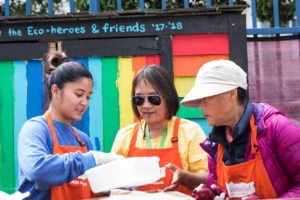
Before COVID-19, The Richmond Neighborhood Center created a thriving community around its food programs. Pantry volunteer shifts created an atmosphere similar to a family gathering. Even among the participants, weekly pantries were a place to gather and catch up with one another. And with Home Delivered Groceries, the volunteers and seniors were paired individually to have a chance to get to know each other and build a long-term relationship.

COVID-19 changed all of that. While The Richmond Neighborhood Center remained open and continues to serve their community, they had to shift the way they operate. We caught up with Program Manager Yves Xavier, to hear more about how things are going now.

(This conversation was edited for length and clarity.)

Food Bank: How have the last few months been for The Richmond Neighborhood Center?

Yves Xavier: They’ve been going well. The first three weeks of the shelter in place ordinance were pretty zany for lots of reasons. I think we were all a little nervous for our own health. We had to quickly redesign our programs to meet these constantly changing guidelines. Every day it seemed like there was either a new guideline or fear of what this pandemic could bring. So, those first three weeks were tough, but we adjusted and reshaped all our programs.

Specifically, for the pantry, we made quick changes that we wish we didn’t have to make but certainly were better for health. For example, one of the coolest pantry experiences, or at least what we really love about our pantry, is that people from the neighborhood gather together. You make friends or you come over with your friends to sit and talk and wait for your group to line up. Unfortunately, with the pandemic, we had to get rid of all of that.
FB: How is volunteer recruitment?

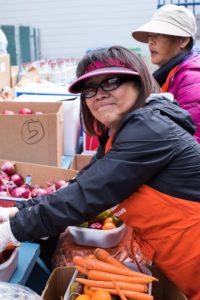
YX: It was a really cool, unexpected shift – for both home delivered groceries and the pantry, we lost probably half of our regular volunteers. But within a day or two, we had a huge influx of new people from the neighborhood. So, our volunteer corps has been strong since the pandemic began. There just seems to be an outpouring of people who want to help, even though there was a large loss at the same time.

FB: One of your pantries was at George Peabody Elementary. Do you still have access to the school?

YX: Unfortunately, no. We don’t have access to the school, so we moved our pantry operations to The Neighborhood Center. We still run three pantries, but we saw a decrease in participation from participants who lived in the Inner Richmond for lots of reasons – including the fear of getting on a bus, buses not running etc. – who couldn’t make it out to our 30th Avenue Outer Richmond headquarters to get their food. But the Food Bank has helped us deliver to many of them through Pantry at Home.

We’ve also been slowly recruiting volunteers to take over those deliveries. We’re up to making 105 deliveries on our own and we’re hoping to take over all the deliveries to free your staff up to serve more people in the city who need it.

FB: Are you serving more people now?  

YX: We’ve definitely seen an increase in participants, but it was similar to the way that the volunteer corps worked. There were some folks in our pantries who stopped attending. And then we also saw an influx of new people. We didn’t talk to everyone about the reasons for coming, but we took a general poll of those in line and heard from many new people who lost jobs their recently.

FB: Aside from the pantries, how has the rest of your programming been going?

YX: Our grocery delivery programs that we do in partnership with the Food Bank and the Richmond Senior Center have carried on. We took about 25 people off our waitlist and served them. It stretches us a bit thin, but it is doable. So that program hasn’t been impacted in a negative way.
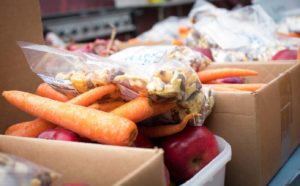
But changes had to be made. One of the things that made our home delivery so unique is we did a one to one volunteer match – one volunteer goes to one senior and it’s the same senior and the same volunteer each week. We have seen really cool relationships grow out of that where people get connected and just go over for other things like helping their senior change light bulbs, shop for them, or take them to a doctor’s appointment. There are endless stories like that. But COVID-19 has made people get creative in the way they connect. We stopped asking volunteers to connect in person. Instead, we’re asking people leave bags in front of doors, ring the doorbell, stand six feet away, and wave.

That hasn’t felt great because that social connection is such an important piece of the program. But the bottom line is people are continuing to get their groceries every week. And that’s what we really wanted to make sure is continuing to happen. We’ve encouraged our volunteers to make calls to their seniors, or teach them how to use Zoom, or write emails and pen pal letters. So, folks have been creative, but it’s definitely been a change.

We also saw a huge increase in CalFresh application assistance – more than any other time in my five years working with the food programs at The Neighborhood Center. Now we are taking as many as six appointments a day, which is pretty significant.

FB: How are you planning to adapt programming as the city reopens? Do you anticipate new challenges?

YX: It’s a really good question. I can’t say we’ve thought about it as much as would probably be helpful, but that’s partly because we’re pretty much set on keeping things the way they are for the foreseeable future. Even as things start to reopen throughout the city, we’re not expecting to change much. We’re going to keep people lining up, disallowing congregating, ensuring that everyone is wearing masks, pre-packing bags for participants, etc., until phase four, when mass gatherings are allowed again by the city.

FB: That makes a lot of sense. Was there anything else that you wanted to share about how you’ve adapted to COVID-19?
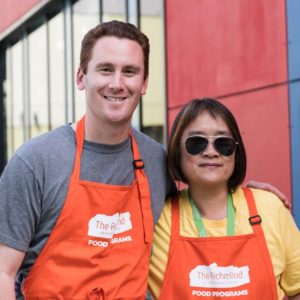
YX: I’m just really impressed by everybody who helps make these partnerships happen. Our staff and volunteers have been incredible with all their flexibility and dedication. Same goes for the Food Bank staff. Gary, our point person for the pantry, is always professional and friendly. During a difficult time, he was great – always keeping us up to date, helping make sure that we had what we needed, and just overall supportive; as was Jillian who supported us with Home Delivered Groceries.

I’m also impressed with how everything shifted for everyone across the city who does these programs and how people can keep a positive attitude, keep the collaboration going, and work really hard to serve more people and get creative. It’s been really cool to see all that happen.

Partner Spotlight: Visitacion Valley Strong Families

June 12, 2020

Expanding in the Face of COVID-19

Day in and day out – rain or shine – the Food Bank’s network of neighborhood food pantries helps us provide food to the community. They are the cornerstone of our outreach. While nearly a third of our pantries had to close due to a variety of COVID-19 related challenges, many remain open and are also serving more people than ever before.

One of them is the pantry at Sunnydale Housing. Here, a committed group of long-time volunteers made extended service to their community possible. The pantry is run by Visitacion Valley Strong Families (VVSF), a collaborative lead by APA Family Support Services with three other community-based organizations: Edgewood Center for Children and Family, Samoan Community Development Center (SCDC), and the Asian Pacific American Community Center (APACC).

COVID-19 Brings Added Challenges

Before COVID-19, the pantry served approximately 200 households, mostly locals from the neighborhood. Now, according to Program Director Jack Siu they are serving more than 300 people from all over San Francisco. They work hard to ensure no one gets turned away.

“We always try to have extra bags if people come late, or if they didn’t know about the pantry,” said Mary Ann Pikes, who is one of the volunteer leaders who has come since 2012. “It’s amazing how many people who live here never knew about the pantry. But I can understand, it’s because they were working every day.”
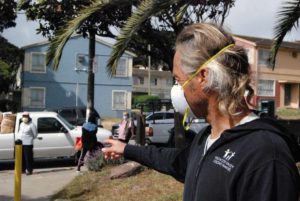
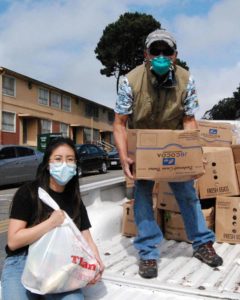
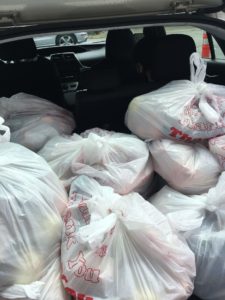
As she points down the street to show where the line used to end compared to where it ends now, she predicts that they will soon need to start ordering more food to meet the growing need.

Sunnydale is a historically neglected public housing area with a particularly high rate of poverty – the average annual household income is only $13,487. Prior to COVID-19, VVSF was running several programs for families in the neighborhood. But now those can’t operate. “Right now, we are focused on basic needs: food, diapers, and clothing,” said Jack.

For local residents who were already struggling, COVID-19 is making things that much harder. Mindy, who has come to this pantry since 2014, explained that with a husband and two teenage sons at home, she goes through food quickly. “They eat a lot as they are getting older.” The pantry always helped her save money and made sure the family got enough to eat.

Now, with the virus, members of Mindy’s family are unemployed, so the fact that her neighborhood pantry could remain open is a huge help. “Beyond just the unemployment, we don’t want to go out to expose ourselves, so coming here is close and easy.” Only half-joking she adds, “but if we could do it twice a week that would be the best.”

Meeting People Where They Are

Long before COVID-19 brought the vulnerability of seniors into our collective consciousness, this pantry started a grassroots effort to deliver food to disabled seniors in their neighborhood.

“About seven or eight years ago, I said ‘if we are going to do this food pantry, let’s get food to the people who need it most,’” said Tim Gras, who works for Edgewood Center and spearheaded the delivery project. He explains, “there was a need and we had a vehicle.”

They now deliver to about 70 people a week and have a long waiting list. “It’s a challenge in this neighborhood because many people qualify for disability and we can’t take this to the hundreds and hundreds of people who we’d like to,” said Tim. “You’ll see at the end of the day our truck will be teetering.”

While the team does have concerns about their health and safety, they are committed to serving their community despite the pandemic. Reflecting,

Tim acknowledges, “in these neighborhoods, just day to day living can be really challenging. Folks are trying to follow guidelines, but it is kind of a different reality in a lot of these public housing neighborhoods.”

For him, if there is an opportunity to help, he is ready to do it. “We are going to keep trying. It is a really critical and necessary service, so we keep trying”

Helping Neighbors

Prior to the pandemic, the pantry was a chance to socialize and catch up with neighbors. Local organizations used to bring coffee and do small cooking demos for volunteers and participants.  Now, it’s a different story. While everyone misses that, it isn’t going to keep them home.

Jack sees this commitment with all the volunteers. “They are more motivated than ever. They are still here, and they come so early. They want to help others,” said Jack.

Delivering Food to Seniors: Q&A with Esther Honda

May 21, 2020

Food insecurity hits seniors particularly hard, especially when they are trying to balance a fixed income with the rising cost of living. Even before the pandemic, one in seven adults between the ages of 50 and 80 nationwide were already food insecure. Those who had recently experienced food insecurity were twice as likely to say their diet was fair or poor.

For many low-income seniors, COVID-19 only exacerbates these challenges by layering on the health risks now associated with meeting their basic needs like going out to get food.

Our temporary Pantry at Home program supports the health of seniors by ensuring they are getting a bag of fresh groceries – including fruit, vegetables, grains, and high-quality protein – delivered to them every week. Because of the generous support of our volunteers and partners, close to 12,000 seniors do not need to risk their health to pick up groceries each week.

We spoke with volunteer Esther Honda about her family’s experience delivering groceries to some of our community’s most vulnerable.

Food Bank: When did you start volunteering with us and why?

Esther Honda: We started volunteering once shelter-in-place started. I knew I wanted our family to volunteer at the Food Bank, and it just worked out well for us to deliver groceries. I have to confess that it seemed like a good excuse to get out of the house but also felt really necessary to help others who could not safely leave home.
FB: Can you describe the experience?

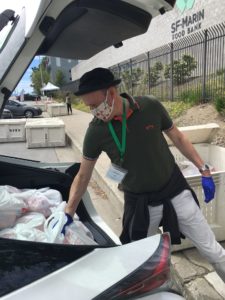
EH: We drive over to the Food Bank warehouse on Pennsylvania Street, back in, and are greeted by friendly volunteers who check us in and offer to help us load up our bags of groceries. There are 3 of us in the family so we manage fine, though. Then we turn on the delivery app and head out to a well-organized list of clients.

FB: You are volunteering with your family?

EH: We volunteer as a family, and we all agree that it’s a great thing to do together! As soon as I signed us up, the family was totally on board.

FB: Are you at all concerned about your health and safety while volunteering?

EH: We wear gloves that the Food Bank hands out, plus our own masks, and we try our best to make as little physical contact as we can.

There has not been one time when we felt unsafe, though, in any neighborhood. I will say that people in all the neighborhoods we have delivered to have been really kind and helpful. It seems like folks can tell you are out there to help others and often offer to hold a door open for you, show you where an elevator or particular house or apartment number is, and to help you get food to the recipients.

FB: Have you learned anything new or surprising during your volunteer experience?

EH: My husband and I have lived in San Francisco for over 30 years, and until we started delivering, there were some neighborhoods in our city we had never been to. It’s expanded our own sense of our city.

FB: How has the volunteer experience impacted you?

EH: Volunteering has made us feel more useful and less like we’re spinning our wheels during this time. We feel like we’re doing something positive and worthwhile. We’ve done lots of things as a family that were community-oriented, but usually, these things have been about the public schools our kids have gone to. This is the first time we’ve gone out to volunteer our support to others as a family. Our teenage daughter has done this on her own, though, so this is actually a bigger step for us, the parents.

FB: What would you say to other people who may be considering volunteering but are on the fence?

EH: Do it! Especially if you are bilingual or have even a tiny bit of language ability in Russian, Spanish, Cantonese, or Mandarin! You are needed, and you will feel appreciated. I have personally been so grateful for the opportunity to get out and volunteer, and the Food Bank makes it easy to sign up for shifts that fit our schedules.

We strongly recommend volunteering with a family member or roommate. It makes dropping off easier and more fun.

FB: What is your favorite part of volunteering?

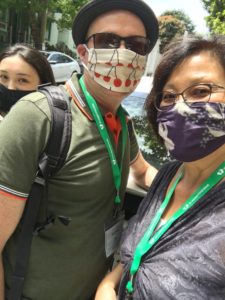
volunteers in masks

EH: Our daughter says her favorite part is the cute old people and how appreciative they are when we drop off. They smile and often thank you repeatedly, even when they speak little or no English. It’s very rewarding.

FB: Is there anything else you want to share about your experience?

EH: Some people might feel hesitant driving and dropping off in neighborhoods they are not familiar with or in housing projects that they might have thought to avoid for safety reasons in the past. I have had to confront my own privilege and biases while delivering somewhere unfamiliar for me and have learned the simple truth that it’s ok… These are people, just living their lives! And they’re very appreciative. If nothing else, I hope that the public health reality has shown that we are all, as San Franciscans and as humans, facing this challenge together. We need to support one another, and food is a very basic need that brings joy and togetherness, even when we have to be apart.

Partner Spotlight: Q&A with Casey Federico

May 13, 2020

When schools closed in March, parents and caregivers were immediately left figuring out how to balance work, childcare, and homeschooling their children. For the families who relied on the Food Bank every week, there was an added layer of stress – where would they get their groceries? Prior to shelter-in-place, many families could pick up the fresh groceries at their school pantry during drop-off or pick-up. Across San Francisco and Marin, school closures caused 46 of the Food Bank’s Healthy Children food pantries to stop their weekly distributions 

One such pantry was at Dolores Huerta Elementary School in San Francisco’s Mission District. When the school closed teachers and staff quickly worked to identify and contact families to let them know where they could access food. Even with new available pop-up pantries opening nearby, with vulnerable relatives at home, some families could not attend nearby Pop-up pantries. The school’s Family Liaison, Nataly Terrazas; Elementary Advisor, Luis García; School Social Worker, Sarah Volk, and school parent and pantry coordinator, Casey Federico quickly sprang into action matching families who couldn’t leave their house with volunteers who could pick up and deliver food to them. They now have 30 volunteers who trade off delivering to 13 families.  

Last week we caught up with Casey to learn more about what is happening in their community. 

(This conversation was edited for length and clarity.) 

Food Bank: How did you start partnering with us and what have you been doing since the start of the pandemic?   

Casey Federico: At Dolores Huerta, which is both of my daughters’ elementary school, there was an established food pantry every Monday morning. Another parent had coordinated it before me, but their son graduated, so I took on the job of being the pantry coordinator this fall. Even before shelter-in-place, we were seeing a huge expansion in need for the pantry. We grew from a 50–person pantry last year to a 70- or 80-person pantry in November.  

When the shelter-in-place happened, I was in communication with Edith, our neighborhood representative from the Food Bank, and knew everything was shifting. At the same time, I was getting all these texts and messages from families at the school saying, ‘we are about to be out of food’ There were lots of different challenging situations. And so, from discussions with the school team – Sarah, Luis, and Nataly – we found out who couldn’t leave their home for whatever reason and identified 12 families who needed food delivered. We started with a group of volunteers –families who did have transportation and could go to a food pantry and pick up a box and then deliver it to those people’s homes.  

Our School Social Worker, Sarah Volk, is such an inspiration. She was just so careful and thoughtful about confidentiality. Sarah asked families who they’d be okay being paired with, because to have someone know you are receiving food from the Food Bank and then know where you live, that is a big deal. She was just super thoughtful about that and got everybody’s permission all along the line. 

FB: What are you hearing from people in the community now? 

CF: I’m still hearing a lot of people saying, you know, we got this [food], but it isn’t really enough. That is the hard reality. So many families that are part of our community are hospitality workers, etc.  

Another amazing thing that happened is one of our teachers, her fiancé owns a restaurant and every time somebody from the community buys a meal in his restaurant, Toma, he’s donating a meal to a family in need. He’s also delivering meals. So, families are getting additional support from that too.  

But what I just heard from Sarah last week, is just the numbers are increasing so much. So, we are talking about how to meet new needs. It’s really challenging. 

FB: Do you talk to the families you deliver to? How are they doing?  

CF: One thing that’s been really good, is a lot of relationships have been built between the families who are delivering and the families who are receiving. I know everybody’s been sending texts like, I’m going to drop it off. They text, I got it, thank you.  

There’s also been some specific communication around needing health items like toothpaste and soap and tampons, and that kind of stuff. A few volunteers who have the capacity have also been sharing those types of items with families. Many of the families who are delivering are also out of work or running low on food themselves.  

FB: We see this too, it’s incredible how many of our volunteers say, ‘oh yeah, I’m out of work right now and so I have free time and I’m going to do this.’ 

CF: I know, it just takes my breath away. One of the women who is helping deliver said ‘oh yeah, we both lost our jobs last week, but this is just so important, it’s the one trip I have purpose around. I have to do this.’  

FB: Is there anything else that you wanted to share about the experience? 

CF: I think the one thing that the Food Bank really does is bring together a community of people. Almost everybody who volunteered at the weekly food pantry at Dolores Huerta is also receiving a box of food. And so, I think our, our community of folks who really view themselves as part of the system were ready to jump in. The group of parents who help us to set up, fold up boxes, and do all that kind of stuff are really jumping up again to help out, which is cool. 

That sort of friendly, joyful mood that was at our Monday morning pantry translates over and made people feel comfortable to be both asking and giving. I’m so proud to be part of this community! 


Pop-up Pantries: a Lifeline to Those Newly Out of Work

May 6, 2020

To meet the exploding need for food during the pandemic, the Food Bank opened 20 Pop-up pantries across San Francisco and Marin, each serving roughly ten times more people each week than our regular pantries. In the south-east corner of San Francisco, the Bayview Opera House was one of the first Pop-ups we opened after shelter in place went into effect.  

Set up in the parking lot between the Opera House and Joseph Lee Recreation Center, the pantry is staffed by volunteers outfitted with masks and gloves always maintaining a safe distance. They say there are many “this is why we are out here” moments – whether it’s participants’ relief that they’ll be able to put food on the table for the week or folks new to the Food Bank who are surprised to open their bag and find that about 70% of what the volunteers bagged for them is fresh produce. 

Finding A Way During the Shutdown  

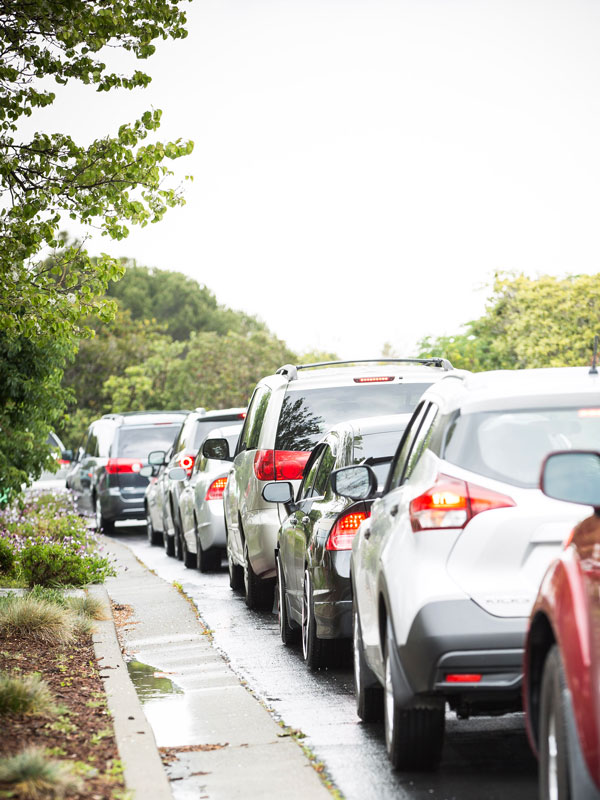
The Bayview Opera House is now serving more than 1,000 households every Monday. The line often stretches down Newcomb Ave, around on 3rd Street, and back up the hill on Oakdale, but it moves quickly – social distancing can be deceiving.  

Once at the front of the line, participants are greeted by a friendly volunteer with a clipboard who asks them how many people are in their household, before they are handed a bag of groceries.  

For Maria, who lost her job in the crisis as a childcare worker, standing in line is worth it, “I know there are a lot of families who are thinking: rent or food?” She has been trying to figure out what to cut from her budget so she can support her family as the shelter in place continues. “This really helps because I have two teenagers at home who eat a lot. Before I was spending $150 per week for just one meal a day. Now, they are eating three meals.” 

James, a tour bus driver, said: “I came to work, and it was just shut down.” Without the tours he has had trouble making money, “my savings are gone so the Food Bank helps.” He loves that he can still get a variety of proteins. “Last week I got eggs. I killed those eggs! Once, there was pork loin. I killed that too!”

For Jasmine’s family, the pop-up pantry is a lifeline. Jasmine lost her hotel job and lives with her mom, who has a health condition that makes her vulnerable to COVID-19, and with her brother, whose hours were cut as his airline job. “Honestly, I don’t even know how we are getting by. By the grace of God, we are living day by day,” she said. “It’s a little stressful figuring out the craziness of how you are going to pay rent and buy food.” But the pop-up pantry helps, “because two out of three of us are not working, it helps 

us save money and not waste the last of our savings.”  

The Pop-ups are a welcome sight, with passing cars often giving us a friendly honk. The Food Bank and our volunteers make sure the community knows we’re here for them in this crisis, and we are all in this together. 

Support our programs here. 

Food Insecurity Town Hall

April 29, 2020

Last night, we were proud to participate in a digital Town Hall Meeting on food insecurity during the COVID–19 crisis, hosted by San Francisco Senator Scott Wiener. Over 2,200 people watched on Facebook and Zoom as our Executive Director, Paul Ash, joined leaders from fellow Bay Area non-profits working to ensure no one in our community goes hungry during this difficult time. 

Food Providers Adapting To Meet the Growing Need 

Senator Wiener was joined by the leaders of Meals on Wheels SF, St. Anthony’s, Second Harvest Food Bank of Silicon Valley, and the CA Association of Food Banks. Each organization is reporting exponential growth in the number of people in need of food assistance since the crisis hit. In the face of significant challenges — including operating with only 60% of their workforce and fewer volunteers, having to rethink how to prepare thousands of meals while keeping cooks 6 feet apart, and compensating for closed pantries — the organizations are continuing to step up to feed more of our neighbors facing hunger. As Executive Director Jose Ramirez of St. Anthony’s shared, “We’re really leaning on each other and learning what it means to be a community.” 

“We should not go back to the ‘old normal'” 

The Town Hall also focused on the ways that COVID-19 has helped advocates advance policy recommendations that improve food access. The crisis has actually allowed us to secure improvements to the CalFresh program for which advocates have been fighting for many years. These include the expansion of online purchasing using CalFresh benefits, allowing for the application process to be done entirely over the phone, and waiving the interview requirement. 

The Food Bank is co-sponsoring a bill in the State Senate, authored by Senator Wiener, that aims to make some of these program flexibilities permanent.  SB 882 – CalFresh: Simpler for Seniors – would make it easier for eligible low-income Californians to sign up and stay connected to CalFresh, particularly older adults and people with disabilities, many of whom have been hit hardest by the COVID crisis. 

We are In This Together 

As our colleague Jose from St. Anthony’s shared last night, “This is an opportunity to reflect on our priorities as a city, as a community, and as a country. We have to address food insecurity as the crisis that it is. It’s about human connection and compassion – putting people first, leading with compassion, and letting the rest fall into place.” 

You can catch the townhall here.

Feeding Kids During COVID19

April 21, 2020

Schools May Be Closed, but Hunger Persists 

Last year, 9,000 kids in Marin and 30,300 kids in San Francisco received free or reduced-price meals every day at school.  When their schools shuttered last month to combat the spread of COVID–19, families were left wondering how they would be able to feed their children while they were at home. 

Child Nutrition Advocates Push for Policies to Feed Our Kids 

In response, we advocated for policymakers at all levels of government to act quickly to ensure that children would not suffer from hunger during this public health crisis.    

Here are three of the advocacy wins that are helping children continue to access the food they need to grow and thrive, even during these challenging times: 

  1. Children of all ages can access grab-and-go school meals during COVID-related school closures.  The Families First Coronavirus Response Act allowed the US Dept. of Agriculture (USDA) flexibility in cutting through some of the administrative red tape that typically governs child nutrition programs. Now, schools and other participating sites can provide grab-and-go meals and home-delivered meals to eligible children while their schools are closed. In San Francisco, the Food Bank is also working with the Unified School District to locating our Pop-Up Pantries at school sites that serve free to-go school meals. The “CA Meals for Kids” mobile app is available to help families find participating sites. Read more about our emergency pop-ups here.  
  2. Low-income families will receive money to buy food through Pandemic EBT. The Families First Coronavirus Response Act also established a new program called Pandemic EBT, which will offer a quick and easy way to get food to school-age students by providing funds on a credit-like card for children who are eligible to receive free and reduced-price school lunch. The California Department of Social Services is working with the California Department of Education to efficiently deliver benefits to all families who qualify without anyone having to submit an application. 
  3. Women, Infant, and Children’s (WIC) Program gets a boost. WIC is a federal nutrition program helping pregnant people, new mothers, and their children access vital nutrition in their formative years.  The Families First Act provides $500 million in additional WIC funds to ensure that the program can serve more people as the economic downturn worsens, and also loosens regulatory requirements during the pandemic.  California was granted flexibility in reducing the administrative and regulatory burdens typically placed on WIC recipients, including temporarily halting in-person meeting requirements and blood tests, as well as expanding the foods that families can buy with their WIC card. 

#InThisTogether: Policymakers Support Food Banks

April 16, 2020

Advocacy in the Age of Shelter in Place 

Every April, our Policy & Advocacy team joins advocates from food banks statewide in Sacramento to meet with our elected leaders.Typically, our Capitol Action Day is an exciting time to gather with fellow advocates and elected champions to rally around our shared anti-hunger priorities and push for policies and programs that help our communities. In our new COVID-19 reality, we continued the tradition but shifted our meetings with lawmakers to video chats. 

The Need is More Urgent Than Ever 

With food banks across the state and throughout the country seeing unprecedented demand for food in the wake of the COVID-19 crisis, our legislative priority was clear: fund food banks. When disasters strike, food banks find themselves on the front lines of response. Last week, we served 40,000 households, 10,000 more than just a few weeks ago, and our lines are only getting longer. We asked our State Senators and Assemblymembers to support our budget requests for additional state funding to help continue to serve the increased need. 

#InThisTogether 

During this crisis,  San Francisco and Marin State policymakers have shown incredible support for the Food Bank and our mission. Over the past few weeks, we’ve been pleased to host many of our Assemblymembers, Senators, and County Supervisors at our Pop-up pantries. They have rolled up their sleeves, donned masks, and shown up to help feed their communities. We couldn’t do what we do without their ongoing support, both in their districts and in Sacramento. 


A First of Its Kind: Drive-through Pantry

April 1, 2020

“It was a logistics miracle,” said Barbara Abbott, Vice President of Supply Chain at the Food Bank, beaming as she walked out of the San Francisco-Marin Food Bank’s San Rafael warehouse on Saturday afternoon.

Abbott and her team had just finished the Food Bank’s first-ever drive-through food pantry. And somehow, besides the rainy weather, the event went off without a hitch.

From the moment the pantry opened at 9:45 a.m. until it closed a little after 2 p.m., staff and volunteers loaded 30-pound boxes into cars. The length of the line waxed and waned – at some points even wrapping around the building – but the flow of cars remained steady throughout the day. By the end, we had served more than 600 households – 100 more than expected.

Necessity: The Mother of Invention

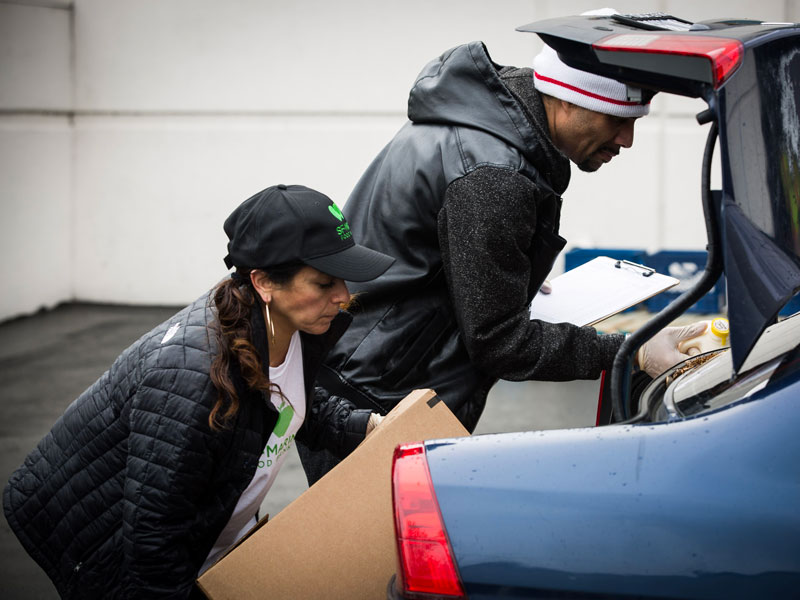
The setup was designed to promote social distancing – something none of us considered before COVID-19. Participants drove up and opened and closed their trunks, so the Food Bank could continue the essential service of distributing food while minimizing person-to-person contact.

Despite how seamless the operation appeared, it wasn’t as simple as it looked. A lot of thought went into the day.

For example, how do you efficiently pack 500-600 boxes while maintaining social distancing? “It’s not easy to keep 20 people away from each other at six feet distancing,” said warehouse manager Steve Coover. “The way we set up was pretty difficult at first. But we finally figured it out and it went smoothly.”

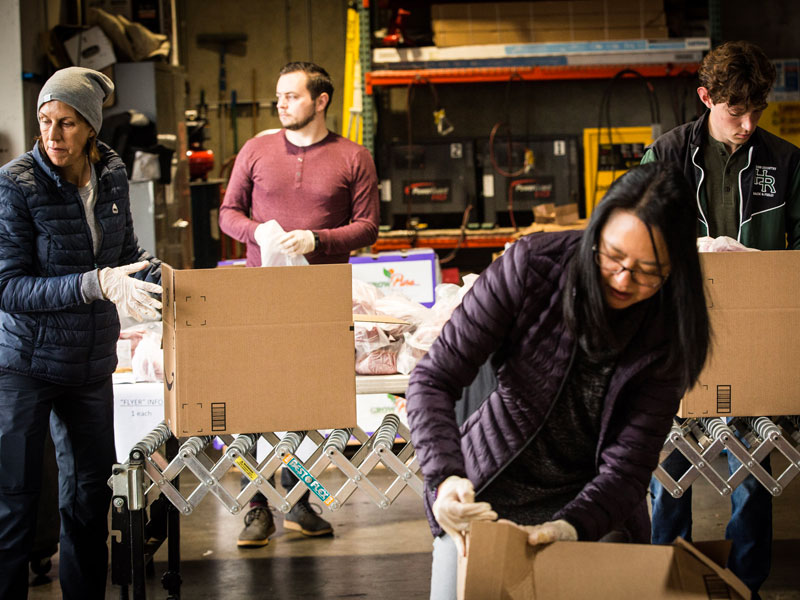
After a trial run on Friday, Saturday looked like a well-oiled machine. A carefully organized assembly line of volunteers slid boxes across a conveyor belt as they loaded in fresh produce, meat, and healthy non-perishables. The process was streamlined and efficient and even the social distancing was a success.

A Team Effort

Katy McKnight, Director of Community Engagement, provided a practical explanation for the team’s success:  “We applied best practices we’ve learned over our 30 years delivering food and have been able to bring that here to our San Rafael facility.”

Everyone agreed the logistical success of the drive-through was only possible because of the community support.

“The community is really rallying around us now,” said McKnight. “People have turned up to volunteer, allowing us to run a project like this, and allowing us to pre-box all of these groceries to make it as safe for our volunteers and participants as possible and as efficient for our participants as possible.”

Coover, who spent much of Saturday managing the line of cars and directing traffic heard many participants saying, “thank you, we appreciate you guys being here.”

He was also out there reminding them we’ll be back again next Saturday from 10-2. The San Rafael drive-through, at 2550 Kerner Blvd, will be a weekly operation for the foreseeable future.

For those who want to volunteer, please sign up here. We especially need the support of those who are bilingual.


Pop-Up Food Pantries Keep Food Flowing

March 25, 2020

On a chilly Thursday morning, a San Francisco-Marin Food Bank truck pulled off the unusually quiet Dolores Street into the parking lot at Mission High School. Sergio Salguera, Sr. Lead Driver at the Food Bank parked and started to unload pallets of fresh produce, rice, milk and eggs.  

Salguera, who has delivered to several pop–ups, said this delivery gives him a whole new appreciation of our mission, “I experienced a newfound strength to be able to set-up and deliver to face the crisis and help our community.”  

Soon after he arrived, volunteers trickled in with coffee in hand and ready to hear their marching orders.  

Tina Gonzales, director of community partnerships at the Food Bank called everyone’s attention and gave a firm reminder of social distancing. Then she asked line managers to greet participants, and volunteers to pack grocery bags with specific amounts of each item – six carrots, four potatoes, three apples, one bunch of celery, etc. Anyone without a task was to make sure boxes of food were open and accessible.  

Food is Essential 

COVID-19 precautions have caused around 100 food pantries in San Francisco and Marin to close. To fill the gap and ensure our neighbors can still have access to healthy food, the Food Bank team is working around the clock to open interim pop-up pantries.  

“We had a lot of pantries close in the community and a lot of people in need of food without access. So, we decided that we needed to reach out to community partners and set up pop-up pantries with the help of volunteers,” said Gonzales.  

The pop-up pantries have been a huge success. The pantry at Mission High School was just one of six pop-up food pantries the Food Bank set up that served over 1,800 people last week. And we will continue to bring more online to serve different neighborhoods.  

These pantries are here to serve anyone whose regular pantry has closed or who is struggling to afford food because of the COVID-19 pandemic.  

Practicing Social Distancing 

The Food Bank is an essential service, and still allowed to operate, but we are adapting to new realities. “We are trying to do the best we can,” said Gonzales. “We are finding new ways to spread out but still get the work done.” 

Instead of having participants walk through the pantry in the typical “farmer’s market style,” they were handed a bag of pre-packed groceries to minimize waiting in line and food handling. Line managers reminded participants to keep six feet between one another, and staff reminded volunteers that spacing out was more important than efficiency.  

Volunteers and participants alike understood the need for these new measures.  

Neighbors Helping Neighbors 

“It warms my heart being able to hear how much the community appreciates our mission and the sense of relief they receive from us,” said Salguera. 

The outpouring of support and eagerness to volunteer has come from everywhere in the community – participants, local churches, staff, and individuals. It has deeply inspired both Salguera and Gonzales.  

“One of the greatest things is our website is blowing up with volunteers. We have seen a lot of people who want to come help” said Gonzales.  

And it’s not just volunteers who are pitching in. Friends, family, and neighbors are pitching in to pick up free groceries for vulnerable family and neighbors who could not leave their homes.  

“People see it and tell us they have a neighbor, or they are taking care of their mom and need to take another bag. So not only are we helping the people in line,” said Gonzales. We are helping people who should not come out and cannot come out, so it’s been really great to be able to do that.” 

Each pop-up pantry is led by a Food Bank staffer or volunteer, and we currently recruiting more volunteers to help us expand. Sign up to learn about opportunities as the arise here.