


Come by the San Francisco-Marin Food Bank’s Potrero Hill warehouse early in the morning and you’ll find our delivery trucks loading up with fresh produce, getting ready to fan out across San Francisco and Marin. Lately, a few of them pull away a little more quietly than the rest. They’re electric, and they’re carrying what every other truck in our fleet carries: food for people who are counting on it.
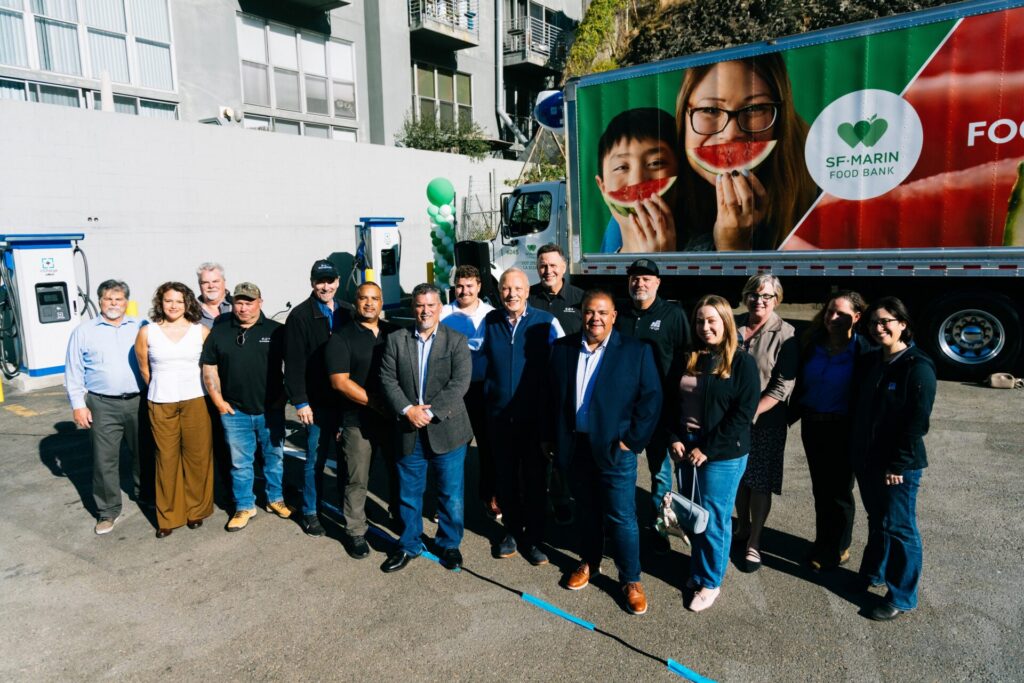
On June 9, the Food Bank reached an exciting milestone in that shift. We cut the ribbon on two new on-site charging stations, with our electric trucks lined up nearby and San Francisco Mayor Daniel Lurie there to help celebrate.
This is about much more than cleaner trucks. The food we deliver depends on a healthy planet to grow it, so for us, protecting the environment has always been a part of our mission to end hunger.
Our resolve held even when the rules changed
“When the federal government rolled back California’s electric vehicle requirements last year, many fleets dropped their electrification plans, and some even walked away from deposits,” said Barbara Abbott, the Food Bank’s chief supply chain office. “The Food Bank chose to keep going, because cleaner air, quieter streets and a smaller carbon footprint are good for the neighborhoods we serve.”
 A Fleet Going Electric
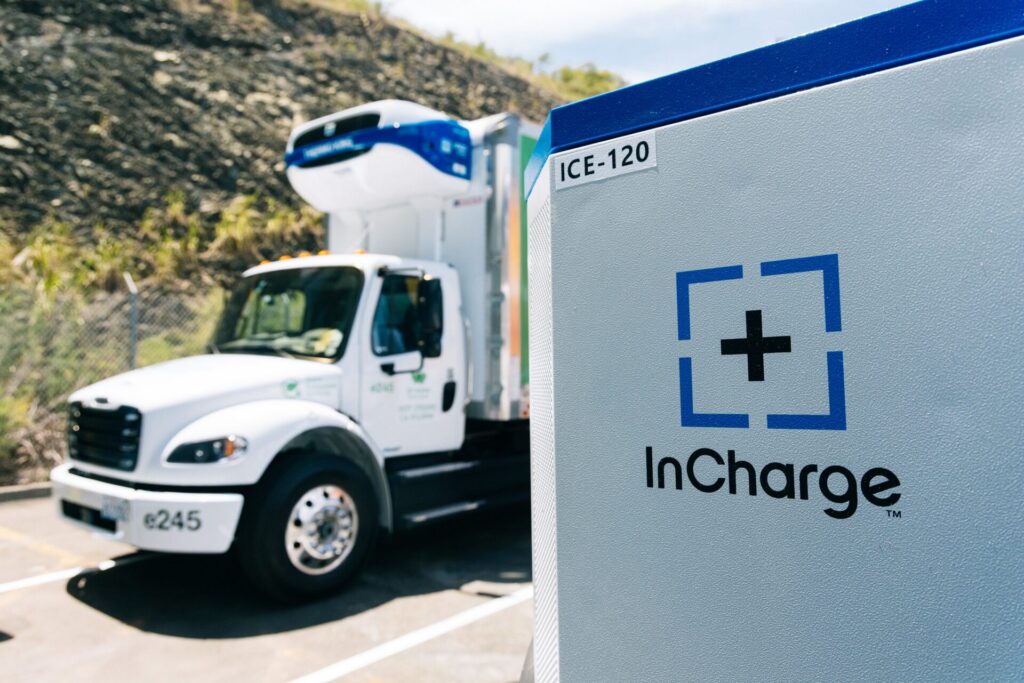
Our commitment has been years in the making. The Food Bank placed its first order in February 2024. The first three trucks went into service in summer 2025, two more joined this spring, and today five of our 24 trucks run on electricity. The new stations give us room to keep growing, with the hope that most of our fleet will be electric within the next decade.
None of it happened overnight. The fleet grew order by order, charger by charger, guided by many teams that believed in where this mission.
“Getting our electric trucks on the road took a couple of years of research, planning and a lot of teamwork,” said Mike Perry, the Food Bank’s senior director of operations. “With the new charging stations, they power up overnight when it’s easiest on the grid and head out the next morning loaded with groceries for neighbors across San Francisco and Marin. It’s been rewarding to watch this fleet grow, knowing that running cleaner and more efficiently means more of our resources can go toward feeding people.”
That teamwork extended to an innovative public-private partnership: the Hybrid and Zero-Emission Truck and Bus Voucher Incentive Project (HVIP), the Clean Off-Road Equipment Voucher Incentive Project (CORE), Pacific Gas and Electric Company, Bay Area Air District, HEDCO Foundation, California Air Resources Board and Guarini Legacy Corp. helped make the Food Bank’s EV charging stations, trucks and infrastructure possible.
And the collective support is already paying off: going electric saves the Food Bank roughly $58,000 a year, and with diesel prices climbing, those savings only grow.
Step back, though, and the charging stations are just one piece of a much bigger picture, the way that Tanis Crosby, the Food Bank’s executive director, sees it.
“We center our participants in all of our decisions and that includes a cleaner environment and saving on fuel costs to focus more on our food programs and services,” Crosby said. “From partnering with farmers to bring fresh produce to our communities instead of healthy produce going to waste. From our warehouse solar panels and rescuing good but slightly imperfect food from grocery stores to the ribbon cutting for our electric vehicle charging stations. All of it is part of our commitment to energy savings, supporting the environment and doing what’s best for those we serve.”
For us, this is one more step toward a greener future for everyone, and we’re excited for all the cleaner miles ahead.
Share