


It was a rainy and cool April morning in San Francisco, the kind of day that keeps people indoors. But roughly 40 advocates and San Francisco-Marin Food Bank staff went outside anyway, boarding a chartered bus bound for Sacramento and Hunger Action Day, the largest anti-hunger advocacy day in California.
They came from across the Food Bank: Food CARE Council members, Peer Navigators from our Community Markets, our Policy and Advocacy team and staff members motivated to learn more about the organization’s advocacy efforts. It was our biggest delegation yet. They were headed for the State Capitol at a moment when food access restrictions included last summer’s federal budget cuts to SNAP, known as CalFresh in California, are putting our neighbors’ food benefits at risk. Hunger is a solvable problem, but we can’t food bank our way out of it. We have to advocate to change the policies that create it.
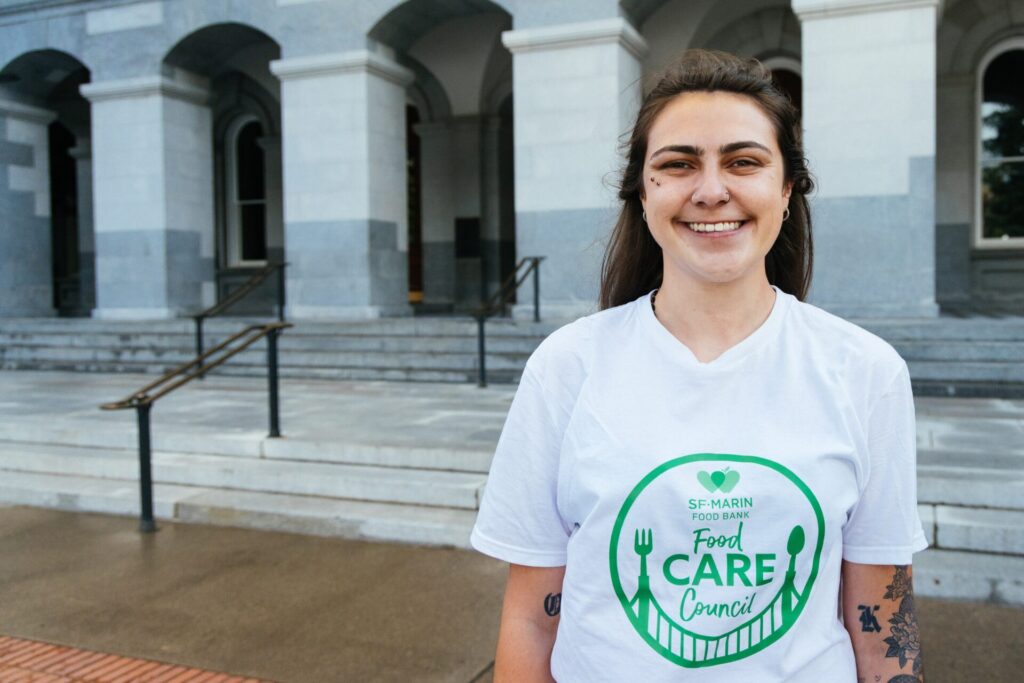
On the bus, Kayley, a Food CARE Council member, was grinning. “I feel like I’m on a field trip,” she said. “I feel like I’m a kid again. I’m nervous, but I’m excited.”
Advocating for Change
The Food CARE (Community Advocacy, Resilience, & Equity) Council is our communityled advocacy group, made up of San Francisco and Marin residents who have lived through hunger themselves. They help shape the Food Bank’s annual Policy Priorities Survey, which directly informs our Legislative Priorities.
Another important aspect is sharing their stories with policymakers, testifying at hearings, and meeting with state and local lawmakers. As someone who’d never spoken publicly for neighbors who grew up food insecure like she did, Kayley started the cohort quiet.
“Day one I was super to myself, super shy,” she said. “I believed food is a right, but I never thought I’d be the advocate to go say that to somebody.”
Over the next nine months, she and her cohort moved through a curriculum built to turn lived experience into policy expertise: local and state policy foundations, media training, storytelling workshops, mock Advocacy Day meetings, and Hunger Action Day prep. With every session, Kaley grew more confident. By the time the bus pulled into Sacramento, she was ready.
At the Capitol
At the Food Bank, we believe food is a human right. That belief is the foundation of Seeding Change, our multi-year policy and advocacy campaign, and Hunger Action Day is one of the moments where it shows up most clearly. Last year, alongside our anti-hunger coalition partners, we helped secure more than $165 million in state funding for school meals, summer food for kids, and Market Match, which doubles CalFresh dollars at farmers markets. This year, the cohort was in Sacramento to push for more.
The rain was still coming down when the bus pulled into the state capitol. The cohort prevailed anyway, holding five meetings with state senators and assembly members over the course of the day, including a visit to State Senator Scott Wiener’s office.
“Advocating in person matters so much,” said Alex Raffanti, our Policy and Advocacy Manager. “Every single time you mention a statistic as a food bank person, all they can see is the numbers. They don’t have anything to back that up. When we bring advocates to the Capitol, we’re sharing stories and real people that connect to the stats.”
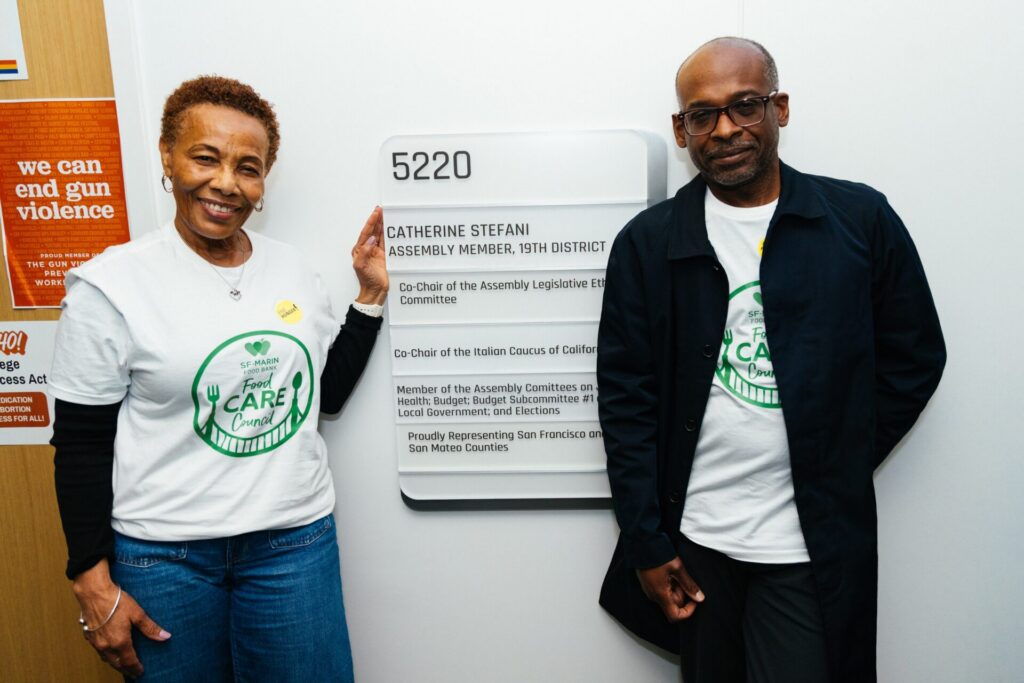
Peter, a Peer Navigator at the Western Addition Community Market, was one of those advocates. He and his wife Annette serve neighbors at that same Market together. In Sacramento, Peter carried that experience into legislator meetings.
“It’s very important to have lived experience,” he said, “because you can actually feel and talk from the heart. Not just from a storybook or just listening. When you have experienced it, you really know the nuances.”
Kayley spoke in support of the Count Hunger Act, which the Food Bank helped develop with Assemblymember Catherine Stefani to restore California’s annual data on hunger.
“I grew up food insecure,” she told one assemblymember’s office. Referring to the Food Bank’s findings on how many SF county households don’t earn enough to meet their basic needs and the need for reliable data on food insecurity, she shared, “I was [one of the] 1 in 4 in San Francisco. Without measurements, we can’t solve the problem.”
By the end of the day, Kayley had walked into a State Senator’s office and told her own story.
“I was definitely nervous,” she said, “but getting out there and just speaking my truth, that’s where I felt comfortable. I want to keep doing this. I want to take the next step every day.”
That’s what Seeding Change looks like in motion. The Food Bank, our coalition partners, and the neighbors who know hunger best, all at the state capitol, advocating for lasting change.
Share