
Opening the Narrow Door
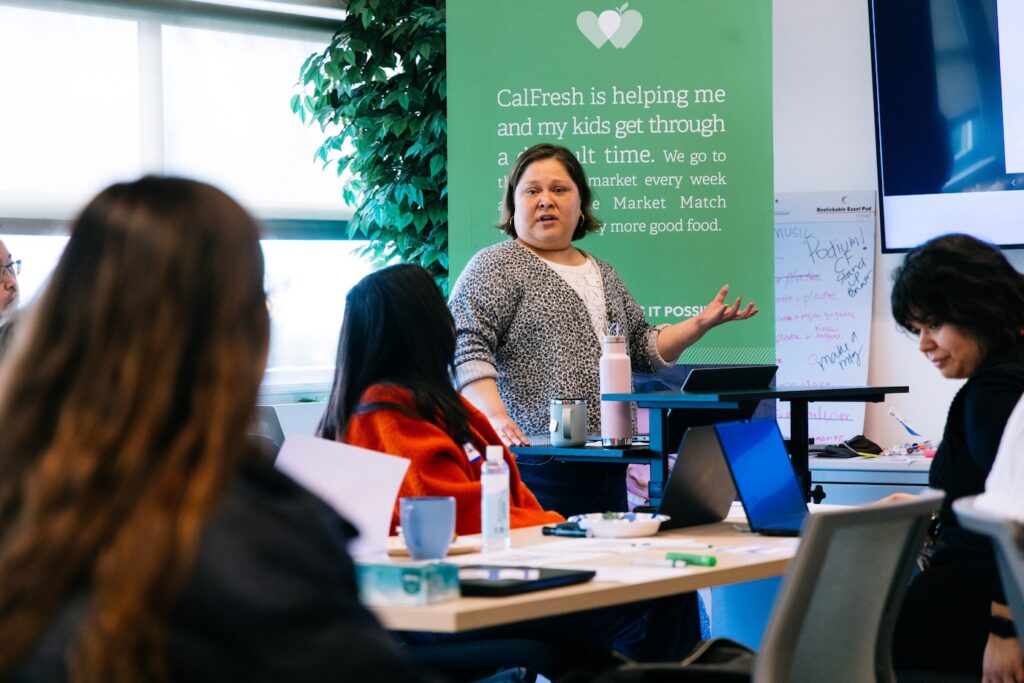
“Students used to have a big block [to accessing SNAP/CalFresh benefits],” explains Liliana Sandoval, Senior Associate Director of Programs Outreach. “They were ineligible unless they could fit through this very narrow door, a long list of extra requirements. This policy change opens the door. They still have to meet the income and immigration rules like everyone else, but they don’t have the extra barriers anymore.”
This year, the San Francisco-Marin Food Bank blew that door wide open. We led advocacy efforts that made it dramatically easier for nearly 350,000 income-eligible students at every public college and university in California to qualify for CalFresh.
The impact of this change meets the immediacy of the moment. As of June 1, any student pursuing an associate or bachelor’s degree at a public California community college, CSU, or UC no longer has to meet the burdensome employability requirements that used to shut so many out. They still have to meet the regular income and immigration rules, but the extra barrier is gone. For a student, CalFresh can mean they receive between $23 and $292 a month for groceries, money that frees up a tight budget for rent, books, and everything else.
This has been one of the biggest CalFresh wins in the Food Bank’s history, and one of the biggest anti-hunger wins in California this year. But it didn’t start with this policy fight. The Food Bank’s CalFresh work started 15 years ago, with one caseworker, a small grant, and a lot of neighbors who needed help getting food.
The Food Banker Who Built It
In 2010, what Liliana was doing wasn’t even called CalFresh outreach. It was “benefits outreach,” and the Food Bank hired a single staffer to help neighbors sign up for what everyone still called food stamps. Liliana took over that role less than a year after the program started. She’s still here, and the program she built from scratch now spans two counties in the fourth largest economy in the world.
There was no playbook when Liliana started. We were still the San Francisco Food Bank (before the Marin merger), and the department was hers to define. She sat down with the county’s food stamps director to learn where neighbors were falling through, then went out into the community to ask people, directly, why they weren’t applying.
Liliana’s caseworker predecessor left her with one rule that still guides the team today: never make anything up. If you don’t know, say so, and go find out. When the rules keep changing and misinformation spreads fast, people need a place they can trust for clear, accurate information about the help available to them, in their own language and without judgment
 The Not-So-Simple evolution From Food Stamps to SNAP to CalFresh
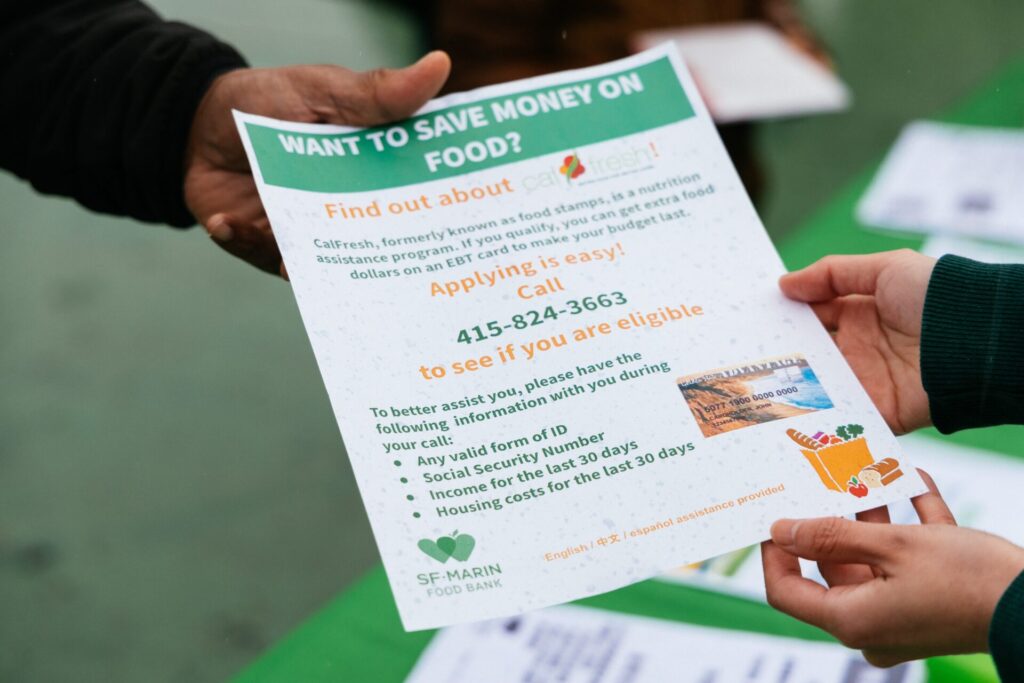
The program’s name changed twice in quick succession: federally to SNAP around 2011, then to CalFresh in California soon after. But the name was never the real barrier. The rules were.
In the beginning, Liliana spent weeks at a time at school food pantries, staying long enough that families came to trust her with their income, their housing, their Social Security numbers. She met older adults and people with disabilities who were turned away because receiving Supplemental Security Income (SSI) made them ineligible then, a rule that wouldn’t change for years. In those days, people were even fingerprinted just to get help buying groceries.
Closing the gap between who qualifies and who actually gets help has been the root of this work ever since.
Two Fights At Once
Signing neighbors up to receive benefits was always just half the work. The other half was changing the rules that kept neighbors from accessing the support in the first place. The Food Bank’s CalFresh advocacy runs on two tracks: defending SNAP, known locally as CalFresh, from cuts and harsh work requirements, and expanding access here at home. We co-sponsored AB 518, which pushes the state to find and enroll eligible neighbors, and AB 2033, which put an EBT retailer on every California college campus.
 Students Matter
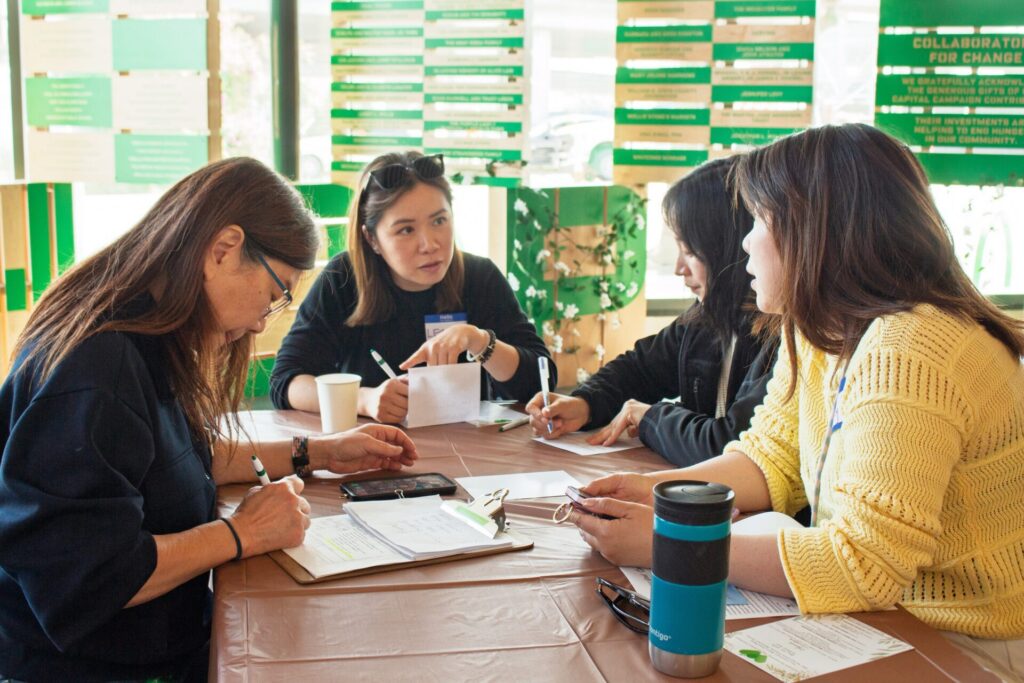
Even after a decade of advocacy, one group kept slipping through the sign-up process: college students. Enrollment stayed low, because students faced extra hurdles no one else did. Even when they qualified on income, federal rules shut most of them out unless they could clear a narrow set of exemptions, like working at least 20 hours a week, qualifying for work-study, caring for a young child, or receiving cash aid.
That gap between benefits and accessing them had real consequences for students. Research out of UCLA and other campuses found that huge numbers of students at public universities were going hungry, and some were experiencing homelessness. That evidence helped push Gov. Gavin Newsom to fund basic needs initiatives across California’s public college systems. The student rules loosened over the years. And this year, they finally broke open.
But being newly eligible for benefits isn’t the same as immediately having food on the table.
Adrian Tsang, the Food Bank’s Bilingual CalFresh Outreach Supervisor, spent the last two years informing the greater community about accessing benefits. He’s now turned his focus to students. Adrian’s team is building a volunteer peer-outreach effort modeled on earlier work in Marin, where students help other students find and finish an application many don’t know they can complete. The goal is to meet students where they are, whether that’s help from the Food Bank or a warm handoff to their campus basic needs center.
For Adrian, the work has come full circle.
“Some of these students are in a position where what they do in school could be a pathway to financial stability, not just for them, but for their whole family. Being able to help with that, by making the path to CalFresh easier, is rewarding in its own way.”
Looking Ahead, Remembering Where We Came From
The fight to end hunger and increasing access to benefits is far from over. The Farm Bill is still moving through Congress, and the painful cuts under H.R. 1 are still rolling out. More than 121,000 neighbors in San Francisco and Marin rely on CalFresh, and 19,000 of them are at risk of losing it. In both counties, it now takes more than four full-time minimum-wage jobs to cover a family’s basic needs. Families are already stretched to cover rent, groceries, and everything else, and losing that support can be the difference between getting by and an impossible choice between food and another basic need.
But 15 years of showing up, one policy fight and one student at a time, is why a door that once barely opened now stands wide open for the people who need to get through it.
If you’re a student, whether you’re sure you qualify, think you might, or aren’t sure, our CalFresh team is here to help. And if you know a student who could use it, share this with them. It starts with one conversation, and our team members like Liliana or Adrian will walk you through the rest — just like we always have.
Share