Food Bank ‘Mini’ Team Favorites: Summer Squash Recipes for Your Enjoyment

July 26, 2019

The Food Bank ‘Mini’ team lives to figure out-of-the-box ways of delivering fresh, nutritious food to our neighbors in need.  To help celebrate the wonderful offerings we are still distributing this summer, we asked members of our Nutrition Education team to help us out with a few refreshing Summer Squash recipes. They pulled up a few delicious ideas from our friends at EatFresh.org.  Enjoy!

Slow Cooked Summer Squash

INGREDIENTS
6 medium summer squash – cut into 1/2-inch-thick slices
1 teaspoon salt – divided into two 1/2 teaspoons
2 tablespoons olive oil
1 medium onion – chopped
1 medium red bell pepper – seeded and chopped
1 garlic clove – minced
1 cup fresh bread crumbs
⅓ cup Parmesan cheese – freshly grated
1 teaspoon Italian seasoning
¼ teaspoon pepper
1 tablespoon unsalted butter – cut into small cubes

PREPARATION

*In a large colander, combine the zucchini slices with 1/2 tsp of the salt. Let stand until the zucchini gives off its juices, about 30 minutes. Rinse well under cold running water to remove the salt, drain and pat dry with paper towels.
*In a large skillet, heat the oil over medium heat. Add the onion and red bell pepper and cook, stirring often, until softened, about 5 minutes. Add the garlic and cook, stirring often, for 1 minute. Removed from the heat, add the zucchini, and mix well.
*In a medium bowl, mix the bread crumbs, Parmesan cheese, Italian seasoning, the remaining 1/2 teaspoon salt, and the pepper.
*Place half of the zucchini mixture in a buttered 3.5-qt slow cooker. Sprinkle with half of the crumb mixture. Top with the remaining zucchini mixture, the sprinkle with the remaining crumbs. dot the top of the crumbs with melted butter.
*Cover and slow cook until the zucchini is tender, about 4 to 5 hours on low.

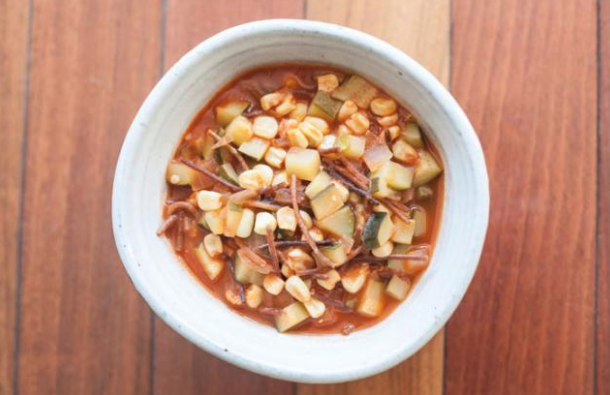
Squash and Corn Pasta Soup
INGREDIENTS

3 cups Low-sodium chicken broth
4 Small zucchini (or any summer squash) diced
½ Small onion chopped
1 Large clove of garlic minced
2 cups Canned corn (16 oz.) drained
10 ounces Whole grain angel hair pasta (thin spaghetti) broken into 2” or 3” pieces
1 cup Tomato sauce (8 oz.)
Olive oil

PREPARATION

*Coat bottom on large skillet with a little bit of olive oil. Add broken pasta and mix well to coat. *Toast pasta over medium heat, stirring and turning constantly until golden. Pasta will burn easily.
*In a 2-quart saucepan, heat chicken broth to boiling. Add zucchini, onion, and garlic. Cook, covered, until zucchini is soft.
*Stir in corn and remove from heat.
*Carefully stir toasted spaghetti into saucepan with zucchini; add tomato sauce. Heat to boiling; reduce heat and simmer 8 to 10 minutes until spaghetti is tender.
*To serve, ladle into shallow bowls.

Advocacy: Summer Hunger Solutions

July 10, 2019

The Problem:  Hunger doesn’t take a summer break

The Food Bank works hard all year to make sure kids have access to fresh, healthy food through our Healthy Children Pantries, our Morning Snack Program, and efforts by our very active CalFresh enrollment team.  But for many of these children, summer break means they miss out on school meals and miss out on nutritious food they need to thrive and return to school in the fall ready to learn. These kids are also affected disproportionately by summer learning loss, which hits low-income children harder than their high-income peers. That means that these children often return to school academically behind higher-income peers and struggle to catch up before classes even start.

The San Francisco-Marin Food Bank has created new programs and is advocating for policies to directly address summer hunger.

The Solution: Creative programs and policies

To combat this summer hunger gap at the local level, the Food Bank continues our support of the Summer Continuation Pantry model.  For the second year we are operating a large-scale pantry at Gordon J. Lau Elementary School in San Francisco’s Chinatown.  There, upwards of 400 families are being served nutritious groceries – so children attending several nearby schools can continue to get the nourishment that they need.

We’re advocating for action at the Federal level

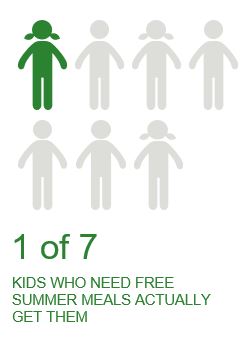
Childhood hunger during the summer months is not just a Bay Area issue.  Nationally, only 1 out of every 7 kids who need free meals in the summer is getting them.

Thankfully, our federal elected officials are responding to demands of advocates to improve access to free summer meals for kids.  The Food Bank has signed on in support of The Stop Child Summer Hunger Act introduced by Senator Pat Murray (D-WA) and Representative Susan Davis (D-CA). The bill would provide low-income families whose children are eligible for free and reduced-price school meals with an electronic benefit transfer (EBT) card to help them obtain nutritious food during the summer, just like with food stamps.

Along with our national anti-hunger partners, the Food Bank is calling for major investments in federal programs like the Summer Food Service Program and Summer EBT that would dramatically reduce summer hunger, provide far more student enrichment opportunities, and create jobs.

We are committed to making sure that hunger does not hold back any child from living up to their full potential.


Nutrition Education | Tips for a Tasty and Healthy Summer BBQ

July 1, 2019

The weather is heating up and chances are folks are planning a few summer barbecues.  With that in mind, we asked our Nutrition Education team to provide a few helpful tips and here is what the came up with.  Enjoy!

  • Consider grilling veggies – Burgers and hot dogs are tasty, but they don’t provide us with lots of nutrients. Consider grilling veggie burgers or kabobs instead of, or in addition to, barbecuing main dish staples that often feature processed meat.Choose hearty sides instead of chips to round out your meal! – Regardless of what you serve as a main dish, choose veggie filled side dishes to feel full and satisfied throughout your day. We recommend this sweet summer corn salad or this zesty bean and corn salsa.
  • Quench your thirst – Refresh your thirst by choosing unsweetened sparkling water instead of soda or juice. If you crave something sweet, try mixing seltzer water and juice like in this raspberry-lime fizz or in a fruit-forward smoothie such as this summer breeze treat.
  • Satisfy your sweet tooth – If it feels like no meal is complete without a sweet ‘something’ then skip the brownies and cookies and choose icy fruit pops or grill some tropical fruit. These delicious treats taste wonderful and provide you with vitamins, minerals and fiber as opposed to empty calories.
  • Get moving – Play some lawn games, jump in the pool or put on some music and dance at your next barbecue. Movement helps us digest our food and keeps our body strong and healthy.

Food Bank Innovations | Learning to Cook Pantry Offerings

June 13, 2019

NUTRITION CLASSES FOR HEALTHIER LIVING

Do you know how to cook maitake mushrooms? Or how to prepare bok choy? And what’s the difference between acorn squash and spaghetti squash? Our Nutrition Education team answers questions like these at nearly every event they attend.  The idea is to set people up for success through thoughtfully prepared menus.

LEARNING HOW TO COOK NEW FOODS

People like Kamurrah, a retired seamstress and artist living on a fixed income in San Francisco.  She relies on our food pantry at Bayanihan House for much of her weekly groceries. She recently attended a Nutrition Education class at the pantry to learn how to cook some of the food she received recently. “I love the Food Bank,” Kamurrah says, “I have never eaten so well in my life. With the pantry, I try all kinds of fruits and veggies that I’ve never seen before. But I try it, and I’m always getting new foods that I like. There are vegetables that I didn’t even know how to eat, but I learned how because of the Food Bank.”  The classes have expanded her horizons and have empowered her with the skills needed to cook and eat fresh foods she would not have known about or chosen otherwise.

FEDERAL GUIDELINES FOR HEALTHIER LIVES

The Food Bank’s food sourcing policy is grounded in the USDA’s Dietary Guidelines for Americans: We always include fresh produce, healthy grains, and proteins in every bag or box of food we send into the community. In fact, 60% of the food we distribute is fresh produce. So, it’s essential that we also empower the people we serve by providing information and education to support healthy eating. Our Nutrition Education program does this every day by providing community members with nutrition classes (just like the one at Bayanihan House), recipes, and cooking demonstrations.  We also offer training programs to staff at our nonprofit partners, so they can spread the word about healthy eating and share nutritious recipes for the foods we provide.


Food Bank Innovations | Addressing College Hunger

June 10, 2019

For young people, college can be a stressful whirlwind of unknowns: wondering which classes to take and activities to join, or how to balance earning a little money while making enough time to study. How to afford your next meal shouldn’t be an unanswered question.

But for thousands of students right here in San Francisco and Marin, food insecurity is a daily challenge.

The Food Bank first connected with advocates at San Francisco State University in 2016, when professors and campus health services began seeing more students suffering from lightheadedness, headaches, and weakness from not having enough food. Soon after, our first college pantries launched to ensure that students always have enough food to stay healthy and focus on learning. After all, it’s nearly impossible to take on life’s challenges with an empty stomach.

A HEALTHY MENU FOR BUSY STUDENTS

Elina, a political science major at Dominican University in San Rafael, commutes 40 miles to campus every day from her home in Santa Rosa — a drive that can take two hours each way. She started coming to the pantry in the fall of 2018.  “A lot of my downtime isn’t actually downtime — it’s driving time between school and home, so that doesn’t leave a lot of extra time to find food,” Elina says. “I have a friend here who had to live in her car because she couldn’t afford housing. The pantry has been a big deal to students like me.”

Many students like Elina either don’t have time to cook or don’t have access to full kitchens. That’s why our college pantry menu is designed for students on the go: fresh produce, canned protein, granola bars, bread for sandwiches, and bottled juice or sparkling water. It’s been a huge hit.  “Sometimes I pick up really great veggies – like carrots – which allows me to skip that trip to the grocery store, which saves me time and money.   But today I totally forgot to pack a lunch, so I came by and was able to pick up some healthy protein bars that will last me a week!”

SERVING NEARLY EVERY COLLEGE CAMPUS IN OUR SERVICE AREA 

We now serve nearly 1,000 hungry students every week at five college pantries through partnerships with student organizations at San Francisco State University, College of Marin, UCSF Parnassus, Dominican University, and City College of San Francisco.  Coming soon we will be establishing pantries at University of San Francisco and the San Francisco Art Institute.  And it’s not just healthy food that we deliver ever week.  Students get tips and recipes for preparing healthy meals, and also have access to CalFresh (food stamps) enrollment assistance at these institutions

Jacques Story | A Changing Economy Makes It Harder To Make Ends Meet

June 8, 2019

Each morning, Jacques rises early, gets ready for the day, and takes his 10-year-old daughter, Shaila, to school. As a single dad, Jacques cares for Shaila and his 80-year-old mother.  Mondays are especially busy, but in a good way.  When Jacques drops off Shaila at Dolores Huerta Elementary School, she heads for her classroom and her father heads for the Food Bank’s Health Children pantry near the campus play yard.

“If I open up the fridge on a Sunday and nothing is in there, then I have to make sure to put something in there,” he says.

It didn’t use to be like this.  Jacques was a mortgage broker until the 2008 recession made it hard to find work in real estate.  He now drives for a ridesharing company in addition to juggling several other jobs to make ends meet.  “I’ve been [in San Francisco] for a while, and I’ve never seen poverty like I’ve seen in the past couple of years,” says Jacques.

KEEPING FAMILY AT THE CENTER

Shaila is a bright girl, at the top of her class, and Jacques wants to ensure that she has no limits to her future ambitions — which currently range from being a pop star to a police officer to a vet. Once Shaila is at school, Jacques starts driving for the ridesharing company until it’s time to pick her up. He then takes her home to her grandmother while he heads out for more driving until dinner, a special time that Jacques never misses. It’s a central part of their family’s routine; a time to share about their day, a time to connect and enjoy a nutritious meal.  “I ask her about her day, and try to be present as a father because that’s so important,” he says. Often, he has to go back out for more driving after his daughter goes to bed.

STRUGGLING IN A HIGH-COST CITY

As he drives, Jacques thinks about how to provide for his family, and what they will have to eat for the next day and week. The weight of his role as the sole earner is heavy in a costly city like San Francisco.  Jacques and his mother plan out their meals for the week, usually starting on Monday when he comes home with a big box of groceries from the pantry. “This pantry has been great,” he says. “It’s been a life saver and eye opener. I needed it because food is so expensive.”  For Jacques and his family, the groceries they receive from the Food Bank help to fill the gap as he works hard to make ends meet. He says, “Thank you for taking care of me and so many people like me who are really trying to do the right thing but who are having a hard time making it.”

Food Bank ‘Mini’ Team Favorites: Watermelon Recipes for Your Enjoyment

June 6, 2019

The Food Bank ‘Mini’ team lives to figure out-of-the-box ways of delivering fresh, nutritious food to our neighbors in need.  To help celebrate the wonderful fruit offerings as we head into summer, we asked members of our Nutrition Education team to help us out with a few refreshing watermelon recipes. They pulled up a few delicious ideas from our friends at EatFresh.org.  Enjoy!

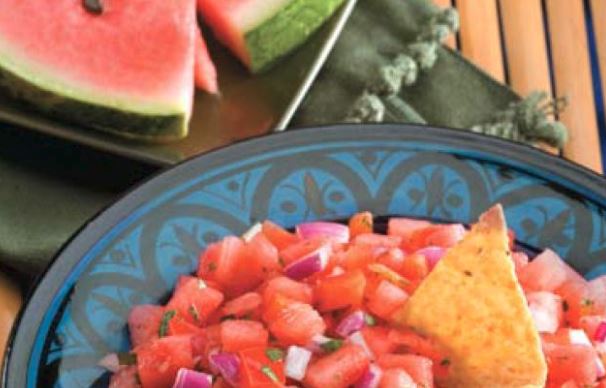
Watermelon Salsa 


INGREDIENTS

3 cups Watermelon seeded and chopped

½ Medium onion chopped

½ Red bell pepper chopped

1 Jalapeño pepper seeded and chopped

2 tablespoons Fresh cilantro chopped

2 tablespoons Lime juice

1 teaspoon Vegetable oil

PREPARATION

*In a medium bowl, mix all ingredients.
*Serve immediately with chips or cover and refrigerate for up to 1 hour to allow flavors to blend.

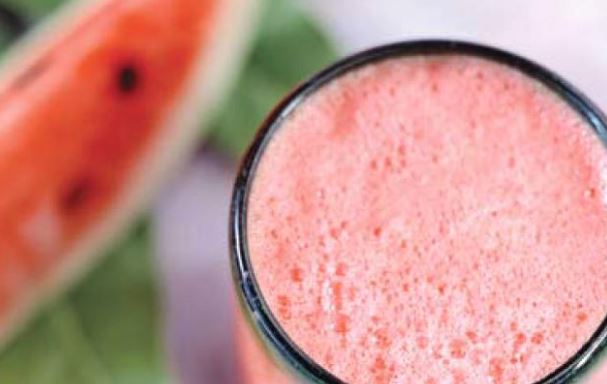
Watermelon Cooler

INGREDIENTS

*2 cups chopped water melon
*2 cups cold water

PREPARATION

*Place all ingredients in a blender container.
*Blend until smooth. Pour into glasses and serve.


Blanca’s Story | SF Survival

June 6, 2019

Monday mornings have a reputation for being kind of a drag.  Many of us rush around in an effort to get the work week – or school week – off to a good start, and things can sometimes get hectic.

Food Bank participant Blanca certainly does her fair share of rushing around, getting her kids off to three different schools in San Francisco’s Glen Park neighborhood. But Monday has become a day she enjoys because after dropping off her daughter at Dolores Huerta Elementary School, Blanca heads straight for our weekly food pantry, located right on campus near the school’s playground.

“My oldest eats a lot – he’s 6 feet tall – so it’s hard to keep him happy and full,” Blanca says. “The other kids are big eaters too.  But we manage, partly because of the groceries we get here every week.”

Blanca is a stay-at-home mom for now.  Her husband is a painter and makes what she describes as a decent wage – but not necessarily enough to get by in San Francisco. Some months are harder than others, but Blanca’s family always seems to get by with a little help from the Food Bank.

“Oh my goodness!  It’s not even a joke how hard it is to survive in this city right now,” she exclaims. “There is enough food here every week to provide several days worth of meals, allowing us to save our money to pay for other things that are important, like clothes and medicine.”

As Blanca walks through the pantry, she finds several items that she likes and puts them in her bag.  As she holds up a package of fresh asparagus, she explains, “We bake this in the oven so they stay crunchy. We also really like the potatoes; we turn those into baked potatoes and fried potatoes.”

Blanca is certain that her family, and many more in the neighborhood, would suffer greatly if it weren’t for the Monday morning pantry offerings.  “Thank you for helping all low-income families in this neighborhood and this city…it really does make a difference.”


Food Bank Innovations | Serving the Unhoused Population

May 13, 2019

Pick up a local newspaper, and it’s more likely than not you’ll spot a story about the challenge of homelessness and efforts to tackle it, including recent headlines about plans to build a Navigation Center along San Francisco’s waterfront, and Marc Benioff’s $30-million donation to study homelessness.

Although the Food Bank is not making headlines on this topic, we are diligently working on improving our assistance to *unhoused neighbors every day.

Food For All

We estimate that a vast majority of the food programs serving unhoused people in San Francisco and Marin today either get fresh groceries for these meals from the Food Bank or partner with us in some way.  These include the big congregate meal sites like GLIDE and St. Anthony’s Dining Room in San Francisco and St. Vincent DePaul in Marin.  in 2018 at just these three sites, we averaged three deliveries of food each week – totaling 1.4 million pounds of food, equal to about 1.17 million meals.

“Providing our unhoused neighbors with healthy food not only reduces their food insecurity, but in some cases it increases their stability so they can address other life challenges.” says Irene Garcia, Senior Program Coordinator and leader of the Food Bank’s Unhoused Workgroup.

New and Improved Partnerships

We are building new pantries and partnerships to better serve our region’s unhoused population. That work includes adjusting menus to address limited and even non-cook needs.  The goal is to ensure that we are providing products that are appropriate for their cooking and storage facilities.

  • City Team in San Francisco’s SOMA neighborhood launched a pantry in spring 2018 and has grown to serve 100 households every week.
  • St. Agnes and St. Ignatius Churches in the Haight-Ashbury neighborhood partnered with us to launch a pantry in summer 2018. Efforts are on-going, primarily in the Haight-Ashbury neighborhood to conduct outreach to unhoused individuals, families, and at-risk youth.
  • Reinvigorated our pantry at Bessie Carmichael Elementary School in 2017 with the support of EPIC Church. Located in San Francisco’s SOMA neighborhood, approximately 20% of families who attend the school are unhoused.  The pantry is now thriving, going from serving 35 families in 2017 to 95 families today.
    • In partnership with TNDC and the Tenderloin People’s Garden, we are now also able to continue serving Bessie families throughout the summer months when school is not in session.
  • Through our ongoing partnership with Starbucks’ FoodShare program, the Food Bank is rescuing thousands of pounds of fresh, prepackaged food from the coffee chain every night after closing and delivering that food to partners like St. Anthony’s Dining Room and GLIDE hours later.

Read stories about how the Food Bank assists neighbors who are unhoused or formerly homeless:

Homeless to Hopeful

Health Food for People With No Place To Call Home

Princess’ Story

Food is a Life Saver

Starbucks FoodShare

By The Numbers

The latest 2019 Homeless Counts for San Francisco and Marin are still being tabulated, so the latest data was taken from Point-In-Time surveys conducted in January of 2017.

  • The San Francisco survey found 7,499 individuals staying in emergency shelters, transitional housing facilities, domestic violence shelters, jails, hospitals, treatment facilities, and living unsheltered on the streets.
  • The Marin County Point-in-Time survey counted 1,117 individuals living in transitional housing, shelters, and on the streets.

* The Food Bank has elected to use the term “unhoused” rather than “homeless” when referring to people without a home of their own.  We believe the term “homeless” carries with it an implied bias – that because someone does not have a home (s)he is therefore considered “less” important than others.  It’s our experience that many people call San Francisco and Marin their home and their community, even though they do not have stable housing at the time.  The difference may seem subtle to some but we feel it’s an important distinction.

*Photo by Kevin Butz on Unsplash   

Kevin Butz

Food Bank ‘Mini’ Team Favorites: Strawberry Recipes for Your Enjoyment

May 6, 2019

The Food Bank ‘Mini’ team lives to figure out-of-the-box ways of delivering fresh, nutritious food to our neighbors in need.  To help celebrate the wonderful fruit offerings this spring, we asked members of our Nutrition Education team to help us out with a few refreshing strawberry recipes. They pulled up a few delicious ideas from our friends at EatFresh.org.  Enjoy!

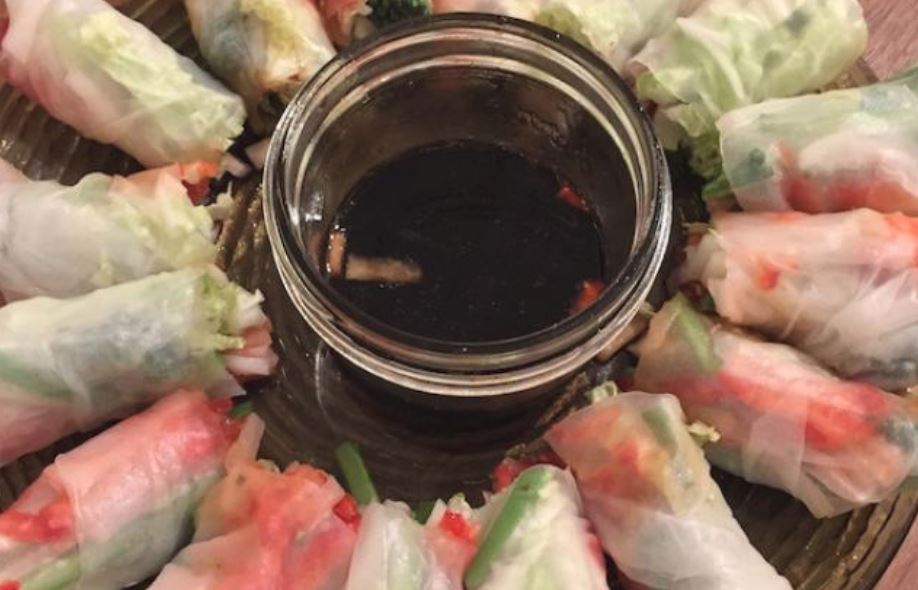
Strawberry Spring Rolls

INGREDIENTS

½ cup Daikon cut into thin strips
½ cup Gailon cut into thin strips
½ cup Chinese cabbage cut into small strips
½ cup Strawberries cut into small strips
8 rice wrappers
4 tablespoons reduced sodium soy sauce
1 tablespoon Sesame oil

PREPARATION

*Mix together all vegetable strips
*Place strips on soaked rice wrappers and roll up burrito-fashion.
*Combine soy sauce and oil; use for dipping sauce.

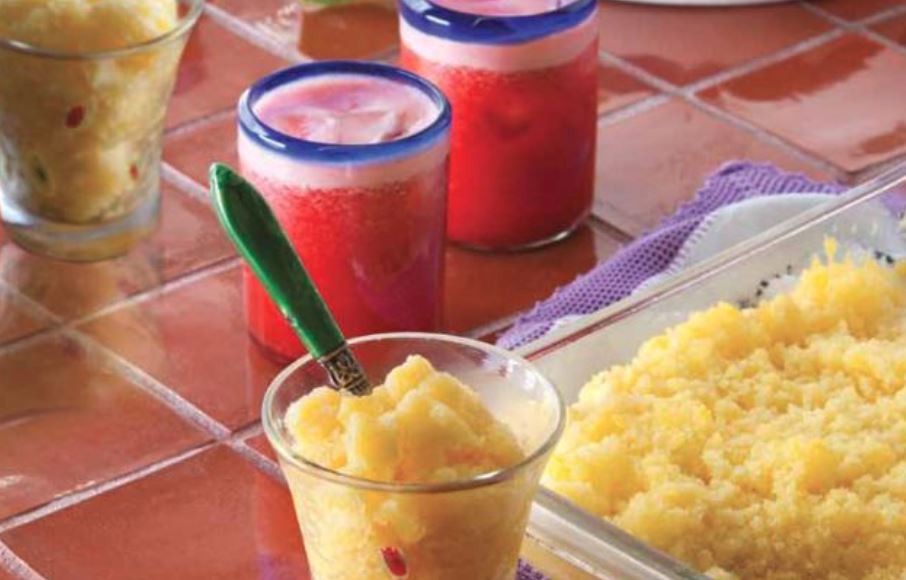
Strawberry Pineapple Lemonade

INGREDIENTS

4 cups 100% pineapple juice
2 cups Fresh or frozen strawberries sliced
¼ cup Fresh lemon juice
½ cup Water
Ice

PREPARATION

*Put all ingredients (except ice) in a blender container and churn until the mixture is smooth
*Pour into glasses over ice cubes and serve.