
Still Going Strong at 95: Meet Angelo

September 5, 2025

It’s early Friday morning, and the weather is gray. Wind and fog roll off the San Francisco Bay and settle over the San Francisco-Marin Food Bank’s warehouse in San Rafael. But inside, the well-oiled machine of regular volunteers — packing, sorting, and distributing produce and groceries for neighbors in need, laughing and joking to upbeat music — radiates warmth. This team has been working together since the early days of COVID, showing up week after week to help those who need it. A crucial member of the team is Angelo Siracusa, known for his hard work and friendly, jovial spirit.  

Angelo greets everyone by name, shares hugs and jokes, lifts heavy boxes of cauliflower over his head, and slices open cartons of potatoes with ease. You wouldn’t guess it, but he recently turned 95. His fellow volunteers brought him cake and the hat he’s wearing today, which reads, “Vintage 1930.”  

“Everybody here knows Angelo,” says Randy Rollman, Senior Warehouse Volunteer Coordinator for the Food Bank. “He drives himself here three times a week, not just Friday. He comes on Tuesdays and works in our repack room, packaging large quantities of grain or pasta into small, family-sized packages. On Thursday, he’s one of my specialized meat crew. We usually go through about 3,000 pounds of donated meat that we’ve accumulated over the course of the week. Angelo’s integral to that part of the crew.”  

Today, that crew is packing around 574 bags filled with fresh produce and groceries, about 25 to 30 pounds each. Later, 30 volunteer drivers will each take 20 bags and deliver them to seniors across Marin.   

“It’s my favorite day of the week,” Angelo says, “because the food goes to the people.”  

He’s a firm believer in giving back to the people around him. He also believes in staying active, both mentally and physically.  

“I would be going crazy if I weren’t doing stuff like this,” he says. “A lot of people get very, very lonely when they retire. So, this is one way to keep active and to keep happy.”  

Angelo was born in San Francisco, the child of Italian immigrants. His family moved to San Mateo County when he was two, and in 1970, he settled in Marin, where he’s lived ever since. He now lives in Larkspur.  

“This is truly home,” he says.  

Still, he knows that many people don’t associate Marin with struggling to make ends meet. 

“A lot of people think of poverty as something that exists somewhere else, not in Marin” Angelo says. “I think people understand poverty in theory, but they don’t see it directly, so they don’t feel like they need to engage… poverty is [actually] shaping life all around us.”  

And because this is home, and because he knows the need is real, he wanted to help.  

“I always wanted to volunteer, but I just didn’t find the right fit for me,” Angelo says.  

When he first tried signing up for a shift, every spot was full. But he didn’t give up.  

“One day, I decided to just come down and work,” he recalls. He immediately felt at home. “I said, ‘Well, I can do this all the time,’” he laughed, “and that made it easy.”  

It also helped that he clicked with the people around him and trusted the way things were run. “We’ve got a great crew here,” he says. “And Randy does a great job. I’ve been involved in a lot of nonprofits, but [the Food Bank] is very well run.”  

In addition to his time, Angelo makes sure to donate each year.  

“This is great mission,” he says. “A lot of people can’t afford to buy food, and this gives them a way to get fed. And the food here is good. Like so many charitable organizations, we’re serving the underserved and the poor. And especially with what’s going on now in the country… there’s going to be a lot of abandoning of those people.”  

He worries about the future and what the brutal cuts to the Supplemental Nutrition Assistance Program (SNAP) will mean for the people who rely on it. But he hopes it pushes his neighbors to act.  

“If we have, we need to share,” he continues. “It doesn’t have to mean suffering or sacrifice. Just little things that can make a big difference. I think more people understand the crisis we’re in, and that brings them out.”  

Angelo is grateful for the opportunity to keep active, stay connected, and give back to the place he calls home. And here at the Food Bank, we’re grateful to have him. 

Planning for Tomorrow, Feeding People Today: Linda and Bill’s Story

August 15, 2025

Every Friday afternoon, Linda delivers groceries for the Food Bank to neighbors along the same route in Central Marin — something she’s done for more than many years. 

In that time, she’s seen the community change. But her weekly volunteer shift, part of the Food Bank’s Home-Delivered Groceries program, has remained a constant, rooted in connection and care for the people she serves. 

“We don’t plan anything else on Friday afternoon,” she says. “It’s blocked off for the Food Bank, and we love looking forward to it.” 

Many of the people Linda visits are older adults or have limited mobility, making it hard to get to a pantry or store. And, in some ways, the visit from Linda means just as much as the food itself. 

“I’ve gotten to know the people I deliver to,” she says. “It’s not just about the food. It’s about showing up. And that connection goes both ways.” 

For Linda and her husband Bill, supporting the San Francisco Marin Food Bank has always been personal. They’ve seen how hunger shows up in their own community and they’ve made it their mission to help. 

That’s why they decided to include the Food Bank in their estate plans. 

“We don’t have children,” Linda explains. “So, when we thought about what we wanted our legacy to be, we knew we wanted to support organizations doing work that truly matters. The Food Bank does that.” 

When they learned that Marin has one of the highest poverty rates in the Bay Area (a 17% child poverty rate and a 14.4% overall rate, according to the Public Policy Institute of California), they were stunned. “People think this is a wealthy county,” Linda says. “But hunger is here. You don’t have to be [visibly] poor to be hungry, and a lot of people are struggling silently.” 

Bill, a former financial analyst, says they carefully vetted every organization in their trust, and the Food Bank stands out. “We looked at the impact, the transparency, how far every dollar goes,” he says. “The Food Bank does the work and makes a real difference.” 

Their legacy gift will help the Food Bank continue meeting immediate needs while investing in long-term change — like providing even more neighbors with home-delivered groceries and advocating for policy solutions that address the root causes of hunger. 

Linda says she and Bill often talk about planned giving with friends, hoping to plant a seed and a sense of urgency. 

“A lot of folks say, ‘I’ll get to it someday,’” Linda says. “But it doesn’t work that way. You have to put it in writing, spell it out, and make it real. It was easy for us because we feel so strongly about it.” 

Learn more about legacy giving


“We have a voice, and I didn’t realize that.” Celebrating the First Food PAC Cohort

August 12, 2025

Amid the backdrop of the largest cut to food assistance in our nation’s history, Food Bank staff, Food Policy and Advocacy Coalition (Food PAC) members, and their loved ones came together on July 11 to celebrate the graduation of our inaugural Food PAC cohort. 

“This has been a transformative chapter,” said Policy & Advocacy Manager Alex Raffanti. “You are not just the first cohort. You are the standard, the example, and the beginning of something very, very powerful.” 

Over 18 months, Food PAC members sharpened their skills in advocacy and public speaking, and learned the ins and outs of policymaking. Drawing on their lived experience of hunger, members helped shape the questions in our Policy Survey, which directly informed the Food Bank’s 2025 Policy Agenda. This hard work culminated in a trip to Sacramento for California Hunger Action Day, where they met with legislators to advocate for policies on behalf of their neighbors. 

“When we went to Sacramento, that was such an eye-opener for me,” said Glen, a Food PAC graduate. “To actually go and speak before a representative and push for something that everybody is going to benefit from, that’s outstanding. We have a voice, and I didn’t realize that… Those people listen. They are paying attention. And I think the more we put effort into that, the more is going to come out of it.” 

Sizi, another graduate, emphasized the importance of creating space for people who have experienced hunger to be involved in policy decisions. 

“I’m super grateful for the opportunity to have a seat at the table,” she said. “Sometimes it’s tough for community members to really engage in advocacy work because of the situations we’re living through. That’s due to the systems that are in place, unfortunately. But as we engage more, I think that’s where we find the strength to really persevere.” 

Sizi also shared powerful reminder of why food banks matter, why the Food PAC’s work matters, and who this is for.  

“That’s where we get our food,” she said. “That’s where my grandma gets her food. My aunts, my cousins. So, thank you to the Food Bank for partnering with organizations that are providing healthy fruits and vegetables for our kids and for our seniors.” 

Greer spoke about how the Food PAC helped her find a sense of purpose and connection. 

“Joining the Food PAC has made such a difference in my life,” she said. “To build this community and be able to tell my story has just been life-changing for me.” 

She added, “I have enjoyed every mile that it’s taken to drive out here. And meeting everyone and developing relationships with people has just been great.” 

Before handing out certificates, Assemblymember Damon Connolly, who represents District 12 in Marin, encouraged the graduates to keep going. 

“As someone who serves in Sacramento on your behalf, I can tell you that real change happens when members of the public show up, by calling, emailing, attending committee hearings, and meeting with legislators.,” he said. “Sharing your perspectives helps us make the case not just here in the Bay Area, but across the state.” 

We’re so proud of this cohort and excited to see how they continue to lead and inspire. 


We’re currently accepting applicants for the next cohort! 

If you’re passionate about making a difference (especially if you’ve experienced food insecurity), apply now! You’ll learn advocacy skills and contribute to policy change – no prior experience needed. We require a 12-month commitment, with about 5 hours of work per month. You’ll need to speak English (reading and writing can be developed) and will be compensated $100/month. 

Apply now 

Patty’s Story: From Pantry Volunteer to Neighborhood Representative

July 28, 2025

When Patricia “Patty” Madrigal moved to Novato in early 2020, she was looking for work that aligned with her values. That’s why, when the opportunity to work at the Food Bank came up, she called it “a no-brainer.”   

“I attended and volunteered at food pantries growing up,” she recalls. So, joining the Food Bank was a full-circle moment. And that personal connection shapes how she approaches her work five years later.   

Patty checking in participants at a neighborhood pantry.

As a Food Bank Neighborhood Representative (NR) for Novato, San Rafael, and West Marin, Patty works closely with local pantries and community organizations to strengthen food access across the region. And, for this type of work, Patty’s knack for collaboration is key. 

“Patty works tirelessly to support her partnerships in Marin,” says Tina Gonzales, Director of Community Partnerships. “She’s built strong relationships by leaning into each partner’s strengths and allowing time for change.”   

That trust helped Patty guide two large sites through the switch to the Food Bank’s Pantry Enrollment System (PES), a shared, centralized database that helps manage long lines and makes food pickup smoother. With Patty’s support, both sites kept serving hundreds of households while making the change behind the scenes. 

“Patty’s support and willingness to listen helped her co-create the best path forward with those partners,” says Tina.   

People are often surprised by just how much Patty manages, supporting pantries across a geographically spread-out and logistically complex region.   

“Marin is one of the wealthiest counties in California,” Patty says, “but that masks the truth. There’s severe income inequality, limited affordable housing, and a real struggle to access nutritious food, especially in remote areas.”   

That’s why Patty’s work is all about meeting people where they are — literally. She’s helped open and grow pantries at schools, clinics, and other trusted partners in the community. She also works closely with partner staff running day-to-day distributions, offering trainings, helping with food safety, and staying connected to what each site needs. 

“Patty is instrumental to the trust and goodwill the Food Bank has built in Marin County,” Tina adds. “She’s a hard worker and a supportive senior program coordinator to the NR team. She’s always positive, dependable, and focused on solutions.”   

For Patty, the work is a chance to give back through the very systems that once supported her family, and to make sure others receive the same care and connection.   

“The gratitude I hear from our partners and the people we serve keeps me going,” she says. “It means a lot to be part of something that brings real support to the community.” 

A Legacy of Care: Western Addition Family Resource Center Food Pantry

July 2, 2025

It was a bright, sunny morning in San Francisco’s Western Addition neighborhood. And inside the Buchanan YMCA, that warmth was reflected in the energy of neighbors, volunteers, and employees celebrating the launch of the Western Addition YMCA Family Resource Center (FRC) food pantry. Music filled the gymnasium as community members lined up alongside tables stocked with fresh fruits and vegetables, tofu, and pantry staples like peanut butter and rice — all provided by the San Francisco-Marin Food Bank. 

This new pantry, a collaboration between the Buchanan YMCA, Urban Services YMCA, and the Food Bank, is more than a place to pick up groceries. It’s a reflection of a long-standing commitment to community care. With Urban Services moving into the Buchanan YMCA last year, neighbors now have access to both health and social services under one roof. The Food Bank’s support has strengthened that safety net, giving the community even more essential resources and support to thrive. 

A Crucial Moment for Food Access 

The timing couldn’t be more critical. Since the pantry opened in late January, the neighborhood’s only grocery store has closed, leaving residents with even fewer nearby options for fresh, healthy food. Many also rely on the Food Bank’s nearby pop-up pantries, which are closing in June due to government funding cuts. While the Food Bank has worked with existing pantries to accommodate more participants, gaps in access remain. To help fill them, the YMCA and the Food Bank created a pantry that not only provides nutritious food but ensures it reflects the diverse cultural traditions of the community. 

Cesnae Crawford, Senior Executive Director at Urban Services YMCA, believes food access should go beyond availability to include culturally relevant ingredients that truly serve the community. “I’ve been to food pantries where they reject so much food because it doesn’t reflect the culture of the people being served,” he says. “That’s why it was so important that our pantry got it right from the start.” 

That commitment to meeting the community’s needs is exactly why the Food Bank was eager to collaborate. Tina Gonzales, Director of Community Partnerships at the Food Bank, has worked with Cesnae for years on the YMCA’s other pantry programs and knew this collaboration would make an impact. “Cesnae has always been a strong community advocate,” she says. “When [the YMCA] was ready to start a pantry in the Western Addition, we were happy to partner. This pantry will help us reach the African American communities connected to the YMCA and provide much-needed support.” 

Meeting the Neighborhood’s Needs 

“This building has been a safe haven through history,” says Suzanne Medina, Buchanan YMCA executive director. Since 1936, Japantown and Western Addition residents from all backgrounds came to the Buchanan YMCA in search of solidarity and a safety net — including during some of history’s most difficult moments. Before World War II, Japanese American families gathered here as part of their daily lives, only to be forced into internment camps by the U.S. government. At the same time, Black families and servicemen migrating from the South for wartime jobs made the Western Addition their home. The Buchanan YMCA became a central gathering place for them, too — providing support, recreation, and a sense of belonging during a time of segregation. 

It’s why opening a food pantry here feels especially meaningful. “This has always been a place where people walk in and feel at home, feel safe,” Suzanne says. “Adding a pantry deepens that sense of security for folks who need it, especially our seniors. Many have relied on our building for health and wellness services, and now, having access to nutritious food alongside preventative programs — like diabetes prevention and brain health — makes a real difference. It all ties back to what we eat.” 

For many, including a resident named John, opening day was their first time visiting a food pantry. John moved to San Francisco from Kenya in December and discovered the pantry through senior education classes at the YMCA. Now living with his daughter and two grandchildren, he says it’s already making a difference in helping his family afford groceries. “The bills, the cost of living — it goes down,” he says, relieved that the family has one less burden. John says he’s thankful to bring home fresh, healthy food without the stress of rising prices. 
Whether due to accessibility challenges or simply not knowing where to turn, neighbors now have a welcoming place to get the nourishment their families need and can connect with others at their neighborhood YMCA where the legacy of community connections runs deep. 

“This Is the Village”: Homeless Prenatal Program

June 23, 2025

Pregnancy and parenthood are overwhelming even in the most ideal circumstances. For some, the time before a baby arrives is spent choosing the right stroller or figuring out how to install a car seat. But for parents without stable housing or income, the stakes are higher. Every decision feels critical: rent or diapers, formula or gas, all while trying to get enough nourishing food to support a healthy pregnancy. 

For 36 years, Homeless Prenatal Program (HPP) has helped lighten the load for expecting parents by providing the tools and support they need to build healthy, stable families. Located in San Francisco’s Mission District, HPP connects pregnant people and their partners with parenting classes, case management, housing support, and fresh groceries through a long-standing partnership with the San Francisco-Marin Food Bank. 

For many staff members, the work is deeply personal. 

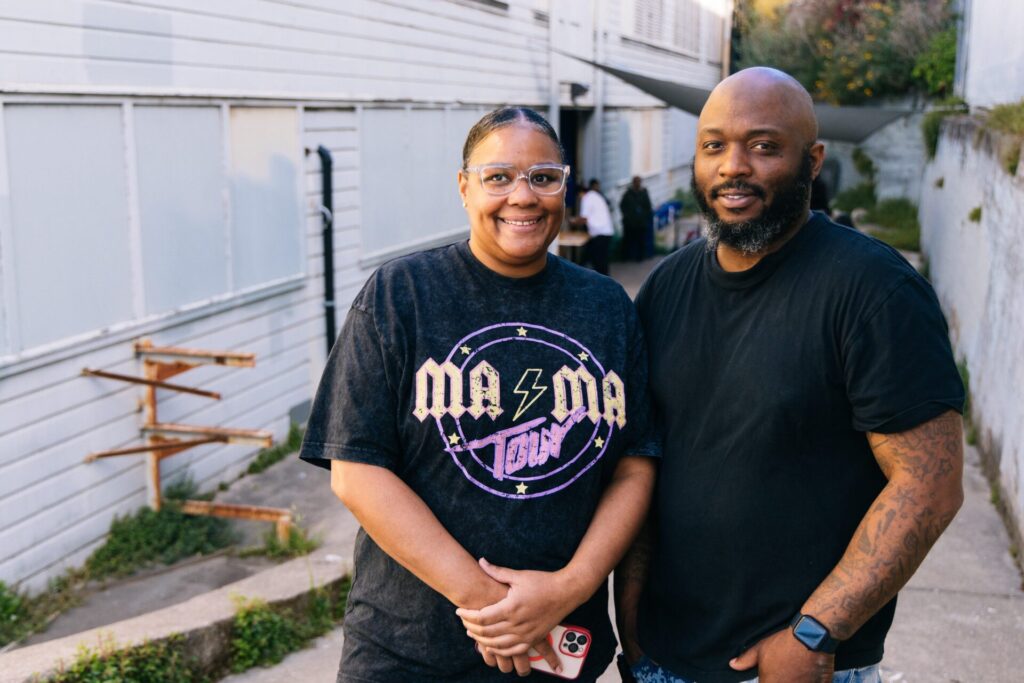
Rashawna and Mike

“My journey started here,” declares Mike Brown, a Community Staff Member at HPP. “I used these services before, and now I’m able to give back. I owe it.” 

Mike oversees the same pantry line he once stood in as a kid. His connection to the Food Bank goes back decades, to when his mom turned to HPP for support while raising him on her own and trying to get by during unemployment. 

“My mom had me young,” he says. “So we basically grew up together.” He remembers the palpable relief of leaving the pantry with food. It’s why he admires his mother for the strength it took to ask for help, and why he understands how much that support means to families. 

“Whether it’s a bag of rice or the eggs this week, it’s all very necessary,” Mike says. “It may be just some carrots and some radishes, but that goes a long way when you have nothing.” 

As Mike shares his story, Rashawna nods in agreement. She found HPP in 2009, when she was pregnant and full of questions. “Back then, there were not many mom classes available,” she recalls. “[HPP] had the support I needed.” 

Through breastfeeding education and peer support, she was able to prepare for her growing family. And with crucial access to fresh produce and pantry staples from the Food Bank, she built a stable foundation for her and her child. 

“It was feeding me, it was feeding my children. It was putting food in the household,” Rashawna says. “When you don’t have that money to make ends meet, then you have the food [from the Food Bank] to rely on. Even if you’re vegetarian, you can make a really good meal.” 

The support she received was transformative, and Rashawna is now an intern in HPP’s paid community health worker apprenticeship. “I was a client,” Rashawna says, “and now being able to give back is a wonderful opportunity.” 

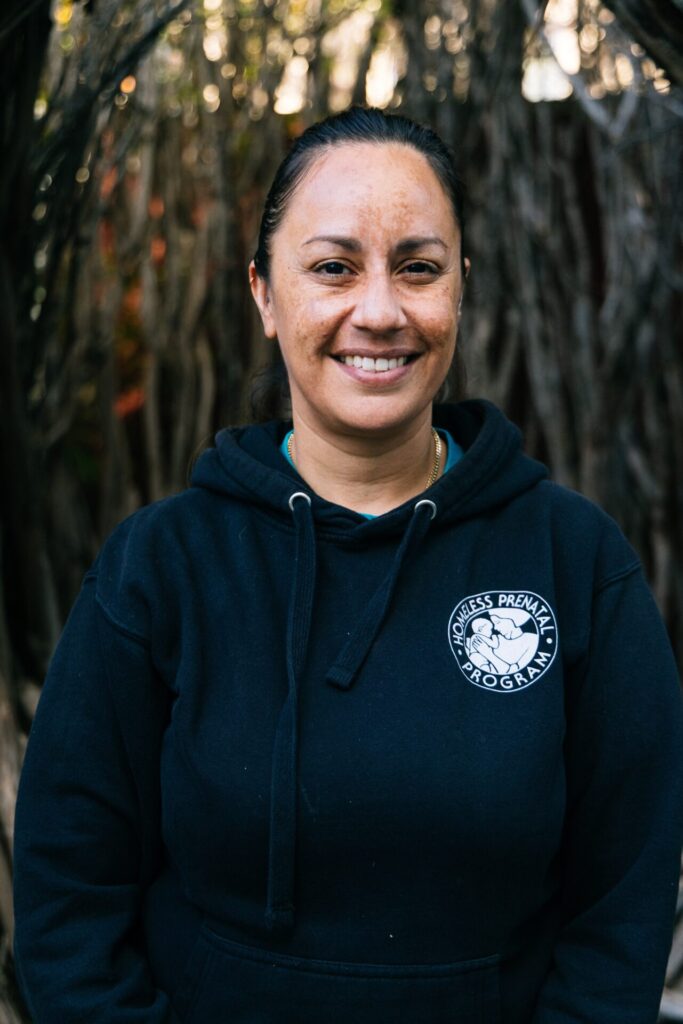
Linda

Linda has spent 12 years on HPP’s operations team, helping run the Food Bank’s weekly food distributions. She says stories like Mike’s and Rashawna’s show just how powerful the partnership between HPP and the Food Bank really is. “What’s special about Homeless Prenatal is serving the community and seeing all these beautiful little children thrive,” she says. “It takes a village to raise a child, but it takes a village to raise a community. This is it. This is the village.” 

But with shrinking budgets and looming cuts on all levels of government, she’s worried about how much support HPP will be able to provide. And Food Bank contributions are more essential than ever. 

“Right now, San Francisco-Marin Food Bank is our only source of fresh fruits and vegetables,” Linda says. “Due to the budget cuts, we no longer have different resources… we rely on the Food Bank.” 

She remembers when HPP could assemble Mom Boxes filled with peanut butter, rice, beans, apples, and chicken. They’d then supplement them with Food Bank extras to round out the meal. But those boxes are no longer possible. “Now we’re just giving Food Bank food,” Linda says. “People are thankful, but it’s hard to see a mom walk away without a bag, especially when she’s picking up right before school drop-off.” 

That strain isn’t unique to HPP. Across the Food Bank’s network, staff and volunteers are bracing for what comes next. Lucia Ruiz, a Senior Program Manager at the San Francisco-Marin Food Bank, hears that uncertainty every day. 

“We don’t know yet exactly how federal budget cuts are going to affect us, but we do expect there could be fewer of certain items coming in,” she says. “What we do know is that we’re incredibly grateful for the support of donors and community members — it’s what allows us to keep these programs going.” 

Lucia says it’s that sense of community and commitment to showing up for each other that will carry partners like HPP through these uncertain times 

“This pantry is more than a food distribution site,” she says. It’s a trusted hub where families get groceries, diapers, and other essentials,” she says. “Even during the pandemic, they kept their doors open. That tells you what kind of community this is.”

CalFresh: More Than Meets the Eye

May 16, 2025

When families enroll in CalFresh, it opens the door to more than groceries. 

Formerly known as food stamps, CalFresh is a vital part of the social safety net. Despite helping thousands stay above the poverty line, California’s participation rate is just 81 percent, ranking 31st in the country. To change this, the Food Bank is working to improve the system through outreach, advocacy, and policy. We co-sponsored AB 518, a new state law that requires California to identify people who are eligible but not enrolled and develop new ways to reach them to get them enrolled. 

Last year, our team helped more than 2,400 people apply for CalFresh, unlocking $6.5 million in benefits for households in San Francisco and Marin. That’s money our neighbors can use to buy the food they need enabling families and communities to thrive.  

CalFresh Puts Food on the Table… and Diapers in the Closet 

In addition to enabling our participants to put food on their tables, CalFresh enable recipients to access other important benefits. For families with young children, the cost of diapers adds up quickly. Too often, parents are forced to choose between diapers and food. That’s where CalFresh, the Food Bank, and community partners like Homeless Prenatal Program (HPP) come together. The San Francisco Diaper Bank, a partnership between the SF Human Services Agency and family resource centers like Homeless Prenatal Program, offers a free monthly supply of diapers to CalFresh families with children under two. At HPP, a long-standing Food Bank partner, families can pick up diapers and healthy groceries in one stop. It’s a model of seamless support that strengthens the safety net and addresses the root causes of hunger. 
Outreach That Meets People Where They Are 

We know that CalFresh is a proven strategy in reducing food insecurity. But stigma, immigration concerns, and a complex application process keep far too many people in San Francisco and Marin from getting help. 

That’s why the Food Bank’s CalFresh Outreach team works closely with partners to provide outreach, education, and one-on-one support to enroll more eligible residents. 

“The Food Bank’s free grocery programming is designed to support low-income residents of San Francisco and Marin to supplement their food budgets,” says Liliana Sandoval, our Senior Director of Programs and Outreach. “Starting CalFresh outreach at the Food Bank was an obvious choice.” 

Bringing CalFresh into the Food Bank’s mission was a natural step, Liliana says, since even a small benefit can make a difference. 

“Folks can attend a pantry and receive CalFresh,” she explains. “Even if they only get the minimum monthly benefit, they can buy food that isn’t available at the pantries. Ultimately, we want people to have a bit more ease in their daily lives.” 

Building Confidence, Busting Myths 

One way we strengthen the region’s CalFresh outreach is by providing training opportunities for our partners who make expanding CalFresh enrollment possible. 
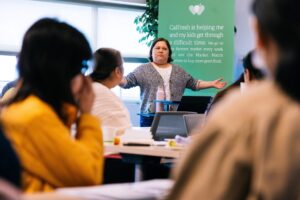
In March 2025, the Food Bank’s CalFresh Outreach Team hosted its first in-person training since the pandemic. Staff from community organizations across San Francisco and Marin were excited to come together to deepen their understanding of the CalFresh application process and build skills to better support participants.  

“Community means more than ever right now,” Liliana said at the start of the day. “We’re all here to learn from each other.” 

The training covered everything from household composition and income rules to immigration-related eligibility and how to help people navigate BenefitsCal, the website where people can apply for and manage their public benefits  Partners also learned about new updates, like chip-enabled CalFresh cards that reduce fraud, and additional benefits like discounts on museums, internet, and more. 

Partners who joined the training shared real fears their clients have, especially older adults, immigrants, and students. Some talked about legal permanent residents who were afraid to apply, worried it could affect their families. 

“There’s so much fear out there,” Liliana said. “And that’s why we’re doing this.” 

Another one of the myths that Liliana and her team are working to dispel is around who is eligible for CalFresh and who isn’t. Many people assume they don’t qualify, while others have tried before and stopped because the process was too difficult or unclear. 

She wishes more people understood what CalFresh is really about: it’s a tool for dignity, stability, and choice. 

“There is no nutrition restriction on what folks can buy, and most grocery stores, farmers markets, and big chain stores accept CalFresh,” Liliana says. People can choose what they want to eat and where to shop. Everyone needs food, and that’s why we are here — to help folks access it.”  

As CalFresh Awareness Month continues, the Food Bank’s Outreach Team is out in the community nearly every day, visiting schools, events, and pantries to raise awareness and enroll new participants.  

It’s a busy season, but the mission remains the same: meet people where they are, walk with them through the process, and open the door to resources that make things a little more manageable for families. 

And connecting folks to CalFresh can open doors to many other cost-saving resources they might not expect. Through CalFresh, people may also be eligible for: 

  • Transit discounts 
  • Free or low-cost cell phone service through the federal Lifeline program — sometimes even a free phone 
  • Affordable internet from major providers, with plans starting as low as $10 per month 
  • Half off Amazon Prime through Prime Access 
  • Free museum admission 

“Life is already so complex, and our low-income community members have to navigate so much just to meet their basic needs,” Liliana says.  “Our team loves reminding partners about these added benefits, because CalFresh isn’t just about food. It’s about making everyday life a little easier.” 


Answering the Call in Times of Crisis

May 13, 2025

At the Food Bank, we know that making sure everyone has food on their plates means showing up every day. Most of the time, that means serving people right here in San Francisco and Marin. But when disaster strikes, we try to provide assistance wherever and however we’re needed. 

This past January, when wildfires tore through Los Angeles, we sent a truck full of shelf-stable food to the Los Angeles Regional Food Bank and Westside Food Bank. We delivered canned fruits and vegetables, beans, soup, meat, and shelf-stable milk to help pack emergency food boxes for people who had lost access to grocery stores or were forced to evacuate. Having accessible food was a lifeline during a time of urgent need and uncertainty. 

Helping people — all people — in times of crisis has always been part of the Food Bank’s DNA. Starting with Hurricane Andrew in 1992, the Food Bank has proudly supported relief efforts across the country, including Hurricane Katrina, Hurricane Harvey, the COVID-19 pandemic, and the 2023 Hawaii wildfires.  

We know how quickly a crisis can overwhelm a local food bank. And we know how much it matters to have help on the way. “Food banks understand the critical role they play in disaster response and the importance of helping our colleagues across the U.S.,” said Michael Braude, our Chief Financial Officer. “We always provide support to others when we can, knowing they will do the same for us should we need them.” 

But of course, food banks supporting one another is just one part of the equation. When the social safety net takes a hit, families need more than just food. That’s why our 2025 State Policy Agenda backs two key bills to strengthen California’s disaster response and ensure a faster, more equitable recovery: 

  • AB 262 – California Individual Assistance Act: Provides direct financial assistance to local governments, community-based organizations, and individuals for disaster-related costs — whether from a fire, flood, epidemic, or other public safety emergency.
  • SB 739 – Disaster CalFresh Support: Ensures that counties have the staffing and resources they need to quickly roll out Disaster CalFresh, giving people fast access to food assistance in the wake of an emergency.

Supporting our neighbors has always been part of our mission — whether that’s distributing food locally, sharing resources with food banks across the country, or pushing for policies that ensure families have what they need to recover and rebuild. In every disaster, we’re reminded that, like our community, food banks are stronger when we work together. 

“Mama” Jean: Feeding Body and Spirit

May 7, 2025

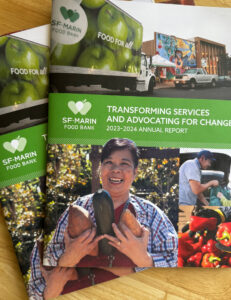
Jean Baker has a joyful smile and ebullient spirit, and both seem to shine prominently on the cover page of the Food Bank’s 2023-24 Annual Report. Now retired, and focused on family and her faith, for years Jean served as a steadfast connection between the Food Bank and participants who came to a food pantry at her church in the Mission District in San Francisco.
Beginnings

In 1976, Jean Baker immigrated to the US from the Philippines with no money, job, or family in the area. “When I first came here being an immigrant, I struggled to survive. Every penny I saved so I can buy food. I didn’t know about government help. I worked part-time here, part-time there, because I couldn’t get a regular job. All I knew was to survive, get work, get paid, and buy your food,” she shared. Jean went on to secure full-time work and raise her three kids — but her experiences of struggle shaped her desire to ensure others wouldn’t undergo the same hardships. “My family back home, they engaged in a lot of social welfare in the church, helping others,” Jean recalls. “So, when I had the opportunity here, I decided to do what my parents were doing.”

Transformative Leadership

17 years ago, Jean was attending church when her priest asked if there were any volunteers to help staff their new food pantry. At the start, other church members took charge of the program, but soon, Jean, who would become affectionately nicknamed ‘Mama Jean’ because of her caring nature, was asked to take the lead. “I accepted because I see a lot of homeless people,” she explains. “They need resources, they need food. Food is the essence of life. So, I dedicated myself to doing this kind of work.”

And dedicated she was. Every Saturday at 6:30 a.m., Jean would meet a Food Bank delivery truck at the pantry. A core group of volunteers — many unhoused community members and participants — helped her unload pallets of food. But Jean quickly noticed they could run the pantry more efficiently outside in the church’s garden. Her idea for a farmer’s market-style set-up in the church courtyard allowed participants to enjoy the fresh air while choosing from healthy, nutritious food supplied by the Food Bank. Rain or shine, Jean and her team shared groceries with 175 households each week.

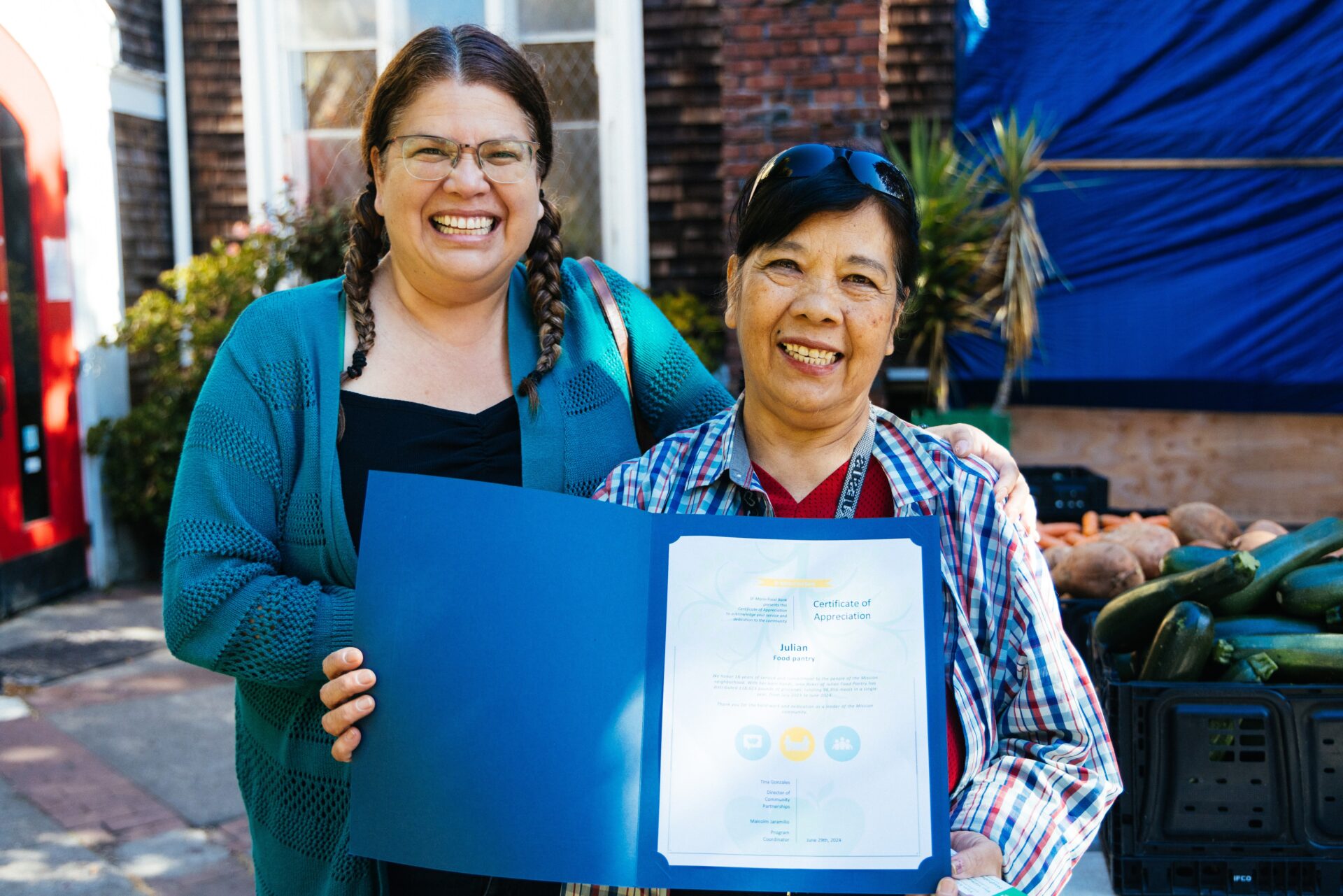
Tina Gonzales (left) with Jean Baker (right)

For Tina Gonzales, Director of Community Partnerships, individuals like Mama Jean are unsung heroes who rightfully deserve our appreciation. “These are actually pillars of the community doing the work for free!” observed Tina. Because committed individuals like Jean accomplish so much with little infrastructure (she doesn’t regularly use a smartphone), having direct face-to-face connections is key.

“We don’t want them to say yes to everything because they will. But are they overwhelmed? Do they have enough support, or are they biting off more than they can chew? Sometimes, we’ve got to go have a cup of coffee with them or have a friendly visit just to see how they’re doing,” says Tina.

A good percentage of network pantries serving food are faith-based and feeding people is part of their ministry. “I think for someone like Jean, this is her life work. So, we have people who fit the category of like, ‘this is my nine to five job, and I run a pantry.’ Then, we have people like Jean who are more like, ‘This is my calling, and this is how I give back.'”

End of an Era

Sadly, after 16 years, her church announced the hard decision to close the pantry last June. “It was heartbreaking,” recalled Jean, with a hushed voice. But as she had for the past 16 years, she handed out food to her neighbors on the last day of pantry service. The pantry closure was not what Jean hoped for. But she still attends church services and volunteers to tend to the garden. Presently, Jean is taking time to find ways to continue serving the community she loves. Until then, she can reflect on her experience with a smile: “Every Saturday, we met [at] the same place, doing work like a happy family. All we got here are a lot of good memories.”

With Appreciation

Another good memory for Jean was a much-deserved honor from the Food Bank. On the closure date, in recognition of her longstanding leadership and partnership as a pantry coordinator, Jean was presented with a Certificate of Appreciation for her 16 years of service to our participants and helping the community. The praise drew smiles from all in attendance, including Tina, and a beaming smile from Jean herself.

With Mother’s Day just ahead of us and in recognition of Asian American and Pacific Islander Heritage Month, we thank you, Mama Jean, for your generosity, inspired calling to help others, and tremendous service to the Mission community. You are appreciated.

Owning Our Energy: How We’re Powering a Greener Future

April 21, 2025

Carmelo has been at the Food Bank for 13 years, and as our Senior Associate Director of Facilities, he’s helped lead some of our biggest projects. But one thing people might not know? He’s afraid of heights. 

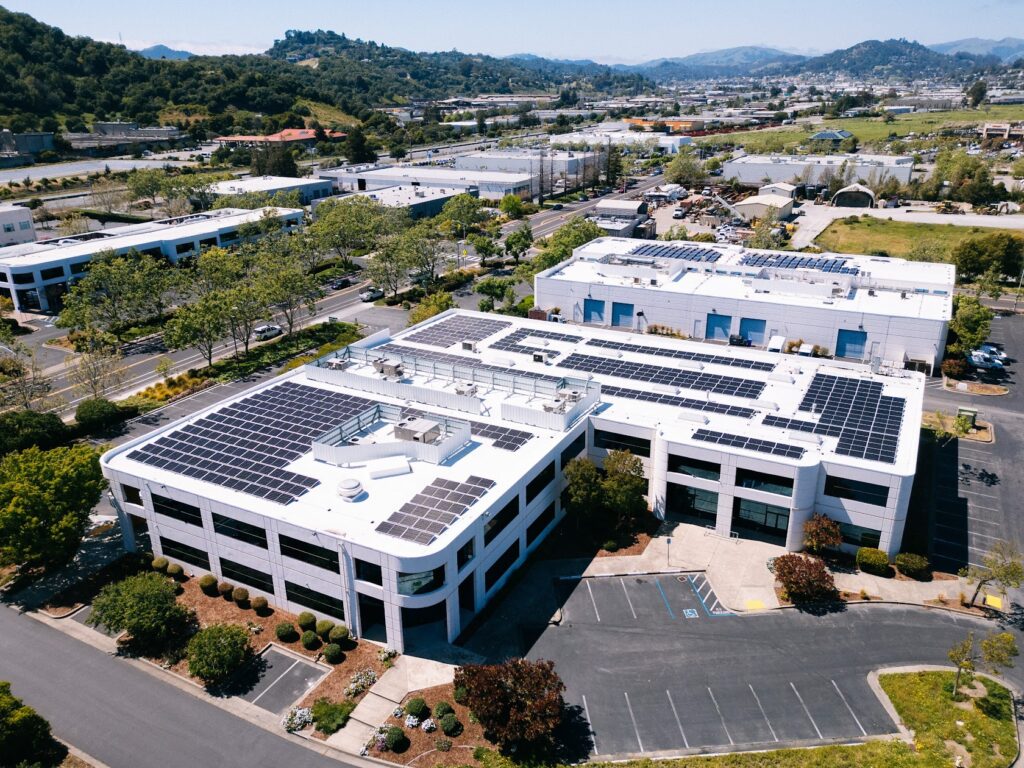
So, when it came time for his team to oversee the installation of solar panels on the roofs of our San Francisco and San Rafael warehouses, Carmelo faced his fear — again and again. 

“It has been a few years in the making since we started the proposed and now completed solar panel installations at both our San Francisco and San Rafael facilities,” he says. “It’s a major accomplishment that reflects a tremendous team effort — from Operations to our friends in Development responsible for the capital campaign fundraising. It truly takes a village to make something like this happen.” 

At the Food Bank, we know that access to healthy nutritious food is deeply connected to the climate crisis. If we want to build a food-secure future, we have to protect the environment we all depend on to grow the fruits, vegetables, and grains that nourish our communities. That’s why making big investments in sustainability is so important for our Food Bank. 
“All companies should be doing as much as they can to address the climate crisis,” says Michael Braude, our Chief Financial Officer. “The refrigeration required for our operation uses a tremendous amount of electricity. Being able to produce as much of that as possible on our own helps shrink our carbon footprint.” 

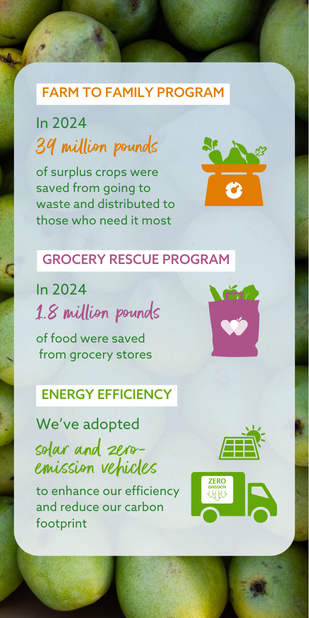
We’re not just proud of our solar panels – check our our other sustainability initiatives.

And, we’ll be producing a lot: Our San Francisco warehouse solar system is projected to generate approximately 600,000 kilowatt-hours (kWh) of electricity each year, reducing our PG&E bill by an estimated 66 %. At our San Rafael facility, we expect to generate about 270,000 kWh annually, with an estimated 90 % savings on electricity costs. 

These systems will cover nearly all the electricity we use during the sunniest months of the year, helping us cut costs, reduce emissions, and serve more people with fresh, healthy food. Simply put: every dollar we save on energy costs helps us go further in our mission to end hunger. 

And we’re not stopping there. We’ve already streamlined our delivery routes through route optimization technology to use less fuel, and this summer, we’re taking another big step: adding three zero-emission electric trucks to our fleet. Two more are on the way, along with the charging infrastructure to support them. 

For Carmelo, who calls himself “a proud Food Banker,” facing his fear of heights was worth it. Reflecting on what’s kept him going all these years: “Of course, it’s our mission to end hunger and the real impact we make in our community. But beyond that, it’s the people,” he continues. “The colleagues I work alongside day in, and day out truly inspire me and keep me motivated. We’re like-minded individuals, united by our commitment to this mission and driven by genuinely kind hearts. That shared purpose and compassion makes all the difference.” 

We’re proud to own our energy and to keep moving forward with climate-conscious solutions that support our neighbors, the planet, and our future. 

Happy Earth Day!